By Mr. Agni Mitra, Founder, Amwoodo
Every July, millions of us make a conscious effort to cut down on plastic. We pack our cloth grocery bags, swap our plastic water bottles for steel ones, and start saying no to single-use packaging. It’s an incredible global movement.
But as a founder working deeply in the sustainability space, I often catch myself asking one question: What happens on August 1st?
Plastic Free July is a fantastic conversation starter, but replacing a plastic item with a jute or steel one isn’t the finish line. It’s just step one. If we truly want to heal the planet, we have to look past the materials we use and completely rethink how products are designed, made, and eventually thrown away.
Here is why our approach to eco-friendly living needs an upgrade.
The Trap of “Eco-Friendly” Swaps
Are natural alternatives always better than plastic? We like to think so. For years, we’ve villainised plastic and given natural materials an automatic free pass. But environmental impact isn’t that simple.
Let me give you an example. Imagine buying a product made of cork. If that product is mass-produced in a factory, shipped halfway across the world, and then thrown in the trash a month later, is it truly sustainable just because it isn’t plastic? Probably not.
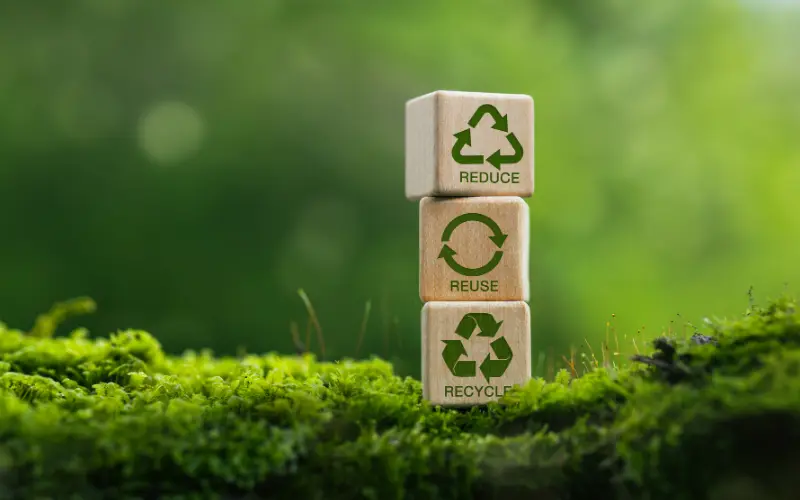
True sustainability looks at the entire lifecycle of a product. To make genuinely green choices, we need to ask:
- Where did these raw materials come from?
- How was it manufactured?
- Who made it, and were they treated fairly?
- How long is it meant to last?
- Where does it go when I’m done with it?
The goal shouldn’t just be a plastic-free world. It should be a waste-free, resource-conscious world.
What is Circular Design? (And Why It’s the Future)
One of the most exciting shifts happening in the green industry right now is the rise of circular design.
Traditionally, manufacturing follows a straight line: we make something, we use it, and we toss it. Circular design breaks that habit by asking one crucial question before a product is even created: What happens when the customer is done with this?
This simple question changes everything. Instead of designing items for the landfill, brands are building products meant to be repaired, reused, or fully recycled.
This isn’t an easy pivot for businesses. Traditional companies make money by selling you a replacement every year. Circular design asks companies to create things you won’t need to replace. It also asks you, the consumer, to stop chasing the newest trends and start valuing things that are built to last.
Why Craftsmanship Matters More Than We Realize
When we talk about the environment, we obsess over materials and supply chains. But we often ignore the most important piece of the puzzle: the people making the products.
Working closely with bamboo artisans at Amwoodo has been a humbling experience. These makers use every single part of the bamboo plant. They don’t do this because “circularity” or “zero waste” is trending online. They do it because that’s how their craft has been practised for generations. To them, it’s just common sense.
This is why craftsmanship is so crucial. True sustainability is about:
- Preserving local skills and traditions.
- Creating honest, reliable livelihoods.
- Building local economies that thrive alongside nature.
Environmental responsibility and social responsibility aren’t two separate goals. They are two sides of the same coin.

How to Practice Mindful Consumption
If swapping plastic for bamboo was the ultimate cure, we wouldn’t still be drowning in global waste. The uncomfortable truth is that the core problem isn’t just what we buy; it’s how much we buy.
It is dangerously easy for brands to sell you an “eco-friendly” version of something you don’t actually need. But sustainability shouldn’t be treated as a trendy new shopping checklist.
The most sustainable choice you can make isn’t always buying the green alternative. Often, it’s continuing to use what you already own until it completely falls apart.
Moving Beyond July
Plastic Free July is brilliant because it forces us to wake up from our autopilot routines. But meaningful change doesn’t clock out at the end of the month.
The businesses that will lead the future won’t just be the ones that swapped plastic packaging for paper. They will be the ones that had the courage to question a broken system and build something better from the ground up.
If this July pushes you to ask tougher questions about what you buy, how it’s made, and who made it, then the campaign did its job. But what happens after July ends? That is where your real impact begins.
– A Media Marketing Initiative