
Consciouscarma
  • Home
  • About Us
  • Products
  • Community
    • Campaigns
    • Inspiration
    • Initiatives
    • CSR
  • Features
    • Sustainable Startup Stories
    • Travel
    • Lifestyle
    • Partners
  • Economy
    • Industry
    • Innovations
    • National
    • Global
  • Environment
  • Expert Corner
    • Authored Articles
    • Reports
  • Magazine
  • Contact
Category:

Expert Corner

Authored ArticlesFeaturedSustainability

Plastic Free July: Why True Sustainability Goes Beyond Swapping Plastic

by Team Conscious Carma July 27, 2026
written by Team Conscious Carma

By Mr. Agni Mitra, Founder, Amwoodo
Every July, millions of us make a conscious effort to cut down on plastic. We pack our cloth grocery bags, swap our plastic water bottles for steel ones, and start saying no to single-use packaging. It’s an incredible global movement.

But as a founder working deeply in the sustainability space, I often catch myself asking one question: What happens on August 1st?

Plastic Free July is a fantastic conversation starter, but replacing a plastic item with a jute or steel one isn’t the finish line. It’s just step one. If we truly want to heal the planet, we have to look past the materials we use and completely rethink how products are designed, made, and eventually thrown away.

Here is why our approach to eco-friendly living needs an upgrade.

The Trap of “Eco-Friendly” Swaps

Are natural alternatives always better than plastic? We like to think so. For years, we’ve villainised plastic and given natural materials an automatic free pass. But environmental impact isn’t that simple.

Let me give you an example. Imagine buying a product made of cork. If that product is mass-produced in a factory, shipped halfway across the world, and then thrown in the trash a month later, is it truly sustainable just because it isn’t plastic? Probably not.
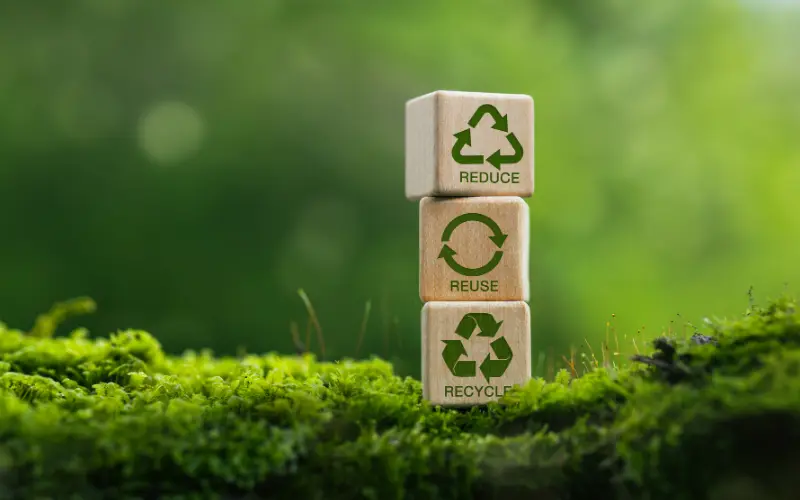
True sustainability looks at the entire lifecycle of a product. To make genuinely green choices, we need to ask:

  • Where did these raw materials come from?
  • How was it manufactured?
  • Who made it, and were they treated fairly?
  • How long is it meant to last?
  • Where does it go when I’m done with it?

The goal shouldn’t just be a plastic-free world. It should be a waste-free, resource-conscious world.

What is Circular Design? (And Why It’s the Future)

One of the most exciting shifts happening in the green industry right now is the rise of circular design.

Traditionally, manufacturing follows a straight line: we make something, we use it, and we toss it. Circular design breaks that habit by asking one crucial question before a product is even created: What happens when the customer is done with this?

This simple question changes everything. Instead of designing items for the landfill, brands are building products meant to be repaired, reused, or fully recycled.

This isn’t an easy pivot for businesses. Traditional companies make money by selling you a replacement every year. Circular design asks companies to create things you won’t need to replace. It also asks you, the consumer, to stop chasing the newest trends and start valuing things that are built to last.

Why Craftsmanship Matters More Than We Realize

When we talk about the environment, we obsess over materials and supply chains. But we often ignore the most important piece of the puzzle: the people making the products.

Working closely with bamboo artisans at Amwoodo has been a humbling experience. These makers use every single part of the bamboo plant. They don’t do this because “circularity” or “zero waste” is trending online. They do it because that’s how their craft has been practised for generations. To them, it’s just common sense.

This is why craftsmanship is so crucial. True sustainability is about:

  • Preserving local skills and traditions.
  • Creating honest, reliable livelihoods.
  • Building local economies that thrive alongside nature.

Environmental responsibility and social responsibility aren’t two separate goals. They are two sides of the same coin.

How to Practice Mindful Consumption

If swapping plastic for bamboo was the ultimate cure, we wouldn’t still be drowning in global waste. The uncomfortable truth is that the core problem isn’t just what we buy; it’s how much we buy.

It is dangerously easy for brands to sell you an “eco-friendly” version of something you don’t actually need. But sustainability shouldn’t be treated as a trendy new shopping checklist.

The most sustainable choice you can make isn’t always buying the green alternative. Often, it’s continuing to use what you already own until it completely falls apart.

Moving Beyond July

Plastic Free July is brilliant because it forces us to wake up from our autopilot routines. But meaningful change doesn’t clock out at the end of the month.

The businesses that will lead the future won’t just be the ones that swapped plastic packaging for paper. They will be the ones that had the courage to question a broken system and build something better from the ground up.

If this July pushes you to ask tougher questions about what you buy, how it’s made, and who made it, then the campaign did its job. But what happens after July ends? That is where your real impact begins.

– A Media Marketing Initiative
July 27, 2026 0 comment
0 FacebookTwitterPinterestEmail
Authored ArticlesEnvironment

Ramveer Tanwar – The Pond Man of India

by Team Conscious Carma June 26, 2023
written by Team Conscious Carma

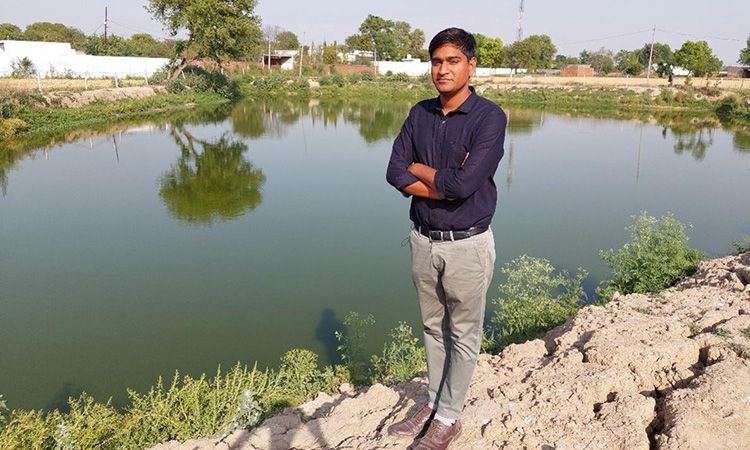
Ramveer Tanwar, a young Mechanical Engineer gave up his MNC job to revive India’s dying lakes.  He grew up in a village called  Dadha in Uttar Pradesh, India and loved playing by lakes and ponds with his friends. However, while pursuing his engineering, he noticed that his favorite childhood hangouts were starting to disappear. Most of the wetlands had become polluted and were more of dumping grounds as people had started throwing their garbage in the ponds, Tanwar took upon himself to change this and educate people about the importance of clean water. He left his MNC job and became full time conservationist in the year 2016.

His NGO, Say Earth started in 2018 has restored more than 80 water bodies all over India in last 6 years and have created 4 urban forests in last 2 years that are self-sustaining

“Just like Taj Mahal and Red Fort are monuments left behind by our ancestors for us, ponds and lakes are the same. These are ancient water conservation measures that our ancestors taught us. But our ponds and lakes are drying. So, will we leave the pits of dry ponds for our future generations? We have to preserve the ponds and lakes for our future generations.” Ramveer Tanwar.

Prime Minister Narendra Modi has also praised his efforts during his monthly radio programme ‘Mann Ki Baat’.

June 26, 2023 0 comment
0 FacebookTwitterPinterestEmail
Authored Articles

Women Who Lead: The Likeability Dilemma!

by Team Conscious Carma June 2, 2023
written by Team Conscious Carma

Nona Walia – Are women leaders disadvantaged by ‘likeability bias’ when they take leadership roles? How do we raise a generation of women leaders? What does it take to become a super leader?

How do we perceive women displaying assertiveness, power and strength? Is ‘ambition’ still a dirty word when it comes to women. When women lead, does stereotype bias follow them. Documentarian Robin Hauser has debated the dilemma between competence and likability faced by women in leadership roles. Should women at workplace be bothered by criticism? Why are women in powerful roles labelled as – bossy, arrogant and hyper? Is it time to free women leaders from these gender stereotypes? It seems women have to work twice as hard to be liked at work if they’re in a leadership role. Women who lead – what does it take to create a generation of new women leaders? Can we give girls a conducive environment to grow thereby create more women leaders of tomorrow? Invisibility at work is the biggest setback to your career growth as a potential leader.

Alicia Menendez writes in her book The Likeability Trap, “Women face likeability penalty from hiring to promotions.” Her advice: If you are not rising or getting promoted, look elsewhere. To be both likeable and successful is walking a tough tightrope. Simply craving for success makes women less likeable. At every turn, it seems women are asked to choose between success and likeability. Infact, this likeability trap is what makes women hold themselves back. Stanford professor Deborah Gruenfeld has been exploring alternatives to the narrative of the likeability penalty.

In her work with women leaders at the Graduate School of Business, Gruenfeld finds that too much focus likeability penalty limits women’s focus to the actions required to lead. She urges women to be more confident in their abilities. Instead of focusing on likability, women can find new ways to be successful as leaders, such as sharing what they know, “but in a way that is generous.” Women who lead need to: Balance inclusiveness with decisiveness; cultivate personal agility; recalibrate risk tolerance; learn to get comfortable with power; consider multiple perspectives and practice right communication tone. Be labelled as energetic, problem=solvers and action-oriented.

It is time women rise as leaders in different spheres. Success is nothing but action and attitude. To raise more women leaders, women should not underestimate their value and self-worth. They are unstoppable force, and can direct conversations in the boardroom and within the organization. Psychology Today highlights in an article, “While we place great emphasis on leadership development today, we often do little to address issues of diversity and leadership. These are about competencies as a process as opposed to a specific skill. Learning “who you are” and what of yourself you bring to your leadership is an important first start.”

For women, being a leader is often an oxymoron. The urge to be liked is a powerful force in the workplace. Careers of women depend on who their bosses: Like and don’t like. If a workplace doesn’t align with you, leave. Women need to think themselves to be natural leaders like men.

How Women Can Train to be Leaders:

Be anti-fragile.

Take action.

Don’t miss opportunities. See opportunity in everything.

Learn how to be open, supportive and collaborative.

Learn how to network.

Create a mindset of strength.

Be a magnet of energy and action.

Break unseen barriers.

Enable women to move up.

Push women to take risks.

Women should not be reluctant to speak up or withhold their opinion. Encourage women to speak up and be heard.

Learn empathetic leadership style.

Women should be cheerleaders for other women. Learn to support women.


Be Prepared to Lead

Build courage & strength: Have emotional strength; having the resolve to take risks even if no one else agrees.

Be resilient:  Stand up to being different and overcoming negative perceptions and expectations.

Have authenticity and integrity: You build your own reputation.

Be super confident: Believe in yourself. You don’t have to keep proving yourself.

June 2, 2023 0 comment
0 FacebookTwitterPinterestEmail
Environmental Impacts of Food Production
Authored ArticlesEnvironment

Environmental Impacts of Food Production

by Team Conscious Carma February 22, 2023
written by Team Conscious Carma

by Hannah Ritchie and Max Roser

Food, energy and water: this is what the United Nations refers to as the ‘nexus’ of sustainable development.

As the world’s population has expanded and gotten richer, the demand for all three has seen a rapid increase. Not only has demand for all three increased, but they are also strongly interlinked: food production requires water and energy; water power can be used as a source of energy; agriculture provides a potential energy source.

In this image, you can find our data, visualizations, and writing relating to the environmental impacts of food.

Ensuring everyone in the world has access to a nutritious diet in a sustainable way is one of the greatest challenges we face.

Key insights on the Environmental Impacts of Food

Food production has a large environmental impact in several ways

What are the environmental impacts of food and agriculture?

The visualization here shows a summary of some of the main global impacts:

  • Food production accounts for over a quarter (26%) of global greenhouse gas emissions.
  • Half of the world’s habitable land is used for agriculture. Habitable land is the land that is ice- and desert-free.
  • 70% of global freshwater withdrawals are used for agriculture.
  • 78% of global ocean and freshwater eutrophication is caused by agriculture. Eutrophication is the pollution of waterways with nutrient-rich water.
  • 94% of non-human mammal biomass is livestock. This means livestock outweigh wild mammals by a factor of 15-to-1.
  • 71% of bird biomass is poultry livestock. This means livestock outweigh wild mammals by a factor of more than 3-to-1.

Tackling what we eat, and how we produce our food, plays a key role in tackling climate change, reducing water stress and pollution, restoring lands back to forests or grasslands, and protecting the world’s wildlife.

Hannah Ritchie and Max Roser (2022) – “Environmental Impacts of Food Production”. Published online at OurWorldInData.org. Retrieved from: ‘https://ourworldindata.org/environmental-impacts-of-food‘ [Online Resource]

February 22, 2023 0 comment
0 FacebookTwitterPinterestEmail
Authored ArticlesWellness

Indian traditions provide panacea for Cyber syndromes, but the Brand Identity of Indian Traditions needs to Cross over

by Team Conscious Carma December 14, 2022
written by Team Conscious Carma

By Sagar Chandola
With mental health being a major topic for exploration, especially due to the overdose of cyber cues and related side-effects coming forth, traditional practices are something worth exploring for a literal reboot to more healthier times, both mentally and physically. However, in order to ensure a connect with these traditional practices, Indian traditions too need to crossover and stay relevant.

As a brand crossover expert I am often approached by Brands entrenched in their identity whose foundation was laid by their founders. In some cases these brands were found in the pre-Indian independence era. There are various Indian brands which are following the traditional Indian practices, way healthier than the modern day techniques.  However, they are not marketed well, the lack of awareness is where these brands majorly fail

Each one of us has the right to evaluate what traditions are worth a copy-paste, edit or to be sent to the recycle bin. However closer scrutiny will reveal the scientific temperament behind many of the traditional Indian practices. Given below are few examples of the worthiness of our tradition.

1.Cooking in earthenware: This has so many health benefits. It makes the food alkaline, retains all nutrients, distributes heats evenly. This could be promoted as a lifestyle product for those seeking to improve their intake of micronutrients, which holistically improves your energy levels and provides solutions to lethargy. Cures for being seeked regularly by the Millennial Man.

2.Ear piercing: Pirates believed that wearing hoops in their ears would improve their eyesight and allow for better navigation skills. However even as per Indian traditions it leads to better Brain development and Reproductive health. Solutions are consistently being seeked by the current couch potato generation for these health concerns and traditional practices provide literally beautiful solutions for this.

3.Sit down and eat your meal & drink your water: Standing redirects the blood flow towards your extremities instead of your digestive system. Have at least one meal sitting on the floor and solve your digestion, insulin release to even posture problems

4.Getting up early in the morning and making Rangoli with rice: Although this might seem like an innocuous activity, but it has great meaning and reverence. The Rangoli was not only eaten by the ants and a great way to connect with nature – Mata Pruthvi Putroha Prutithvya(earth is my mother and I am her child), but also signified that you were alive and kicking inside. Safety is a major concern for this generation and what better than to allow mother nature to be your watchman.

It is said that your Future is the Past Replayed. This holds true for many Indian Traditions too.
So go ahead and embrace your traditions, you never know if they could be your ‘powerpoint’ to a teleported transformation.

Sagar Chandola is a renowned Brand Crossover Expert  with two decades of experience in advocating #healthcarethatworks initiatives with a focus on PublicPrivatePartnership and facilitating unlocking of value via non traditional mediums such as metaverse and neuromarketing

Initiatives include the likes of Neurocomputing lab in IIT Delhi setup in collaboration with MIT USA and Porvoo transition care – An Indo European wellness center, India’s 1st Transition care center Besides being the first person from India to be inducted into the IEEE P1828 board, dedicated to laying the foundation of the 3D internet with a focus on mapping industry requirements

December 14, 2022 0 comment
0 FacebookTwitterPinterestEmail
Authored ArticlesSustainability

Eight Ways to Live Sustainably

by Team Conscious Carma December 9, 2022
written by Team Conscious Carma

– by Anil Chowta 
Living Sustainably is the need of the hour. It is what we owe to our next generations.

Sustainable living sounds like some elite and luxurious lifestyle indulged in by the nouveau rich of society, those who do not have to pay their EMIs or bother about their next paycheques. However, sustainable living is what the people of this country have been doing for centuries —using that old faded t-shirt as a dusting cloth, passing down outgrown clothes to siblings and using leftover pages from last year’s school notebooks as practice sheets or notepads- things that we have done ourselves or seen our parents do.

Here are eight hacks for a sustainable lifestyle

  1. Always remember to carry a shopping bag from home
    Just like you won’t step out without your wallet or purse, you must not leave the house without a reusable shopping bag. Invest in a sustainable, washable and reusable shopping bag. Not only do they look so much better than single-use plastic bags, but they are a great for saving the planet.
  2. Refuse if you cannot Reuse
    Refuse outright to purchase products designed for single use. Opt for sustainable alternatives for everyday use products that are made out of eco-friendly materials. Replace plastic toothbrushes, writing instruments, utensil-scrub pads, hygiene and sanitary products with those made out of planet friendly raw materials like bamboo, wood, coir. Also there are reusable alternatives of sanitary products available today. The planet is crying for help, and we must choose wisely.
  3. Wear your lifestyle on your sleeve
    Do not be shy to voice your choices to your family, friends and anyone who cares to listen. Be vocal about your reasons for doing what you do. You might feel awkward or uncomfortable, but people will respect you for standing up for your beliefs. With changing climatic conditions, and the global pandemic, everyone understands that the planet needs action NOW.
  4. Purchase Locally
    Purchase from the greengrocer around the corner. Local shopping minimises fuel and packaging. Many seasonal and hyperlocal fruits, berries and seeds are available only at the local vegetable vendor. Buy the freshest seasonal produce and support local communities.
  5. Dress-Up Smart
    Patronise the local (designer) tailor who can give the big brands a run for their money. Flaunting labels may have perks, but nothing beats the swag of wearing a specially crafted unique creation in the fabric of your choice. Upcycle classic sarees and gowns for festivities and special occasions. It’s easy on the wallet, super fun and gentle on the planet.
  6. Travel Wisely
    The COVID-19 pandemic brought the travel industry to a grinding halt. It also gave the planet respite and a chance to heal. As we begin travelling for work and leisure again, look for travelling and luggage bags that can withstand weathering and be repaired easily. Live in eco-friendly accommodations, use public transportation, try local cuisine and respect local cultures.
  7. Meditate, Exercise and Eat Healthily.
    A healthy body and mind are the best gift to yourself, your children and the planet. Our planet’s resources are already stretched to support the eight billion of us. Now imagine providing ongoing medical care to a small percentage of this population. Growing healthier is good not just for us but for our planet too
  8. Act Now
    Reduce, Reuse, Recycle, Upcycle, Segregate, Compost, Walk, Cycle, Carpool – We all know these and the zillion other things that must be done. The solution is to develop pro-planet habits. Start with something small or big that you can do right now. So, get that reusable bag, put it in your purse/wallet, or order that compost bin. And tell everyone about it. And that includes your nosy neighbour and your social media followers.

Extraordinary commitment to ordinary actions is what will save the day. Commit and act to live sustainably now.

About the author: Mr. Anil Chowta is the Founder and CEO of Ecosac- a brand of eco-friendly and reusable utility bags and sustainable consumer products.

Anil stepped into the business world in the year 1990 with Falcon as a brand providing training kits to more than 3000 engineering colleges globally. An engineer in Electronics & Telecommunications, he explored the field of technical training products for 22 years. While he successfully built a scalable business at Falcon, his burning desire to impact society and the environment at large led him to find the brand of his sustainable product- Ecosac in 2016. The exorbitant amount of single-use plastic and paper bags consumed around the globe and its consequences on the environment intrigued Anil, thus giving rise to a new hustle in the FMCG and Retail sector.

December 9, 2022 0 comment
0 FacebookTwitterPinterestEmail
Authored ArticlesGlobal

2022 ENVIRONMENTAL PERFORMANCE INDEX FINDS WORLD NOT ON TRACK TO MEET CLIMATE COMMITMENTS

by Team Conscious Carma August 19, 2022
written by Team Conscious Carma

Denmark earns #1 ranking; India falls to bottom of the scorecard; United States ranks low among wealthy democracies

Global progress to reduce greenhouse gas (GHG) emissions remains insufficient to meet the net-zero GHGs by mid-century target established in the 2021 Glasgow Climate Pact, according to the 2022 Environmental Performance Index (EPI) produced by researchers at Yale and Columbia Universities.

The Yale Center for Environmental Law & Policy advances real-world outcomes in sustainable development through multiple initiatives. Inspiring fresh thinking with data- driven approaches to environmental decision- making, the Center engages stakeholders across disciplines, sectors, and boundaries to enhance policy and voluntary action on critical sustainability issues. The Center for International Earth Science Information Network (CIESIN), a center of the Columbia Climate School at Columbia University, works at the intersection of the social, natural, and information sciences. CIESIN specializes in online data and information management, spatial data integration and training, and interdisciplinary research related to human interactions in the environment.

Using the past 10-years’ emissions trajectory as a basis for projecting 2050 emissions, the EPI researchers forecast that the vast majority of countries will not achieve the net-zero goal. A number of nations — including the United States — are projected to fall far short of the target.

Commenting on the findings, Professor Dan Esty, who directs the Yale Center for Environmental Law & Policy that has produced the EPI biennially since 2006, said: “Major countries have much more work to do than they may have realized if the world is to avoid the potentially devastating impacts of climate change.”

Only a handful of countries — notably Denmark and the United Kingdom — are currently projected to reach GHG neutrality by 2050, according to the EPI’s analyses. The countries performing well on the net-zero GHG in 2050 metric have enacted some of the world’s most ambitious climate policies. For example, Denmark has set a national target of reducing 2030 emissions by 70% compared to the 1990 level and has adopted a comprehensive policy agenda to deliver on this commitment including recently expanded GHG taxes.

More than 50% of emissions in 2050 are slated to come from just 4 countries: China, India, the United States, and Russia. “While U.S. emissions are declining rapidly, they are not falling fast enough to get to net zero by 2050 given the very high emissions starting point of the United States,” said EPI project director Martin Wolf. More troubling, GHGs continue to rise in China, India, Russia, and a number of other major developing countries.

Just 24 countries — the dirty two-dozen — will account for nearly 80% of 2050 residual GHG emissions unless climate change policies are strengthened and emissions trajectories shifted. “The 2022 EPI emissions projections should be a call to action for many nations,” declared Dr. Wolf.

Ranking 180 countries on 40 performance indicators covering climate change, environmental public health, and ecosystem vitality, the EPI constitutes the world’s leading analysis of country-level sustainability trends. The 2022 EPI offers a powerful policy tool for assessing performance at the global and national levels across an array of critical sustainability issues including air and water pollution, waste management, biodiversity and habitat protection, as well as the transition to a clean energy future. Country rankings are grounded in the best available data from international organizations and research centers around the world that have been carefully analyzed by Yale and Columbia researchers.

In highlighting leaders, calling out laggards, and spotlighting the best policy practices on an issue-by-issue basis, the EPI provides a guide to policymakers on the path to a sustainable future. It also offers opposition political leaders, the media, environmental advocates, business executives, community groups, and citizen activists a mechanism for holding governments accountable.

2022 EPI Rankings

Denmark emerges as the most sustainable country in the world according to the 2022 EPI. Retaining its #1 ranking from 2020, Denmark’s top score reflects strong performance across many of the issues tracked by the EPI with notable leadership in climate and sustainable agriculture. Dan Jørgensen, the Danish Minister for Climate, Energy, and Utilities, commented on Denmark’s achievements: “Denmark is a small country. But we want to make a big difference. That’s why we aim to set a good example. We hope that by doing so, we can inspire others to also do more to preserve our planet. And when we set ambitious targets for ourselves, we also spark innovation and the development of solutions and technology that can help the green transformation in other countries. We have come a long way. But we still have a lot of work to do. Even though Denmark comparatively is doing a lot at a fast pace, we are not satisfied. We need to do more even faster. And we will.”

Other high-scoring nations include the United Kingdom and Finland, both of which earn top rankings from their strong climate change performance driven by policies that have substantially cut GHGs in recent years. Sweden and Switzerland, also among the top countries, rise above their peers in terms of air and water quality. But as Yale Professor Jay Emerson, who leads the team doing the EPI’s statistical analyses, noted, “No country is top-tier across the board. Even Denmark has things to learn from others.”

Beyond providing global and country-level results, the 2022 EPI offers insights into the drivers of good environmental performance. As senior research scientist Alex de Sherbinin of Columbia University’s Columbia Climate School and one of the lead authors of the 2022 EPI explained, “Good governance, policy commitment, and targeted environmental investments separate the nations that are moving toward a sustainable future from those which are not. High-scoring countries have well-thought-through programs to protect public health, conserve natural resources, and mitigate greenhouse gas emissions.”

Lagging its peers, the United States places 43rd out of 180 countries in the 2022 EPI. This relatively low ranking reflects a nation that has become deeply divided over how to respond to environmental challenges leading to inaction in Washington on critical issues such as climate change — and the rollback of environmental

protections during the Trump Administration. Between 2016 and 2020, the Administration repealed or weakened nearly 100 environmental regulations, reversing progress the U.S. had made in climate mitigation, air quality, and habitat conservation. In particular, the United States’ withdrawal from the Paris Climate Agreement, relaxed methane emissions regulations, and weaker fuel efficiency standards meant the nation lost precious time while its peers in the developed world enacted significant policies to reduce their GHG emissions. While the data indicate the U.S. has made strides toward improving air quality and marine protected areas, the aggregate ranking puts it behind most wealthy western democracies, including France (12th), Germany (13th), Australia (17th), Italy (23rd), and Japan (25th).

The lowest scores overall go to countries that are struggling with civil unrest and other crises (such as Myanmar or Haiti), or nations that have prioritized economic growth over environmental sustainability, such as India, Vietnam, Bangladesh, and Pakistan. India, with markedly poor air quality and quickly rising GHG emissions, comes in at the very bottom of country rankings for the first time. Poor air quality and growing GHG emissions continue to impact China’s EPI ranking, placing the nation 160th out of 180 countries in the 2022 scorecard.

Additional Global Insights

Worldwide trends suggest that many countries have made significant progress over the past decade on critical environmental health issues like sanitation, drinking water, and indoor air pollution. These gains demonstrate that investments in environmental infrastructure, like wastewater treatment facilities, and better household energy technologies, such as cleaner cookstoves, can translate into rapid improvements in public health. The EPI’s new air quality metrics indicate, however, that residents in most countries still breathe unsafe air. More than 8 million people die prematurely each year from exposure to indoor and ambient air pollutants. Southern Asian countries, such as India, Nepal, and Pakistan, are particularly lagging in air quality.

Ecosystem trends capture both remarkable improvements and persistent challenges when it comes to preserving habitat and biodiversity around the world. Belgium, the U.A.E., Croatia, and Niger have substantially expanded protected habitat within their borders, earning top scores for biodiversity metrics in the 2022 EPI. The world has also met its marine protected areas target, successfully preserving 10% of coastlines – but with ocean ecosystems still threatened in much of the world, there remains a good bit of work to do in this issue category. On other issues, global performance continues to move away from sustainability. Fisheries are especially in decline, with nearly all countries earning scores below 50% on this vital issue.

The Drivers of Good Environmental Performance

At every level of development, some countries achieve scores that exceed their peer nations with similar economic circumstances. Cutting-edge analyses of the 2022 EPI rankings make clear that the factors explaining environmental success include good governance, country wealth, quality of life, independent media, and well- crafted regulations. The researchers found strong correlations between EPI scores and government effectiveness, rule of law, regulatory quality, happiness, and GDP per capita. Sustainable development requires financial resources, which enable investments in environmental protection. The wide divergence in scores among wealthy countries demonstrates, however, that policy choices also matter. Leaders that carefully manage pollution threats and natural resource use can drive their countries toward a more sustainable future.

A Call for Improved Environmental Monitoring and Data Reporting

Policy efforts to deliver a more sustainable future would benefit from better data collection, reporting, and verification across a range of environmental issues. The push towards more analytically-rigorous environmental policymaking has gained momentum in recent years, particularly after the adoption of the UN Sustainable Development Goals (SDGs) and the Paris Climate Agreement in 2015. Nonetheless, persistent information gaps hold the world back from a more sustainable future. Good data are particularly lacking in agriculture, freshwater quality, chemical exposure, and ecosystem protection. The EPI team continues to call for world leaders and data organizations to close these gaps with stronger investments in environmental information frameworks.

August 19, 2022 0 comment
0 FacebookTwitterPinterestEmail
Authored ArticlesSustainabilityWellness

It’s a New Era of Well-being at Workplaces!

by Team Conscious Carma August 1, 2022
written by Team Conscious Carma

Intro: The future of work is well-being. The zillennials are demanding better work culture and environment. Nurturing employee well-being is critical to developing workplace resilience and sustainability! – Nona Walia

Body Copy: The last two years of pandemic era living have impacted everyone. Pandemic-related fatigue, social isolation, remote hybrid work culture and ‘the Great Reshuffle,’ have employees across generations asking for workplaces that promote well-being. The future trend forecasters believe that a new wave of well-being at work is here: leaders as coaches; 4-day work week; elimination of bullying. The rise of ‘well workplaces’ which follow the pyramids of wellness: financial wellness, career wellness, physical wellness, social wellness are the core focus areas. We need more workplaces which create new thriving cultures. 

The youngest workforce — Zillennials – born between 1993-1998 – demand a work environment that aligns with their personal values.  Wellness is now a new corporate responsibility in order to create sustainable workplaces. If companies are serious of building a well-being inclusive culture – then it’s time to take care of your employees. Stop giving people Well-being and Meditation Days, or free wellness apps, this is the time to make broader wellness policies and make structural changes. Employees need support, this is the time for collective organisational well-being. 

It’s going to be essential to train bosses to embrace the roles of facilitator, coach, mentor and guide with the purpose of empowering wellbeing and trust. ‘Command and Control’ model of work and obsessive bosses will be outdated.  Organisations that sack employees mindlessly automatically become unattractive as they go against the model of well-being and sustainability.

According to a recent article in Forbes, ‘employee well-being has expanded beyond physical well-being to focus on building a culture of holistic well-being including physical, emotional, financial, social, career, community, and purpose. At the heart of this is the growing need for flexibility in where, when, and how employees work.’

Organizations need to go beyond physical well-being. Opening up a gym or holding online/real yoga and meditation classes isn’t well-being.  For instance, PwC’s Be Well, Work Well Habit Bank helps you track physical well-being from standing up for short meetings or tracking what and when you eat. Microsoft CEO Satya Nadella has been focusing on employee well-being, he believes “soft skills and “good old-fashioned” management practices were needed to take care of employee well-being.”

According to a survey by LifeWorks’ Mental Health Index, mental stress among employees continues to rise. Employees are now more likely to report feelings of isolation and anxiety which negatively impacts productivity. The Mental Health Index survey revealed that young people are now focussing more on mental health with individuals between 20 and 29 nearly twice as likely to report wanting to put their mental health first compared to those over 60. This translates to employee retention with half of millennials and 75% of Gen-Zers citing mental health reasons as the motivation for leaving a job.  Experts report that, “wellbeing is becoming a board priority, not just the domain of the HR department.”

The shift will be creating workplaces with energy and vitality not just stresses and control. Employees will reject workplaces and cultures that don’t allow them to thrive. Work does not need to be an unending drain on vitality or your energy reserves. We need work and workplaces where people actually leave work more refreshed, happy, feeling charged and creative than when they arrived.

Wellbeing is important for employee happiness and fulfillment, but it’s also critical for business results. According to Gallup survey, “When your employees’ wellbeing is thriving, your organization directly benefits — they take fewer sick days. But when your employees’ wellbeing suffers, so does your organization’s bottom line.  Career wellbeing is the foundation for the other wellbeing elements.”

The focus of future will be on those organisations that promote and enhance the employee’s career well-being. The future area of focus will be — Why We Work rather than How We Work. In his TED Talk, Why We Work, Barry Schwartz says, “We need more organisations that motivate employees beyond a paycheck. This is a period of transformation of workplaces. We need to change workplace structures.”

People are not in it just for the money. They want to know where and why they should spend their energy and time in the right workplaces. Nobody wants to sign into a life making unbearable workplaces bearable. People are going to ask: What am I getting giving 40 hours a week to this organisations beyond the salary? Is this workplace interested in my well-being? Everyone is asking: Does this add value to my life?

The Wellbeing of We

We are trying to build sustainable and resilient work culture. People will not fall for the goals hiring HR pundits will be dangling at them. Employees want organisations for ensure financial well-being in times of uncertainty and distress. The PwC 2021 Employee Financial Well-being Survey found finances to be the top cause of employee stress above their job, their health, and their relationships combined. The Wellbeing of We is a culture that believes in everyone’s wellbeing not just the bosses wellbeing or their favourite people’s wellbeing.

Social Well-being

The key for workplace wellbeing is also to create strong bonds and meaningful friendships at work. “They can be a buffer during stressful situations,” says Jen Fisher, co-author of Work Better Together and Chief Well-Being officer for Deloitte. Leaders now view well-being not just as an employee benefit but as a way to support employees in all aspects of their personal and work lives.

It takes time to build workplaces that “do no harm” as spaces that optimize performance, lower fatigue, promote healthy life- and work-styles and empower thriving.

It’s time for well-being revolution at workplaces.

A check-list for Workplace Wellbeing for organisations:

•       Do your development plans include wellbeing goals?

•       Do you share and celebrate wellbeing successes?

August 1, 2022 0 comment
0 FacebookTwitterPinterestEmail
Authored ArticlesSpirituality

Mantras have the power of generating positive vibrations

by Team Conscious Carma July 30, 2022
written by Team Conscious Carma

Yogi Ashwini, Dhyan Ashram – Human body is a vibration. What distinguishes one individual from the other, or a diseased body from a healthy body, or a young body from an aged body, is the frequency of this vibration. Grosser frequencies correspond to disease and ageing, while subtler frequencies translate as health and youth in the body. Still subtler frequencies manifest as the phenomenal glow and attraction as possessed by yogis and rishis of yesteryears and still subtler frequencies form the body of devas.

The topic of Mantra Chikitsa under Divya Chikitsa details the process of generating positive vibrations through the correct uchharan (enunciation) of a combination of seven mantras using the medium of sound or dhwani. This can only be done by an adept who has attained the siddhi of the mantra under a Guru. It is not possible through electronic media, via recordings or even live calls as the vibration of electronic media is not the same as the frequency created by the dhwani of a mantra sadhak. When a siddha chants these mantras, the positive vibrations so-created have the effect of changing diseased body into healthy and healthy body into positive healthy, entitling one for higher births in subtler dimensions. The key in this is being in the direct company of the one who is chanting, only then the frequency is carried forth.

Relationship between Cow and Gayatri Mantra – the Mahamantra as laid down in our shastras
Of the seven mantras that constitute mantra chikitsa, Gayatri mantra deserves a special mention. Our shastras call it the mahamantra. In Bhagwad Gita, Chapter 10, Verse 35, Lord Krishna tells Arjuna – gāyatrī chhandasām aham, that is, among the chhands (poetic meters) I am Gayatri. Such is the greatness of the Gayatri. Another way to access the frequency of Gayatri is Gai or Cow. No wonder Lord Krishna was better known as Gopal or the protector of cows.

Cow is the mother. It is said that before getting a human birth one has to pass through the yoni of a cow. And after leaving the human body, the soul once again enters the body of a cow before treading its journey beyond or below as per individual karma. Whenever a death happens in a house, you will always find a cow or a bull straying around, for this reason only. This is also the reason why offerings are made to the cow for propitiating one’s ancestors. Why the cow? Because the cow holds within it the power of Gayatri, the mother. Have you ever noticed the hump of a desi cow, it carries a specific Nadi called the Surya Ketu nadi. This nadi absorbs the frequencies from sun, moon and all the luminaries of Creation. 

Service to the cow – saving it, nurturing it and protecting its calf – has the effect of transferring this positive frequency to an individual which may then be used for negating imbalances in the body, environment or for upliftment of the soul. On the other hand, killing or harming this being, consuming its meat, has the opposite effect – breeding disease, and paving the way for lower painful births. All religions and cultures of the world, and even modern medicine accepts that cow beef spells disease in a human.

All through our history, the rulers and role models of this country have protected and nurtured the cow.

King Prithu, after whom earth is called ‘prithvi’, milked a cow, which is the embodiment of earth, to end the famine on the planet and save humanity. Lord Krishna was a Gopal, cow herder. Arjun thought it worthy to risk another 14 years of exile in order to protect the cattle in the Viratnagar war. King Nahush had to reimburse the fishermen with a prize equivalent to life of Rishi Chyawan, he did so by gifting them a cow. Chola King Manu Needhi Cholan killed his son Veedhividangan to provide justice to a cow whose calf was killed under the wheels of his son’s chariot. Mughal emperors – Akbar (1556 – 1605), Jahangir (1605 – 1627), and Ahmad Shah (1748 – 1754) also imposed restricted bans on cow slaughter. Sultan of Mysore, Hyder Ali (1761-82), made cow slaughter an offence punishable with the cutting of the hands of the offenders. In the early 19th century, Ranjit Singh, the founder of Sikh empire banned cow slaughter throughout his domain. The last Mughal emperor Bahadur Shah Zafar in 1857, banned cow slaughter, forbade the eating of beef and announced the punishment of being blown by cannon for anyone killing a cow. The Marathas, who were known for being inclusive and tolerant towards all faiths took extensive steps to inhibit cattle slaughter and dealt severely (even executed in many cases) those who killed cattle. They even set up blockades around Bassein (now Vasai, Maharashtra) in the late 1790s to prevent cow carcasses from being smuggled to butchers in Bombay and Salsette.

The first slaughterhouse in India was built in Calcutta (now Kolkata) in 1760 by Robert Clive, then Governor of Bengal. It could kill 30,000 animals per day. 7-8 years down the line, the earlier rich & abundant Bengal witnessed the worst famines throughout history where millions of people were killed. Robert Clive became an opium addict and later committed suicide by stabbing himself with a pen knife after being unable to withstand the pain caused by the illness that had resulted from opium addiction. Such is the negativity generated by abusing the cow and bull.

The clairvoyants at Dhyan Foundation are able to see these frequencies in the aura of an individual in form of grosser colors for those smuggling and butchering this animal and subtler colors for those protecting it. That their observations are not a mumbo-jumbo is established by the fact that doctors at Indian Medical Association, Mumbai bore testimony to a live demonstration by these clairvoyants and noted that “it appears that you were able to identify the symptoms from the photographs of the person.” The havans performed by these sadhaks and their mantra uchharan has the ability to manifest the deva in the havan fire. The secret to these abilities of the sadhaks lies once again in the service to cow. 

Volunteers and sadhaks at Dhyan Foundation are taking care of nearly 20,000 stray, abandoned, sick, injured, orphaned and rescued cows and bulls throughout the country through a network of 30 plus shelters, 8 ambulances, 24-hour animal helpline, plastic removal surgeries, prosthetic limb replacements, 1000 plus stray feeding points, emergency relief programs for calamity struck cattle among others. Dhyan Foundation, as per BSF, is the ‘only’ organization which is rehabilitating and nurturing the cattle saved by them from smugglers at Indo-Bangladesh border. Since November 2018, they have successfully rehabilitated over 25000 BSF rescues, without government or any other help. They have gaushalas in nearly every state of India – no milking cows, only bulls and old and infirm cows, all saved from cattle mafia and butchers.

Nurturing, feeding and protecting cows becomes an essential pillar for prosperity and good health.

July 30, 2022 0 comment
0 FacebookTwitterPinterestEmail
Authored ArticlesInspiration

Three generations of Women in the service of creation

by Team Conscious Carma July 26, 2022
written by Team Conscious Carma

A young widow, Vimal Kumari (70) from Jammu, not only raised her 3 children single handedly, but also instilled in them the moral values and encouraged them to follow the path of Guru.

Vimal toiled hard to earn as well look after the home and the children, fulfill their every need and desire, gave them the best education and the best ethics. She worked in education department and spent the rest of her time with the kids.

All this while, she yearned to find a Guru and could finally find one in Yogi Ashwini of Dhyan Ashram.  Once her kids were settled, she started visiting Dhyan Ashram in Delhi regularly and immersed in servicing the injured, abandoned and rescued cattle in Dhyan Ashram’s guashalas all over India. At present, she is taking care of more than 500 cattle in Moharipur gaushala in Tripura.  The only lady handling … labour and taking care of food and treatment of all the cattle and other tasks at a remote location.  In its more than 50 gaushalas across the globe, Dhyan Foundation (DF) takes care of more than 50,000 cattles and its progeny. They are either injured, sick, non-milking or being rescued from traffickers.

Inspired by her mother, Suraj Katotra (48), the younger daughter of Vimal, accompanied her to Ashram to learn Sanatan Kriya from Yogi ji and as soon as Suraj’s children went to armed forces, she followed her mother’s footsteps.  She’s been taking care of more than 1000 cattle in Devipur gaushala of Tripura which is just 1 km from Bangladesh border and is surrounded by border from three sides.  It’s a remote jungle area notorious for cattle trafficking. “Recently 2 bulls were stolen from our gaushala but we ran after the thieves and saved our bulls from the mafia”, says the fearless lady.  “A housewife who had immersed herself in household chores and raising 2 kids, I travelled alone for the first time in my life, boarded flight for the first time, to reach Devipur.  With Guru’s Kripa, not even once I feel scared of being all alone in this jungle”, says Suraj.

Her typical day starts at 5 am in the morning and ends at 11pm, but at times, she’s seen working as late as 2 or 3 am.  A typical housewife, Suraj is seen driving tractor on the fields at the gaushala, apart from taking care of the entire place.

Suraj’s daughter, Tanya Bhardwaj (23), followed the footsteps and made Yogi Ashwini her Guru and learnt Sanatan Kriya from him.  At present, she is part of the T&T (Tigers and Tigresses) team at DF of  under 25 age group and teaches Sanatan Kriya.  DF is committed to the cause of spreading awareness about the authentic path of yog, as laid down by Sage Patanjali 4,500 years ago. DF, follows the ancient Guru-Shishya Parampara and traches where Sanatan Kriya (Patanjali Ashtang Yog in its original, undiluted form) free of cost a today at its centers across the world.  There are thousands across the globe who have benefited physically, emotionally, mentally and spiritually from the practice of Sanatan Kriya.

July 26, 2022 0 comment
0 FacebookTwitterPinterestEmail
Newer Posts
Older Posts

Recent Posts

  • India–UK Free Trade Agreement Opens Global Growth Opportunities for 3R ZeroWaste’s Circular Economy Solutions
  • Plastic Free July: Why True Sustainability Goes Beyond Swapping Plastic
  • From the Editor’s Desk: When Greed Takes Over Conscience
  • Beyond the Pose: Why Your Yoga Mat Needs a Sustainable Upgrade
  • Best Sustainable Father’s Day Gifts: Conscious Carma’s Exclusive Picks

Recent Comments

  • Team Conscious Carma on Label Shivika Agarwal – where craft meets sustainability
  • Cocomeister.jp on Label Shivika Agarwal – where craft meets sustainability
  • Team Conscious Carma on Equitable City Designs To Fight Climate Change
  • UN report calls for repurposing of USD 470 billion of agricultural support that distorts prices and steer us away from environment and social goals | Consciouscarma on UNEP & ICMR collaborate to boost understanding of environmental dimensions of antimicrobial resistance in India
  • Wild Earth : Natural body products | Consciouscarma on Sat.Suma : the true essence of flowers in your everyday skincare needs

Keep in touch

Facebook Twitter Instagram Youtube

Recent Posts

  • India–UK Free Trade Agreement Opens Global Growth Opportunities for 3R ZeroWaste’s Circular Economy Solutions

  • Plastic Free July: Why True Sustainability Goes Beyond Swapping Plastic

  • From the Editor’s Desk: When Greed Takes Over Conscience

  • Beyond the Pose: Why Your Yoga Mat Needs a Sustainable Upgrade

  • Best Sustainable Father’s Day Gifts: Conscious Carma’s Exclusive Picks

  • How Sacred Sound is Reshaping the Future of Holistic Health?

Categories

  • Community (38)
    • Campaigns (3)
  • CSR (4)
  • Economy (82)
    • Global (24)
    • Industry (42)
    • Innovations (4)
    • National (2)
  • Environment (48)
  • Expert Corner (48)
    • Authored Articles (47)
  • Featured (5)
    • Partners (1)
  • Global News (2)
  • Initiatives (31)
    • CSR (3)
    • Events (6)
  • Inspiration (22)
  • Lifestyle (9)
  • Media Coverage (6)
  • Press Releases (4,358)
  • Products (126)
    • Accessories (27)
    • Apparel (32)
    • Beauty (26)
    • Food (4)
    • Gifting (3)
    • Home Décor (15)
    • Skin-Care (14)
  • Reports (3)
  • Spirituality (10)
  • Sustainability (49)
  • Sustainable Startup Stories (28)
  • Travel (19)
  • Uncategorized (2)
  • Wellness (33)
    • Home Cleaners (3)

Archives

  • August 2026 (1)
  • July 2026 (1)
  • June 2026 (6)
  • October 2024 (1)
  • September 2024 (1)
  • July 2024 (2)
  • June 2024 (2)
  • May 2024 (1)
  • November 2023 (330)
  • October 2023 (554)
  • September 2023 (631)
  • August 2023 (718)
  • July 2023 (723)
  • June 2023 (710)
  • May 2023 (608)
  • April 2023 (114)
  • March 2023 (7)
  • February 2023 (3)
  • January 2023 (11)
  • December 2022 (18)
  • November 2022 (1)
  • August 2022 (6)
  • July 2022 (8)
  • June 2022 (24)
  • May 2022 (11)
  • April 2022 (19)
  • March 2022 (11)
  • February 2022 (11)
  • January 2022 (14)
  • December 2021 (10)
  • November 2021 (4)
  • October 2021 (14)
  • September 2021 (22)
  • August 2021 (12)
  • July 2021 (17)
  • June 2021 (17)
  • May 2021 (16)
  • April 2021 (22)
  • March 2021 (33)
  • February 2021 (16)
  • January 2021 (22)
  • December 2020 (10)
  • Facebook
  • Twitter
  • Instagram
  • Pinterest
  • Linkedin
  • Youtube

@2020 - All Right Reserved. Designed and Developed by Bizopser Technologies

Consciouscarma
  • Home
  • About Us
  • Products
  • Community
    • Campaigns
    • Inspiration
    • Initiatives
    • CSR
  • Features
    • Sustainable Startup Stories
    • Travel
    • Lifestyle
    • Partners
  • Economy
    • Industry
    • Innovations
    • National
    • Global
  • Environment
  • Expert Corner
    • Authored Articles
    • Reports
  • Magazine
  • Contact