Consciouscarma
  • Home
  • About Us
  • Products
  • Community
    • Campaigns
    • Inspiration
    • Initiatives
    • CSR
  • Features
    • Sustainable Startup Stories
    • Travel
    • Lifestyle
    • Partners
  • Economy
    • Industry
    • Innovations
    • National
    • Global
  • Environment
  • Expert Corner
    • Authored Articles
    • Reports
  • Magazine
  • Contact
Monthly Archives

March 2021

EconomyIndustry

Q&A with Parag Kathuria; Director of Sales and Marketing, Reethi Faru Resort

by Team Conscious Carma March 30, 2021
written by Team Conscious Carma

In a Nutshell

It would be an understatement to say that 2020 has been a year of change and reflection! Never before did we witness such dynamic pricing and flexible cancellation policies across the travel, aviation and hospitality industry. As the world is going from one lockdown to the next, those who are fortunate to move about are planning on safe and sustainable travel. And that’s great news, as what’s not good for the environment can never be good for business. At Reethi Faru we are proud of the work we do in the space of sustainability and the larger impact we create with our guests and patrons across geographical boundaries.

What are some of the environmental challenges that the Maldives is witnessing and how is Reethi Faru contributing to the aspects of sustainability?

No spot on the face of the earth is untouched by the impacts of global warming – being an island nation the Maldives is one of the most vulnerable countries and therefore the need to adapt and fight back to preserve its existence is greater than others. The irony is that while the Maldives is barely a contributor to greenhouse emissions, it faces some of the worst consequences. The coral reef ecosystem is sensitive but quintessential for sustainable oceans – buffering shorelines against harsh waves, storms and even floods. Particularly vulnerable to the effects of climate change, we are witnessing depletion in marine life, and the death of coral reefs.

Hope floats as the Maldives is beginning to turn the tide. And more and more resorts are beginning to employ sustainable practices. At Reethi Faru, it’s encouraging to see how our senior leadership, mindful of contributing towards planet | people | positivity, lay a strong foundation towards a sustainable tomorrow. And now it’s upon us to further the cause. We have specialized programs in the marine segment that not only help revive the coral population but also focus on adding diversity. Our coral nurseries are a live example of our ongoing efforts.

Have you seen any major shift in the travel pattern or new emerging markets?

Last year the Maldives witnessed the influx of over 500,000 visitors, and this year we have already welcomed over 92,102 travellers. As per the stats, approximately 2,900 visitors are arriving here each day. While Europe (DACH countries) has always been a strong market for us, quite interestingly, India, Russia/CIS and Ukraine are fast emergings as strong players. In the context of Russia/CIS and Ukraine, family holidays and the time spent together in peace and harmony with a little bit of adventure are the driving factors. It won’t be entirely wrong to say that of late, Maldives has become the hub for first-timers and honeymooners looking for an exotic vacation, especially from India. We are quite proud of the fact that most of the young travellers, conscious of cause and effect, are choosing us for our commitment towards sustainability. While it is a win-win situation for all, these young eco-warriors are a hope for a better tomorrow!

Going forward, what should we expect from Reethi Faru in the space of sustainability?

We do not believe in over-promising and under-delivering. We have set a benchmark for us and are quite proud of all the good that we have done since the day of our conception. While technically, we are quite sound in our energy-conservation methods deployed across the island, we are equally proud of our initiatives underwater as well. We have a few more ideas that we would put into action soon, but more than announcing more and more initiatives, we want to focus our efforts on continuing what we have already set into motion. Sustainability is not a touch-and-go kind of concept; it needs constant nurturing and enhancements and that’s what’s going to be our focus going forward.

The travel and Hospitality industry will never be the same again. What do you foresee vis-a-vis these industries post the recent pandemic, COVID-19?

It goes without saying that the travel and hospitality industry was by far the worst-hit segments and one not only needs to think about how to recover from this but also focus on the emerging trends that going forward will decide the fate of these industries. Our industry’s vulnerabilities are multi-faceted. That also means that the years gone by have well prepared us to think ahead and plan for tomorrow. Just as the impact of COVID-19 will begin to fade further and more countries will open their borders, it will be crucial for resorts to act in a proactive manner by effectively managing pricing and marketing strategies that directly impact revenues but more importantly make travellers feel safe. Recent studies strongly indicate that there’ll be a major shift in the future travel pattern, where individuals will opt for more and more sustainable travel and stay options. At Reethi Faru, we have been conscious about our relationship with the environment and we are well prepared to host the new wave of eco-conscious travellers. Our continuous initiatives in the marine and energy conservation segment ever since the conception of our resort affirm that sustainability is in our DNA.

Does Reethi Faru have programs/activities with guest-connect to impart know-how of the causes it is championing?

We are certain of the fact that without doing anything, nothing will change, but we are also aware that alone we can only start the fire, but for it to become a revolution, more and more like-minded and socially aware people need to join in. And who better than those who choose us for our best practices. We have a weekly guest engagement program called the Management Cocktail, where guests and selected members of the staff interact on various subjects. Our Resort Manager along with our front-line team including F&B | Front Office| Marine Biologist | Dive Center and Marketing experts all come together to impart all the good we have been doing in the sustainability space. It’s imperative for us to assure them that they are choosing us for all the right reasons. We also have various activities like beach and reef cleaning, coral adoption, plant a tree that witnesses active guest participation. Before the pandemic, we were also giving our guests a technical tour of our island to walk the talk about energy conservation and eco-friendly initiatives. We hope to revive it soon.

March 30, 2021 0 comment
0 FacebookTwitterPinterestEmail
IndustryTravel

Reethi Faru Resort: Leading eco-tourism in the Maldives

by Team Conscious Carma March 29, 2021
written by Team Conscious Carma

Dusk is approaching and dramatic clouds takeover the paradise sky – filled with shades of hope of a sustainable tomorrow! While cities around the globe are still adapting to the ‘new normal’, Maldives has been blissfully blessed to shelter the new wave of travellers into its safe haven. It is one of the most visually stunning destinations where shades of aquamarine blend seamlessly with the white sand amidst the tropical foliage. This unique blend has been drawing visitors for decades to explore its waterscapes and landscapes and the quintessential underwater magic. Taking the responsibility of maintaining that fine line of responsible tourism, many resorts across the region are including sustainable practices going forward.

One such eco-conscious resort, dedicated to the cause of sustainability is Reethi Faru Resort, translating to a beautiful reef in Dhivehi – the Maldivian language! A stunning bio- luxury resort on the secluded, private island of Filaidhoo, Reethi Faru has been dedicatedly working towards maintaining the perfect harmony between all the elements of nature – from marine life rehabilitation to planting of coral reefs, from incorporating the biggest solar panel installations to wastewater treatment plants. This resort is a forward-thinking establishment taking the right steps today to ensure that tourism and one of the world’s most fragile ecosystems can both coexist in harmonious sync with each other in days to come.

Established in 2017, its alluring 150 secluded hideaway villas are surrounded by breathtaking land and waterscapes. Their meticulously thought through a channel of construction, ensured that no trees are cut down during the course – the ones that had to be removed, were safely relocated to other parts of the island. The mobilization of machinery, which would harm corals in the lagoon was also avoided. While setting up the beams for the jetties and water villas, the corals were safely relocated within the house reef as was the case during the placement of wave breakers. To tackle the issues of beach erosion, wave-breakers have been placed in critical areas around the island.

Sustainable initiatives – recovering, growing and diversifying house reef

The island boasts of a charming lagoon, with its house reef just thirty to eighty meters from the shore. As an on-going mission to restore its house reef, ever since the development phase, the resort has conceived various methods and techniques, in sync with its marine biologist, towards coral growth and conservation, and continue to do so. Upon carefully observing the changes in the ecosystem, the resort team has been modifying and using techniques to create artificial reefs and transplant corals to coral nurseries. Coral nurseries and artificial reefs are forms of active reef restoration aimed at increasing coral health, diversity, and abundance.

“The impacts of climate change have been devastating on the coral reefs around the world. Therefore, it is imperative to focus on finding solutions to this problem. At Reethi Faru, we have been restoring the coral reef around the island using various methods – from creating artificial reefs using metal frames to rope nurseries, and also went one step further by setting up our very own land-based coral nursery. We hope that all these efforts, along with our ongoing sustainable initiatives for energy and waste management, will help us get back on track with protecting and conserving our natural environment.”

–Marine Biologist – Smrutica Jithendranath

The artificial reefs were established with the aim of salvaging corals that have been damaged by coral bleaching and natural storms. Accumulated in one area, these artificial reefs form a coral garden that has been given the name ‘Reethi Garden’. The transplantation process includes collecting broken or damaged pieces of live corals and attaching them to coral frames. This gives the corals a chance at survival and aids in the enhancement of existing reef habitats.

The team’s new goal is to increase and improve the diversity of the coral species in the reef. Resilient coral species that have overcome and survived the bleaching are being identified and categorized as either abundant or non-abundant species. Currently, the focus is on breeding and growing the non-abundant species in their coral nursery that will eventually be replanted in the natural reef.

Reethi Day: Celebrating and conserving the environment

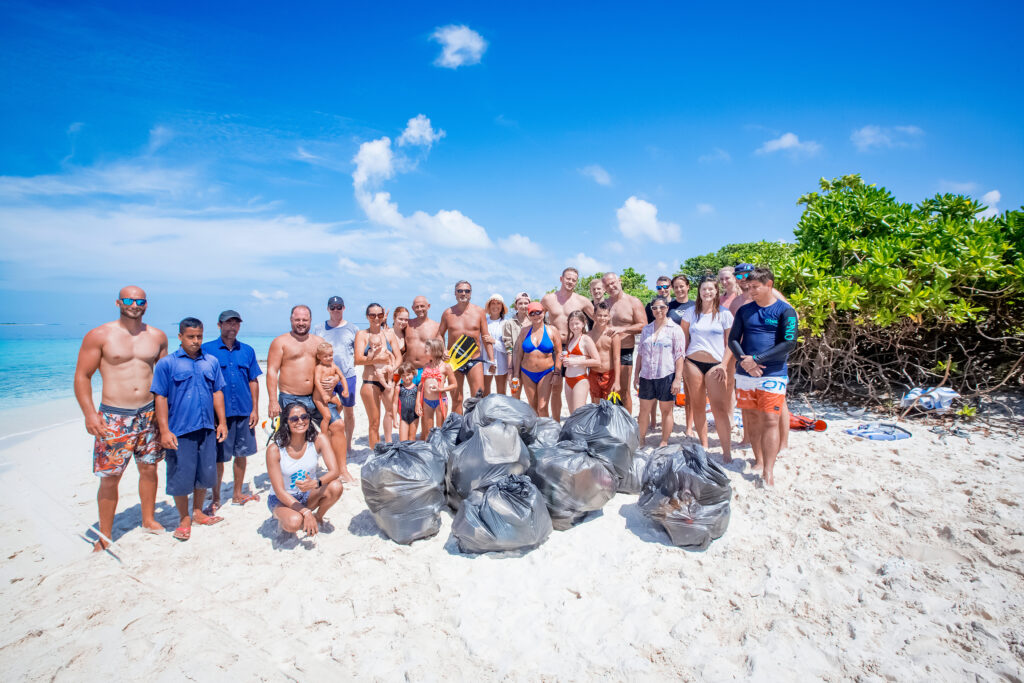
Mindful of protecting the environment, both marine and terrestrial, conceived their monthly event -Reethi Day (Beautiful Day in Dhivehi) – to celebrate the environment and help conserve it through education and activities. Interestingly, their in-house guests actively participate in coral planting, reef and beach clean-ups, tree plantation, educational presentations, guided awareness snorkels and more! Their Environmental and Marine Center serves towards marine research and plays the part of a useful educational tool to impart the importance of marine biology/ conservation.

It’s pretty safe to say that the one thing people around the globe have missed the most in the past year has been the opportunity to travel and discover new places. And it doesn’t come as a surprise that travellers are consciously opting for sustainable choices, to feel safer, and comfortable and in some sense giving back to the environment.

“We sleep better knowing that when we are wide awake, we are doing all that we can to care | contribute | conserve the world that we owe our very own existence to!”

Resort Manager – Vittoriano Ummarino

Sustainability at its core

The plush villas here demonstrate opulence right from the entrance, and what makes them more righteous is the core principles they are built upon. Constructed using a combination of soil stabilized earthen blocks and aerated cement blocks (made in-house) – both eco-friendly materials – functioning as natural heat insulators that help keep the carbon footprint as low as possible. This eco-conscious resort synonymous with sustainability – in principle and practice – boasts of six restaurants, six bars, an infinity pool, a sports complex and gym, a dive and watersports centre and a spa. Sheer seclusion and splendour are what you’ll get at this ultimate escape. With over 400 staff members, Reethi Faru has employees from diverse backgrounds and locals alike.

“A business must exist for a greater purpose than just shareholder returns – there lies a greater responsibility of respecting the land and its resources. From generating the highest capacity of solar power (1 megawatt) in the Maldives to producing our mineral water on-site – from producing fuel through biogas plant to using wastewater for irrigation – Reethi Faru Resort has implemented effective ways to conserve and protect the environment.”

-Director of Engineering – Kasi Rao Pothamchetty

At any given day 60%- 70% of the overall load of the island, during the day, is met by using solar energy, resulting in a reduction of carbon footprint significantly. The remaining electricity required is produced by state-of-the-art energy-efficient diesel generators fitted with a heat exchanger system that helps produce hot water for the entire resort, helping them avoid the use of electrical or gas boilers. Furthermore, they have 3 in-house RO Plants that desalinates seawater and converts it into freshwater.

Recycling Waste and banishing single-use plastic

Committed to reducing the impact of waste generated by their operations, Reethi Faru Resort has a dedicated waste segregation facility on its island. They strongly believe in implementing the 3R’s of waste management – Reduce, Reuse and Recycle – with a dedicated waste segregation facility on its island. All food waste generated in the resort is segregated and directed to their in-house biogas plant, which generates biogas from food waste, which is in turn used for cooking- thereby reducing the need for traditional, non-renewable cooking gas.

The resort is working towards managing and recycling plastic waste on the island, to avoid and intercept their entry into the marine ecosystems. Additionally, they have implemented the use of paper straws instead of plastic and switched from plastic bottles to glass bottles in all the guest areas. 99% of the lights around the island are LED as part of the resort’s conservation plan. The refrigerant gas used in refrigeration and air conditioning is eco-friendly which is free of CFCs. Electric bikes and carts are used to commute and baggage transfer within the island.

Accolades for its efforts

Reethi Faru Resort won the Indian Ocean’s Leading Green Resort 2020 award and was nominated for the World’s Leading Green Resort 2020 and Maldives’ Leading Green Resort category at the World Travel Awards 2020. Additionally, the resort became the proud winners in two categories – Luxury Eco Resort (Regional) and Luxury Spa Resort (Continent) – at the recently concluded World Luxury Awards.

Tourists want to get back in the air, employees want to return to business as usual, and families want a holiday. But the new normal is more ecologically aware, more responsible towards cause and effect, and more cautious. A single person or a standalone resort can start the journey towards sustainability, but a revolution takes people. And keeping that in mind Reethi Faru has been relentlessly promoting responsible tourism by creating ecotourists. With continuous direct engagement in various activities and a professional technical tour, guests at this resort get to soak in the sustainable and eco-friendly practices spread across the island.

March 29, 2021 0 comment
0 FacebookTwitterPinterestEmail
EconomyIndustry

Volvo Cars to be fully electric by 2030

by Team Conscious Carma March 28, 2021
written by Team Conscious Carma

Volvo Cars is committed to becoming a leader in the fast-growing premium electric car market and plans to become a fully electric car company by 2030. By then, the company intends to only sell fully electric cars and phase out any car in its global portfolio with an internal combustion engine, including hybrids.

The company’s transition towards becoming a fully electric car maker is part of its ambitious climate plan, which seeks to consistently reduce the life cycle carbon footprint per car through concrete action. Its decision also builds on the expectation that legislation as well as a rapid expansion of accessible high quality charging infrastructure will accelerate consumer acceptance of fully electric cars.

Volvo Cars’ move towards full electrification comes together with an increased focus on online sales and a more complete, attractive and transparent consumer offer under the name Care by Volvo. All fully electric models will be available online only.

The 2030 ambition represents an acceleration of Volvo Cars’ electrification strategy, driven by strong demand for its electrified cars in recent years and a firm conviction that the market for combustion engine cars is a shrinking one.

“To remain successful, we need profitable growth. So instead of investing in a shrinking business, we choose to invest in the future – electric and online,” said Håkan Samuelsson, chief executive. “We are fully focused on becoming a leader in the fast-growing premium electric segment.”

Volvo Cars launched its first fully electric car, the XC40 Recharge, in markets around the globe last year. The company now revealed its second fully electric car, a new model in the 40 Series.

In coming years Volvo Cars will roll out several additional electric models, with more to follow. Already by 2025, it aims for 50 per cent of its global sales to consist of fully electric cars, with the rest hybrids. By 2030, every car it sells should be fully electric.

“There is no long-term future for cars with an internal combustion engine,” said Henrik Green, chief technology officer. “We are firmly committed to becoming an electric-only car maker and the transition should happen by 2030. It will allow us to meet the expectations of our customers and be a part of the solution when it comes to fighting climate change.”

Volvo Car Group in 2020

For the 2020 financial year, Volvo Car Group recorded an operating profit of 8.5 BSEK (14.3 BSEK in 2019). Revenue over the period amounted to 262.8 BSEK (274.1 BSEK). For the full year of 2020, global sales reached 661,713 cars (705,452), a decline of 6.2 per cent compared to 2019.

About Volvo Car Group

Volvo Cars was founded in 1927. Today, it is one of the most well-known and respected car brands in the world with sales of 661,713 cars in 2020 in about 100 countries. Volvo Cars has been under the ownership of the Zhejiang Geely Holding since 2010. As of December 2020, Volvo Cars employed approximately 40,000 (41,500) full-time employees. 

Under its new company purpose, Volvo Cars aims to provide customers with the Freedom to Move in a personal, sustainable and safe way. This purpose is reflected into a number of business ambitions: for example, by the middle of this decade it aims for half of its global sales to be fully electric cars and to establish five million direct consumer relationships. Volvo Cars is also committed to an ongoing reduction of its carbon footprint, with the ambition to be a climate-neutral company by 2040.

Keywords:

Sustainability (for your reference Ekram)

Descriptions and facts in this press material relate to Volvo Cars’ international car range. Described features might be optional. Vehicle specifications may vary from one country to another and may be altered without prior notification.

To view the full copyright information click here

Source: Volvocars.com

Note: The content has been edited for style and length

March 28, 2021 0 comment
0 FacebookTwitterPinterestEmail
arani productts
BeautyProducts

Arani Ecosteps unveils plastic-free personal and home care products

by Team Conscious Carma March 27, 2021
written by Team Conscious Carma

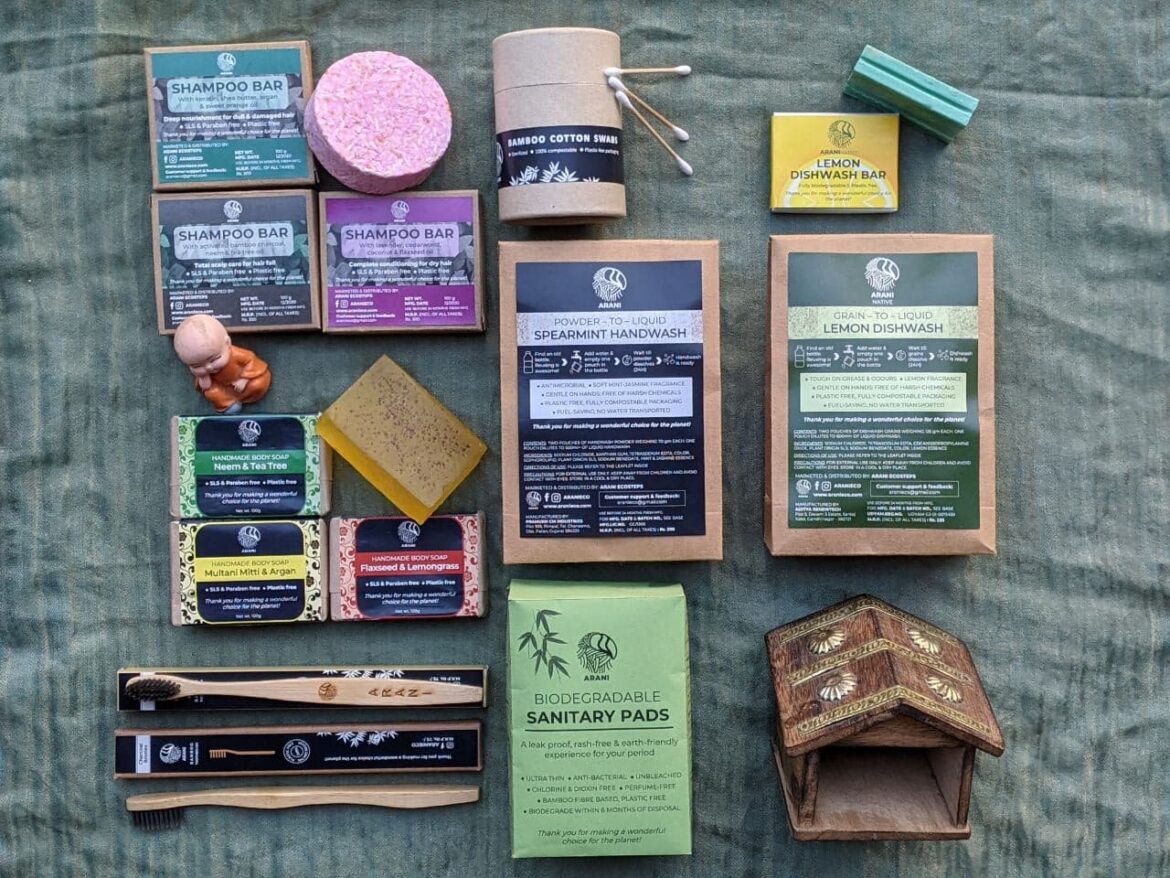
A Sanskrit word for the flint used to kindle a fire, ‘Arani’ is a brand of plastic-free personal and home care products aimed at providing comprehensive and affordable alternatives to make a household as plastic-free as possible. The initiative is focused on fighting the growing plastic waste problem by creating novel formulations of daily use essentials, so that they can be packaged 100% without plastic. 

Nearly 50% of the single use plastics that end up in our landfills and oceans come from the packaging of consumer goods. Launched in December 2020, Arani Ecosteps has a range of 9 personal and home care products, 2 of which are proprietary formulations that require consumers to use old bottles at home, add water, and dissolve the pre-mixes they provide (in fully compostable pouches). The packaging can either be disposed with wet waste or be buried in a plant/garden and will turn to compost within 6 months. 

Also, there are 5+ formulations under development to cut out plastic from daily use personal and home care products, which would be launched over the coming months. In just 3 months, Arani’s consumers have saved nearly 9,000 pieces of single use plastic including 500+ bottles of various sizes. This amounts to 40+ kgs of single-use plastic. Small, yes, but it is a start! 

“Plastic is so pervasive because it is durable, cheap and versatile – making it responsible for many critical advancements. But as a single-use material, indiscriminate use over the past few decades has created islands of garbage in our oceans and on our land. More than 50% of this waste comes from packaging consumer goods, which means that collective conviction and action can go a long way in fighting this crisis! At Arani, we keep spreading awareness while making affordable and plastic-free alternatives available to our consumers, hoping to do our bit in a massive undertaking”, says the founder Gauri Gupta, who has worked closely across the healthcare industry verticals in her 4 years career as a private equity and venture capital investor, before launching Arani Ecosteps. 

Availability : www.aranieco.com

March 27, 2021 0 comment
0 FacebookTwitterPinterestEmail
Spirituality

Woman is the embodiment of shakti, pure energy

by Team Conscious Carma March 26, 2021
written by Team Conscious Carma

A woman is the embodiment of shakti, pure energy. It is this shakti from which the entire Creation derives its strength and stimulus. The magnitude of this energy is beyond measure. The entire Creation manifested from the womb of Mata Adi Shakti. A woman through her perseverance can achieve the infinite as was exhibited by Parvati when she won Shiva as her husband.

Our ancients acknowledged this and hence in the Vedic times, women were given the highest regard. There is a Vedic saying, ‘Where women are worshipped, there the gods dwell.’ In fact, Manusmriti explains:

“A woman must be honoured and adorned by their fathers, brothers, husbands, and brothers‑in‑law, who desire their own welfare. Where women are honoured, there the gods are pleased; but where they are not honoured, no sacred rite yields rewards. The houses on which female relations, not being duly honoured, pronounce a curse, perish completely as if destroyed by magic.”

The fate of Ravana was ordained when he dared to disgrace a woman. Ravana met Vedavati at her hermitage, where she had been performing penance with the intention of winning Lord Vishnu as her husband. He proposed to her and but being rejected, he attempted to molest her by pulling her hair. Incensed by the insult, Vedavati cut her hair and entered the blazing fire promising that she would be reborn to aid the destruction of Ravana. It was she who was born again as Sita, and was the moving cause for Ravana’s death, though Rama was the agent.

The famous statement, ‘behind every successful man lies a woman’ only goes on to emphasize the Vedic thought of evolution through the union of Shiv-Shakti. Jesus received his gyaan from Mother Mary. It was Jijabai who nurtured the heroic Shivaji with values to fight a battle of righteousness. Kalidasa became the renowned scholar only after rejection from his learned wife and subsequent sadhana of Kali. It was the support of Hillary that helped Bill Clinton to keep his seat despite public outrage. Time and again women have transcended the human limitations to become the epitome of love and detachment – Mirabai, courage and determination – Lakshmibai and chastity and loyalty- Sita. As Sati they have exhibited extraordinary sacrifice, as Savitri, they have outwitted death.

However, history is also proof enough that wherever there has been discord between Shiv and Shakti, it has bred devolution. It was only when Sita overrode the Lakshman Rekha, that Ravana abducted her. Sati had to immolate herself because she did not pay heed to Shiva’s advice to not go for the yajna. It was Duryodhan’s disregard for Gandhari’s instruction to be completely unclad that paved the way for his defeat.

In today’s heyday of negativity, the discord between the two forces has taken the form of greater evils. Sexual harassment, female infanticide, gender bias, inequality of opportunity, dowry, oppression have impregnated modern society. As goes the saying, ‘what you sow, so shall you reap’ – there is a draught of love, forgiveness and sacrifice and the world today is contaminated with cowardice, treachery and greed.

It is our responsibility as a society to channelize this shakti that we are blessed with in the form of a woman in a conducive manner for the larger good. Only then can we harness the physical strength of the likes of PT Usha and Bachendri Pal, or the creativity of Lata Mangeshkar and Amrita Pritam; the boundless love of Mother Teresa or the power and courage exuded by Kiran Bedi and Sarojini Naidu.

Yogi Ashwini

Dhyan Aashram

March 26, 2021 0 comment
0 FacebookTwitterPinterestEmail
paper industry
EconomyIndustry

Paper Industry: Environment Friendly or Not

by Team Conscious Carma March 25, 2021
written by Team Conscious Carma

How environment-friendly is the paper industry? Are we clearing forests to produce paper and thus degrading the environment? There are a lot of questions when it comes to paper being environmentally friendly or not.

Conscious Carma, in conversation with Rohit Pandit, Secretary-General, Indian Paper Manufacturers Association (IPMA) tries to clear some myths surrounding Paper and brings forth various initiatives by industry bodies as well Paper mills and the government to make this industrial process as environment-friendly as possible.

Paper industry is not eco-friendly. Can you please comment on this?

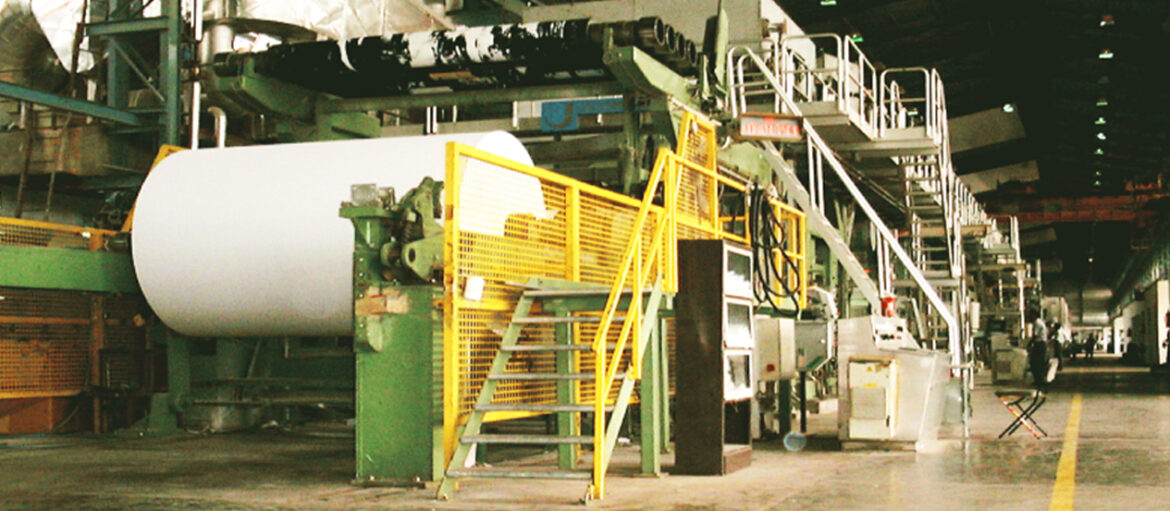
Nothing could be farther from the truth. In fact, few industries in India can match the sustainability that paper offers. It is fully biodegradable and can be recycled up to 6-7 times. Moreover, it is made from resources which are renewable and can be easily regenerated. Paper industry is not only conserving the environment but also regenerating natural resources. Two significant global pollution problems being faced are the disposal of single-use plastic and e-waste. Paper provides an eco-friendly alternate in both areas. Paper industry recycles the post-consumer waste paper that is generated. The industry recycles agricultural waste which otherwise would have been burnt in the fields. Paper industry has therefore struck a fine balance between growth and sustainability, unmatched by many other industries.

Paper manufacturing requires a lot of water. What is the Indian paper industry doing to reduce water usage? Have there been any innovations in methods or techniques to reduce water consumption?

On the waterfront, a few years ago, the paper industry used to consume 200 cubic metres of water to produce a tonne of paper. Now, the integrated mills have reduced that to 50 cubic metres. Efforts are on to bring it further down to 35-40 cubic metres by inducting a whole range of water conservation technologies.

Paper manufacturing process leads to a lot of environmental pollution. What’s your take on it?

Paper manufacturing scenario in India is witnessing a significant shift towards sustainability. In the last few decades, the large paper mills have gone on an overdrive to improve efficiencies, increase productivity and reduce resource intensity. The industry has been working on new practices including research & development towards energy efficiency, environment preservation and better overall process technology, etc. The industry has managed to bring down its specific energy consumption by about 20% in the last five years. Integrated paper mills in India now generate 50-60% of the power they use by utilising the black liquor from the pulping process. In the first two cycles of PAT (Perform Achieve Trade) scheme of the Government, the paper industry significantly over-achieved the mandated stiff targets for energy saving. The environmental standards mandated by the government have become stringent over time and all members of the Indian Paper Manufacturers Association (IPMA) are environment compliant.

How much Paper industry contribute to the National GDP, Export and employment?

The Indian Pulp & Paper Industry provides direct employment to 5 lakh persons, and indirectly to around 15 lakhs, and has an annual turnover of over INR 70,000 crores (domestic market size of INR 80,000 crores). In 2019-20, exports of paper were over INR 6,800 crores.

How has the paper industry evolved over the years? What major changes have come in, which are environment friendly?

As opposed to the common perception, the paper industry in India is not cutting forests. Over the last two decades, the industry has been encouraging the growth of trees by the farmers, like other crops, especially on degraded lands for sourcing wood. In fact, the paper industry grows more trees than it harvests, and is therefore wood-positive. Not only that, growing trees by paper industry is leading to the absorption of carbon dioxide and helping the cause of mitigating climate change. The agroforestry model adopted by the Indian Paper Industry is one-of-its-kind in the world.

Three alternate raw materials are used for manufacturing paper in India. These are wood, agro residue (wheat straw, bagasse) and recycled fibre/wastepaper. Paper manufactured from wood is about 25% of the total paper manufactured. Over 90% of the wood used by the paper industry is procured from agro / farm forestry. This not only helps on the environmental front significantly but also has supplemented the incomes of farmers.

What are the steps required to make the Indian Paper Industry environment friendly? What role IPMA is playing in the same?

IPMA, along with CII, has been engaged in a project titled “Making Indian Paper Industry World Class” which is running for more than 10 years and is playing a key role in upgrading practices and processes at Indian paper mills. The industry is increasingly adopting the circular economy model and focus not only on Reduce, Reuse, Recycle but also on Redesign, Remanufacture and Refurbish.

What are the growth rate of the Paper Industry and the factors contributing to its growth?

According to IPMA estimates, paper consumption in India is growing at 6-7% per annum (pre-COVID). The per capita consumption of paper in India is still very low at 14 kgs per annum, as compared to the global average of 57 kgs (in developed countries, it is +200 kgs). The key drivers for growth include a greater emphasis on education and literacy by the government coupled with growth in organised retail and demand for better quality paper in writing and printing segment. Demand for better quality packaging of FMCG products marketed through organised retail, booming e-commerce, rising healthcare spends, over-the-counter medicines and increasing preference for ready-to-eat foods are the key demand drivers for paperboard/packaging paper.

How does Indian Paper industry compare vis-à-vis Global Paper Industry in terms of environmentally friendly practices?

Indian Paper Industry, especially the integrated paper mills, compare favourably with global peers. Economies of scale play a key role in benchmarking practices to global levels. Over the last few years, certain key players have invested handsomely in capacity creation and technology up-gradation to achieve size and scale. The industry appreciates that it needs to take significant leaps in technological up-gradation, process-optimisation and introduction of better practices to minimise the usage of energy and water.

Rohit Pandit,
Secretary-General,
Indian Paper Manufacturers Association (IPMA)
March 25, 2021 0 comment
0 FacebookTwitterPinterestEmail
EconomyIndustry

Net-zero emissions in India’s energy system by 2050 technologically possible but highly challenging

by Team Conscious Carma March 24, 2021
written by Team Conscious Carma

A recent modelling report jointly undertaken by TERI and Shell maps out an illustrative technological pathway for India’s domestic energy system to move towards net-zero emissions by 2050, while delivering sustainable economic growth.

Energy is at the heart of development and India has high aspirations as it strives to create a better life for its population of almost 1.4 billion people. But how can India accomplish this and make progress towards reaching a net-zero emissions economy by 2050 in support of broader well-being? To reach a net-zero emissions energy system by 2050, India needs a suitable policy and innovation driven context to deploy clean energy technologies on a massive scale. It requires more and faster deployment of large-scale solar, wind and hydro power to enable greater electrification across the country. It also requires the development of new fuels, such as liquid biofuels and biogas, as well as hydrogen produced from electrolysis. Energy efficiency must improve significantly, and carbon removals (from technology and nature-based solutions) will have a critical role in moving towards zero emissions. These are the key insights from a new scenario sketch by TERI and Shell, that has assessed India’s technology and policy options if it were to accelerate its transition to a net zero emissions energy system by 2050.

Today, India has opportunities to chart out its own unique development pathway rather than take up fossil-fuel driven paths previously pursued by developed economies. At the same time, it will be important for India to ensure that its energy pathway is socially inclusive, economically viable and ensures long term sustainability of resources.

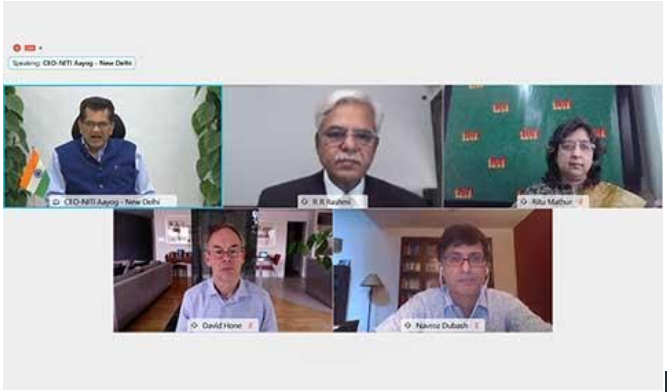
Speaking at the launch of the report, India: Transforming to a net-zero emissions energy system, Mr Amitabh Kant, CEO of the NITI Aayog said, “I’m really pleased to participate in the launch of this very important study on transforming India to a Net Zero emissions energy system which I believe is a step towards pursuing the goal of achieving cleaner energy transition and spearheading discussions amongst policy makers, knowledge partners and think tanks. With its geographic advantage and availability of vast potential, not only can India materialize its renewable potential, it can also become a global leader to showcase its green energy pathways. This is the right time for India to think in this direction of net-zero emissions by 2050”

Speaking on the occasion, Nitin Prasad, Chairman, Shell Companies in India, said “Building on many years of collaboration in the work related to the Indian energy sector and its transition, The Energy and Resources Institute (TERI) and Shell have partnered to present a Scenario Sketch for India outlining the options and choices towards developing a technically possible though challenging net-zero energy system for India. The challenge actually provides an opportunity for India to embed sustainability principles while achieving its developmental priorities – and minimise the risk of stranded investment in high emitting infrastructure. This approach has important implications in accelerating economic growth, local manufacturing, job creation and energy security.”

“The energy sector alone does not have enough choices with the technologies available today to achieve net-zero by 2050. The industry sector, in particular, lacks technological solutions. Additional options for sequestration through nature-based solutions and CCS/CCUS would need to be adopted if net-zero were to be achieved by 2050” added Dr Ritu Mathur, Director, Integrated Assessments & Modelling at The Energy & Resources Institute (TERI).

Given announcements made by a number of countries about their net zero emission targets, this report assumes significance as it is one of the first assessments of the challenges that India would face if India were to move towards such a pathway. India: Transforming to a net-zero emissions energy system indicates that the transformations needed over the next thirty years for India, in pursuit of this goal by mid-century would consist of the following areas of action:

Accelerate clean technologies

  • Grow the power sector by a factor of more than four in 30 years, dominated by renewables (around 90%)
  • Target 13% hydrogen in final energy, including as a fuel for industry and transport
  • Transform bioenergy, with liquid biofuels surpassing petroleum products by 2040 to fuel industry and transport, including hard-to-abate sectors such as aviation

Support energy-efficient and lower-carbon choices

  • Invest in processes, technologies and end uses to improve energy intensity per unit of GDP by almost 60% by 2050, a rate of improvement nearly twice historical levels
  • Adopt economic mechanisms, such as carbon trading and/or pricing to facilitate reallocation of capital and resources to support commercialization of new fuels and technologies

Remove carbon emissions

Resort to carbon sequestration to an extent of around 1.3 Gt CO2, using nature-based solutions and /or carbon capture and storage (CCS)to achieve net zero emissions by 2050

The report adds that success in achieving the net zero emissions goal will depend on clear and coherent policies at the national and sub national level. It suggests that the economic and social impact of the transition will need to be understood and managed, and a well-designed policy framework will be required to contain the overall macroeconomic costs; address transition impacts and ensure more resilient and environmentally just outcomes for the most vulnerable and underserved communities.

About TERI

The Energy and Resources Institute (TERI) is an independent, multi-dimensional organisation, with capabilities in research, policy, consultancy and implementation. It has pioneered conversations and action in the energy, environment, climate change, and sustainability space for over four decades.

About Shell

Shell is one of the most diversified international energy company in India with over 9500 employees and presence across upstream, integrated gas, downstream, renewable energy, and deep capabilities in R&D, digitalization, and business operations. 

Source : TERI

March 24, 2021 0 comment
0 FacebookTwitterPinterestEmail
EconomyIndustry

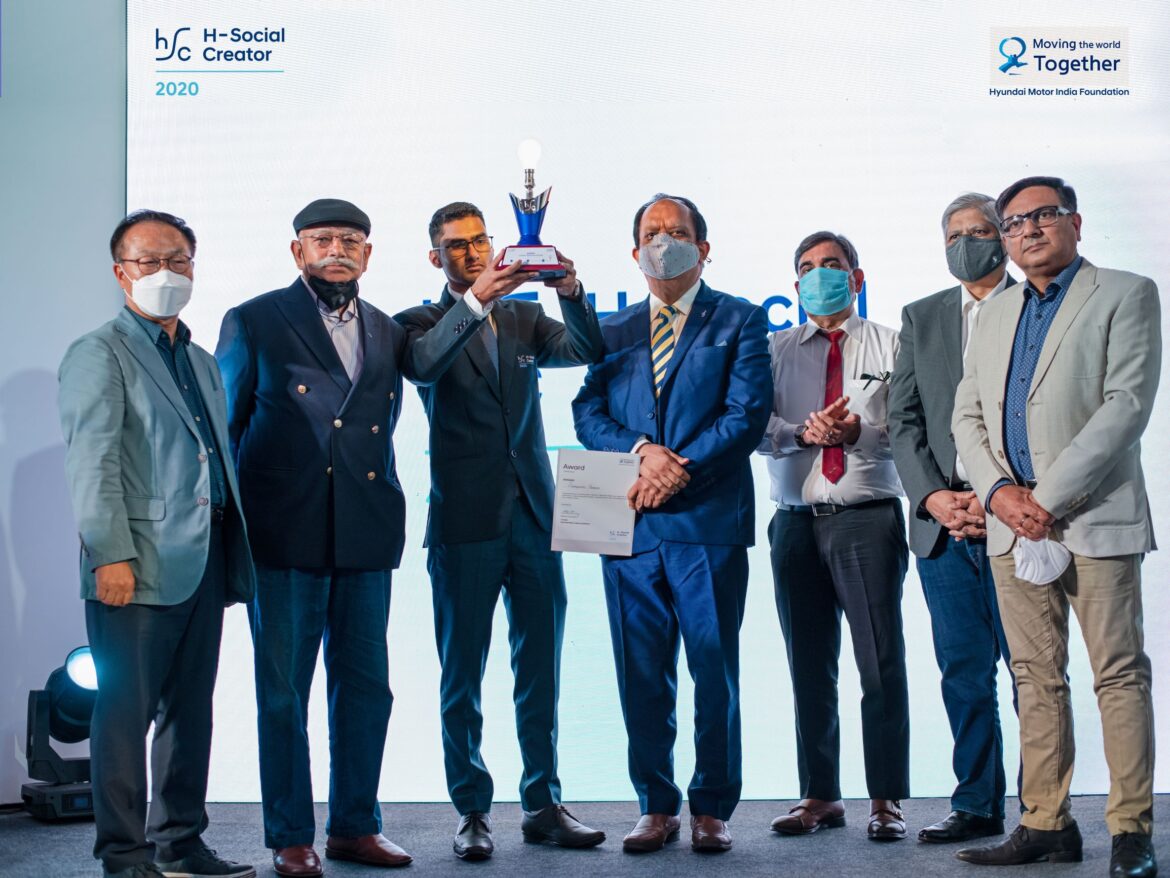
Hyundai Motor India Foundation Announces the winner of H-Social Creator 2020

by Team Conscious Carma March 23, 2021
written by Team Conscious Carma
  • Mr Bhagwati Prasad was declared as the winner of HSC 2020.
  • Rs. 15 Lakh Seed Capital to be invested in his idea –‘Accident Alert System for Blind Turns’
  • HSC 2020 generated over 400 innovative ideas from 200 colleges

Hyundai Motor India Foundation (HMIF) the CSR arm of Hyundai Motor India Ltd, announced the winner of the second edition of the globally renowned H-Social Creator. The ‘H-Social Creator’ is a social innovation program instituted to felicitate young minds who can deliver innovative solutions in areas of Road Safety, Environment, Clean India, and Health.

Winning Idea – Mr. Bhagwati Prasad won the H-Social Creator of the Year 2020 Award for his idea –‘Accident Alert System for Blind Turns’. His idea involves capturing data at blind turns and transmitting it on a real time basis to the drivers to avoid accidents. In addition, the display boards will give an indication to the drivers about the incoming vehicles.

Speaking at the Grand Finale of H Social Creator 2020, Mr. S.S.Kim, MD & CEO, HMIL said, “Embracing the vision ‘Progress for Humanity’, we are working towards creating an amicable ecosystem to realise the dreams of mankind. With the 2nd edition of the H-Social Creator program, Hyundai Motor India Foundation aims to engage the youth of India and future leaders to ideate, develop, and implement practical solutions to fathom social change.”

Mr. Kim further added: “We congratulate the winner, Mr. Bhagwati Prasad, and all finalists of H Social Creator 2020 for giving ideas to bring social change. The steadfast spirit of all participants and the zeal to unleash their full potential to develop ground-breaking ideas will further craft a better world.”

All 11 Finalists at the Grand Finale of H Social Creator (HSC) 2020 along with their esteemed mentors in New Delhi

HMIF created the ‘H-Social Creator’ as a platform to encourage the youth to find solutions to problems and drive social transformation. The second edition of H-Social Creator received over 520 registrations virtually from 200 educational and technical institutions. 

Out of the 401 entries received, 135 were from the road safety domain, 116 were related to environment, 101 were for the Health category, and the remaining 49 ideas were for a Cleaner India. Furthermore, a dedicated call centre supported all the participants to address their queries.

The eminent Jury members and Mentors, handpicked for H Social Creator 2020, have years of experience and an expertise in Road Safety, Healthcare, Environment, Technology, and Sustainability. 

The shortlisting and screening was done on the basis of complexity and application of the ideas. The subject matter experts selected the eleven finalists based on the criteria of innovation, sustainability, and more importantly the social impact. All the finalists were mentored by industry experts to refine and hone their final pitches. To culminate and choose the best social idea out of eleven big ideas, an independent panel of distinguished jury selected the final winner. 

About H-Social Creator

H-Social Creator’, a social innovator CSR program for Indian youth. The ‘H-Social Creator Program’ was first instituted by Hyundai Motor Company in South Korea in 2015.H-Social Creator is industry’s first youth contact program to build social innovators and future thinkers. The platform acknowledges India’s H-Social Creator – a Graduate or a Post Graduate student who develops a novel idea based on any of these three categories namely Road Safety, Environment, Clean India, Health & Hygiene.

March 23, 2021 0 comment
0 FacebookTwitterPinterestEmail
Economy

PM Modi launches Catch the rain campaign on the occasion of World Water Day; Calls for water security & effective water management

by Team Conscious Carma March 23, 2021
written by Team Conscious Carma

Prime Minister Narendra Modi has said that India’s development and self-reliance is dependent on water security and water connectivity. 

Launching Jal Shakti Abhiyan: Catch the Rain campaign virtually on the occasion of World Water Day, Mr Modi said water security and water management is crucial for the future of coming generations. 

He noted that the challenge of the water crisis is increasing equally with India’s development. 

Prime Minister said it is the responsibility of the present generation of the country to fulfil its responsibility for the generations to come. He asserted that the government has made water governance a priority in its policies and decisions. 

In the last 6 years, many steps have been taken in this direction. He talked about Pradhan Mantri Krishi Sinchai Yojna, water campaign to every farm – Har Khet ko Paani, ‘Per Drop More Crop’ campaign and Namami Gange Mission, Jal Jeevan Mission and Atal Bhujal Yojana. Mr Modi said work is being undertaken rapidly on all these schemes.

Prime Minister noted that the awareness around Jal Shakti Mission is increasing. He expressed happiness that villagers are trying to save rainwater and educate others to promote efficient use of water. 

Mr Modi said water is more precious than money but there has been a lack in preserving water resources.

Mr Modi emphasised that if India manages rainwater better, it will reduce the country’s dependence on groundwater. 

Therefore, running campaigns like ‘Catch the Rain’, and being successful in it are very important. He said losses during droughts can be controlled if more water is saved during rains.
 
Interacting with Santosh, a sarpanch from Pune, Maharashtra, Mr Modi stressed that sugarcane can grow through drip irrigation and sprinkles too. 

He said it will not only save water resources but also increase profits. Interacting with Vidya Ben from Gujarat, the Prime Minister said Aadiwasi people have always put their faith in water and treated it as a stream of development. 

He added that if country learns this faith from Aadiwasi people, water problems will be solved.

On the occasion, Minister of Jal Shakti and the Chief Ministers of Madhya Pradesh and Uttar Pradesh signed the historic Memorandum of Agreement to implement the Ken Betwa Link Project.

This is the first project of the National Perspective Plan for interlinking of rivers. This project involves transfer of water from the Ken to the Betwa River through the construction of Daudhan Dam and a canal linking the two rivers. 

It will provide annual irrigation of 10.62 lakh hactare, drinking water supply to about 62 lakh people and also generate 103 Mega Watt of hydropower. 

The Project will be of immense benefit to the water starved region of Bundelkhand, especially to the districts of Panna, Tikamgarh, Chhatarpur, Sagar, Damoh, Datia, Vidisha, Shivpuri and Raisen of Madhya Pradesh and Banda, Mahoba, Jhansi and Lalitpur of Uttar Pradesh.

To check out more National Economy news, Click Here

March 23, 2021 0 comment
0 FacebookTwitterPinterestEmail
CommunityInitiatives

India Reckons a Housewife ‘s Worth

by Team Conscious Carma March 22, 2021
written by Team Conscious Carma

A historic statement by the Supreme Court of India in Jan 2021 is worth applauding – Value of homemakers work same as hubby’s at office.

The Supreme Court said that the conception that housewives do not work or do not add economic value to the household is “problematic” and needs to be overcome. The Court was dealing with a grant of compensation in a motor accident case, where the Delhi High Court had reduced the earning of the deceased wife as she was a homemaker.

A three-judge bench headed by Justice NV Ramana felt that fixing an economic value to the hard work and labour by homemakers is difficult but nevertheless significant. The bench, also comprising Justices S Abdul Nazeer and Surya Kant unanimously agreed to raise the compensation awarded to the motor accident victims to Rs 33.2 lakh instead of Rs 22 lakh awarded by the High Court.

The Court said that a homemaker’s notional income must be determined by Courts keeping in mind the number of women engaged in this activity, and the value of their labour, service and sacrifices. Their activities contribute in a real way to the economic condition of the family and the economy of the nation and ought to be recognized in a reflection of our changing attitudes and mindsets as well as towards achieving the constitutional vision of social equality and dignity of all individuals.

March 22, 2021 0 comment
0 FacebookTwitterPinterestEmail
Newer Posts
Older Posts

Recent Posts

  • India–UK Free Trade Agreement Opens Global Growth Opportunities for 3R ZeroWaste’s Circular Economy Solutions
  • Plastic Free July: Why True Sustainability Goes Beyond Swapping Plastic
  • From the Editor’s Desk: When Greed Takes Over Conscience
  • Beyond the Pose: Why Your Yoga Mat Needs a Sustainable Upgrade
  • Best Sustainable Father’s Day Gifts: Conscious Carma’s Exclusive Picks

Recent Comments

  • Team Conscious Carma on Label Shivika Agarwal – where craft meets sustainability
  • Cocomeister.jp on Label Shivika Agarwal – where craft meets sustainability
  • Team Conscious Carma on Equitable City Designs To Fight Climate Change
  • UN report calls for repurposing of USD 470 billion of agricultural support that distorts prices and steer us away from environment and social goals | Consciouscarma on UNEP & ICMR collaborate to boost understanding of environmental dimensions of antimicrobial resistance in India
  • Wild Earth : Natural body products | Consciouscarma on Sat.Suma : the true essence of flowers in your everyday skincare needs

Keep in touch

Facebook Twitter Instagram Youtube

Recent Posts

  • India–UK Free Trade Agreement Opens Global Growth Opportunities for 3R ZeroWaste’s Circular Economy Solutions

  • Plastic Free July: Why True Sustainability Goes Beyond Swapping Plastic

  • From the Editor’s Desk: When Greed Takes Over Conscience

  • Beyond the Pose: Why Your Yoga Mat Needs a Sustainable Upgrade

  • Best Sustainable Father’s Day Gifts: Conscious Carma’s Exclusive Picks

  • How Sacred Sound is Reshaping the Future of Holistic Health?

Categories

  • Community (38)
    • Campaigns (3)
  • CSR (4)
  • Economy (82)
    • Global (24)
    • Industry (42)
    • Innovations (4)
    • National (2)
  • Environment (48)
  • Expert Corner (48)
    • Authored Articles (47)
  • Featured (5)
    • Partners (1)
  • Global News (2)
  • Initiatives (31)
    • CSR (3)
    • Events (6)
  • Inspiration (22)
  • Lifestyle (9)
  • Media Coverage (6)
  • Press Releases (4,358)
  • Products (126)
    • Accessories (27)
    • Apparel (32)
    • Beauty (26)
    • Food (4)
    • Gifting (3)
    • Home Décor (15)
    • Skin-Care (14)
  • Reports (3)
  • Spirituality (10)
  • Sustainability (49)
  • Sustainable Startup Stories (28)
  • Travel (19)
  • Uncategorized (2)
  • Wellness (33)
    • Home Cleaners (3)

Archives

  • August 2026 (1)
  • July 2026 (1)
  • June 2026 (6)
  • October 2024 (1)
  • September 2024 (1)
  • July 2024 (2)
  • June 2024 (2)
  • May 2024 (1)
  • November 2023 (330)
  • October 2023 (554)
  • September 2023 (631)
  • August 2023 (718)
  • July 2023 (723)
  • June 2023 (710)
  • May 2023 (608)
  • April 2023 (114)
  • March 2023 (7)
  • February 2023 (3)
  • January 2023 (11)
  • December 2022 (18)
  • November 2022 (1)
  • August 2022 (6)
  • July 2022 (8)
  • June 2022 (24)
  • May 2022 (11)
  • April 2022 (19)
  • March 2022 (11)
  • February 2022 (11)
  • January 2022 (14)
  • December 2021 (10)
  • November 2021 (4)
  • October 2021 (14)
  • September 2021 (22)
  • August 2021 (12)
  • July 2021 (17)
  • June 2021 (17)
  • May 2021 (16)
  • April 2021 (22)
  • March 2021 (33)
  • February 2021 (16)
  • January 2021 (22)
  • December 2020 (10)
  • Facebook
  • Twitter
  • Instagram
  • Pinterest
  • Linkedin
  • Youtube

@2020 - All Right Reserved. Designed and Developed by Bizopser Technologies

Consciouscarma
  • Home
  • About Us
  • Products
  • Community
    • Campaigns
    • Inspiration
    • Initiatives
    • CSR
  • Features
    • Sustainable Startup Stories
    • Travel
    • Lifestyle
    • Partners
  • Economy
    • Industry
    • Innovations
    • National
    • Global
  • Environment
  • Expert Corner
    • Authored Articles
    • Reports
  • Magazine
  • Contact