Consciouscarma
  • Home
  • About Us
  • Products
  • Community
    • Campaigns
    • Inspiration
    • Initiatives
    • CSR
  • Features
    • Sustainable Startup Stories
    • Travel
    • Lifestyle
    • Partners
  • Economy
    • Industry
    • Innovations
    • National
    • Global
  • Environment
  • Expert Corner
    • Authored Articles
    • Reports
  • Magazine
  • Contact
Category:

Economy

The countries, the governments, the non-profit organisations are all working towards changing the world for better, protecting the environment, shifting to renewable resources, inventing new technologies, innovating new ways of manufacturing, producing, distributing, packaging and living etc to reduce the carbon footprint
EconomyIndustry

Net-zero emissions in India’s energy system by 2050 technologically possible but highly challenging

by Team Conscious Carma March 24, 2021
written by Team Conscious Carma

A recent modelling report jointly undertaken by TERI and Shell maps out an illustrative technological pathway for India’s domestic energy system to move towards net-zero emissions by 2050, while delivering sustainable economic growth.

Energy is at the heart of development and India has high aspirations as it strives to create a better life for its population of almost 1.4 billion people. But how can India accomplish this and make progress towards reaching a net-zero emissions economy by 2050 in support of broader well-being? To reach a net-zero emissions energy system by 2050, India needs a suitable policy and innovation driven context to deploy clean energy technologies on a massive scale. It requires more and faster deployment of large-scale solar, wind and hydro power to enable greater electrification across the country. It also requires the development of new fuels, such as liquid biofuels and biogas, as well as hydrogen produced from electrolysis. Energy efficiency must improve significantly, and carbon removals (from technology and nature-based solutions) will have a critical role in moving towards zero emissions. These are the key insights from a new scenario sketch by TERI and Shell, that has assessed India’s technology and policy options if it were to accelerate its transition to a net zero emissions energy system by 2050.

Today, India has opportunities to chart out its own unique development pathway rather than take up fossil-fuel driven paths previously pursued by developed economies. At the same time, it will be important for India to ensure that its energy pathway is socially inclusive, economically viable and ensures long term sustainability of resources.

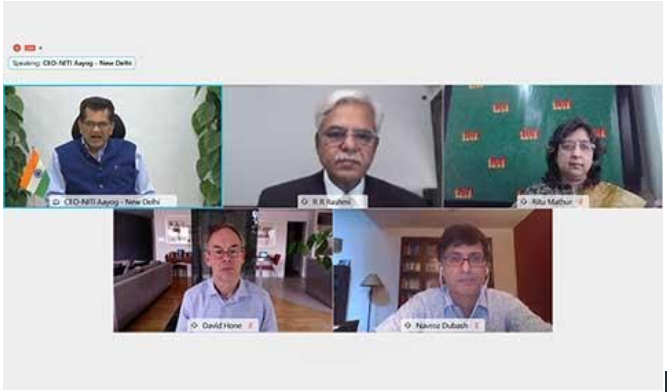
Speaking at the launch of the report, India: Transforming to a net-zero emissions energy system, Mr Amitabh Kant, CEO of the NITI Aayog said, “I’m really pleased to participate in the launch of this very important study on transforming India to a Net Zero emissions energy system which I believe is a step towards pursuing the goal of achieving cleaner energy transition and spearheading discussions amongst policy makers, knowledge partners and think tanks. With its geographic advantage and availability of vast potential, not only can India materialize its renewable potential, it can also become a global leader to showcase its green energy pathways. This is the right time for India to think in this direction of net-zero emissions by 2050”

Speaking on the occasion, Nitin Prasad, Chairman, Shell Companies in India, said “Building on many years of collaboration in the work related to the Indian energy sector and its transition, The Energy and Resources Institute (TERI) and Shell have partnered to present a Scenario Sketch for India outlining the options and choices towards developing a technically possible though challenging net-zero energy system for India. The challenge actually provides an opportunity for India to embed sustainability principles while achieving its developmental priorities – and minimise the risk of stranded investment in high emitting infrastructure. This approach has important implications in accelerating economic growth, local manufacturing, job creation and energy security.”

“The energy sector alone does not have enough choices with the technologies available today to achieve net-zero by 2050. The industry sector, in particular, lacks technological solutions. Additional options for sequestration through nature-based solutions and CCS/CCUS would need to be adopted if net-zero were to be achieved by 2050” added Dr Ritu Mathur, Director, Integrated Assessments & Modelling at The Energy & Resources Institute (TERI).

Given announcements made by a number of countries about their net zero emission targets, this report assumes significance as it is one of the first assessments of the challenges that India would face if India were to move towards such a pathway. India: Transforming to a net-zero emissions energy system indicates that the transformations needed over the next thirty years for India, in pursuit of this goal by mid-century would consist of the following areas of action:

Accelerate clean technologies

  • Grow the power sector by a factor of more than four in 30 years, dominated by renewables (around 90%)
  • Target 13% hydrogen in final energy, including as a fuel for industry and transport
  • Transform bioenergy, with liquid biofuels surpassing petroleum products by 2040 to fuel industry and transport, including hard-to-abate sectors such as aviation

Support energy-efficient and lower-carbon choices

  • Invest in processes, technologies and end uses to improve energy intensity per unit of GDP by almost 60% by 2050, a rate of improvement nearly twice historical levels
  • Adopt economic mechanisms, such as carbon trading and/or pricing to facilitate reallocation of capital and resources to support commercialization of new fuels and technologies

Remove carbon emissions

Resort to carbon sequestration to an extent of around 1.3 Gt CO2, using nature-based solutions and /or carbon capture and storage (CCS)to achieve net zero emissions by 2050

The report adds that success in achieving the net zero emissions goal will depend on clear and coherent policies at the national and sub national level. It suggests that the economic and social impact of the transition will need to be understood and managed, and a well-designed policy framework will be required to contain the overall macroeconomic costs; address transition impacts and ensure more resilient and environmentally just outcomes for the most vulnerable and underserved communities.

About TERI

The Energy and Resources Institute (TERI) is an independent, multi-dimensional organisation, with capabilities in research, policy, consultancy and implementation. It has pioneered conversations and action in the energy, environment, climate change, and sustainability space for over four decades.

About Shell

Shell is one of the most diversified international energy company in India with over 9500 employees and presence across upstream, integrated gas, downstream, renewable energy, and deep capabilities in R&D, digitalization, and business operations. 

Source : TERI
March 24, 2021 0 comment
0 FacebookTwitterPinterestEmail
EconomyIndustry

Hyundai Motor India Foundation Announces the winner of H-Social Creator 2020

by Team Conscious Carma March 23, 2021
written by Team Conscious Carma
  • Mr Bhagwati Prasad was declared as the winner of HSC 2020.
  • Rs. 15 Lakh Seed Capital to be invested in his idea –‘Accident Alert System for Blind Turns’
  • HSC 2020 generated over 400 innovative ideas from 200 colleges

Hyundai Motor India Foundation (HMIF) the CSR arm of Hyundai Motor India Ltd, announced the winner of the second edition of the globally renowned H-Social Creator. The ‘H-Social Creator’ is a social innovation program instituted to felicitate young minds who can deliver innovative solutions in areas of Road Safety, Environment, Clean India, and Health.

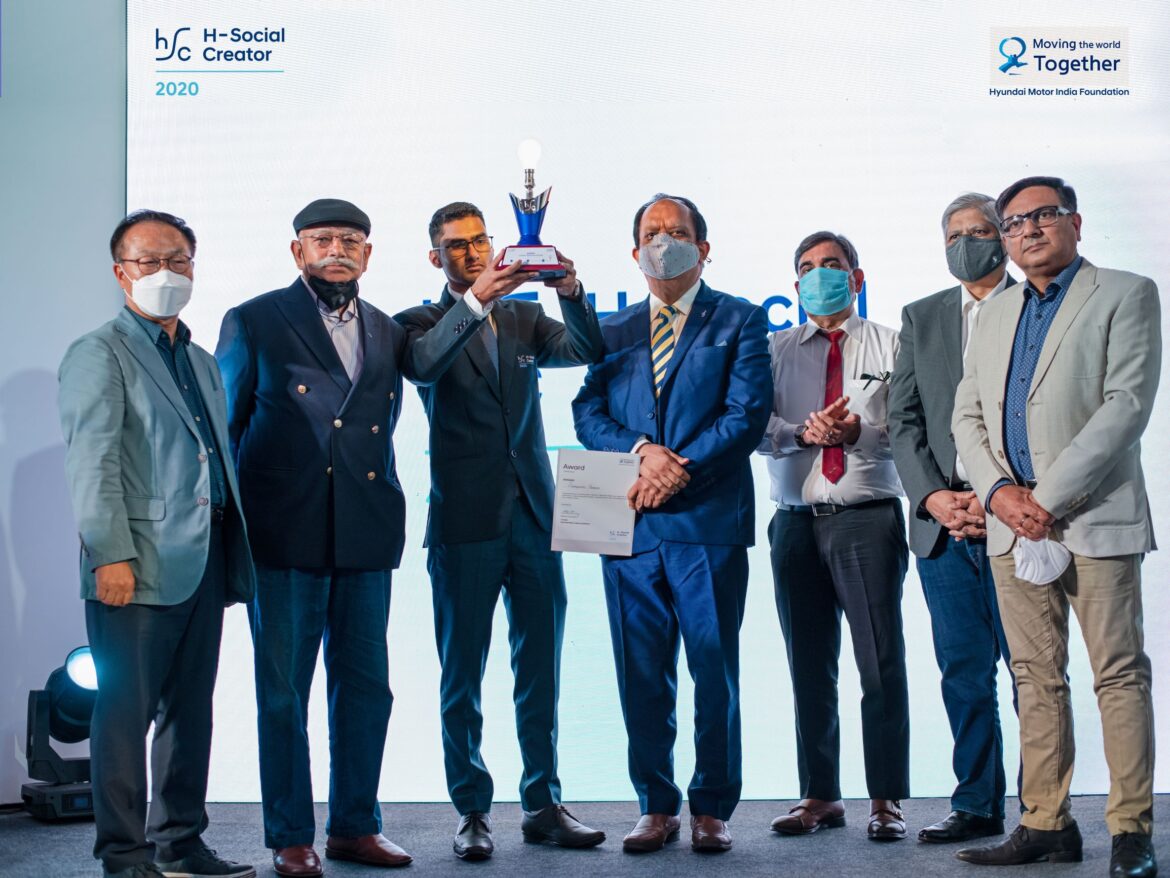
Winning Idea – Mr. Bhagwati Prasad won the H-Social Creator of the Year 2020 Award for his idea –‘Accident Alert System for Blind Turns’. His idea involves capturing data at blind turns and transmitting it on a real time basis to the drivers to avoid accidents. In addition, the display boards will give an indication to the drivers about the incoming vehicles.

Speaking at the Grand Finale of H Social Creator 2020, Mr. S.S.Kim, MD & CEO, HMIL said, “Embracing the vision ‘Progress for Humanity’, we are working towards creating an amicable ecosystem to realise the dreams of mankind. With the 2nd edition of the H-Social Creator program, Hyundai Motor India Foundation aims to engage the youth of India and future leaders to ideate, develop, and implement practical solutions to fathom social change.”

Mr. Kim further added: “We congratulate the winner, Mr. Bhagwati Prasad, and all finalists of H Social Creator 2020 for giving ideas to bring social change. The steadfast spirit of all participants and the zeal to unleash their full potential to develop ground-breaking ideas will further craft a better world.”

All 11 Finalists at the Grand Finale of H Social Creator (HSC) 2020 along with their esteemed mentors in New Delhi

HMIF created the ‘H-Social Creator’ as a platform to encourage the youth to find solutions to problems and drive social transformation. The second edition of H-Social Creator received over 520 registrations virtually from 200 educational and technical institutions. 

Out of the 401 entries received, 135 were from the road safety domain, 116 were related to environment, 101 were for the Health category, and the remaining 49 ideas were for a Cleaner India. Furthermore, a dedicated call centre supported all the participants to address their queries.

The eminent Jury members and Mentors, handpicked for H Social Creator 2020, have years of experience and an expertise in Road Safety, Healthcare, Environment, Technology, and Sustainability. 

The shortlisting and screening was done on the basis of complexity and application of the ideas. The subject matter experts selected the eleven finalists based on the criteria of innovation, sustainability, and more importantly the social impact. All the finalists were mentored by industry experts to refine and hone their final pitches. To culminate and choose the best social idea out of eleven big ideas, an independent panel of distinguished jury selected the final winner. 

About H-Social Creator

H-Social Creator’, a social innovator CSR program for Indian youth. The ‘H-Social Creator Program’ was first instituted by Hyundai Motor Company in South Korea in 2015.H-Social Creator is industry’s first youth contact program to build social innovators and future thinkers. The platform acknowledges India’s H-Social Creator – a Graduate or a Post Graduate student who develops a novel idea based on any of these three categories namely Road Safety, Environment, Clean India, Health & Hygiene.

March 23, 2021 0 comment
0 FacebookTwitterPinterestEmail
Economy

PM Modi launches Catch the rain campaign on the occasion of World Water Day; Calls for water security & effective water management

by Team Conscious Carma March 23, 2021
written by Team Conscious Carma

Prime Minister Narendra Modi has said that India’s development and self-reliance is dependent on water security and water connectivity. 

Launching Jal Shakti Abhiyan: Catch the Rain campaign virtually on the occasion of World Water Day, Mr Modi said water security and water management is crucial for the future of coming generations. 

He noted that the challenge of the water crisis is increasing equally with India’s development. 

Prime Minister said it is the responsibility of the present generation of the country to fulfil its responsibility for the generations to come. He asserted that the government has made water governance a priority in its policies and decisions. 

In the last 6 years, many steps have been taken in this direction. He talked about Pradhan Mantri Krishi Sinchai Yojna, water campaign to every farm – Har Khet ko Paani, ‘Per Drop More Crop’ campaign and Namami Gange Mission, Jal Jeevan Mission and Atal Bhujal Yojana. Mr Modi said work is being undertaken rapidly on all these schemes.

Prime Minister noted that the awareness around Jal Shakti Mission is increasing. He expressed happiness that villagers are trying to save rainwater and educate others to promote efficient use of water. 

Mr Modi said water is more precious than money but there has been a lack in preserving water resources.

Mr Modi emphasised that if India manages rainwater better, it will reduce the country’s dependence on groundwater. 

Therefore, running campaigns like ‘Catch the Rain’, and being successful in it are very important. He said losses during droughts can be controlled if more water is saved during rains.
 
Interacting with Santosh, a sarpanch from Pune, Maharashtra, Mr Modi stressed that sugarcane can grow through drip irrigation and sprinkles too. 

He said it will not only save water resources but also increase profits. Interacting with Vidya Ben from Gujarat, the Prime Minister said Aadiwasi people have always put their faith in water and treated it as a stream of development. 

He added that if country learns this faith from Aadiwasi people, water problems will be solved.

On the occasion, Minister of Jal Shakti and the Chief Ministers of Madhya Pradesh and Uttar Pradesh signed the historic Memorandum of Agreement to implement the Ken Betwa Link Project.

This is the first project of the National Perspective Plan for interlinking of rivers. This project involves transfer of water from the Ken to the Betwa River through the construction of Daudhan Dam and a canal linking the two rivers. 

It will provide annual irrigation of 10.62 lakh hactare, drinking water supply to about 62 lakh people and also generate 103 Mega Watt of hydropower. 

The Project will be of immense benefit to the water starved region of Bundelkhand, especially to the districts of Panna, Tikamgarh, Chhatarpur, Sagar, Damoh, Datia, Vidisha, Shivpuri and Raisen of Madhya Pradesh and Banda, Mahoba, Jhansi and Lalitpur of Uttar Pradesh.

To check out more National Economy news, Click Here

March 23, 2021 0 comment
0 FacebookTwitterPinterestEmail
EconomyEnvironment

Water overflows in India’s Union Budget 2021

by Team Conscious Carma March 20, 2021
written by Team Conscious Carma

Rs. 4.28 trillion (USD 57 billion) allocated for water issues for the next 5 years

  • The mission aims to supply water to 4,378 urban local bodies with 2.68 crores tap connections
  • Liquid waste management would be carried out across 500 AMRUT cities

Water supply got a boost in the Union Budget 2021 presented in Parliament by finance minister Nirmala Sitharaman. An outlay of Rs2.87 trillion towards the launch of the Jal Jeevan Mission Urban was announced in her budget speech. The next phase of the Swachh Bharat Mission focusing on the management of sludge, wastewater and construction and demolition waste in cities has also been announced.

The World Health Organization has repeatedly stressed the importance of clean water, sanitation, and a clean environment as a prerequisite to achieving universal health. The mission aims to supply water to 4,378 urban local bodies with 2.68 crore tap connections. Liquid waste management would be carried out across 500 AMRUT (the Atal Mission for Rejuvenation and Urban Transformation) cities,” Sitharaman said. The scheme will be implemented over five years.

The Swachh Bharat Mission (Urban), which was being implemented by the Ministry of Housing and Urban Affairs, would get a second round. “For further cleanliness of urban India, we intend to focus on complete faecal sludge management and wastewater treatment, source segregation of garbage, reduction in single-use plastic, reduction in air pollution by effectively managing waste from construction-and-demolition activities and bio-remediation of all legacy dump sites,” she emphasized. The Swachh Bharat Mission(Urban)2.0 would be implemented over 5 years–2021 till 2026–with an outlay of Rs.1.41 trillion.

Context

In July 2019, the government had formed a new ministry, Jal Sakti, to address all water issues in the country. The ministry also looks at the management of water resources and drinking water supply in a holistic manner.

The ministry was formed by integrating it with other existing ministries, such as water resources and the ministry of drinking water and sanitation. The larger aim is to work with state governments to ensure ‘Har Ghar Jal’ to all rural households by 2024. The announcement was made at a time when the country is grappling with one of the most severe water crisis that it has faced.

Significance

More than 3,500 cities are not supported by any structured scheme. So the government has decided to launch another scheme to cover 4,000 cities and towns for water supply. The proposal estimates JJM-Urban to target 26.8 million households which do not have tap connections and 26.4 million households without sewerage or septage facilities. The proposal would subsume AMRUT under JJM-Urban. The ongoing AMRUT programme focuses on 500 cities, mostly those with over 100,000 population, and aims to provide tap connections to 13.9 million households. The scheme has currently provided 9.5 million connections, roughly 75 per cent. While JJM (U) aims to saturate urban areas with tap connections, the remaining sewage connections outside of the AMRUT cities will be overseen by the Swachh Bharat Mission.

The proposed funding pattern for JJM (U) is to have the Centre provide 100 per cent funding in Union Territories without a legislature, 90 per cent in North Eastern and the other Himalayan States, 50 per cent in cities with a population below one lakh, 33 per cent in cities with a population between 0.1 and 1 million, and 25 per cent in cities with over a million people. “With ever-changing scenarios in the field of water, like improving technology, funding through external sources and availability of water through various sources like surface water, recycled wastewater, harvested rainwater etc. it is imperative to devise comprehensive water plans for every city… The water supply needs to be sustainable, equitable and should meet specified quality standards,” as per the proposal.

The Agence Française de Développement (AFD), the French Development Bank, and KfW, the German Development Bank, have shown interest to fund up to USD 200 million and USD 300 million, respectively. As per the 2011 Census, India’s urban population is roughly 377 million, of which 320 million people live in 4,041 statutory towns and204.8 million people have access to a piped water supply. At the household-level, 42.8 million households out of a total of 67.1 million in the statutory towns had access to a piped water supply. The proposal to the EFC estimates a total urban population of 440.3 million in statutory towns by 2025 (assuming a growth rate of 2.31 per cent), of which 331.9 million will have access to the piped water supply. Similarly, it estimates 92.4 million urban households in all statutory towns.

Conclusion

The Govt has recognized the importance of water and wastewater management for the social and economic development of the country. They also see the looming crisis if the issue is not addressed quickly. The issue also has sizeable political benefits, as the voting public attaches great value to availability of water and sanitation infrastructure. While the money has been put in, robust implementation would be needed to make it work. Previous initiatives like the Namame Gange project have not yielded the desired results.

Policy, technology, planning and project management needs to come together to achieve the stated goals. Rather than looking at the issue as an engineering problem, there is a need to involve civil society, to change mindsets and to address the issues at a mission-critical level. All right-minded individuals and corporates need to come together to ensure safe water and sanitation is available to all …

March 20, 2021 0 comment
0 FacebookTwitterPinterestEmail
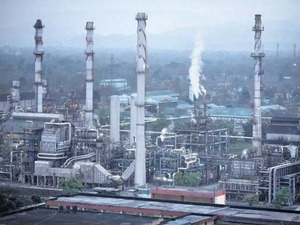
numaligarh refinery
EconomyIndustry

Numaligarh Refinery Limited Implements Hexagon’s Operations Management Solution as Part of its Digital Transformation Initiative

by Team Conscious Carma March 17, 2021
written by Team Conscious Carma

Digitalizing the Operations workforce at the NRL refinery will enable NRL to not only see major advancements in the management of their daily operations but also ensure the best in market safety and sustainability standards.

Hexagon’s PPM division yesterday announced that Numaligarh Refinery Limited (NRL) has implemented the j5 Operations Management Solution (j5 OMS) to ensure safe, efficient and compliant operations of its industrial sites. 

This marks the acceleration of NRL’s digital transformation journey as the j5 OMS adoption helps the company create a digital shift logbook and digitalize shift operations. The new j5 OMS combines the data collected by the employees with the information from historians, providing NRL’s Operations team with a single source of truth for Operations.

Hexagon’s j5 OMS combined with the j5 Connector for AspenTech will empower the NRL team with advanced business operations and technology transfer capabilities. This will improve shift-to-shift communication and help NRL reduce the risk of hazardous incidents, equaling industry-wide shift handover recommendations by experts. NRL’s personnel also will be able to collect measurements or observations in the field with industry-standard mobile devices.

Mr S. K. Barua, MD at NRL, said, “Hexagon solutions will accelerate and support our digital transformation journey by enabling us to optimize our business operations. Hexagon solutions provide us with efficient, intelligent, and data-centric work processes with auditable traceability, supporting the entire facility lifecycle.”

“This partnership between NRL and Hexagon marks the first public service company j5 OMS adoption in India. Digitalizing the Operations workforce at the NRL refinery will enable NRL to not only see major advancements in the management of their daily operations but also ensure the best in market safety and sustainability standards. We look forward to the successful adaptation of the technology,” said Mr Chanpreet Sahni, Vice President for Hexagon’s PPM Division in India, following the inauguration ceremony.

About Hexagon

Hexagon is a global leader in sensor, software and autonomous solutions. They are putting data to work to boost efficiency, productivity, and quality across industrial, manufacturing, infrastructure, safety, and mobility applications. Their technologies are shaping urban and production ecosystems to become increasingly connected and autonomous – ensuring a scalable, sustainable future.

Hexagon’s PPM division empowers its clients to transform unstructured information into a smart digital asset to visualize, build, and manage structures and facilities of all complexities, ensuring safe and efficient operation throughout the entire lifecycle.

Hexagon (Nasdaq Stockholm: HEXA B) has approximately 21,000 employees in 50 countries and net sales of approximately 3.8bn EUR. Log on to their website to learn more at hexagon.com 

About Numaligarh Refinery (NRL)

The Numaligarh Refinery (NRL) is an energy company owned by Bharat Petroleum Corporation Limited, Government of Assam, and Oil India Limited, located in the Brahmaputra valley in the region of Assam. The commencement of commercial operations started in 2000, and in 2019, the Cabinet Committee of Economic Affairs approved the Numaligarh Refinery Expansion Project (NREP) to expand the production capacity. www.nrl.co.in

March 17, 2021 0 comment
0 FacebookTwitterPinterestEmail
ola electric scooter
EconomyIndustry

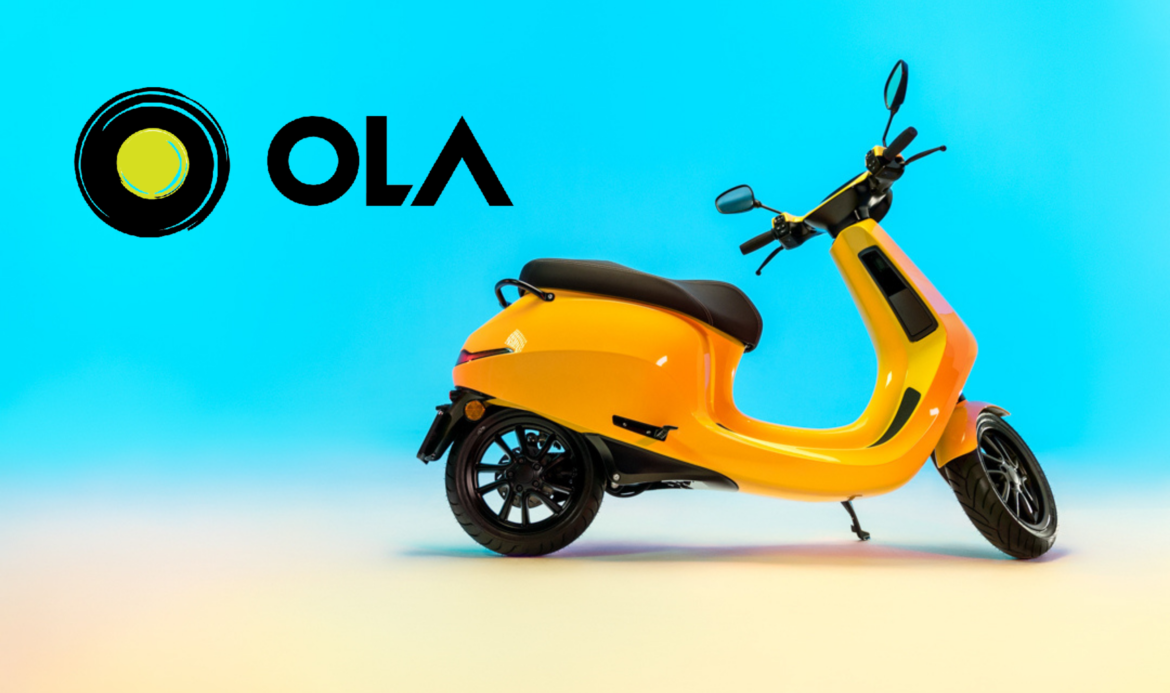
Ola is racing ahead to build the world’s largest two-wheeler factory on a 500-acre site in Tamil Nadu

by Team Conscious Carma March 15, 2021
written by Team Conscious Carma

India-headquartered Ola, one of the world’s leading mobility companies, has commenced construction of the world’s largest two-wheeler mega-factory on its 500-acre site. 

The company announced a Rs 2400 crore MoU with the Tamil Nadu government in December 2020 and rapidly completed the land acquisition in January this year. The company is racing ahead to operationalise its factory in the next few months. An estimated more than 10 million man-hours have been planned to bring the factory up in record time, with the first phase becoming operational in the coming months.

Through this entire process, Ola is maintaining its strong focus on sustainability. The company has ensured the conservation of the green belt in the area by preserving and transplanting the trees on site. Ola plans to have a large forest area within the site and reuse the excavated soil and rocks within the factory.

Ola’s mega-factory will have an initial capacity of 2M units a year in phase 1 and will serve as the company’s global manufacturing hub for its range of electric-powered scooters and two-wheelers across India and India and international markets including Europe, UK, Latin America, Asia Pacific, Australia and New Zealand.

ola electric scooter

Expected to create 10,000 jobs, the factory will incorporate Industry 4.0 principles and will be powered by Ola’s own proprietary AI Engine and tech stack that will be deeply integrated into all its systems.

The factory is also expected to be the country’s most automated, with about 5,000 robots and automated guided vehicles in use once it is operational to its full capacity. The company has already brought on board global partners and suppliers as it works towards getting its factory, billed to be the world’s largest scooter factory, operational in the coming months.

Last year, it had acquired Etergo, a Dutch firm that has built a scooter that uses a swappable, high energy battery that delivers a range of up to 240 km (149 miles). The scooter’s built, design and efficiency are so impressive that its maker has been called “the Tesla of the scooter world” — by many.

Ola is close to launching the first in its range of electric scooters in the coming months. The scooter is expected to have great design, removable battery, high performance and range as well as a host of industry-first technology features. The scooter has already won several prestigious design and innovation awards including the IHS Markit Innovation award at CES and the German Design Award. 

About Ola

Ola is India’s largest mobility platform and one of the world’s largest ride-hailing companies, serving 250+ cities across India, Australia, New Zealand, and the UK including key global markets like London and Sydney. The Ola app offers mobility solutions by connecting customers to drivers and a wide range of vehicles across bikes, auto-rickshaws, metered taxis, and cabs, enabling convenience and transparency for hundreds of millions of consumers and over 2.5 million driver-partners. Ola’s mobility offering in India is supplemented by its electric-vehicle arm Ola Electric and its fleet management business Ola Fleet Technologies. Ola also extends its consumer offerings like micro-insurance and credit led payments through Ola Financial Services and a range of owned food brands with India’s largest network of cloud kitchens through Ola Foods. 

Source: OLA

Note: The content has been edited for style and length

March 15, 2021 0 comment
0 FacebookTwitterPinterestEmail
EconomyGlobal

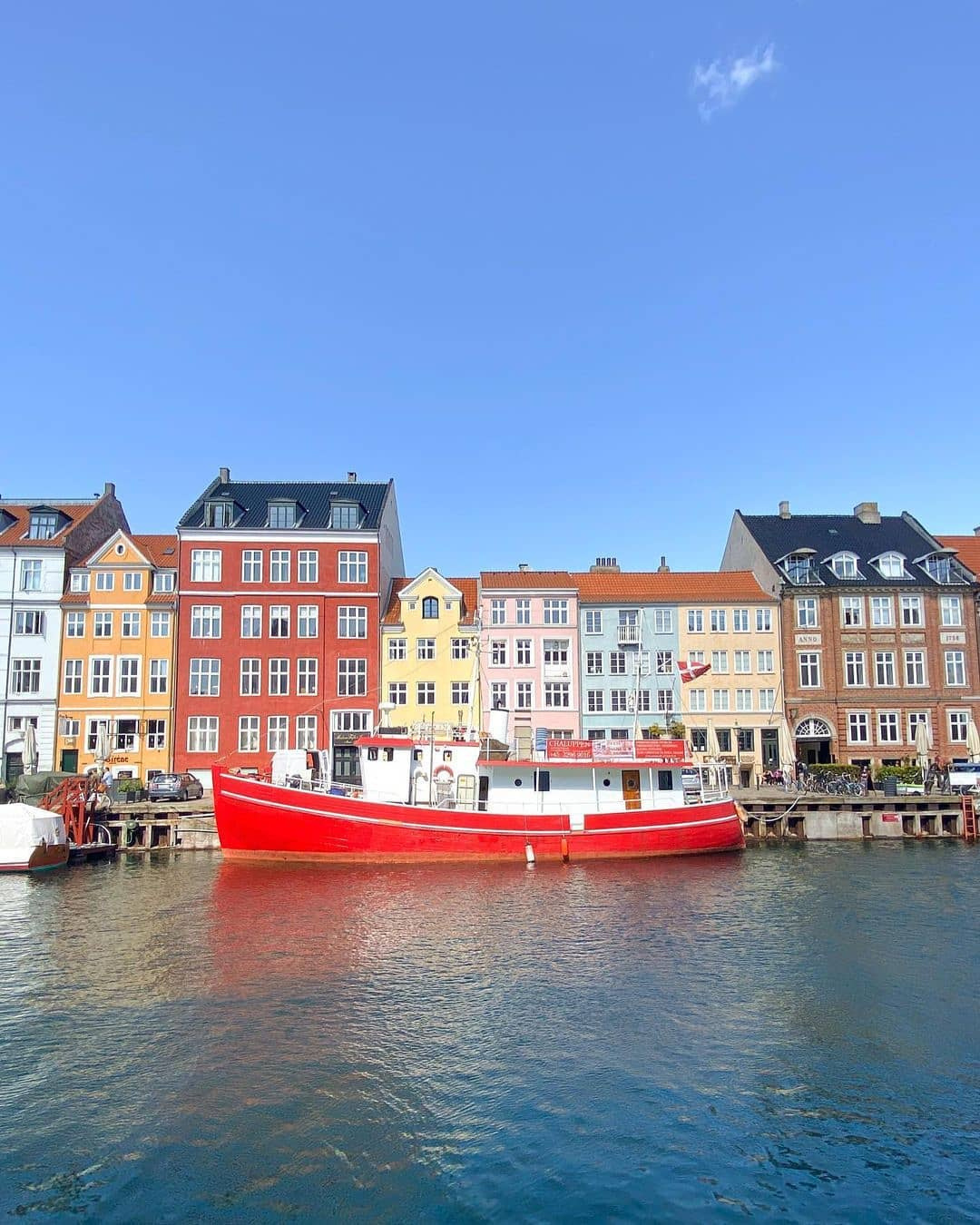
Denmark: World’s Most Eco-friendly Country

by Team Conscious Carma March 13, 2021
written by Team Conscious Carma

Home to World’s No. 1 & No. 2 Sustainable Corporations

Denmark, in Northern Europe, is the World’s most eco-friendly country, according to the 2020 Environmental Performance Index (EPI). Now in its 22nd year, the EPI report has become the premier metrics framework for global environmental policy analysis ranking 180 countries on 32 performance indicators across 11 issue categories covering environmental health and ecosystem vitality.

Denmark is a constitutional monarchy ruled by a representative democracy. In 1971 Denmark established a Ministry of Environment and was the FIRST country in the world to implement an environmental law in 1973. The country shows consistent, cutting-edge commitments to clean green climate change initiatives.

“Denmark excels in almost every indicator of environmental health, having long made significant commitments to air quality, advanced sanitation, and safe drinking water. The highest-ranked country also stands out in solid waste management, with virtually all of the waste being recycled, composted, or incinerated. In addition, Denmark leads the world in the breadth and depth of its programs to tackle climate change, including a recently announced target of cutting its greenhouse gas emissions by 70% by 2030”, the report states.

Spread over an area of 42,924 square kilometres and a population of over 5.82 million, Denmark is considered to be one of the most economically and socially developed countries in the world. It has the lowest level of corruption in the world, a high level of income equality and one of the world’s highest per capita incomes. According to the International Monetary Fund, it has the world’s highest minimum wage, attributed to its powerful trade unions. A worker in a fast-food chain makes the equivalent of US$20 an hour, which is more than double what their counterparts earn in the United States, and have access to five weeks of paid vacation, parental leave and a pension plan.

Once a predominantly agricultural country, Denmark has greatly expanded its industrial base and service sector. By 2017, the Services sector contributed approximately 75% of GDP, manufacturing about 15% and agriculture less than 2%. Major industries include Wind Turbines, Pharmaceuticals, Medical Equipment, Machinery and Transport Equipment, Food Processing and Construction. Denmark is a major exporter of Food and Energy. Denmark ranks 10th most competitive economy in the world, according to the World Economic Forum’s Global Competitiveness Report 2018.

Denmark is a long time leader in wind power. The country aims for renewables to cover at least half of the country’s total energy consumption by 2030 and by 2050, Denmark aims to be a low-carbon society independent of fossil fuels. The country also exported roughly 460 million GJ of energy in 2018. It’s noteworthy to mention that Countries making concerted efforts to decarbonize their electricity sectors have made the greatest gains in combating climate change, with associated benefits for ecosystems and human health.

More than half of Denmark’s electricity came from wind and solar power in 2020, surpassing 2019 as the greenest year in Danish electricity history. In ten years, the share of wind and solar power in Danish electricity has doubled.

In order to achieve the country’s commitment to reduce 70% emissions by 2030 and becoming CO2 neutral by 2050, Denmark’s government has approved its plan to construct artificial renewable energy island in the North Sea, 80 kilometres off the coast of Jutland.

For the first phase- the artificial renewable energy island is set to have a capacity of 3 GW. This island will serve as a hub for approximately 200 offshore wind turbines to neighbouring countries’ electricity grids. In the future, the hub could be expanded to 10 GW which will allows the system to power 3 million homes in Europe.

This largest construction project in Danish history would be owned by a public-private partnership with the Danish state holding a majority stake. The island construction is expected to start in 2026 and targeted to operate in 2033.

Continue Reading
March 13, 2021 0 comment
0 FacebookTwitterPinterestEmail
EconomyIndustry

Karnataka handicraft corporation to speed up the establishment of state’s first Craft Tourism Village

by Team Conscious Carma March 8, 2021
written by Team Conscious Carma

Recently the Managing Director of KSHDC, IGP D Roopa paid a visit to Anegundi and assured the artisans that the Craft Tourism Project will soon be a reality

MD of Karnataka State Handicrafts Development Corporation D Roopa interacts with NGO volunteers and artisans at Anegundi during her visit last week.

MD of Karnataka State Handicrafts Development Corporation D Roopa interacts with NGO volunteers and artisans at Anegundi during her visit recently (Photo | Express)

Come June, Karnataka’s first Craft Tourism Village will be ready to welcome visitors in Anegundi of Koppal district. The Karnataka State Handicrafts Development Corporation (KSHDC), the implementing agency has taken steps to speed up the process. Recently the Managing Director of KSHDC, IGP D Roopa paid a visit to Anegundi and assured the artisans that the Craft Tourism Project will soon be a reality. 

Though announced a few months ago the project was limping in implementation.

Last week the Managing Director of KSHDC, IGP D Roopa paid a visit to Anegundi and assured the artisans that the Craft Tourism Project will soon be a reality. 

The historic Anegundi was earlier the capital of Vijayanagara dynasty and home for a number of artisans.

For several years artisans here have been preparing a variety of crafts using banana fibre and water hyacinth. There are 300 strong artisans living in Anegundi and already attracts several tourists who come to visit the world heritage site Hampi. 

The Handicrafts Corporation has now given the contract of implementing the project to Nirmithi which will be working on the project with the assistance of local NGOs from Anegundi.

A special officer has been appointed at the local level to oversee the project development. A meeting was held with Koppal DC recently in this regard involving all the stakeholders including the local panchayats. 

“There is a great scope in Anegundi where the state’s first Craft Tourism Village is coming up. The DPR of the project is ready and we are eager to implement the same. Beautification of streets and creating some space for artisans are being done on priority. We are in talks with the governmental agencies in Bengaluru and at the local level to take up the project on priority,” said D Roopa. 

Roopa also hinted that the Corporation will also be looking at popularizing banana fibre craft and bamboo crafts in the coming days.

“The banana fibre crafts need encouragement and at the same time, we need to tap the potential of making crafts out of bamboo, especially in areas of Western Ghats. Besides Anegundi there are villages near Hampi where artisans make a craft using banana fibre,” she added. 

“The MD Karnataka Handicrafts has taken a lot of interest in the project. The KSHDC is executing the project which may bring back part of Anegundi’s lost charm and enhance what we have now. Also, the project gives visibility to the banana fibre craft industry. Common facilities for the artisans are being created and we hope by June the project will be ready,” said an NGO member from Anegundi. 

Source : The New Indian ExpressNote: The content has been edited for style and length

March 8, 2021 0 comment
0 FacebookTwitterPinterestEmail
turkey zero waste project
EconomyGlobal

Turkey saves $2.2 bln with Zero Waste project, says minister

by Team Conscious Carma March 6, 2021
written by Team Conscious Carma

Turkey has saved around 17 billion Turkish Liras ($2.2 billion) with the Zero Waste Project led by First Lady Emine Erdoğan, Turkish Environment and Urbanization Minister Murat Kurum has said.

“We are taking firm steps toward our 2023 goals in line with the Zero Waste Project,” Kurum said on March 5 in a Twitter post by sharing an infographic of data showing the progress they have made through the project so far.

According to the minister, the amount of energy savings has been 315 million kilowatts per hour, and some 209 million trees have been saved so far with the help of the project.

“Some 84,000 public buildings have started using a zero-waste system,” Kurum said.

The aim is to save 20 billion liras ($2.66 billion) and provide employment to 100,000 people by 2023, the 100th anniversary of modern Turkey.

“We have saved 345 million cubic meters of water, 54 million barrels of oil and 397 million tons of raw material,” Kurum said.

Noting that the per cent of recycled content has jumped from 13 per cent to 19 per cent in a short time, Kurum said, “The goal for 2023 is to increase it to 35 per cent.”

The ministry started the Zero Waste project in 2017 under the auspices of the first lady.

Since then, the country has organized several international zero waste summits, encouraging public institutions and municipalities to adapt to zero waste policies.

“Protecting the environment is not a choice; it is a necessity,” the first lady said in an introductory meeting of the project in 2019.

Source: https://www.hurriyetdailynews.com

Checkout more Global news from here

March 6, 2021 0 comment
0 FacebookTwitterPinterestEmail
flipkart using evans
EconomyIndustry

Flipkart to deploy more than 25,000 Electric Vehicles in its Supply Chain to achieve 100% transition to electric mobility by 2030

by Team Conscious Carma March 2, 2021
written by Team Conscious Carma

● Builds on the commitment of Flipkart to transition its logistics fleet to Electric Vehicles after joining the Climate Group’s EV100 initiative 

● Partners with key players including Hero Electric, Mahindra Electric and Piaggio to procure electric vehicles through logistics partners 

Flipkart, India’s homegrown e-commerce marketplace, recently announced that it will deploy more than 25,000 electric vehicles by 2030. This is in line with Flipkart’s public commitment to transition to electric vehicles across its city logistics fleet and help set up charging infrastructure around delivery hubs and offices to fast track the adoption of electric vehicles (EVs) in India. Flipkart has already started deploying 2-wheeler and 3-wheeler electric vehicles in multiple locations for delivery across the country, including in Delhi, Bengaluru, Hyderabad, Kolkata, Guwahati and Pune, to name a few. 

Flipkart’s electric fleet will include 2-wheeler, 3-wheeler, and 4-wheeler vehicles designed and assembled in India, helping boost local innovation and economy. Flipkart has partnered with leading electric vehicle manufacturers, including Hero Electric, Mahindra Electric and Piaggio, for specific vehicles to be deployed for its first and last-mile delivery fleet across the country. 

Flipkart will also place requirements in service contracts, install charging infrastructure close to its 1,400 supply chain facilities, conduct awareness programs, and encourage delivery executives to use EVs. 

Amitesh Jha, SVP Ekart and Marketplace, Flipkart said, “Electric mobility can benefit multiple ecosystem stakeholders, not just in e-commerce but in many other industries. Electrification of the logistics fleet is a key part of Flipkart’s larger sustainability goal and in line with our commitment to the Climate Group’s EV100 initiative. In this journey of making our logistics fleet completely electric by 2030, we will collaborate and work with leading local players to procure and deploy Electric Vehicles while supporting the required infrastructure growth. We understand the relevance of electric mobility in achieving both business and sustainability goals and are committed to paving the way for greater adoption of EVs across the country.”

 Flipkart is strongly committed to environmental sustainability and has adopted a proactive and holistic approach towards conducting its business responsibly with optimum usage of natural resources. In this direction, Flipkart has, over the past year, worked towards creating a network of ecosystem partners across charging providers, skill development agencies, aggregators and OEMs (original equipment manufacturers). 

As part of Flipkart’s commitment to following sustainable business practices across its value chain, the company has been driving several other initiatives over the years. These include reducing single-use plastic packaging in the supply chain. Flipkart’s waste management and energy efficiency practices, the increased use of renewable energy, and the recently achieved ISO 14001 certifications are all testament to its continuing efforts towards achieving sustainable operations. 

About the Flipkart Group 

The Flipkart Group is one of India’s leading digital commerce entities and includes group companies Flipkart, Myntra, and Flipkart Wholesale. Started in 2007, Flipkart has enabled millions of consumers, sellers, merchants, and small businesses to be a part of India’s e-commerce revolution, with a registered customer base of over 300 million, offering over 150 million products across 80+ categories. Our efforts to democratise e-commerce in India, drive access and affordability, delight customers, create lakhs of jobs in the ecosystem and empower generations of entrepreneurs and MSMEs have inspired us to innovate on many industry firsts. The recent launch of Flipkart Wholesale, our new digital marketplace, is a testament to our commitment to accelerate the growth of kiranas and MSMEs in India. Flipkart is known for pioneering services such as Cash on Delivery, No Cost EMI and easy returns – customer-centric innovations that have made online shopping more accessible and affordable for millions of Indians. Together with Myntra, which holds a prominent position in the online fashion market and now Flipkart Wholesale, the Flipkart Group will continue to steer the transformation of commerce in India through technology.

SOURCE : Flipkart.com

Note: The content has been edited for style and length

  • India–UK Free Trade Agreement Opens Global Growth Opportunities for 3R ZeroWaste’s Circular Economy Solutions
  • Plastic Free July: Why True Sustainability Goes Beyond Swapping Plastic
  • From the Editor’s Desk: When Greed Takes Over Conscience
  • Beyond the Pose: Why Your Yoga Mat Needs a Sustainable Upgrade
  • Best Sustainable Father’s Day Gifts: Conscious Carma’s Exclusive Picks
March 2, 2021 0 comment
0 FacebookTwitterPinterestEmail
Newer Posts
Older Posts

Recent Posts

  • India–UK Free Trade Agreement Opens Global Growth Opportunities for 3R ZeroWaste’s Circular Economy Solutions
  • Plastic Free July: Why True Sustainability Goes Beyond Swapping Plastic
  • From the Editor’s Desk: When Greed Takes Over Conscience
  • Beyond the Pose: Why Your Yoga Mat Needs a Sustainable Upgrade
  • Best Sustainable Father’s Day Gifts: Conscious Carma’s Exclusive Picks

Recent Comments

  • Team Conscious Carma on Label Shivika Agarwal – where craft meets sustainability
  • Cocomeister.jp on Label Shivika Agarwal – where craft meets sustainability
  • Team Conscious Carma on Equitable City Designs To Fight Climate Change
  • UN report calls for repurposing of USD 470 billion of agricultural support that distorts prices and steer us away from environment and social goals | Consciouscarma on UNEP & ICMR collaborate to boost understanding of environmental dimensions of antimicrobial resistance in India
  • Wild Earth : Natural body products | Consciouscarma on Sat.Suma : the true essence of flowers in your everyday skincare needs

Keep in touch

Facebook Twitter Instagram Youtube

Recent Posts

  • India–UK Free Trade Agreement Opens Global Growth Opportunities for 3R ZeroWaste’s Circular Economy Solutions

  • Plastic Free July: Why True Sustainability Goes Beyond Swapping Plastic

  • From the Editor’s Desk: When Greed Takes Over Conscience

  • Beyond the Pose: Why Your Yoga Mat Needs a Sustainable Upgrade

  • Best Sustainable Father’s Day Gifts: Conscious Carma’s Exclusive Picks

  • How Sacred Sound is Reshaping the Future of Holistic Health?

Categories

  • Community (38)
    • Campaigns (3)
  • CSR (4)
  • Economy (82)
    • Global (24)
    • Industry (42)
    • Innovations (4)
    • National (2)
  • Environment (48)
  • Expert Corner (48)
    • Authored Articles (47)
  • Featured (5)
    • Partners (1)
  • Global News (2)
  • Initiatives (31)
    • CSR (3)
    • Events (6)
  • Inspiration (22)
  • Lifestyle (9)
  • Media Coverage (6)
  • Press Releases (4,358)
  • Products (126)
    • Accessories (27)
    • Apparel (32)
    • Beauty (26)
    • Food (4)
    • Gifting (3)
    • Home Décor (15)
    • Skin-Care (14)
  • Reports (3)
  • Spirituality (10)
  • Sustainability (49)
  • Sustainable Startup Stories (28)
  • Travel (19)
  • Uncategorized (2)
  • Wellness (33)
    • Home Cleaners (3)

Archives

  • August 2026 (1)
  • July 2026 (1)
  • June 2026 (6)
  • October 2024 (1)
  • September 2024 (1)
  • July 2024 (2)
  • June 2024 (2)
  • May 2024 (1)
  • November 2023 (330)
  • October 2023 (554)
  • September 2023 (631)
  • August 2023 (718)
  • July 2023 (723)
  • June 2023 (710)
  • May 2023 (608)
  • April 2023 (114)
  • March 2023 (7)
  • February 2023 (3)
  • January 2023 (11)
  • December 2022 (18)
  • November 2022 (1)
  • August 2022 (6)
  • July 2022 (8)
  • June 2022 (24)
  • May 2022 (11)
  • April 2022 (19)
  • March 2022 (11)
  • February 2022 (11)
  • January 2022 (14)
  • December 2021 (10)
  • November 2021 (4)
  • October 2021 (14)
  • September 2021 (22)
  • August 2021 (12)
  • July 2021 (17)
  • June 2021 (17)
  • May 2021 (16)
  • April 2021 (22)
  • March 2021 (33)
  • February 2021 (16)
  • January 2021 (22)
  • December 2020 (10)
  • Facebook
  • Twitter
  • Instagram
  • Pinterest
  • Linkedin
  • Youtube

@2020 - All Right Reserved. Designed and Developed by Bizopser Technologies

Consciouscarma
  • Home
  • About Us
  • Products
  • Community
    • Campaigns
    • Inspiration
    • Initiatives
    • CSR
  • Features
    • Sustainable Startup Stories
    • Travel
    • Lifestyle
    • Partners
  • Economy
    • Industry
    • Innovations
    • National
    • Global
  • Environment
  • Expert Corner
    • Authored Articles
    • Reports
  • Magazine
  • Contact