Consciouscarma
  • Home
  • About Us
  • Products
  • Community
    • Campaigns
    • Inspiration
    • Initiatives
    • CSR
  • Features
    • Sustainable Startup Stories
    • Travel
    • Lifestyle
    • Partners
  • Economy
    • Industry
    • Innovations
    • National
    • Global
  • Environment
  • Expert Corner
    • Authored Articles
    • Reports
  • Magazine
  • Contact
Category:

Economy

The countries, the governments, the non-profit organisations are all working towards changing the world for better, protecting the environment, shifting to renewable resources, inventing new technologies, innovating new ways of manufacturing, producing, distributing, packaging and living etc to reduce the carbon footprint

transparent solar cells
EconomyInnovations

‘Transparent solar cells’ can take us towards a new era of personalized energy

by Team Conscious Carma February 28, 2021
written by Team Conscious Carma

Researchers from Incheon National University, Republic of Korea, and Michigan State University (MSU), USA design novel transparent solar cells

Solar power has shown immense potential as a futuristic, ‘clean’ source of energy. No wonder environmentalists worldwide have been looking for ways to advance the current solar cell technology. Now, scientists have put forth an innovative design for the development of a high-power transparent solar cell. This innovation brings us closer to realizing our goal of a sustainable green future with off-the-grid living.

Today, the imminent climate change crisis demands a shift from conventionally used fossil fuels to efficient sources of green energy. This has led to researchers looking into the concept of “personalized energy,” which would make on-site energy generation possible. For example, solar cells could possibly be integrated into windows, vehicles, cellphone screens, and other everyday products. But for this, it is important for the solar panels to be handy and transparent. To this end, scientists have recently developed “transparent photovoltaic” (TPV) devices — transparent versions of the traditional solar cell. Unlike the conventionally dark, opaque solar cells (which absorb visible light), TPVs make use of the “invisible” light that falls in the ultraviolet (UV) range.

Conventional solar cells can be either “wet type” (solution-based) or “dry type” (made up of metal-oxide semiconductors). Of these, dry-type solar cells have a slight edge over the wet-type ones: they are more reliable, eco-friendly, and cost-effective. Moreover, metal-oxides are well-suited to make use of UV light. Despite all this, however, the potential of metal-oxide TPVs has not been fully explored until now.

Researchers from Incheon National University, Republic of Korea, came up with an innovative design for a metal-oxide-based TPV device, consisting of an ultra-thin layer of silicon (Si). Based on the findings, the research team is optimistic that the real-life applicability of this new TPV design will soon be possible. As for potential applications, there are plenty, as Prof Joondong Kim, who led the study explains, “We hope to extend the use of our TPV design to all kinds of material, right from glass buildings to mobile devices like electric cars, smartphones, and sensors.” Says Not just this, the team is excited to take their design to the next level, by using innovative materials such as 2D semiconductors, nanocrystals of metal-oxides, and sulfide semiconductors. As Prof Kim concludes, “Our research is essential for a sustainable green future — especially to connect the clean energy system with no or minimal carbon footprint.”

Meanwhile, in the US, Researchers at Michigan State University (MSU) originally created the first fully transparent solar concentrator in 2014. This clear solar panel could turn virtually any glass sheet or window into a PV cell. By 2020, researchers in the U.S. and Europe have already achieved full transparency for solar glass.

Photovoltaic glass is probably the most cutting-edge new solar panel technology that promises to be a game-changer in expanding the scope of solar. These are transparent solar panels that can literally generate electricity from windows—in offices, homes, car’s sunroof, or even smartphones.  The two major types of transparent solar panels include partial and full transparent panels. As these solar power windows can simply replace the traditional glass windows in offices and homes, the technology holds the potential to virtually turn every building in the United States and the world into a solar producer. 

Just the way solar roof panels are currently produced using different technologies, solar windows are also being developed using different techniques. 

The potential to generate renewable, clean energy from the sun is enormous with transparent solar panels, considering the number of skyscrapers and buildings already in existence or under construction with a massive amount of glass surface.

According to Richard Lunt, the Johansen Crosby Endowed Associate Professor of Chemical Engineering and Materials Science at MSU, highly transparent solar cells represent the “wave of the future” for new solar panel technologies.

Lunt says that these clear solar panels have a similar power-generation potential as rooftop solar, along with additional applications to improve the efficiency of buildings, cars and mobile devices. Lunt and his team estimate that the U.S. alone has about 5 to 7 billion square meters of glass surface at present. (Just in the last 10 years, as much as 682 million sq. ft. of office space has been added in the U.S.).

With this much glass surface to cover, transparent solar panel technology has the potential to meet about 40 per cent of the country’s annual energy demand. This potential is nearly the same as that of rooftop solar. When both these technologies are deployed complimentarily, it could help meet nearly 100 per cent of the U.S. electricity needs if we also improve energy storage. 

Story Source: Information is sourced from www.sciencedaily.com, www.solarmagazine.com

Note: Content has been edited for style and length

To check out more innovations, Click Here
February 28, 2021 0 comment
0 FacebookTwitterPinterestEmail
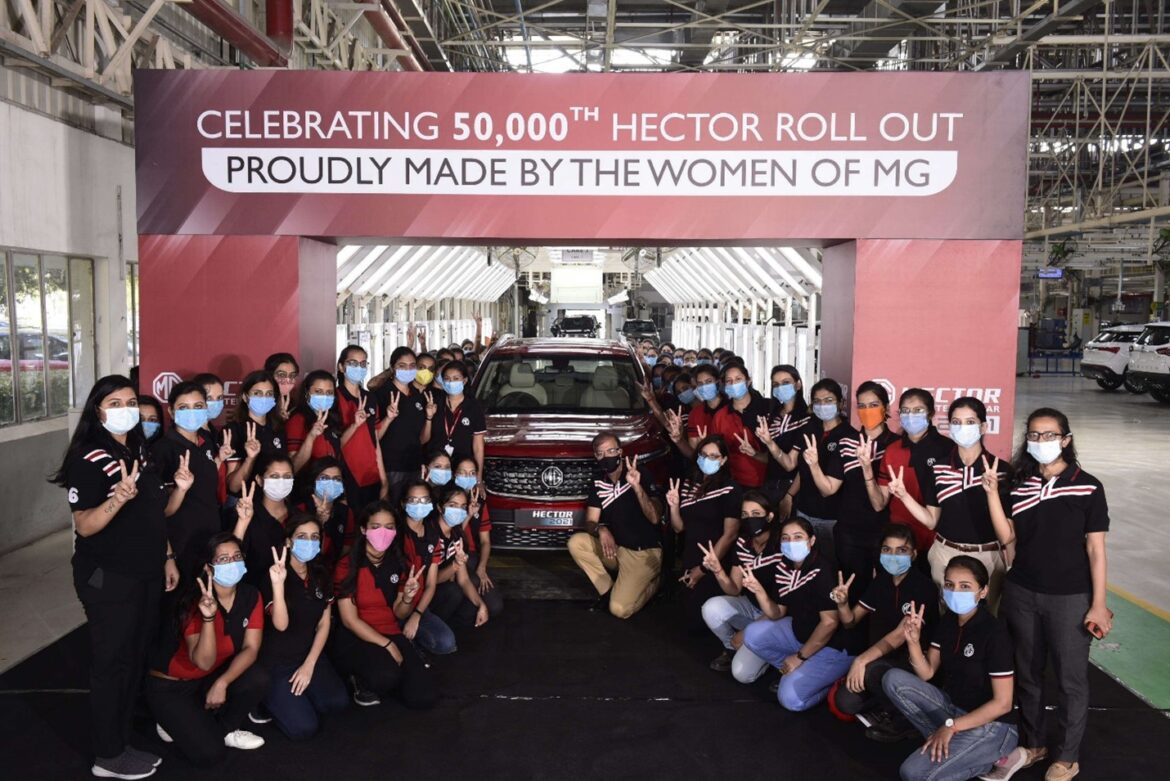
MG Motors women crew
EconomyIndustry

MG Motor rolls out 50,000th Hector in India: All-women crew makes it

by Team Conscious Carma February 27, 2021
written by Team Conscious Carma

End-to-end production of this MG Hector was undertaken by the crew. This included panel-pressing, paint job, welding and even the production tests. MG Motor aims to achieve 50% gender diversity in its organisation in future and pave the way for a balanced workforce.

MG Motor India has manufactured its 50,000th Hector with an all-women crew in Gujarat’s Vadodara. Women-only teams were involved in panel-pressing of sheet metal and welding to painting jobs as well as carrying out post-production test runs. 

MG said the initiative has created a new benchmark while celebrating `Diversity’ – one of the core pillars of the automaker – as women led the end-to-end production.

The automaker aims to achieve 50% gender diversity in its organisation in future and pave the way for a balanced workforce.

MG Motor India has its manufacturing facility in Gujarat’s Halol (Panchmahal district) which comprises a 33% share of women in its workforce across all business functions. If trained well, both men and women can handle the machinery with equal competency.

Rajeev Chaba, president and managing director, MG Motor India, said, “The rollout of our 50,000th Hector by an all-women crew comes as an honour to their contributions and hard work. It also demonstrates that glass ceilings no longer exist even in an erstwhile male-dominated industry such as automobile manufacturing. We believe that it will inspire more women to join the automotive industry in India and abroad.”

Source: ETAuto.com

To checkout more initiatives, click here

February 27, 2021 0 comment
0 FacebookTwitterPinterestEmail
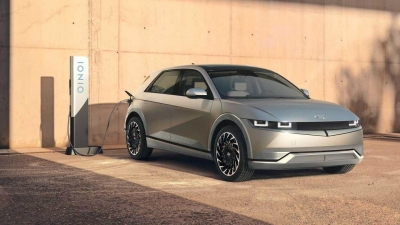
IONIQ 5 car
EconomyIndustry

Hyundai unveils IONIQ 5

by Team Conscious Carma February 24, 2021
written by Team Conscious Carma

Hyundai unveils IONIQ 5, first model based on its own EV platform

South Korean auto giant Hyundai Motor on Tuesday, Feb 23, 2021, unveiled the IONIQ 5, the first model embedded with its own electric vehicle (EV) platform, as it strives to morph into a future mobility solutions provider.

The IONIQ 5 midsize crossover utility vehicle is the first model equipped with Hyundai Motor Group’s own EV-only electric-global modular platform (E-GMP), Hyundai said in a statement.

Hyundai said that it will launch the IONIQ 5 in Europe next month, in Korea in the second quarter and in the US and other markets later this year.

“The production of the IONIQ 5 begins in Hyundai’s Ulsan plant next month. The company aims to sell 70,000 units globally this year, including 26,500 units in the domestic market, and 100,000 units next year,” Hyundai Motor President and Chief Executive Chang Jae-hoon said in an online press conference.

The all-electric car is priced at 50 million won to 55 million won ($45,000-$49,500). With government subsidies, it can be purchased for around 40 million won.

Among other features, the E-GMP’s flat battery and long wheelbase allow for a more spacious and customisable interior for passengers and cargo, unlike crossovers with internal combustion engines and conventional steer-by-wire systems, the CEO said.

The IONIQ 5 is available in two versions:

The long-range model with a 72.6 kilowatt-hour (kWh) battery and the standard model with a 58 kWh battery. The long-range version can travel up to 430 km on a single charge and charge 80 per cent of the battery capacity within 18 minutes, the automaker said.

The all-electric model boasts “user-friendly” functions such as the gear selector located behind the steering wheel, the sliding centre console which offers passengers more flexibility in front seats and the vehicle-to-load (V2L) function which serves as a charger on wheels. The V2L function allows customers to charge electric devices such as coffee machines and electric bicycles, reports Yonhap news agency.

It also comes with advanced safety features such as lane-keeping assist, blind-spot collision avoidance, safety exit assist and rear cross-traffic collision-avoidance assist systems.

The IONIQ 5’s signature design elements include Parametric Pixels, the smallest unit of digital imaging. The company plans to apply the design language to future models to be released under the IONIQ battery electric vehicle brand.

Hyundai said it will receive pre-orders for the IONIQ 5 from Thursday in the domestic market.

To strengthen its presence in the eco-friendly vehicle market, Hyundai also plans to introduce the IONIQ 6 midsize sedan in 2022 and the IONIQ 7 large SUV in 2024. It will begin using alphanumeric names like its bigger rivals, such as BMW, whose models are named Series No. 1-8.

Hyundai’s independent Genesis brand also plans to launch an all-electric model this year and will eventually fill its lineup with zero-emission models in the future.

Source: IANS

February 24, 2021 0 comment
0 FacebookTwitterPinterestEmail
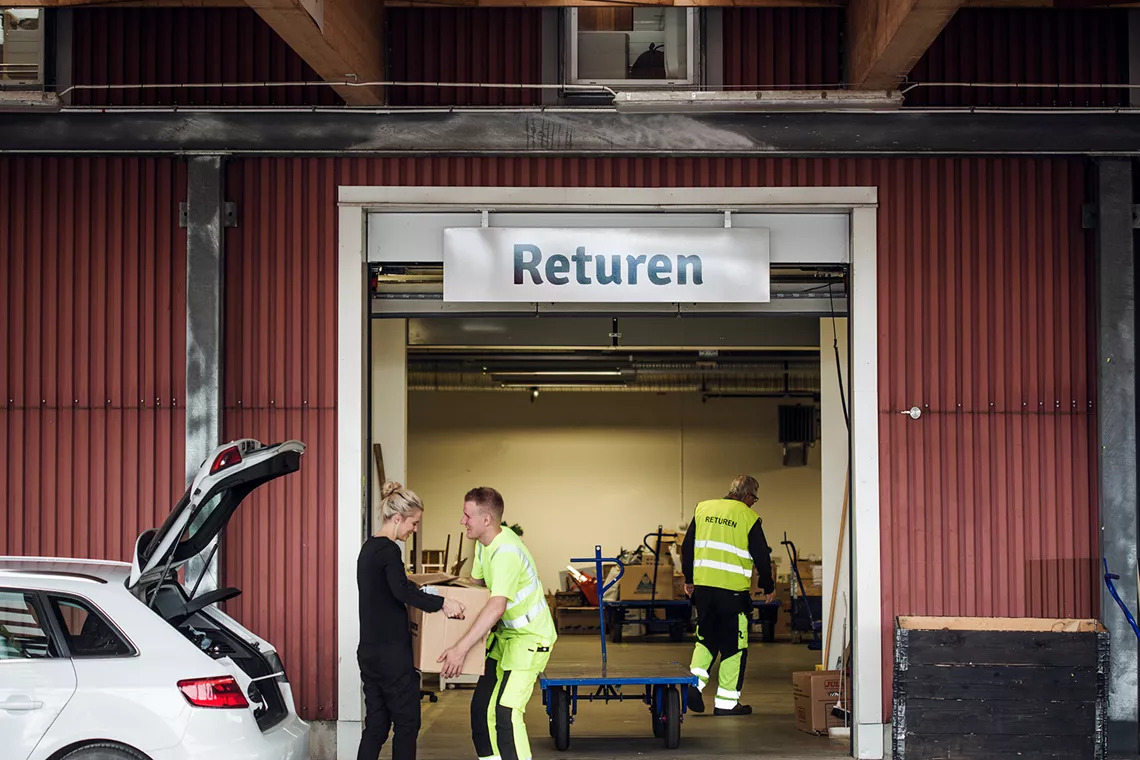
ReTuna shopping mall
EconomyGlobal

ReTuna – the World’s first recycling Mall in Sweden

by Team Conscious Carma February 23, 2021
written by Team Conscious Carma

ReTuna Återbruksgalleria is the world’s first recycling mall, revolutionizing shopping in a climate-smart way. Old items are given new life through repair and upcycling. Everything sold is recycled or reused or has been organically or sustainably produced. 

ReTuna was set up by Eskilstuna’s local government and implemented by its subsidiary Eskilstuna Energi och Miljö (EEM) in 2015. The mall has grown into an international success story and reached SEK 11.7 million in sales for pre-owned products in 2018. Moreover, the mall has generated 50 new jobs in a city that has been struggling with high unemployment rates and a drain of young people.

The mall is called ReTuna. “Tuna” because that’s the nickname for the city where it is based – Eskilstuna, an hour’s train journey west of Stockholm – and “Re” because the goods on sale have been recycled or repurposed.

The case of ReTuna is a strong example of a city acting as a circular catalyst. The strength of the recycling mall is that it makes sustainable shopping much easier and less time-consuming. Second-hand stores exist everywhere in the world, but ReTuna enables you to do all your circular shopping in one place. In addition, unlike many traditional second-hand shops, the stores in ReTuna have a diverse range of products, such as sportswear, furniture, fashion items, or toys. 

In addition, ReTuna has been successful in developing a self-sustaining system at local level. All goods that are being sold in the stores as well as the staff members of ReTuna are sourced within the region. The mall is located next to Eskilstuna’s recycling centre where citizens come approximately once a month to discard their used products. The initial selection of what is usable and what is not is performed at the centre by the staff from AMA (the resource unit of the municipality for Activity, Motivation and Work). Afterwards, the goods are transported to the mall where they are sorted and distributed to the shops by the mall’s staff members. Many shops have a workshop corner where they renovate or upgrade the used items before sale.

The success story of ReTuna provides some important lessons, which should be taken into account in similar future projects or initiatives:

  • It is important to keep in mind that consumers are influenced by the shopping environment and the aesthetics of pre-owned products.
  • It is important to brand secondary products and to put efforts in how both the store and its products look.
  • There is a need for educating citizens on the value of waste materials and products.
  • A city government plays a crucial role in the initiation and facilitation of circular initiatives. In addition to providing financial support, a city government should take action to lower implementation barriers, such as legal barriers around waste transportation.
  • ReTuna shows how re-using, repairing and upcycling of discarded items can be organised effectively to attract consumers at a local level and simultaneously spur local business development and generate new jobs.

Source: https://www.circularcityfundingguide.eu

February 23, 2021 0 comment
0 FacebookTwitterPinterestEmail
coca cola paper bottle
EconomyIndustry

Coca-Cola Plans To Launch Paper Bottles To Prevent Plastic Pollution

by Team Conscious Carma February 21, 2021
written by Team Conscious Carma

Beverage Giant Coca-Cola Plans To Launch Paper Bottles To Prevent Plastic Pollution

Nearly 50% of the plastic we use is single-use plastic. Rising plastic pollution around the globe has been considered to be one of the biggest environmental threats, with an estimated 8 million tons of plastic waste escaping into the oceans from coastal nations, according to National Geographic. The report further stress that plastic waste has been the root cause of the death of millions of animals every year, from birds to fish to other marine organisms. Nearly 700 species, including endangered ones, have been known to have been affected by plastics.

As the charity initiative ‘Break Free From Plastic’ in its annual survey last year named industry giants like Coca-Cola, PepsiCo and Nestle as some of the major pollution polluters after plastic bottles, caps were found around the beaches, which led to a massive uproar on social media.

Amidst this scenario, the announcement by the beverage giant Coca-Cola about their testing of new paper bottles that are environment-friendly and sustainable is a welcome move.

They released the video of the bottle prototype created in collaboration with a Danish startup The Paper Bottle Company (Paboco). The bottle is not entirely made of paper, there will be a thin lining of plastic underneath the porous paper that would prevent the paper from soaking up the carbonated-drink, but the company assures that the bottle prototype is 100 per cent recyclable after one use.

Coca-Cola will run its first test with the innovative bottles in Hungary, before rolling it out in other countries. Coca-Cola has set a goal of producing zero waste by the year 2030. (Click here to read it on their official website)

The post on their official Twitter handle: “We’re continuing to deliver sustainable packaging solutions around the world. Our paper bottle prototype in Europe is an exciting example of innovation and partnership as we work toward our World Without Waste Goals”

We’re continuing to deliver sustainable packaging solutions around the world. Our paper bottle prototype in Europe is an exciting example of innovation and partnership as we work toward our World Without Waste goals: https://t.co/YVwTB6BblE https://t.co/2Fw8S7DARz

— The Coca-Cola Co. (@CocaColaCo) February 12, 2021
February 21, 2021 0 comment
0 FacebookTwitterPinterestEmail
EconomyIndustryInitiatives

GreenPro Ecolabel to help steel sector reduce carbon emission

by Team Conscious Carma February 16, 2021
written by Team Conscious Carma

Tata Steel and CII Green Business Centre partner to develop GreenPro Ecolabel to help steel sector reduce carbon emission

Tata Steel has collaborated with CII Green Business Centre to develop a GreenPro framework for steel rebars, for the first time in India. GreenPro Ecolabel enables the end-users to make an informed choice about buying steel having the lowest environmental impact.

Steel rebars are key construction materials and have a significant impact on the sustainability of buildings. There is a need for the Indian steel industry to reduce the environmental footprint during the manufacturing of steel products and supply steel having the lowest environmental impact for the Indian building sector.

So far, more than 125 building products and materials manufacturing companies have adopted GreenPro Ecolabel for 1800+ products and are available in the market for construction of Green Buildings.

“CII will support the rerolling mills and the steel product manufacturers to implement green measures, reduce their resource consumption, also gain significant market reach in the building sector by the adoption of GreenPro Ecolabel for steel products. This would ultimately lead to a market transformation in the production and consumption of steel in India.”

said K S Venkatagiri, Executive Director of CII Sohrabji Godrej Green Business Centre

Buildings and construction together account for nearly 36% of global energy use and 39% of energy-related carbon dioxide emissions. Embodied carbon accounts for 11% of the building’s emissions and is primarily from materials like steel, cement, concrete, glass, etc. The use of Green or low carbon materials has the potential to reduce the life cycle environmental impacts in the construction sector. Material efficiency strategies can reduce emissions due to construction, operations, and dismantling of homes by up to 50% to 70% in India by 2050.

“The Green Building Movement in India is growing from strength to strength. Promoting sustainable materials is the need of the hour to ensure successful Green Building Movement. The GreenPro Ecolabel for Steel rebars is a step in the right direction to make the Indian steel industry green. Tata Steel will take leadership in incorporating green measures in all its steel products. It has been our constant endeavour to build a sustainable steel ecosystem. With GreenPro rebars we are moving a step forward towards the sustainable future.”

said Sanjiv Paul, Vice President (Safety, Health and Sustainability), Tata Steel 

“GreenPro Ecolabel for Rebars in India is an important milestone in creating a market for sustainable steel in India. Tata Steel is committed to demonstrating that going green in manufacturing steel products makes business sense and contributes to the nation’s objective of reducing CO2 emissions.”

Biswajit Ghosh, Chief of Technology, Tata Steel, who chaired the task force created by CII-GBC for GreenPro framework creation for Rebars

Climate change is ‘as real as daylight’ and it is imperative for countries to strike a balance between economic development and protect the environment. Economy and ecology can coexist and green buildings are the need of the hour for this coexistence.

Greenpro tata steel

About Tata Steel

Tata Steel Group is among the top global steel companies with an annual crude steel capacity of 34 million tonnes per annum. It is one of the world’s most geographically-diversified steel producers, with operations and commercial presence across the world.

Tata Steel has been a part of the DJSI (Dow Jones Sustainability) Emerging Markets Index since 2012. Along with that, it has been consistently ranked amongst the top 5 steel companies in the DJSI Corporate Sustainability Assessment since 2016. Besides being a member of ResponsibleSteelTM and world steels Climate Action Programme, Tata Steel has won several awards and recognitions including

  • the World Economic Forum’s Global Lighthouse recognition for its Kalinganagar Plant – a first in India, and
  • Prime Minister’s Trophy for the best performing integrated steel plant for 2016-17.
  • The Company, ranked as India’s most valuable Metals & Mining brand by Brand Finance,
  • Received the ‘Honourable Mention’ at the National CSR Awards 2019,
  • Steel Sustainability Champion 2019 by world steel,
  • CII Greenco Star Performer Award 2019,
  • ‘Most Ethical Company’ award 2020 from Ethisphere Institute, and
  • Best Risk Management Framework & Systems Award (2020) by CNBC TV-18, among several others.

To Checkout more initiatives, Click Here

Checkout other latest posts of Conscious Carma from here

  • India–UK Free Trade Agreement Opens Global Growth Opportunities for 3R ZeroWaste’s Circular Economy Solutions
  • Plastic Free July: Why True Sustainability Goes Beyond Swapping Plastic
  • From the Editor’s Desk: When Greed Takes Over Conscience
  • Beyond the Pose: Why Your Yoga Mat Needs a Sustainable Upgrade
  • Best Sustainable Father’s Day Gifts: Conscious Carma’s Exclusive Picks
February 16, 2021 0 comment
0 FacebookTwitterPinterestEmail
EconomyIndustry

UltraTech Cement’s Awarpur Cement Works wins National Energy Conservation Award

by Team Conscious Carma February 14, 2021
written by Team Conscious Carma

Awarpur Cement Works, UltraTech Cement’s integrated cement unit located in Chandrapur, Maharashtra, has been awarded the prestigious National Energy Conservation Award, 2020. The unit bagged the first prize in the Thermal Power Plant sector (Coal & Gas) in the below 100-Megawatt (MW) category.

This award is a recognition of Awarpur Cement Work’s efforts to reduce energy consumption by adopting several innovative solutions. Last year, Awarpur Cement Work’s thermal power unit also won the second prize at the Maharashtra Energy Development Agency (MEDA) Awards, for excellence in energy conservation and management in thermal power station sector. Awarpur Cement Work’s thermal power station has made exemplary efforts in reducing its auxiliary power consumption to 8.5 per cent from 10.5 per cent in the last two years. Technology up-gradation and optimization of process parameters helped the company to achieve this.

The National Energy Conservation Award (NECA) is given to units that have demonstrated a measurable reduction in their energy use. Every year, the NECA attracts participation from several industrial units and establishments from key sectors.

The Ministry of Power, Government of India, in association with Bureau of Energy Efficiency (BEE) organized the 30th National Energy Conservation Award (NECA) function.  Shri R. K.Singh was the chief guest at the award function held on 11th January. He is the Minister of State (IC) for Power and New & Renewable Energy and Minister of State for Skill Development & Entrepreneurship, Government of India. Due to the current COVID related restrictions, the function was organized as a hybrid event transmitted from Vigyan Bhawan in Delhi. Stakeholders from across the country and the awardees participated in the function through a virtual platform.

About Ultra Tech Cement:

UltraTech Cement Ltd, part of Aditya Birla Group,  is the largest manufacturer of grey cement, ready mix concrete (RMC) and white cement in India. It is also one of the leading cement producers globally, and the only cement company globally (outside of China) to have more than 100 million tonne capacity in one country.

To Checkout more from Business, Click Here

Checkout other latest posts from Conscious Carma from here,

  • India–UK Free Trade Agreement Opens Global Growth Opportunities for 3R ZeroWaste’s Circular Economy Solutions
  • Plastic Free July: Why True Sustainability Goes Beyond Swapping Plastic
  • From the Editor’s Desk: When Greed Takes Over Conscience
  • Beyond the Pose: Why Your Yoga Mat Needs a Sustainable Upgrade
  • Best Sustainable Father’s Day Gifts: Conscious Carma’s Exclusive Picks
February 14, 2021 0 comment
0 FacebookTwitterPinterestEmail
Economy

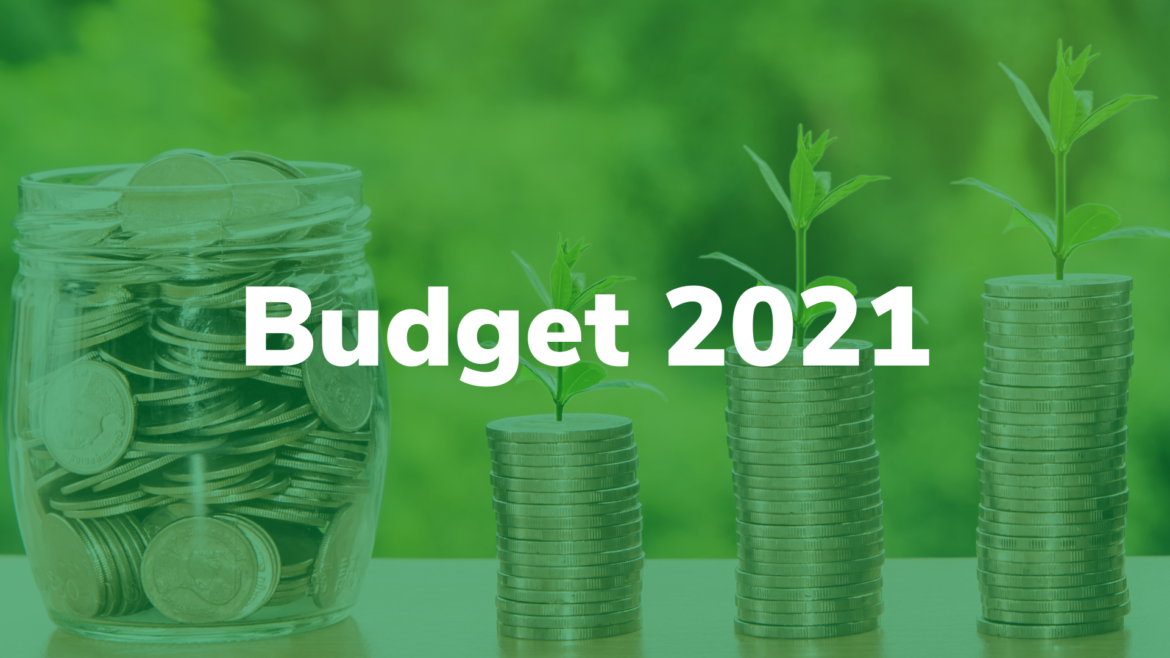
Budget 2021: FM introduces Swachh Bharat 2.0:

by Team Conscious Carma February 2, 2021
written by Team Conscious Carma

Focus to bring ‘swachhta’ to urban India

Budget 2021-22:

To ensure ‘swachhta’ in India, Finance Minister Nirmala Sitharaman has said in the Budget 2021 that the government will focus on complete faecal sludge management. Sitharaman said that in order to tackle the burdening problem of pollution, the ministry has proposed Rs 2,217 crore for 42 urban centres having a population of more than a million people.

man in smoggy Delhi, budget 2021

Union Budget 2021:

To ensure ‘swachhta’ in India, Finance Minister Nirmala Sitharaman has introduced Swachh Bharat 2.0 and said that the government will focus on complete faecal sludge management. Apart from this, wastewater treatment, segregation of garbage, reduction in single-use plastics, reduction in air pollution by managing waste from construction sites and demolition activities along with bioremediation of all legacy dumpsites will be taken into consideration. “The urban swachh Bharat mission 2.0 will be implemented with a total financial allocation of Rs 1.41 lakh crore over a period of 5 years from 2021,” the FM said.

Sitharaman said that in order to tackle the burdening problem of pollution, the ministry has proposed Rs 2,217 crore for 42 urban centres having a population of more than a million people.

The earlier Swachh Bharat mission introduced by the Modi government had an initial goal to make urban India open defecation free (ODF) as well as 100 per cent scientific solid waste management. In the Swachh Bharat 2.0,  the government is trying to tap other aspects under the Swachh Bharat mission including safe containment, transportation, disposal of faecal sludge, and septage from toilets. This has also been highlighted by the Ministry of Housing & Urban Affairs earlier. All wastewater will be treated properly before it is discharged into water bodies, and the government is trying to make maximum possible re-use a priority.

Since its launch in 2014, Swachh Bharat Mission-Urban (SBM-U) has made significant progress in the area of both sanitation and solid waste management. 4,324 urban local bodies have been declared Open Defecation Free, which has been made possible through the construction of more than 66 lakhs individual household toilets and over 6 lakhs community/ public toilets, far exceeding the Mission’s targets, the statement highlighted. Additionally, over 59,900 toilets across over 2900 cities have been made live on Google Maps.

Source: FE Online

To Checkout more from Conscious Carma, Click here

February 2, 2021 0 comment
0 FacebookTwitterPinterestEmail
PM moves to declare climate emergency
EconomyGlobal

New Zealand declares climate emergency, promises carbon-neutral Govt by 2025

by Team Conscious Carma January 31, 2021
written by Team Conscious Carma

New Zealand promised its public sector would become carbon neutral by 2025 as it declared a climate emergency on Dec 2, 2020, a symbolic move that critics said needed to be backed with greater actions to reduce emissions.

Prime Minister Jacinda Ardern said the climate emergency declaration was based on the Intergovernmental Panel on Climate Change’s findings that to avoid more than 1.5 degree Celsius rise in global warming, emissions would need to fall by around 45% from 2010 levels by 2023 and reach zero by around 2050.

Video Source: The Guardian

“This declaration is an acknowledgement of the next generation. An acknowledgement of the burden that they will carry if we do not get this right and do not take action now,” Ardern told lawmakers in parliament.

New Zealand joins 32 other countries including Japan, Canada, France and Britain that have declared a climate emergency.

Ardern, who returned to power in October delivering the biggest election victory for her centre-left Labour Party in half a century, has called climate change the “nuclear-free moment of our generation”.

In her first term, she passed a Zero Carbon Bill, which sets the framework for net-zero emissions by 2050 with an exemption for farming, and banned new offshore oil and gas exploration.

Nearly half of New Zealand’s greenhouse gas emissions come from agriculture, mainly methane.

The programme will be backed by a NZ$200 million ($141 million) fund to finance replacing coal boilers and help purchase electric or hybrid vehicles. 

Greenpeace welcomed the declaration but challenged the government to follow through with policy and action.

“For Jacinda Ardern’s climate emergency declaration to be more than just words, that means tackling New Zealand’s largest source of climate pollution: agriculture,” said Greenpeace agriculture and climate campaigner Kate Simcock.

Source: Reuters

To checkout more Global news, Click Here

Checkout other Latest posts from Conscious Carma

  • India–UK Free Trade Agreement Opens Global Growth Opportunities for 3R ZeroWaste’s Circular Economy Solutions
  • Plastic Free July: Why True Sustainability Goes Beyond Swapping Plastic
  • From the Editor’s Desk: When Greed Takes Over Conscience
  • Beyond the Pose: Why Your Yoga Mat Needs a Sustainable Upgrade
  • Best Sustainable Father’s Day Gifts: Conscious Carma’s Exclusive Picks
January 31, 2021 0 comment
0 FacebookTwitterPinterestEmail
oil industry machines
EconomyGlobal

Denmark set to end all new oil and gas exploration

by Team Conscious Carma January 12, 2021
written by Team Conscious Carma

Denmark will end all new oil and gas exploration in the North Sea, as part of a wider plan to stop extracting fossil fuels by 2050.

Its government also agreed to cancel its latest licensing round, which gives firms permission to search for and produce oil and gas.

“We are now putting a final end to the fossil era,” said Denmark’s climate minister Dan Jorgensen. “We’re the European Union’s biggest oil producer and this decision will therefore resonate around the world. We want to be climate neutral in 2050. And if we are to have any credibility in that, then this is a necessary decision,” he added. 

Greenpeace Denmark described the announcement as a “watershed moment”.

men beside an oil industry machine

Denmark is currently the largest oil producer in the European Union. Although it produces much less than non-EU members Norway or the UK.

It pumped 103,000 barrels a day in 2019, according to an analysis by UK oil giant BP

There are 55 drilling platforms on its territory, across 20 oil and gas fields.

The decision will cost Denmark about 13 billion kroner (£1.1bn). According to estimates by the energy ministry, it said this amount was subject to substantial uncertainty.

Denmark is regarded as having one of the world’s most ambitious climate targets. It aims to reduce greenhouse gas emissions from 1990 levels by 70% by 2030, as well as reach net zero emissions by 2050 – both targets which have been passed into law.

men working in oil industry
IMAGE COPYRIGHTGETTY IMAGES

Governments around the world have also committed to taking further action on climate change as part of a wider plan to meet the goals of the Paris Agreement.

The UK will aim to cut its carbon emissions by at least 68% of what they were in 1990 by the end of 2030, Prime Minister Boris Johnson announced. 

Scientists have said, however, that even if the UK and other nations keep their promises on cutting emissions there was no guarantee the world would avoid serious global warming.

Source: www.bbc.com

Checkout our other Latest posts from below:

  • India–UK Free Trade Agreement Opens Global Growth Opportunities for 3R ZeroWaste’s Circular Economy Solutions
  • Plastic Free July: Why True Sustainability Goes Beyond Swapping Plastic
  • From the Editor’s Desk: When Greed Takes Over Conscience
  • Beyond the Pose: Why Your Yoga Mat Needs a Sustainable Upgrade
  • Best Sustainable Father’s Day Gifts: Conscious Carma’s Exclusive Picks

January 12, 2021 0 comment
0 FacebookTwitterPinterestEmail
Newer Posts
Older Posts

Recent Posts

  • India–UK Free Trade Agreement Opens Global Growth Opportunities for 3R ZeroWaste’s Circular Economy Solutions
  • Plastic Free July: Why True Sustainability Goes Beyond Swapping Plastic
  • From the Editor’s Desk: When Greed Takes Over Conscience
  • Beyond the Pose: Why Your Yoga Mat Needs a Sustainable Upgrade
  • Best Sustainable Father’s Day Gifts: Conscious Carma’s Exclusive Picks

Recent Comments

  • Team Conscious Carma on Label Shivika Agarwal – where craft meets sustainability
  • Cocomeister.jp on Label Shivika Agarwal – where craft meets sustainability
  • Team Conscious Carma on Equitable City Designs To Fight Climate Change
  • UN report calls for repurposing of USD 470 billion of agricultural support that distorts prices and steer us away from environment and social goals | Consciouscarma on UNEP & ICMR collaborate to boost understanding of environmental dimensions of antimicrobial resistance in India
  • Wild Earth : Natural body products | Consciouscarma on Sat.Suma : the true essence of flowers in your everyday skincare needs

Keep in touch

Facebook Twitter Instagram Youtube

Recent Posts

  • India–UK Free Trade Agreement Opens Global Growth Opportunities for 3R ZeroWaste’s Circular Economy Solutions

  • Plastic Free July: Why True Sustainability Goes Beyond Swapping Plastic

  • From the Editor’s Desk: When Greed Takes Over Conscience

  • Beyond the Pose: Why Your Yoga Mat Needs a Sustainable Upgrade

  • Best Sustainable Father’s Day Gifts: Conscious Carma’s Exclusive Picks

  • How Sacred Sound is Reshaping the Future of Holistic Health?

Categories

  • Community (38)
    • Campaigns (3)
  • CSR (4)
  • Economy (82)
    • Global (24)
    • Industry (42)
    • Innovations (4)
    • National (2)
  • Environment (48)
  • Expert Corner (48)
    • Authored Articles (47)
  • Featured (5)
    • Partners (1)
  • Global News (2)
  • Initiatives (31)
    • CSR (3)
    • Events (6)
  • Inspiration (22)
  • Lifestyle (9)
  • Media Coverage (6)
  • Press Releases (4,358)
  • Products (126)
    • Accessories (27)
    • Apparel (32)
    • Beauty (26)
    • Food (4)
    • Gifting (3)
    • Home Décor (15)
    • Skin-Care (14)
  • Reports (3)
  • Spirituality (10)
  • Sustainability (49)
  • Sustainable Startup Stories (28)
  • Travel (19)
  • Uncategorized (2)
  • Wellness (33)
    • Home Cleaners (3)

Archives

  • August 2026 (1)
  • July 2026 (1)
  • June 2026 (6)
  • October 2024 (1)
  • September 2024 (1)
  • July 2024 (2)
  • June 2024 (2)
  • May 2024 (1)
  • November 2023 (330)
  • October 2023 (554)
  • September 2023 (631)
  • August 2023 (718)
  • July 2023 (723)
  • June 2023 (710)
  • May 2023 (608)
  • April 2023 (114)
  • March 2023 (7)
  • February 2023 (3)
  • January 2023 (11)
  • December 2022 (18)
  • November 2022 (1)
  • August 2022 (6)
  • July 2022 (8)
  • June 2022 (24)
  • May 2022 (11)
  • April 2022 (19)
  • March 2022 (11)
  • February 2022 (11)
  • January 2022 (14)
  • December 2021 (10)
  • November 2021 (4)
  • October 2021 (14)
  • September 2021 (22)
  • August 2021 (12)
  • July 2021 (17)
  • June 2021 (17)
  • May 2021 (16)
  • April 2021 (22)
  • March 2021 (33)
  • February 2021 (16)
  • January 2021 (22)
  • December 2020 (10)
  • Facebook
  • Twitter
  • Instagram
  • Pinterest
  • Linkedin
  • Youtube

@2020 - All Right Reserved. Designed and Developed by Bizopser Technologies

Consciouscarma
  • Home
  • About Us
  • Products
  • Community
    • Campaigns
    • Inspiration
    • Initiatives
    • CSR
  • Features
    • Sustainable Startup Stories
    • Travel
    • Lifestyle
    • Partners
  • Economy
    • Industry
    • Innovations
    • National
    • Global
  • Environment
  • Expert Corner
    • Authored Articles
    • Reports
  • Magazine
  • Contact