Consciouscarma
  • Home
  • About Us
  • Products
  • Community
    • Campaigns
    • Inspiration
    • Initiatives
    • CSR
  • Features
    • Sustainable Startup Stories
    • Travel
    • Lifestyle
    • Partners
  • Economy
    • Industry
    • Innovations
    • National
    • Global
  • Environment
  • Expert Corner
    • Authored Articles
    • Reports
  • Magazine
  • Contact
Category:

Environment

Is there a way to survive without air and water?  Ofcourse not.  Knowing it fully well, we are polluting our air and depleting our water resources every second.   It’s just like cutting the branch of the tree on which we are sitting.   Environment needs to be protected at any cost, if we humans, want to live on Planet Earth.  Its NOW or NEVER to save the Earth and in turn, save ourselves

unep nature investment
Environment

World needs USD 8.1 trillion investment in nature by 2050 to tackle triple planetary crisis: UNEP

by Team Conscious Carma June 1, 2021
written by Team Conscious Carma

Total investment in nature of USD 8.1 trillion is required between now and 2050 – while annual investment should reach USD 536 billion annually by 2050 – in order to successfully tackle the interlinked climate, biodiversity, and land degradation crises, according to the State of Finance for Nature report released recently.

The report finds that annual investments in nature-based solutions will have to triple by 2030 and increase four-fold by 2050 from the current investments into nature-based solutions of USD 133 billion (using 2020 as base year).

The authors of the report – produced by the UN Environment Programme (UNEP), the World Economic Forum (WEF) and the Economics of Land Degradation (ELD) Initiative hosted by the Deutsche Gesellschaft für Internationale Zusammenarbeit (GIZ) in collaboration with Vivid Economics – urge Governments, financial institutions and businesses to overcome this investment gap by placing nature at the heart of economic decision-making in the future. They stress the need to rapidly accelerate capital flows to nature-based solutions by making nature central to public and private sector decision-making related to societal challenges, including tackling the climate and biodiversity crises.

Unlocking the potential of nature-based solutions to close the finance gap by 2050

Structural transformations are needed to close the USD 4.1 trillion finance gap between now and 2050, by building back more sustainably in the wake of the Covid-19 pandemic, but also by repurposing harmful agricultural and fossil fuel subsidies and creating other economic and regulatory incentives. Investing in nature supports human, animal and planetary health, improves quality of life, and creates jobs. However, nature currently only accounts for 2.5% of projected economic stimulus spending in the wake of Covid-19. Private capital will also have to be scaled up dramatically to close the investment gap. Developing and scaling up revenue flows from ecosystem services and using blended finance models as a means to crowd in private capital are among the suite of solutions needed to make this happen, which also requires risk-sharing from private sector entities.

“Biodiversity loss is already costing the global economy 10 percent of its output each year. If we do not sufficiently finance nature-based solutions, we will impact the capacities of countries to make progress on other vital areas such as education, health and employment. If we do not save nature now, we will not be able to achieve sustainable development,” said UNEP Executive Director, Inger Andersen.

“The report is a wake-up call for Governments, financial institutions and businesses to invest in nature — including reforestation, regenerative agriculture, and restoration of our Ocean,” she said, adding that countries and leaders of industry will have an opportunity to do so at the upcoming summits related to climate, biodiversity, land degradation and food systems, and in the context of the UN Decade on Ecosystem Restoration (2021-2030).

Investing smarter: Reimagine, recreate, restore

Forest-based solutions alone, including the management, conservation and restoration of forests, will require USD 203 billion in total annual expenditure globally, according to the report. That is equivalent to just over USD 25 per year for every citizen in 2021. The report calls for coupling investments in restoration action with financing conservation measures. This could result in forest and agro-forestry (the combination of food production and tree growing) area increases of approximately 300 million hectares by 2050, relative to 2020.

The upcoming summits on climate, biodiversity, land degradation and food systems, as well as the launch of the UN Decade on Ecosystem Restoration on 5 June 2021 provides an opportunity to harness political and business momentum to align the economic recovery with the Paris Agreement and the anticipated post-2020 Global Biodiversity Framework, and thus be consistent with limiting warming to 1.5° C above pre-industrial levels, as well as halting and reversing the loss of biodiversity.

Making nature a business and investment case

The report’s authors say the annual investment of the private sector in nature-based solutions was equal to USD 18 billion in 2018. Private finance only accounts for 14%, including capital mobilized through sustainable agricultural and forestry supply chains, private equity investments, biodiversity offsets financed by private sectors, philanthropic capital, private finance leveraged by multilateral organizations and forest and other land use-related carbon markets.

In climate finance, private sector investment accounts for most capital flows (56% according to the Climate Policy Initiative). The scaling up of private capital for nature-based solutions is one of the central challenges of the next few years with a specific focus on investing in nature to support sustainable economic growth in the 21st century.

Investors, developers, market infrastructure makers, customers and beneficiaries can play roles in creating a market where nature-based solutions access new sources of revenue, increases resilience of commercial activities, reduces costs or contributes to reputation and purpose.

While a number of private sector-led initiatives have already emerged, the report stresses the need for companies and financial institutions to increasingly be part of the solution by sharing the risk and committing to boost finance and investment in nature-based solutions in an ambitious way and with clear, time-bound targets. While investments in nature-based solutions cannot be a substitute for deep decarbonization of all sectors of the economy, they can contribute to the required pace and scale of climate change mitigation and adaptation.

About the Economics of Land Degradation (ELD) Initiative
The ELD Initiative is a global initiative established in 2011 by the United Nations Convention to Combat Desertification, the German Federal Ministry for Economic Cooperation and Development, and the European Commission. It is supported by a broad network of partners across diverse fields of knowledge.

About the UN Environment Programme (UNEP)
UNEP is the leading global voice on the environment. It provides leadership and encourages partnership in caring for the environment by inspiring, informing and enabling nations and peoples to improve their quality of life without compromising that of future generations.

About the World Economic Forum (WEF)
The World Economic Forum is the International Organization for Public-Private Cooperation. It engages the foremost political, business, cultural and other leaders of society to shape global, regional and industry agendas.


June 1, 2021 0 comment
0 FacebookTwitterPinterestEmail
biomass
Environment

Ministry of Power decides to set up a National Mission on the use of Biomass in coal-based thermal power plants

by Team Conscious Carma May 26, 2021
written by Team Conscious Carma

In order to address the issue of air pollution due to farm stubble-burning and to reduce carbon footprints of thermal power generation, the Ministry of Power has decided to set up a National Mission on the use of Biomass in coal-based thermal power plants. This would further support the energy transition in the country and our targets to move towards cleaner energy sources.

The “National Mission on use of biomass in thermal power plants” will have the following objectives;

(a) To increase the level of co-firing from present 5% to higher levels to have a larger share of carbon neutral power generation from the thermal power plants.

(b) To take up R&D activity in boiler design to handle the higher amount of silica, alkalis in the biomass pellets.

(c) To facilitate overcoming the constraints in supply chain of bio mass pellets and agro- residue and its transport upto to the power plants.

(d) To consider regulatory issues in biomass co-firing.

The modalities of operation and structure of the Nation Mission are under finalization. It is being envisaged that the Mission would have a Steering Committee headed by Secretary (Power) comprising of all stakeholders including representatives from Ministry of Petroleum & Natural Gas (MoPNG), Ministry of New & Renewable Energy (MNRE) etc. The Executive Committee would be headed by Member (Thermal), CEA. NTPC will play a larger role in providing logistic and infrastructure support in the proposed National Mission. The Mission would have full time officers from CEA, NTPC, DVC and NLC or other participating organizations. The duration of proposed National Mission would be a minimum 5 years. The following Sub-Groups are also proposed to be formed under the Mission:

(i) Sub-Group 1 : to be responsible to carry out research on properties/ characteristics of biomass.

(ii) Sub-Group 2 : to carry out technical specification and safety aspects including research in boiler design etc. to handle the pilot project for higher amount of co-firing of biomass with coal in pulverized coal (PC) fired boilers.

(iii). Sub-Group 3: for resolving the issues of supply chain during the mission period and sensitization programme.

(iv). Sub-Group 4 : to select designated labs and certification bodies for testing of Agro-based biomass pellets and Municipal Solid Waste (MSW) pellets

(v). Sub-Group 5: be formed on regulatory framework and economics of biomass co-firing in coal based Thermal power plants.

 The proposed National Mission on biomass will also contribute to the National Clean Air Programme (NCAP).
Source: www.pib.gov.in

May 26, 2021 0 comment
0 FacebookTwitterPinterestEmail
Environment

Global plan to protect world’s seas

by Team Conscious Carma April 24, 2021
written by Team Conscious Carma

A new ocean conservation initiative, Blue Nature Alliance partners to protect and conserve 18 million square kilometres of the ocean (7 million square miles) over the next five years—an area larger than the continent of South America.

Blue Nature Alliance, is a collaboration led by Conservation International, The Pew Charitable Trusts, the Global Environment Facility, Minderoo Foundation, and the Rob and Melani Walton Foundation. The Alliance aims to expand and enhance ocean protections with a focus on working alongside Indigenous peoples and local communities, scientists and academia, and other partners.

The Blue Nature Alliance is working with governments and other partners on large-scale efforts in Fiji’s Lau Seascape, Antarctica’s Southern Ocean, and Tristan da Cunha to collectively secure protections over 4.8 million square kilometres (1.9 million square miles) of the ocean. The Alliance will soon engage in efforts in Canada, Palau, Seychelles, and the Western Indian Ocean. This will aim to strengthen and enhance the protection of nearly 2 million square kilometres (734,000 square miles) of the ocean. A pipeline of 18 additional Blue Nature Alliance engagements has been identified across North and South America, Europe, and the Asian Pacific region. The Blue Nature Alliance will announce the next round of locations in summer 2021.

“A Healthy ocean is key to our existence. It provides nutrition and employment for a majority of people around the world and half of the oxygen each of us breathes. Yet significantly less of our ocean is protected when compared to land,” said ‘Aulani Wilhelm, senior vice president of Oceans for Conservation International. “We must collaborate globally, in partnership with local governments and Indigenous peoples, to make the conservation of our ocean a priority. The time is now to take big practical action to move this work forward.”

The world’s ocean is under stress, it is facing threats from climate change, damaging fishing practices, and pollution. Science shows that protecting and conserving large areas of the ocean is necessary to support the air we breathe, regulate the climate, and maintain essential levels of biodiversity.

“From the coastlines to the high seas, we need to tackle conservation holistically and in partnership. Our collective efforts will help secure a healthy ocean that is more resilient to climate change and yields benefits to both nature and people,” said Tom Dillon, senior vice president for the environment at The Pew Charitable Trusts. “To boost biodiversity, fisheries, and economies, the Blue Nature Alliance will work with partners globally to apply science and lessons learned, and build on best practices to conserve our ocean at scale. We need this type of ambition to address the challenges facing our ocean today.”

The Blue Nature Alliance’s efforts support the push to protect at least 30 per cent of the ocean by 2030, a global conservation goal expected to be formally adopted at the United Nations Biodiversity Conference later this year. To date, less than 10 per cent of the global ocean is protected. The 30 per cent goal is widely agreed upon as the threshold needed to maintain a resilient and functioning ocean that supports the health of people and nature.

“Conserving 30 per cent of the world’s land and sea in the coming decade will require all of us to work together, with science as our North Star,” said Carlos Manuel Rodriguez, CEO and Chairperson of the Global Environment Facility. “It is heartening to see collaborative work underway in the South Atlantic, South Pacific, and Antarctica’s the Southern Ocean, and with work about to begin in even more locations around Palau, Seychelles, Canada, and the Western Indian Ocean. Through the Blue Nature Alliance, we will be contributing significantly to the 30 per cent global ocean conservation goal and ensuring we have the momentum to build on as we strive for our 2030 ambitions.”

To achieve its ambitious goal, the Blue Nature Alliance is creating a global network of partners dedicated to building on lessons learned from well-functioning marine protected areas and innovating new approaches to conserving large ocean areas, many of which have heavily incorporated the traditional knowledge and needs of local communities and governments into their long-term management plans – a practice that helps ensure resilience, both in funding and implementation.

“Engaging with local communities is essential to the long-term success of ocean conservation efforts,” said Dr. Tony Worby, CEO of Flourishing Oceans at Australia’s Minderoo Foundation. “Local communities rely on the ocean directly for livelihoods, cultural activities and recreation, so it is critical that they are involved in decision making that supports long-term sustainability. A measure of success for the Blue Nature Alliance will be to build community support for ocean conservation measures that are enduring.”

“Melani and I care deeply about the future of our planet and the communities that depend on nature for their health, livelihoods and culture,” said Rob Walton, co-founder of the Rob and Melani Walton Foundation. “That’s why we are pleased to be part of the Blue Nature Alliance – which brings together philanthropists, businesses, governments and NGOs to substantially increase and improve ocean conservation. Now is a critical time. The ocean is under immense pressure, and we all have a responsibility to help safeguard it.”

In addition to its five founding partners, the Blue Nature Alliance’s growing network includes world-renowned conservation experts, scientists, and financial strategists including Big Ocean, the Global Island Partnership, the Gordon and Betty Moore Foundation, the Murphy Family Foundation, Nekton, Oceana, Ocean Unite, the Tiffany & Co. Foundation, and SkyLight Surveillance and Enforcement Technology.

April 24, 2021 0 comment
0 FacebookTwitterPinterestEmail
earth in a pot
Environment

Nurture Mother Earth: Our only mode of Survival

by Team Conscious Carma April 22, 2021
written by Team Conscious Carma

All living beings are dependent on it

Our world is a beautiful place and it has sustained everything living on it for millions of years, Although our presence has done much damage to it, we still have a chance to change it. When we talk of the environment, it involves everything around us, not just weather. It includes all the animals, plants and human beings living on earth. The world population of 7.7 billion people represent just 0.01 per cent of all living beings. Yet since the dawn of civilization, humanity has caused the loss of 83% of all wild mammals and half of all plants.

Over consumerism is killing the Earth

We have made consumption our way of life, but our consumer society is currently destroying the planet. Everything we buy has global consequences. To illustrate, a simple meal for one person required 800 litres of water, 1.3 litres of diesel, 0.3 grams of pesticides, 3.5 kilos of carbon dioxide, and 10 kilos of topsoil. By 2030, the Global Ecological Footprint is expected to reach 2, meaning that we will need the equivalent of two planet Earth to support our consumption of products and services

Experts widely agree that human activities are harming the global environment. Since the Industrial Revolution, the world economy has grown dramatically. Overall this is a success story since rising incomes have lifted millions of people out of poverty. But it has been fueled by population growth and increasing consumption of natural resources.

Our consumer society is running amok. The global population is growing by the second. We are turning Earth’s resources into waste faster and faster. Rising demand to meet the needs of more than 7 billion people has transformed land use and generated unprecedented levels of pollution, affecting biodiversity, forests, wetlands, water bodies, soils and air quality.

Climate Change

The planet’s average surface temperature has risen about 2.12 degrees Fahrenheit (1.18 degrees Celsius) since the late 19th century, a change driven largely by increased carbon dioxide emissions into the atmosphere and other human activities. Most of the warming occurred in the past 40 years, with the seven most recent years being the warmest. The past decade was the hottest on record. The year 2020 was more than 1.2C hotter than the average year in the 19th Century. In Europe, it was the hottest year ever, while globally 2020 tied with 2016 as the warmest. The exceptionally warm temperatures triggered the largest wildfires ever recorded in the US states of California and Colorado, and the “black summer” of fires in eastern Australia.

The threat of abrupt and irreversible climate change is growing. There is an increasing consensus that critical tipping points are approaching after which global warming will be impossible to stop. The loss of the Greenland and West Antarctic ice sheets would cause sea levels to rise 10 meters. This could happen already in this century. At the same time, global energy use will continue to grow by about 27% between 2017 and 2040. If nothing changes, most of this increase will be covered by burning more coal.

The potential future effects of global climate change include more frequent wildfires, longer periods of drought in some regions and an increase in the number, duration and intensity of tropical storms.

A Growing World Population

The world population will reach 8.5 billion by 2030 with almost 5 billion part of the consumer class. This will put even more pressure on Earth’s ecosystems. We have already used up more than a third of our natural resources. By 2030, the demands from 5.6 billion consumers will be draining the Earth for resources so fast that we need 2 planets to support us. And if everyone on the planet lives like western consumers, we would need 5 planets to support us.

A toxic planet

The global economy emits more than 250 billion tonnes of chemical substances a year, Many completely uncontrolled. And produces more than 400 million tons of hazardous chemical waste each year. Human-made chemicals have found their way into every single ecosystem on Earth causing scientists to label Earth “a toxic planet”.

The industrial activities that our modern civilization depends upon have raised atmospheric carbon dioxide levels from 280 parts per million to 414 parts per million in the last 150 years.

Facts about Waste & Pollution

  • Landfills are composed of 35% packaging materials
  • By 2100, the global urban population will produce three times more waste than today
  • Up to half of all food produced is lost or wasted before or after it reaches consumers
  • The equivalent of one garbage truck of plastic is dumped into our oceans every single minute. By 2030, it will be two truckloads per minute and by 2050, four
  • The speed of groundwater pollution doubled between 1960 and 2000
  • According to a 2018 article in Nature Magazine, the Great Pacific Plastic Garbage Patch stretches 1.6 million km2. That’s the size of Iran or over twice the size of Texas
  • Mining is considered the world’s Number One Toxic Polluter. Steel production, for example, results in 80 tons of toxic wastewater for each ton of steel produced

Forests

Since 1990 the world has lost 178 million hectares of forest (690,000 square miles) – an area the size of Libya. Over the past three decades, the rate of deforestation has slowed but experts say it isn’t fast enough, given the vital role forests play in curbing global warming. In 2015-20 the annual deforestation rate was 10 million hectares (39,000 square miles, or about the size of Iceland), compared to 12 million hectares (46,000 square miles) in the previous five years.

An estimated 45% of all carbon on land is stored in trees and forest soil. “Soils globally contain more carbon than all plants and atmosphere put together,” says Waring. When forests are cut down or burned, the soil is disturbed and carbon dioxide is released.

Facts about Natural Resources & other living species

  • According to NASA, the world’s rainforests will be gone by 2100 if the current rate of destruction continues.
  • When you throw plastic bags and other plastic materials in the ocean, it kills as many as 1 million sea creatures annually
  • An estimated 50,000 species inhabiting our tropical forests become extinct annually. That’s an average of 137 species a day
  • By 2070, the world’s coral reefs could be gone altogether
  • By 2050, there could be more plastic than fish in the world’s oceans
  • If all life on Earth was put on a scale, the human population would only make up about one ten-thousandth of the total weight of life on Earth.

Industries of the Agricultural Sector

Modern agriculture is the driver of 80% of deforestation and 70% of freshwater use globally. The rainforest could be gone by 2100 and fish stocks completely collapsed by 2050

Oceans

Since the beginning of the Industrial Revolution, the acidity of surface ocean waters has increased by about 30%. This increase is the result of humans emitting more carbon dioxide into the atmosphere and hence more being absorbed into the ocean. The ocean has absorbed between 20% and 30% of total anthropogenic carbon dioxide emissions in recent decades (7.2 to 10.8 billion metric tons per year).

The top 100 meters (about 328 feet) of the ocean showing warming of more than 0.6 degrees Fahrenheit (0.33 degrees Celsius) since 1969. Earth stores 90% of the extra energy in the ocean.

People & Poverty

Over 150 million children are working under dangerous or exploitative conditions. 40 million people work in conditions of slavery – more people than at any other time in human history. These men, women and children produce some of our everyday products. At the same time, more than 800 million people suffer from hunger.

Conclusion

Real change is needed. Not just from politicians and businesses – but from all of us. Without understanding the situation and without developing a deeper awareness about the lives we are living and the consequences it has, such changes are unlikely to occur. Today, more than ever, we need ideas, information and tools to help us live consciously.

Consumerism facts

  • Human consumption of Earth’s natural resources more than tripled between 1970 and 2015. Our use of natural resources to continue growing and more than double from 2015 to 2050
  • The consumer society is thirsty. Very thirsty. “There will be no water by 2040 if we keep doing what we’re doing today”, (Professor Benjamin Sovacool of Aarhus University, Denmark)
  • 27,000 trees are cut down each day so we can have Toilet Paper
  • Cotton production requires so much water that it emptied a whole sea (the Aral Sea in Uzbekistan). It has been called one of the worst environmental disasters in history
  • We use 5 trillion plastic bags a year, that’s about 1,60,000 bags a second
  • If current patterns continue. We will have emptied the world’s oceans for seafood by 2050.
  • Nearly 80% of the world’s fisheries are fully exploited, over-exploited, depleted or in a state of collapse. Globally 90% of large predatory fish, such as sharks and tuna are gone.

With inputs from theworldcounts.com

April 22, 2021 0 comment
0 FacebookTwitterPinterestEmail
Environment

Conscious Carma gets into a candid chat with the Environmentalist Pragya Kapoor

by Team Conscious Carma April 7, 2021
written by Team Conscious Carma

Phenomenal producer, sensational environmentalist and a loving mother of two, Pragya Kapoor, born and brought up in a small, quaint town of Sweden, relocated to India in 2009 to try her hand at acting. Post her Bollywood debut in the 2014 film ‘Hawaa Hawaai’, the actress tied the knot with the celebrated film director Abhishek Kapoor in 2015. 

Whilst pursuing her work in Hindi cinema, Pragya is also an avid conservationist with colossal zeal for sustainability and eco-friendly practices. Her practice of ensuring zero waste at home later inspired her to establish Ek Saath- The Earth Foundation, a not for profit entity that works towards making the country more sustainable. Pragya also strives to inculcate the idea of sustainability in her role as a mother as she celebrated her younger son’s birthday by organizing a beach clean-up drive. Recently, even her production house went 100% green by switching to solar power!

Conscious Carma gets into a candid chat with the Environmentalist

Q1. How and when were you inspired towards sustainability?

Spending my formative years in a country like Sweden ensured that I’m raised in an environment that has values of sustainability ingrained in its very culture. So practising recycling or managing our waste responsibly were things that just came naturally to us. But it was a completely different story down here in Mumbai. It took me a fair amount of time while getting used to the drastically different ways of living here. That was until I became a mother and the thought of raising my kids in a world which doesn’t offer the same values that I inculcated growing up, seemed unacceptable to me. That triggered a drive in me to not be complacent with how things are and trace back my sustainable ways of living, one step a time.

Q2. Please tell us more about your life as an environmentalist, both in Sweden and India?

It’s just a gift that keeps giving. I feel blessed to have this opportunity where my actions can translate into making the world a better place for so many others in the long run. That being said, being an environmentalist you’re always aware that reaching the uphill milestones you chase is never going to be a one-person job.  Bringing about a change demands a united effort on so many different fronts. Teaming up with kindred spirits, garnering the government’s support, empowering the locals. I got to juggle between many different roles and hope that I am able to set an example for others to follow.

Q3. You’ve been in India for more than a decade. Have you seen any remarkable difference in people’s and organisational behaviour with respect to the conservation of environment?

Most certainly. It’s hard to turn a blind eye towards nature when its severe consequences are all around you. People are starting to care, it’s overwhelming to see how our youth today has begun to raise important questions, come out on the streets to save trees and support other causes. Organisations too are offering increasing support to important initiatives that would never see the light of the day without their aid. Social Media has played a crucial role in setting up the momentum for so many important movements that have overturned government’s decisions, led to landmark verdicts and what not. So yes, there’s been a remarkable shift in the attitude and that’s also the need of the hour. That being said, I think we still have a long way to go in order to bring about a considerable change. The kind of ecological hazard these consumer giants have become today, it’s hard to compensate that with a few CSR drives from the aware ones. Until we don’t strive to change the very model on which these companies function, there’s little we can do to salvage the situation.

Q4. Please tell us more about Ek Saath- The Earth Foundation and its various activities?

Ek Saath was a lifelong dream that I happened to realise last year. Over time, we’ve grown to sideline the tender relationship we all share with nature. We’ve forgotten what it’s like to climb trees, walk barefoot on grass. Instead, we pollute our seas, land, air only to face the consequences of it later. The more we nourish our surroundings, the more it shall nurture us in turn. Ek Saath stands to harmonise this very critical rapport that lies terribly compromised of late. In barely a year we’ve managed to conquer such great heights, we’ve conducted massive beach clean-up drives to rid it of tons of harmful plastic trash, carried out urban afforestation drives to make our cities greener. Throughout the lockdown period, we took up the daunting task of supporting thousands of needy migrant families by providing them with daily meals and rations to help them sustain the threatening phase. More than an NGO, I consider Ek Saath to be a force that is out there to make people accountable for their own surroundings. It’s a drive to empower people to take charge of the nature around them. A team effort that unites like-minded individuals headed in the same direction.

Q5. Going forward, how do you plan to take forward your mission of saving the environment?

Last year we broadened our horizons by setting up a waste management centre in Rakccham, a tiny picturesque hamlet in Himachal Pradesh, with the objective of eliminating primitive waste disposal methods and promoting eco-tourism. Going forward, we aim to move across different parts of the state to make it the first waste-free state of India. Apart from that, we shall also continue with our existing drives- afforestation programmes, beach clean-ups, awareness campaigns. Our two main goals for the year remain to promote sustainable development and waste management. We aim to make the corporations, government and the masses aware of the sustainable alternatives they can opt for without compromising on their convenience to reduce their carbon footprints. Waste is another major issue plaguing our ecosystems. Other than being a breeding ground for diseases, improper disposal methods have had devastating impacts on marine life. We hope to minimise the damage by making people and organisations more responsible with their waste.

April 7, 2021 0 comment
0 FacebookTwitterPinterestEmail
EconomyEnvironment

Water overflows in India’s Union Budget 2021

by Team Conscious Carma March 20, 2021
written by Team Conscious Carma

Rs. 4.28 trillion (USD 57 billion) allocated for water issues for the next 5 years

  • The mission aims to supply water to 4,378 urban local bodies with 2.68 crores tap connections
  • Liquid waste management would be carried out across 500 AMRUT cities

Water supply got a boost in the Union Budget 2021 presented in Parliament by finance minister Nirmala Sitharaman. An outlay of Rs2.87 trillion towards the launch of the Jal Jeevan Mission Urban was announced in her budget speech. The next phase of the Swachh Bharat Mission focusing on the management of sludge, wastewater and construction and demolition waste in cities has also been announced.

The World Health Organization has repeatedly stressed the importance of clean water, sanitation, and a clean environment as a prerequisite to achieving universal health. The mission aims to supply water to 4,378 urban local bodies with 2.68 crore tap connections. Liquid waste management would be carried out across 500 AMRUT (the Atal Mission for Rejuvenation and Urban Transformation) cities,” Sitharaman said. The scheme will be implemented over five years.

The Swachh Bharat Mission (Urban), which was being implemented by the Ministry of Housing and Urban Affairs, would get a second round. “For further cleanliness of urban India, we intend to focus on complete faecal sludge management and wastewater treatment, source segregation of garbage, reduction in single-use plastic, reduction in air pollution by effectively managing waste from construction-and-demolition activities and bio-remediation of all legacy dump sites,” she emphasized. The Swachh Bharat Mission(Urban)2.0 would be implemented over 5 years–2021 till 2026–with an outlay of Rs.1.41 trillion.

Context

In July 2019, the government had formed a new ministry, Jal Sakti, to address all water issues in the country. The ministry also looks at the management of water resources and drinking water supply in a holistic manner.

The ministry was formed by integrating it with other existing ministries, such as water resources and the ministry of drinking water and sanitation. The larger aim is to work with state governments to ensure ‘Har Ghar Jal’ to all rural households by 2024. The announcement was made at a time when the country is grappling with one of the most severe water crisis that it has faced.

Significance

More than 3,500 cities are not supported by any structured scheme. So the government has decided to launch another scheme to cover 4,000 cities and towns for water supply. The proposal estimates JJM-Urban to target 26.8 million households which do not have tap connections and 26.4 million households without sewerage or septage facilities. The proposal would subsume AMRUT under JJM-Urban. The ongoing AMRUT programme focuses on 500 cities, mostly those with over 100,000 population, and aims to provide tap connections to 13.9 million households. The scheme has currently provided 9.5 million connections, roughly 75 per cent. While JJM (U) aims to saturate urban areas with tap connections, the remaining sewage connections outside of the AMRUT cities will be overseen by the Swachh Bharat Mission.

The proposed funding pattern for JJM (U) is to have the Centre provide 100 per cent funding in Union Territories without a legislature, 90 per cent in North Eastern and the other Himalayan States, 50 per cent in cities with a population below one lakh, 33 per cent in cities with a population between 0.1 and 1 million, and 25 per cent in cities with over a million people. “With ever-changing scenarios in the field of water, like improving technology, funding through external sources and availability of water through various sources like surface water, recycled wastewater, harvested rainwater etc. it is imperative to devise comprehensive water plans for every city… The water supply needs to be sustainable, equitable and should meet specified quality standards,” as per the proposal.

The Agence Française de Développement (AFD), the French Development Bank, and KfW, the German Development Bank, have shown interest to fund up to USD 200 million and USD 300 million, respectively. As per the 2011 Census, India’s urban population is roughly 377 million, of which 320 million people live in 4,041 statutory towns and204.8 million people have access to a piped water supply. At the household-level, 42.8 million households out of a total of 67.1 million in the statutory towns had access to a piped water supply. The proposal to the EFC estimates a total urban population of 440.3 million in statutory towns by 2025 (assuming a growth rate of 2.31 per cent), of which 331.9 million will have access to the piped water supply. Similarly, it estimates 92.4 million urban households in all statutory towns.

Conclusion

The Govt has recognized the importance of water and wastewater management for the social and economic development of the country. They also see the looming crisis if the issue is not addressed quickly. The issue also has sizeable political benefits, as the voting public attaches great value to availability of water and sanitation infrastructure. While the money has been put in, robust implementation would be needed to make it work. Previous initiatives like the Namame Gange project have not yielded the desired results.

Policy, technology, planning and project management needs to come together to achieve the stated goals. Rather than looking at the issue as an engineering problem, there is a need to involve civil society, to change mindsets and to address the issues at a mission-critical level. All right-minded individuals and corporates need to come together to ensure safe water and sanitation is available to all …

March 20, 2021 0 comment
0 FacebookTwitterPinterestEmail
Environment

Fighting climate change is now a job for the Bank of England

by Team Conscious Carma March 7, 2021
written by Team Conscious Carma

Central banks are usually tasked with keeping inflation in check while promoting economic growth and employment. Now, add fighting the climate crisis to the list.

On Wednesday, the Bank of England was given a new mandate to support the UK government’s ambition to become a net-zero economy by 2050.

“I am today updating the [Monetary Policy Committee’s] remit to reflect the government’s economic strategy for achieving strong, sustainable and balanced growth that is also environmentally sustainable and consistent with the transition to a net-zero economy,” finance minister Rishi Sunak wrote in a letter to Bank of England Governor Andrew Bailey.

The central bank — which has viewed climate change as a risk to financial stability for some time — will now take into account the climate record of companies before buying their bonds, effectively rewarding greener businesses by lowering their borrowing costs. It said in a statement that it will provide more information on its planned approach in the coming months.

The change comes as UK Prime Minister Boris Johnson touts a “green industrial revolution,” following the coronavirus pandemic that triggered Britain’s worst economic slump in more than three centuries. Johnson’s plan will funnel billions of pounds towards greening Britain’s power, transport and housing infrastructure.

In a separate letter to Bailey on Wednesday, Sunak said that the central bank should “continue to act with a view to building the resilience of the UK financial system to the risks from climate change and support the government’s ambition of a greener industry, using innovation and finance to protect our environment and tackle climate change.”g

Sunak unveiled plans in his annual budget to issue at least £15 billion ($20.9 billion) worth of green bonds in the coming year to help finance projects that tackle climate change and create jobs in the green economy.

UK says the biggest companies must pay more tax

The UK says the biggest companies must pay more tax

He also announced funds for new port infrastructure to support offshore wind farms and plans to launch a bond that will make it easier for UK savers to invest in green projects. Alongside these measures, Sunak unveiled Britain’s first infrastructure bank, which will be located in Leeds with the aim of channelling £40 billion ($55.8 billion) into projects such as carbon capture, hydrogen production and electric vehicle charge points.

Former Bank of England Governor Mark Carney said in a tweet that Sunak’s decision to align the central bank’s remit with the transition to a net-zero economy was a “critically important move.”

But Keir Starmer, the leader of the opposition Labour Party, said the measures didn’t go far enough.

“[Sunak] just talked up his green credentials, but his budget stops way short of what was needed or what’s happening in other countries,” he said in remarks to parliament. “This budget should have included a major green stimulus, bringing forward billions of pounds of investments to create new jobs and new green infrastructure.”

The United Kingdom, which became the first major economy to commit to a legally binding target of net zero emissions by 2050, will host the COP26 UN climate change conference in Glasgow in November.

Source: CNN Business

March 7, 2021 0 comment
0 FacebookTwitterPinterestEmail
co2 emissions
Environment

IEA Says Global CO2 Emissions Rising Again After Nearly 6% Fall Last Year

by Team Conscious Carma March 3, 2021
written by Team Conscious Carma

Global carbon dioxide emissions dropped by 5.8% in 2020 as the COVID-19 pandemic slowed economic activity, but they rebounded at the end of the year and are on course to rise further, the International Energy Agency (IEA) said on Tuesday.

Major economies led a rebound in December when emissions were 2%, or 60 million tonnes, higher than in December 2019, as a pick-up in economic activity increased energy demand.

China, the world’s biggest emitter of greenhouse gases, was the only country that experienced an increase in emissions last year of 0.8%, or 75 million tonnes, from 2019 levels, the IEA said in a report.

co2 emissions
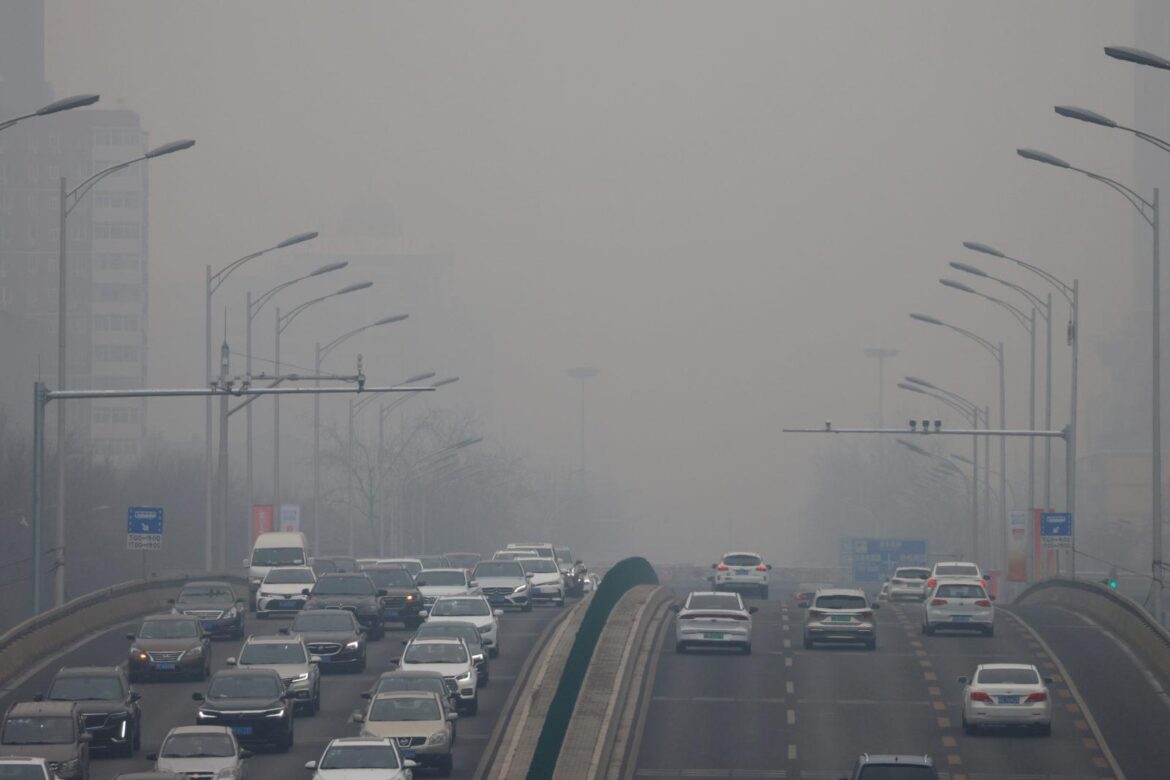
Polluted day in Beijing following the outbreak of the coronavirus disease (COVID-19). Photo: Reuters/Carlos Garcia Rawlins/File Photo

In India, the world’s third biggest emitter, emissions rose above 2019 levels from last September as economic activity increased and restrictions were relaxed.

“The rebound in global carbon emissions toward the end of last year is a stark warning that not enough is being done to accelerate clean energy transitions worldwide,” Fatih Birol, IEA executive director, said.

“If current expectations for a global economic rebound this year are confirmed, and in the absence of major policy changes in the world’s largest economies, global emissions are likely to increase in 2021,” he added.

Primary energy demand fell 4% in 2020 as lockdowns and other restrictions limited industrial activity and transport.

This prompted an unprecedented decline of almost 2 billion tonnes of carbon dioxide – the equivalent of removing all the European Union’s emissions from the global total, the IEA said.

In the global power sector last year, emissions fell by 3.3%, the largest absolute fall on record. Although energy demand decreased, the growth of renewables generation was the biggest contributor to the fall.

The share of renewables in power generation rose to 29% last year from 27% in 2019. Emissions from transport fell by 14% last year from 2019 levels.

(Reuters ‒  Reporting by Nina Chestney; editing by Barbara Lewis)

To checkout more on Environment, Click here

March 3, 2021 0 comment
0 FacebookTwitterPinterestEmail
Newer Posts
Older Posts

Recent Posts

  • India–UK Free Trade Agreement Opens Global Growth Opportunities for 3R ZeroWaste’s Circular Economy Solutions
  • Plastic Free July: Why True Sustainability Goes Beyond Swapping Plastic
  • From the Editor’s Desk: When Greed Takes Over Conscience
  • Beyond the Pose: Why Your Yoga Mat Needs a Sustainable Upgrade
  • Best Sustainable Father’s Day Gifts: Conscious Carma’s Exclusive Picks

Recent Comments

  • Team Conscious Carma on Label Shivika Agarwal – where craft meets sustainability
  • Cocomeister.jp on Label Shivika Agarwal – where craft meets sustainability
  • Team Conscious Carma on Equitable City Designs To Fight Climate Change
  • UN report calls for repurposing of USD 470 billion of agricultural support that distorts prices and steer us away from environment and social goals | Consciouscarma on UNEP & ICMR collaborate to boost understanding of environmental dimensions of antimicrobial resistance in India
  • Wild Earth : Natural body products | Consciouscarma on Sat.Suma : the true essence of flowers in your everyday skincare needs

Keep in touch

Facebook Twitter Instagram Youtube

Recent Posts

  • India–UK Free Trade Agreement Opens Global Growth Opportunities for 3R ZeroWaste’s Circular Economy Solutions

  • Plastic Free July: Why True Sustainability Goes Beyond Swapping Plastic

  • From the Editor’s Desk: When Greed Takes Over Conscience

  • Beyond the Pose: Why Your Yoga Mat Needs a Sustainable Upgrade

  • Best Sustainable Father’s Day Gifts: Conscious Carma’s Exclusive Picks

  • How Sacred Sound is Reshaping the Future of Holistic Health?

Categories

  • Community (38)
    • Campaigns (3)
  • CSR (4)
  • Economy (82)
    • Global (24)
    • Industry (42)
    • Innovations (4)
    • National (2)
  • Environment (48)
  • Expert Corner (48)
    • Authored Articles (47)
  • Featured (5)
    • Partners (1)
  • Global News (2)
  • Initiatives (31)
    • CSR (3)
    • Events (6)
  • Inspiration (22)
  • Lifestyle (9)
  • Media Coverage (6)
  • Press Releases (4,358)
  • Products (126)
    • Accessories (27)
    • Apparel (32)
    • Beauty (26)
    • Food (4)
    • Gifting (3)
    • Home Décor (15)
    • Skin-Care (14)
  • Reports (3)
  • Spirituality (10)
  • Sustainability (49)
  • Sustainable Startup Stories (28)
  • Travel (19)
  • Uncategorized (2)
  • Wellness (33)
    • Home Cleaners (3)

Archives

  • August 2026 (1)
  • July 2026 (1)
  • June 2026 (6)
  • October 2024 (1)
  • September 2024 (1)
  • July 2024 (2)
  • June 2024 (2)
  • May 2024 (1)
  • November 2023 (330)
  • October 2023 (554)
  • September 2023 (631)
  • August 2023 (718)
  • July 2023 (723)
  • June 2023 (710)
  • May 2023 (608)
  • April 2023 (114)
  • March 2023 (7)
  • February 2023 (3)
  • January 2023 (11)
  • December 2022 (18)
  • November 2022 (1)
  • August 2022 (6)
  • July 2022 (8)
  • June 2022 (24)
  • May 2022 (11)
  • April 2022 (19)
  • March 2022 (11)
  • February 2022 (11)
  • January 2022 (14)
  • December 2021 (10)
  • November 2021 (4)
  • October 2021 (14)
  • September 2021 (22)
  • August 2021 (12)
  • July 2021 (17)
  • June 2021 (17)
  • May 2021 (16)
  • April 2021 (22)
  • March 2021 (33)
  • February 2021 (16)
  • January 2021 (22)
  • December 2020 (10)
  • Facebook
  • Twitter
  • Instagram
  • Pinterest
  • Linkedin
  • Youtube

@2020 - All Right Reserved. Designed and Developed by Bizopser Technologies

Consciouscarma
  • Home
  • About Us
  • Products
  • Community
    • Campaigns
    • Inspiration
    • Initiatives
    • CSR
  • Features
    • Sustainable Startup Stories
    • Travel
    • Lifestyle
    • Partners
  • Economy
    • Industry
    • Innovations
    • National
    • Global
  • Environment
  • Expert Corner
    • Authored Articles
    • Reports
  • Magazine
  • Contact