Consciouscarma
  • Home
  • About Us
  • Products
  • Community
    • Campaigns
    • Inspiration
    • Initiatives
    • CSR
  • Features
    • Sustainable Startup Stories
    • Travel
    • Lifestyle
    • Partners
  • Economy
    • Industry
    • Innovations
    • National
    • Global
  • Environment
  • Expert Corner
    • Authored Articles
    • Reports
  • Magazine
  • Contact
Category:

Environment

Is there a way to survive without air and water?  Ofcourse not.  Knowing it fully well, we are polluting our air and depleting our water resources every second.   It’s just like cutting the branch of the tree on which we are sitting.   Environment needs to be protected at any cost, if we humans, want to live on Planet Earth.  Its NOW or NEVER to save the Earth and in turn, save ourselves

EconomyEnvironmentGlobal

India is leveraging the renewable energy industry

by Team Conscious Carma August 12, 2022
written by Team Conscious Carma

What is Renewable Energy?

Renewable energy is obtained from natural resources which can regenerate within short period without exhausting the planet’s reserves. These sources of energy include solar energy, wing energy, geothermal energy and hydroelectric power. Renewable energy, is often referred to as the clean energy.

Switching to the Renewable Energy is the need of the hour

The way we produce and consume electricity not only impacts our environment but also influences the economy of a nation. Therefore, switching from fossil fuels to renewable energy is crucial.   

The production and use of renewable energy are rising, and almost 30% of the electricity consumed on the planet comes from renewable energies. The global renewable energy market is expected to continue its upward growth over the next years, reaching 1.1 trillion U.S. dollars by 2027.

India leveraging the renewable energy industry

India is trying to reduce its dependency on fossil fuels and trying to reach a net-zero economy by 2070. India ranks 3rd in renewable energy country attractive index in 2021 and is also the 3rd largest energy consuming country in the world.  India produces 38 percent of renewable energy and it has significantly progressed to implement policies on renewable energy. Indian government plans to install 175 gigawatts (GW) of renewable energy projects by 2022 and 500 GW by 2030. This is the world’s largest expansion plan in renewable energy.

renewable

Addressing the G7 Summit, India’s Prime Minister, Narendra Modi said,  “We have achieved the target of 40% energy-capacity from non-fossil sources nine years before time. The target of 10% ethanol-blending in petrol has been achieved five months before time.  India has the world’s first fully solar power operated airport. India’s huge railway system will become net zero in this decade”.

Facts and Figures – INDIA

India was the second largest market in Asia for new solar PV capacity and third globally (13 GW of additions in 2021). It ranked fourth for total installations (60.4 GW), overtaking Germany (59.2 GW) for the first time.

4th largest installed capacity of renewable energy in the world

4th largest installed capacity of wind power in the world

Fifth-largest solar installed capacity in the world

India ranked third globally for total renewable power capacity additions with 15.4 GW in 2021, following China (136 GW) and the US (43 GW).

Source : https://www.investindia.gov.in/

Investment in renewable energy in India reached a record US$14.5 billion in the last financial year (FY2021-22), an increase of 125% compared to FY2020-21 and 72% over pre-pandemic FY2019-20, finds a new report by the Institute for Energy Economics and Financial Analysis (IEEFA).

THE GLOBAL SCENARIO – World Leaders in using renewable energy

Iceland and Norway generate all of their electricity using renewable energy resources. 

Source: https://worldpopulationreview.com

Top five countries with the highest wind energy capacity in 2020

1. China – 288.32 GW

2. United States – 122.32 GW

3. Germany – 62.85 GW

4. India – 38.63 GW

5. Spain – 27.24 GW

Source: https://www.nsenergybusiness.com/features/top-countries-wind-energy-capacity/

Global per capita fossil fuel consumption by select country 2020

  1. Qatar
  2. Singapore
  3. Trinidad & Tobago
  4. UAE
  5. Kuwait
  6. Saudi Arabia
  7. Oman
  8. Canada
  9. Turkmenistan
  10. USA

Qatar has the highest per capita fossil fuel consumption in the world. In 2020, residents in Qatar used up nearly 165,000 kilowatt-hours worth of fossil energy. This was some 3,000 kilowatt-hours more than the fossil fuel energy consumed by the average resident of Singapore, which ranked second. Qatar is one of the largest natural gas producers in the world and also among the leading exporters of liquefied natural gas.

Source: Statista.com

Countries most reliant on fossil fuels

With 98 per cent reliance on fossil fuels, Singapore comes out as the worst in the world.
Singapore is closely followed by Australia, with 93 per cent reliance, and then South Africa with 91 per cent.
Luxembourg and the Netherlands take fourth and fifth spot with a joint 90 per cent fossil fuel dependence.

Indian Renewable Energy sector on a growth spree

  • Proposed solar cities and parks – 1 solar city per state-approved and 45 solar parks of 37 GW across the nation have been approved
  • New areas of opportunities – Wind – Solar Hybrid, Off-shore Wind Energy, Floating PV Projects, Green Hydrogen
  • The world’s largest renewable energy park of 30 GW capacity solar-wind hybrid project is under installation in Gujarat
  • India offers a great opportunity for investments in RE sector; $ 196.98 bn worth of projects underway in India

Leading Indian companies in Renewable Energy

1. Tata Power Solar Ltd – The largest integrated solar power company in India
2. Suzlon –  One of India’s leading company designing, developing and manufactures wind turbine generators.
3. ReNew Power – ReNew Power Ventures is an independent power produce, generating non-conventional energy through solar and wind power.
4. Adani New Industries Ltd – A pioneer in energy transition and clean energy adoption, Adani has invested USD 50 bn in green hydrogen and have entered into a new partnership with  TotalEnergies of France, to jointly create the world’s largest green hydrogen ecosystem.
5. Sterling and Wilson is a leading end-to-end solar EPC solutions providers globally.
6. Inox Wind is one of the leading manufacturers of wind turbine generators in India.
7. Borosil Renewables is India’s only solar glass manufacturer.

August 12, 2022 0 comment
0 FacebookTwitterPinterestEmail
EnvironmentReports

Ranked lowest in Environment Performance Index, India claims report used ‘unscientific methods’

by Team Conscious Carma August 3, 2022
written by Team Conscious Carma

Says weight of indicators in which India performed well has been reduced – The Union environment ministry,  rebutted the Environmental Performance Index 2022, which ranked India at the bottom of a list of 180 countries, saying some of the indicators it used are extrapolated and based on surmises and unscientific methods.

The index published recently by the Yale Center for Environmental Law and Policy and the Center for International Earth Science Information Network, Columbia University, used 40 performance indicators across 11 categories to judge countries on climate change performance, environmental health and ecosystem vitality.

The Environmental Performance Index (EPI) 2022 released recently has many indicators based on unfounded assumptions. Some of these indicators used for assessing performance are extrapolated and based on surmises and unscientific methods, the ministry said in a statement.

A new indicator in the climate policy objective is ‘projected GHG emissions levels in 2050’. This is computed based on the average rate of change in emission of the last 10 years instead of modelling that takes into account a longer time period, extent of renewable energy capacity and use, additional carbon sinks, energy efficiency etc. of respective countries, the ministry said.

Forests and wetlands of the country are crucial carbon sinks but have not been factored in while computing the projected GHG emissions trajectory up to 2050 given by EPI 2022. Historical data on the lowest emission trajectory has been ignored in the computation, it said while rejecting the analysis.

The ministry said the weight of the indicators in which India performed well has been reduced and the reasons for such change have not been explained in the report.

The principle of equity is given very low weightage in the form of indicators like GHG emission per capita and GHG Emission intensity trend. The CBDR-RC principle is also barely reflected in the composition of the index, it said.

Common but Differentiated Responsibilities and Respective Capabilities (CBDRRC) acknowledges the different capabilities and differing responsibilities of individual countries in addressing climate change.

The indicators on water quality, water use efficiency, waste generation per capita which are closely linked to sustainable consumption and production are not included in the Index, the ministry said.

The index emphasises the extent of protected areas rather than the quality of protection that they afford. Management, effectiveness and evaluation of protected areas and eco-sensitive regions is not factored into the computation of biodiversity indices, it said.

The index computes the extent of ecosystems but not their condition or productivity. It did not include indicators like agro biodiversity, soil health, food loss and waste even though they are important for developing countries with large agrarian populations.

Source: PTI

August 3, 2022 0 comment
0 FacebookTwitterPinterestEmail
EnvironmentTravel

The dam that let it’s people down! This place left me with moist eyes, what an apathy.

by Team Conscious Carma July 6, 2022
written by Team Conscious Carma

Located 32 km from Srivilliputhur town, 15 km from Watrap Town and 76 km from Madurai, the Kovilar dam is located in Virudhunagar district.  The dam site of Kovilar located inside the Srivilliputtur Wildlife Sanctuary is known for sightings of elephants in the morning and evening, which happens because of the presence of the deciduous forest and the river line that led to the dam. 

The people of the Dam area, who came from far and wide to construct the structure to contain waters, the lifeline of the place have become lifeless in its truest sense, fighting for their rights and identity… face the threat of displacement and are a worried lot!

Freeda Maria A start of positivity….. a progressive thought….

From a tourism product perspective, the ETMC was created in September 2013 and registered in November of 2013 with an intent to promote adventure tourism in the area.  A trekking route starting from the dam site to the anti-poaching shed at Athiyadikidai atop the hill was identified.  Besides, the trek to Saduragiri Sundaramahalingam temple which is located five kilometers from Thaniparai entrance.  The locals do visit the temple in large number for full moon and new moon.  To ensure the adventure activity, there is a watch tower near the dam and a trekking shed that was built in 2015-16.  To help the visitors understand the local flora and fauna an Interpretation center was set up at Thaniparai. 

To ensure quality adventure activity, the Tamil Nadu Forest Department (TNFD) also provided for a 27-seater van that was budgeted through the TBGP scheme to be utilized to usher in visitors from Srivilliputhur to dam at a cost of INR 2,500 per trip.  A Self-help Group (SHG) at Kilanvanakoil was also set-up to provide for food at the rate of INR 60 per head.

The TNFD team even created an itinerary that would help in ushering in visitors for an experience of nature.

Sl. No.TimePlace (activity)
10800Srivilluputhur Bus Stand/Railway Station Pick up
20900Thaniparai Tribal Village
30930 to 1130Thaniparai Interpretation Ctentre and Medicinal Plant visit
41300Kovilar Dam 
51330Lunch (SHG to supply food via the ETMC)
61400 to 1600Trekking and Kovilar Dam visit
71600 to 1630Short halt at the trekking shed (Tea to be provided for a cost by SHG/ETMC)
81715Departure to Srivilliputhur

From the above it is clear that the Government of Tamil Nadu through TNFD made all efforts and provided for an opportunity for a community in the area to make a living out of a dam and tourism products that surround the dam.  When I visited the destination, I realized that, the destination is one of the best with all the facets present for destination development. 

The way it is today….

The village folk are predominantly Muslim who came as labourers for the Dam construction. They stayed on. What is sad and alarming is that despite the number of years of settling in the place they have no identity as locals. They own no lands due to not holding any identity card. They have no means for monthly supplies as rations from the government fair price shops too. This puts them in a major crisis, as the village folk cannot deem themselves to be locals for any government facilities or welfare schemes. They are subject to no or less employment opportunities. They depend on sundry jobs and are not forthcoming to the tourism opportunities too.

The ETMC is a very minuscule relief as very few are appointed as staff thus becoming direct beneficiaries of tourism income. The Forest department does not consider revolving funds and micro finance institutions do not come forward to offer them small and medium loans for income generation. Banks require proper documents for loan approvals and the village folk have no paper documents to submit.

A situation of complete apathy befell and I retreated to the place with a burdened mind and a heavy heart. Interventions for this community should be made with the government to give them rights over the land that they are living in for years.  This is the first and the most basic requirement for them to consider helping themselves for jobs, basic rations and availing of benefits. The infrastructure facilities in the village are in shambles as there are no toilets with open defecation causing a permanent stench in the air. No road access to reach the village, only a kacha path, another deterrent for the tourists to navigate to the dam through the village. The area has not been visited by the local self-government institutions for waste collecting and there’s garbage strewn everywhere. Open drainage creates a scene of soreness and the stench is unbearable. The village folk own zero agricultural lands and are not involved in any agricultural activity. They are seen whiling away their valuable time sometimes doing nothing, squatting and in random talks. Their morale seems to be very low and in a state of despair. 

It is time that development happens from the smallest of such villages and not talk of top brass policies, that sometimes do not address the problems of the people of the lowest rung…

Sabka Saath, Sabka Vikas, Sabka Vishwas, Sabka Prayas is a must for this community………….I only hope someone is listening

July 6, 2022 0 comment
0 FacebookTwitterPinterestEmail
ApparelEnvironment

UNIREC unveils garments from recycled plastic Pet bottles

by Team Conscious Carma June 25, 2022
written by Team Conscious Carma

Plastic  is  a  synthetic  material  which  is  widely  used  in  a  variety of sectors.  A huge amount of plastic is produced and dumped into the environment which doesn’t degrade naturally.  Ever since the breakdown of COVID-19 pandemic, there has been an unprecedented use of plastic in our daily lives, more out of fear than out of need – be it in the form of PET bottles, masks, bags or disposable cutlery and crockery. “Understanding this global issue of sustainability, UNIREC – a unit of BrandStore India Private Limited’s Corporate launched with a focus on creating a brand where every product is manufactured using recycled plastic PET bottles and thereby reducing the carbon footprints. The brand’s vision is to create a sustainable world, ensuring zero effect (on climate) and zero defects (on the products) manufactured”, says Kapil Bhatia, CEO and Founder of UNIREC

India produces more than 25000 tonnes of plastic a day or 16.5 billion tons of plastic a year. On an average, every Indian consumes around 11kg of plastic per annum. However PET bottles can be recycled and converted into its original form i.e. plastic chips which can then be used to manufacture polyester fabric. This polyester fabric when blended with cotton or other such fabrics can definitely help in reducing the carbon footprints and carbon emissions. Thus, the problem and solution lies side-by-side.

UNIREC is the first sustainable brand from India that manufactures garments made from recycled PET bottles. Every garment made by UNIREC helps in recycling on an average 10 plastic bottles of 1 ltr each. While there are brands which do manufacture tshirts currently, UNIREC is the first brand in the country which not only manufactures tshirts but also formal jackets, sleeveless jackets, trousers and very soon will be launching their shirts collection also.

The team at UNIREC, under the supervision of  Kapil, a stalwart in the garment industry and a director of a reputed mens wear brand, is turning this global issue of plastic waste into opportunity and constantly working to create products that are environmentally friendly and are also in line with the latest fashion trends. Under the brand UNIREC – variety of products are available which includes pants, trousers, jackets and corporate uniforms.  

UNIREC is not only manufacturing garments made from recycled PET bottles but also looking at finding solutions for up cycling garments in different shapes and forms so as to make sure that the life cycle of the fabric goes up all while reducing the impact on the environment.

June 25, 2022 0 comment
0 FacebookTwitterPinterestEmail
Authored ArticlesEnvironment

Environment Performance Index: India fails green test, finishes at bottom

by Team Conscious Carma June 10, 2022
written by Team Conscious Carma

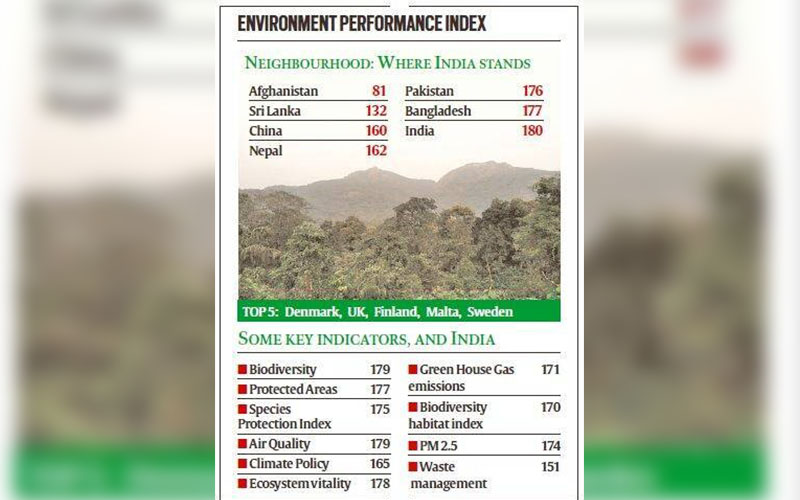
The recently released Environment Performance Index-2022, an international ranking system that measures environmental health and sustainability of countries, has ranked India last among 180 countries that have been ranked.

With a paltry score of 18.9, India’s 180th ranking comes after Pakistan, Bangladesh, Vietnam and Myanmar — the bottom five together make up the poorest performing countries for environmental health.

India has also scored low on rule of law, control of corruption and government effectiveness, according to EPI.

The EPI, a biennial index, was started in 2002 as Environmental Sustainability Index by the World Economic Forum in collaboration with the Yale Center for Environmental Law and Policy and the Columbia University Center for International Earth Science Information Network.

“Using 40 performance indicators across 11 issue categories, EPI ranks 180 countries on climate change performance, environmental health, and ecosystem vitality. These indicators provide a gauge at a national scale of how close countries are to established environmental policy targets,’’says the EPI report.

Overall EPI rankings indicate which countries are best addressing environmental challenges , it states.
The report has found that “good policy results are associated with wealth (GDP per capita)’’, meaning economic prosperity makes it possible for nations to invest in policies and programmes that lead to desirable outcomes. “This trend is especially true for issue categories under the umbrella of environmental health, as building the necessary infrastructure to provide clean drinking water and sanitation, reduce ambient air pollution, control hazardous waste, and respond to public health crises yields large returns for human well-being,’’ the report states.

India was ranked 168th in EPI-2020, with a score of 27.6 In EPI-2020, Denmark has been ranked first in environmental health and sustainability. (Image: Pixabay)

The pursuit of economic prosperity — manifested in industrialisation and urbanisation — often means more pollution and other strains on ecosystem vitality, especially in the developing world, where air and water emissions remain significant, it says. The report says that top-performing countries have paid attention to all areas of sustainability, while their lagging peers tend to have uneven performance.

“In general, high scorers exhibit long-standing policies and programs to protect public health, preserve natural resources, and decrease greenhouse gas emissions. The data further suggest that countries making concerted efforts to decarbonize their electricity sectors have made the greatest gains in combating climate change, with associated benefits for ecosystems and human health,’’ says the report.

The report states: “A number of important countries in the Global South, including India and Nigeria, come out near the bottom of the rankings. Their low EPI scores indicate the need for greater attention to the spectrum of sustainability requirements, with a high-priority focus on critical issues such as air and water quality, biodiversity, and climate change. Some of the other laggards, including Nepal and Afghanistan, face broader challenges such as civil unrest, and their low scores can almost all be attributed to weak governance.”

June 10, 2022 0 comment
0 FacebookTwitterPinterestEmail
Authored ArticlesEnvironment

Basanti Devi, environmentalist who saved Kosi River

by Team Conscious Carma May 23, 2022
written by Team Conscious Carma

Conferred with the Padma Shri Award this year for her contribution to the ‘Save Kosi Movement’ and environmental protection, Devi is also looked upon as a champion of women empowerment.

Indian environmentalist Basanti Devi was born in Pithoragarh (Uttarakhand) in 1958. She got married at a young age of 12 years while she was in class 5 and was widowed at 14. 

A chance visit to Kausani Ashram inspired her to take up social work and she decided to stay there and dedicate her life in serving humanity. At the ashram, she completed her studies as well as got involved with opening Bal Baris, recreational centres for children in remote villages, that also looked into their nutrition.

Thereafter, she was given the work to save water and the environment in Kosi river basin villages as level in water sources there was continuously depleting. The Kosi River  is an important resource in Uttarakhand. The river is responsible for major flooding in Bihar that can affect tens of thousands of hectares of land and a million people. Devi read an article that estimated that the river would cease to exist in a decade if the felling of trees continued at the current rate. She went to speak to local women explaining that this was their forest and their land and asking what they would do once the river had dried up. This began to convince people and both the villagers as well as timber companies agreed to cease to cut new wood. Villagers agreed that they would only burn old wood.

Devi then formed  Mahila Sangthans (women organisations) in almost 50 villages from Kausani to Katli village in Someswar which not only worked toward saving the environment of Kosi region but also empowered women by the way of their increased participation in social works.

For 20 years Devi used to travel in 50 villages of the Kosi region with the aim of saving trees, environment, empowering women and eradicating liquor consumption from the lives of villagers.

The effects have been slow to see but it is noted that springs that used to dry up in the summer now run all year. Moreover, the forest shows more diversity with more broad leafed trees and plants appearing.

“It started resulting in surplus water in once almost dry area of Kosi watershed region, now, after revival of some old springs, the villagers of Someswar area have started sowing to grow paddy crop”, says Devi.

She has also been honoured with Nari Shakti award 2016,  the highest award for women in India and DEVI award in 2016.

May 23, 2022 0 comment
0 FacebookTwitterPinterestEmail
Environment

Sand is the world’s second most exploited resource and must be wisely managed, says UNEP report

by Team Conscious Carma April 27, 2022
written by Team Conscious Carma
  • Strategic recognition for sand and actions across sectors needed, report urges
  • Sand is the world’s second most exploited resource and must be wisely managed
  • Legal changes, recycled building material, crushed rock and ‘ore-sand’ from mining, among solutions.  

50 billion tons: enough to build a wall 27 metres wide and 27 metres high around planet Earth. This is the volume of sand and gravel used each year, making it the second most used resource worldwide after water. Given our dependency on it, sand must be recognised as a strategic resource and its extraction and use needs to be rethought, finds a new report by the United Nations Environment Programme (UNEP). The UN Environment Programme is the leading global voice on the environment. It provides leadership and encourages partnership in caring for the environment by inspiring, informing and enabling nations and peoples to improve their quality of life without compromising that of future generations. 

The report, Sand and Sustainability: 10 strategic recommendations to avert a crisis, released on Apr 26th, 2022 by UNEP’s GRID-Geneva team, provides the necessary guidance gathered from world experts to switch to improved practices for the resource’s extraction and management.

Extracting sand where it plays an active role, such as rivers, and coastal or marine ecosystems, can lead to erosion, salination of aquifers, loss of protection against storm surges and impacts on biodiversity, which pose a threat to livelihoods through, among other things, water supply, food production, fisheries, or to the tourism industry. 

According to the report’s authors, sand must be recognised as a strategic resource, not only as a material for construction, but also for its multiple roles in the environment. They stress that governments, industries and consumers should price sand in a way that recognises its true social and environmental value. For example, keeping sand on coasts may be the most cost-effective strategy for adapting to climate change due to how it protects against storm surges and impacts from sea level rise – such services should be factored into its value. 

An international standard on how sand is extracted from the marine environment should also be developed, the report proposes. This could bring about dramatic improvements as most marine dredging is done through public tenders open to international companies. Meanwhile, the report recommends that the extraction of sand from beaches be banned due to its importance for coastal resilience, the environment and the economy.

“To achieve sustainable development, we need to drastically change the way we produce, build and consume products, infrastructures and services. Our sand resources are not infinite, and we need to use them wisely. If we can get a grip on how to manage the most extracted solid material in the world, we can avert a crisis and move toward a circular economy,” said Pascal Peduzzi, Director of GRID-Geneva at UNEP and overall programme coordinator for this report.

Infrastructure, homes, food and nature at stake 

Sand is critical to economic development, needed to produce concrete and build vital infrastructure ranging from homes and roads to hospitals. By providing habitats and breeding grounds for diverse flora and fauna, sand also plays a vital function in supporting biodiversity, including marine plants that act as carbon sinks or filter water. The resource will be crucial to achieving the Sustainable Development Goals and tackling the triple planetary crisis of climate change, pollution and biodiversity loss. However, it is being used faster than it can be naturally replenished, so its responsible management is crucial.

A circular economy is within reach 

The authors note that solutions exist for moving towards a circular economy for sand, including  banning the landfilling of mineral waste and encouraging sand to be reused in public procurement contracts are among the policy measures cited. Crushed rock or recycled construction and demolition material, as well as ‘ore-sand’ from mine tailings are among the viable alternatives to sand that should also be incentivised, the report details.

They add that new institutional and legal structures are needed for sand to be more effectively governed and best practices shared and implemented. Sand resources must furthermore be mapped, monitored and reported on, the report recommends. Meanwhile, all stakeholders must be involved in decisions related to the management of sand to allow for place-based approaches and avoid one-size-fits-all solutions, the paper stresses. 

The report follows a resolution on Mineral resource governance adopted at the fourth United Nations Environment Assembly (UNEA) that called for actions on sustainable sand management. This mandate was confirmed at UNEA-5 in 2022 in the new resolution titled Environmental aspects of minerals and metals management, adopted by all member states.  

April 27, 2022 0 comment
0 FacebookTwitterPinterestEmail
EnvironmentSustainability

World Earth Day 2022, The theme of this year’s Earth Day is “Invest in our Planet”.

by Team Conscious Carma April 22, 2022
written by Team Conscious Carma

Earth overshoot Day, is one such important parameter which can show how ruthlessly we are consuming the renewable resources of the Planet Earth.  And inspite of all the talks and guidelines, nothing actually is happening in controlling our greed to consume.

Earth Overshoot Day marks the date when humanity’s demand for ecological resources and services in a given year exceeds what Earth can regenerate in that year. The term “overshoot” represents the level by which human population’s demand overshoots the sustainable amount of biological resources regenerated on Earth.

Earth Overshoot Day in 2018 : Aug 1st
Earth Overshoot Day in 2019 :  July 29th
Earth Overshoot Day in 2020: Aug 22nd  
Earth Overshoot Day in  : July 29th

According to Global Footprint Network (GFN),  an organization that collects each country’s consumption data and compares those data with the biocapacity of the planet, humanity’s demand for resources is now equivalent to that of more than 1.7 Earths.  The data shows us on track to require the resources of two planets well before mid-21st century. The costs of resource depletion are becoming more evident. Climate change — a result of greenhouse gases  being emitted — is the most obvious result and widespread effects. Other biophysical effects include: deforestation, species loss or fisheries collapse. Such resource insecurity can lead to economic stress (such as monetary inflation) and conflict (such as civil unrest)

The data pertaining from the recent years have highlighted India as a role model in the context of consumption of resources. While major countries have been major exploiters of the Earth’s natural resources, the Indian lifestyle provides for a possible solution to the problem. Some of the frontline countries consuming resources are Qatar, Luxembourg, the UAE, France, the UK, Germany, China, and Indonesia. It has been found that if the entire world starts living like the Qataris, an entire year’s global natural resources will be exhausted by the 11th of February.

India finds itself in a much better position compared to the above-mentioned countries. India, with the second-largest population count in the world, still has a per capita consumption rate that is not at all in the danger area of getting unsustainable

According to the GFN, in a hypothetical situation where every citizen of the world lives like a citizen of the United States, sustainability would call for a total of 5 Earth. This figure is 4.1 for Australia and 2.2 for China. In this same list, it is defined that people of the world living like Indians would actually call for only 0.7 of the planet Earth to reach sustainability.

The above figures put India in a place where it can certainly be a role model for other nations to follow in the context of resource consumption. There are several aspects in the consumption patterns of the Indians that can actually work as solutions for the resource challenges in the world. According to the GFN list, Indian lifestyles call for only 0.7 of the planet Earth. The GFN list places 50 other countries in the same place, like India.

April 22, 2022 0 comment
0 FacebookTwitterPinterestEmail
Environment

Experts warn of rise in number of wildfires, upto 50% by 2100

by Team Conscious Carma February 24, 2022
written by Team Conscious Carma

Governments, all over the world are called to radically shift their spending on wildfires, from investing in reaction and response to prevention and preparedness. As even the Arctic, previously all but immune, faces rising wildfire risk, experts say ahead of the UN Environment Assembly in Nairobi. 

According to a new report by the UN Environment Programme (UNEP) and GRID-Arendal, climate change and land-use change are projected to make wildfires more frequent and intense, with a global increase of extreme fires of up to 14 per cent by 2030, 30 per cent by the end of 2050 and 50 per cent by the end of the century,  

The report, Spreading like Wildfire: The Rising Threat of Extraordinary Landscape Fires, finds an elevated risk even for the Arctic and other regions previously unaffected by wildfires. The report is released before the resumed 5th session of the UN Environment Assembly (UNEA-5.2) convenes in Nairobi, between 28 February and 2 March, 2022. 

The publication calls on governments to adopt a new ‘Fire Ready Formula’, with two-thirds of spending devoted to planning, prevention, preparedness, and recovery, with one third left for response. Currently, direct responses to wildfires typically receive over half of related expenditures, while planning receives less than one per cent. 

To prevent fires, authors call for a combination of data and science-based monitoring systems with indigenous knowledge and for a stronger regional and international cooperation. 

“Current government responses to wildfires are often putting money in the wrong place. Those emergency service workers and firefighters on the frontlines who are risking their lives to fight forest wildfires need to be supported”, said Inger Andersen, UNEP Executive Director. “We have to minimize the risk of extreme wildfires by being better prepared: invest more in fire risk reduction, work with local communities, and strengthen global commitment to fight climate change”. 

Wildfires disproportionately affect the world’s poorest nations. With an impact that extends for days, weeks and even years after the flames subside, they impede progress towards the UN Sustainable Development Goals and deepen social inequalities:

  • People’s health is directly affected by inhaling wildfire smoke, causing respiratory and cardiovascular impacts and increased health effects for the most vulnerable;
  • The economic costs of rebuilding after areas are struck by wildfires can be beyond the means of low-income countries;

·      Watersheds are degraded by wildfires’ pollutants; they also can lead to soil erosion causing more problems for waterways;

·      Wastes left behind are often highly contaminated and require appropriate disposal.

Wildfires and climate change are mutually exacerbating. Wildfires are made worse by climate change through increased drought, high air temperatures, low relative humidity, lightning, and strong winds resulting in hotter, drier, and longer fire seasons. At the same time, climate change is made worse by wildfires, mostly by ravaging sensitive and carbon-rich ecosystems like peatlands and rainforests. This turns landscapes into tinderboxes, making it harder to halt rising temperatures.

Wildlife and its natural habitats are rarely spared from wildfires, pushing some animal and plant species closer to extinction. A recent example is the Australian 2020 bushfires, which are estimated to have wiped out billions of domesticated and wild animals. 

There is a critical need to better understand the behaviour of wildfires. Achieving and sustaining adaptive land and fire management requires a combination of policies, a legal framework and incentives that encourage appropriate land and fire use.

The restoration of ecosystems is an important avenue to mitigate the risk of wildfires before they occur and to build back better in their aftermath. Wetlands restoration and the reintroduction of species such as beavers, peatlands restoration, building at a distance from vegetation and preserving open space buffers are some examples of the essential investments into prevention, preparedness and recovery.

The report concludes with a call for stronger international standards for the safety and health of firefighters and for minimising the risks that they face before, during and after operations. This includes raising awareness of the risks of smoke inhalation, minimising the potential for life-threatening entrapments, and providing firefighters with access to adequate hydration, nutrition, rest, and recovery between shifts. 

The report was commissioned in support of UNREDD and the UN Decade on Ecosystem Restoration. UNEP will be exploring how further investments can be made to reduce fire risks in critical ecosystems around the world.

About GRID-Arendal

GRID-Arendal is a non-profit environmental communications centre based in Norway. We transform environmental data into innovative, science-based information products and provide capacity-building services that enable better environmental governance. We aim to inform and activate a global audience and motivate decision-makers to effect positive change. GRID-Arendal collaborates with the United Nations Environment Programme and other partners around the world.

About the UN Decade on Ecosystem Restoration

The UN Decade on Ecosystem Restoration 2021-2030 is a rallying call for the protection and revival of ecosystems all around the world, for the benefit of people and nature. It aims to halt the degradation of ecosystems, and restore them to achieve global goals. The United Nations General Assembly has proclaimed the UN Decade and it is led by the United Nations Environment Programme and the Food and Agriculture Organization of the United Nations. The UN Decade is building a strong, broad-based global movement to ramp up restoration and put the world on track for a sustainable future. That will include building political momentum for restoration as well as thousands of initiatives on the ground.

UNEP@50: A time to reflect on the past and envision the future

The 1972 United Nations Conference on the Human Environment in Stockholm, Sweden, was the first-ever UN conference with the word “environment” in its title. The creation of the UN Environment Programme (UNEP) was one of the most visible outcomes of this conference of many firsts. UNEP was created quite simply to be the environmental conscience of the UN and the world. Activities taking place through 2022 will look at significant progress made as well as what’s ahead in decades to come.

About the UN Environment Programme (UNEP)

UNEP is the leading global voice on the environment. It provides leadership and encourages partnership in caring for the environment by inspiring, informing and enabling nations and peoples to improve their quality of life without compromising that of future generations.

February 24, 2022 0 comment
0 FacebookTwitterPinterestEmail
Environment

Deadly wildfires, noise pollution, and disruptive timing of life cycles:UN report identifies looming environmental threats

by Team Conscious Carma February 18, 2022
written by Team Conscious Carma

Wildfires are burning more severely and more often, urban noise pollution is growing into a global public health menace, and phenological mismatches – disruptions in the timing of life-cycle stages in natural systems – are causing ecological consequences. These critical environmental issues, requiring greater attention, are highlighted in the new Frontiers Report published on Feb 17th at Nairobi,  by the UN Environment Programme (UNEP).

This is the fourth edition of the Frontiers Report, which was first published in 2016 with an alert to the growing risk of zoonotic diseases, four years before the outbreak of the COVID-19 pandemic.

“The Frontiers Report identifies and offers solutions to three environmental issues that merit attention and action from governments and the public at large,” said Inger Andersen, Executive Director of UNEP. “Urban noise pollution, wildfires and phenological shifts – the three topics of this Frontiers report – are issues that highlight the urgent need to address the triple planetary crisis of climate change, pollution and biodiversity loss.”

The latest edition of the Frontiers report, Noise, Blazes and Mismatches: Emerging Issues of Environmental Concern, is released days before the resumed fifth session of the UN Environment Assembly (UNEA):

Noise pollution in cities is a growing hazard to public health

  • Unwanted, prolonged and high-level sounds from road traffic, railways, or leisure activities impair human health and well-being. This includes chronic annoyance and sleep disturbance, resulting in severe heart diseases and metabolic disorders such as diabetes, hearing impairment, and poorer mental health.
  • Noise pollution already leads to 12,000 premature deaths each year in the EU and affects one in five EU citizens. Acceptable noise levels are surpassed in many cities worldwide, including Algiers, Bangkok, Damascus, Dhaka, Ho Chi Minh City Ibadan, Islamabad and New York.
  • Particularly affected are the very young, the elderly and marginalized communities near high traffic roads, and industrial areas and far from green spaces.
  • It is also a threat to animals, altering communications and the behaviour of various species, including birds, insects, and amphibians.
  • At the same time, natural sounds can offer diverse health benefits. Urban planners should prioritize the reduction of noise at the source; investments in alternative mobility; and urban infrastructure that creates positive soundscapes such as tree belts, green walls, green roofs, and more green spaces in cities.
  • Positive examples include London’s Ultra-Low Emission Zone, Berlin’s new cycle lanes on wide roads, and Egypt’s national plan to combat noise.
  • COVID-19 lockdowns brought a new appreciation for green spaces and the reduction of urban traffic noise. Programmes meant to ‘build back better’ represent an under-utilized opportunity for policymakers, urban planners and communities to create additional green spaces for all.

Dangerous wildfire weather is projected to get worse

  • Each year, between 2002 and 2016, an average of about 423 million hectares or 4.23 million square km of the Earth’s land surface – an area about the size of the entire European Union – burned, becoming more common in mixed forest and savannah ecosystems. An estimated 67% of the annual global area burned by all types of fires, including wildfires, was on the African continent.
  • Dangerous wildfire weather conditions are projected to become more frequent and intense and to last longer, including in areas previously unaffected by fires. Extremely intense wildfires can trigger thunderstorms in smoke flumes that aggravate fires through erratic wind speeds and generate lightning that ignites other fires far beyond the fire front, a hazardous feedback loop.
  • This is due to climate change, including hotter temperatures and drier conditions with more frequent droughts. Land-use change is another risk factor, including commercial logging and deforestation for farms, grazing land, and expanding cities. A further cause for the proliferation of wildfires is the aggressive suppression of natural fire, which is essential in some natural systems to limit the amounts of combustible material, and inappropriate fire management policies that exclude traditional fire management practices and indigenous knowledge.
  • Long-term effects on human health extend beyond those fighting wildfires, evacuated, or suffering losses. Smoke and particulate matter from wildfires deliver significant consequences for health in downwind settlements, sometimes thousands of kilometres from the source, with impacts often exacerbated among those with pre-existing illness, women, children, the elderly and the poor. Changes in fire regimes are also expected to lead to massive biodiversity loss, endangering over 4,400 terrestrial and freshwater species.
  • Wildfires generate black carbon and other pollutants that can pollute water sources, enhance the melting of glaciers, cause landslides and large-scale algal blooms in oceans, and turn carbon sinks such as rainforests into carbon sources.
  • The report calls for greater investment in reducing the risks of wildfires; development of prevention and response management approaches that include vulnerable, rural, traditional and indigenous communities; and further refinements in remote sensing capabilities, such as satellites, radar and lightning detection.

Climate change disrupts natural rhythms in plants and animals

  • Phenology is the timing of recurring life cycle stages, driven by environmental forces, and how, within an ecosystem, interacting species respond to the changing conditions. Plants and animals in terrestrial, aquatic and marine ecosystems use temperature, day-length or rainfall as cues for when to unfold leaf, flower, bear fruit, breed, nestle, pollinate, migrate or transform in other ways.
  • Phenological shifts occur when species shift the timing of life cycle stages in response to changing environmental conditions altered by climate change. The concern is that interacting species in an ecosystem do not always shift the timing in the same direction or at the same rate.
  • These phenological shifts are increasingly disturbed by climate change, pushing plants and animals out of synch with their natural rhythms and leading to mismatches, such as when plants shift life cycle stages faster than herbivores.
  • Long-distance migrants are particularly vulnerable to phenological change. Local climatic cues that normally trigger migration may no longer accurately predict conditions at their destination and resting sites along the route.
  • Phenological shifts in crops in response to seasonal variations will be challenging for food production in the face of climate change.  Shifts in the phenology of commercially important marine species and their prey have significant consequences for stock and fisheries productivity.  
  • The full impacts of phenological mismatches require further research. Maintaining suitable habitats and ecological connectivity, strengthening the integrity of biological diversity, coordinating international efforts along migratory routes, supporting resilience and maintaining genetic variation within species are crucial conservation goals. Above all, limiting the rate of warming by reducing CO2 emissions is essential.

About the UN Environment Assembly (UNEA)

UNEA is the world’s most powerful decision-making body on the environment, and responsible for tackling some of the most critical issues of our time. This year, hundreds of key decision makers, businesses and representatives of intergovernmental organizations and civil society will gather for the second part of UNEA-5, taking place at the UN Environment Programme Headquarters in Nairobi.

About the UN Environment Programme (UNEP)

UNEP is the leading global voice on the environment. It provides leadership and encourages partnership in caring for the environment by inspiring, informing and enabling nations and peoples to improve their quality of life without compromising that of future generations.

UNEP@50: A time to reflect on the past and envision the future

The 1972 United Nations Conference on the Human Environment in Stockholm, Sweden, was the first-ever UN conference with the word “environment” in its title. The creation of the UN Environment Programme (UNEP) was one of the most visible outcomes of this conference of many firsts. UNEP was created quite simply to be the environmental conscience of the UN and the world. Activities taking place through 2022 will look at the significant progress made as well as what’s ahead in decades to come.

February 18, 2022 0 comment
0 FacebookTwitterPinterestEmail
Newer Posts
Older Posts

Recent Posts

  • India–UK Free Trade Agreement Opens Global Growth Opportunities for 3R ZeroWaste’s Circular Economy Solutions
  • Plastic Free July: Why True Sustainability Goes Beyond Swapping Plastic
  • From the Editor’s Desk: When Greed Takes Over Conscience
  • Beyond the Pose: Why Your Yoga Mat Needs a Sustainable Upgrade
  • Best Sustainable Father’s Day Gifts: Conscious Carma’s Exclusive Picks

Recent Comments

  • Team Conscious Carma on Label Shivika Agarwal – where craft meets sustainability
  • Cocomeister.jp on Label Shivika Agarwal – where craft meets sustainability
  • Team Conscious Carma on Equitable City Designs To Fight Climate Change
  • UN report calls for repurposing of USD 470 billion of agricultural support that distorts prices and steer us away from environment and social goals | Consciouscarma on UNEP & ICMR collaborate to boost understanding of environmental dimensions of antimicrobial resistance in India
  • Wild Earth : Natural body products | Consciouscarma on Sat.Suma : the true essence of flowers in your everyday skincare needs

Keep in touch

Facebook Twitter Instagram Youtube

Recent Posts

  • India–UK Free Trade Agreement Opens Global Growth Opportunities for 3R ZeroWaste’s Circular Economy Solutions

  • Plastic Free July: Why True Sustainability Goes Beyond Swapping Plastic

  • From the Editor’s Desk: When Greed Takes Over Conscience

  • Beyond the Pose: Why Your Yoga Mat Needs a Sustainable Upgrade

  • Best Sustainable Father’s Day Gifts: Conscious Carma’s Exclusive Picks

  • How Sacred Sound is Reshaping the Future of Holistic Health?

Categories

  • Community (38)
    • Campaigns (3)
  • CSR (4)
  • Economy (82)
    • Global (24)
    • Industry (42)
    • Innovations (4)
    • National (2)
  • Environment (48)
  • Expert Corner (48)
    • Authored Articles (47)
  • Featured (5)
    • Partners (1)
  • Global News (2)
  • Initiatives (31)
    • CSR (3)
    • Events (6)
  • Inspiration (22)
  • Lifestyle (9)
  • Media Coverage (6)
  • Press Releases (4,358)
  • Products (126)
    • Accessories (27)
    • Apparel (32)
    • Beauty (26)
    • Food (4)
    • Gifting (3)
    • Home Décor (15)
    • Skin-Care (14)
  • Reports (3)
  • Spirituality (10)
  • Sustainability (49)
  • Sustainable Startup Stories (28)
  • Travel (19)
  • Uncategorized (2)
  • Wellness (33)
    • Home Cleaners (3)

Archives

  • August 2026 (1)
  • July 2026 (1)
  • June 2026 (6)
  • October 2024 (1)
  • September 2024 (1)
  • July 2024 (2)
  • June 2024 (2)
  • May 2024 (1)
  • November 2023 (330)
  • October 2023 (554)
  • September 2023 (631)
  • August 2023 (718)
  • July 2023 (723)
  • June 2023 (710)
  • May 2023 (608)
  • April 2023 (114)
  • March 2023 (7)
  • February 2023 (3)
  • January 2023 (11)
  • December 2022 (18)
  • November 2022 (1)
  • August 2022 (6)
  • July 2022 (8)
  • June 2022 (24)
  • May 2022 (11)
  • April 2022 (19)
  • March 2022 (11)
  • February 2022 (11)
  • January 2022 (14)
  • December 2021 (10)
  • November 2021 (4)
  • October 2021 (14)
  • September 2021 (22)
  • August 2021 (12)
  • July 2021 (17)
  • June 2021 (17)
  • May 2021 (16)
  • April 2021 (22)
  • March 2021 (33)
  • February 2021 (16)
  • January 2021 (22)
  • December 2020 (10)
  • Facebook
  • Twitter
  • Instagram
  • Pinterest
  • Linkedin
  • Youtube

@2020 - All Right Reserved. Designed and Developed by Bizopser Technologies

Consciouscarma
  • Home
  • About Us
  • Products
  • Community
    • Campaigns
    • Inspiration
    • Initiatives
    • CSR
  • Features
    • Sustainable Startup Stories
    • Travel
    • Lifestyle
    • Partners
  • Economy
    • Industry
    • Innovations
    • National
    • Global
  • Environment
  • Expert Corner
    • Authored Articles
    • Reports
  • Magazine
  • Contact