Consciouscarma
  • Home
  • About Us
  • Products
  • Community
    • Campaigns
    • Inspiration
    • Initiatives
    • CSR
  • Features
    • Sustainable Startup Stories
    • Travel
    • Lifestyle
    • Partners
  • Economy
    • Industry
    • Innovations
    • National
    • Global
  • Environment
  • Expert Corner
    • Authored Articles
    • Reports
  • Magazine
  • Contact
Category:

Economy

The countries, the governments, the non-profit organisations are all working towards changing the world for better, protecting the environment, shifting to renewable resources, inventing new technologies, innovating new ways of manufacturing, producing, distributing, packaging and living etc to reduce the carbon footprint
EconomyIndustry

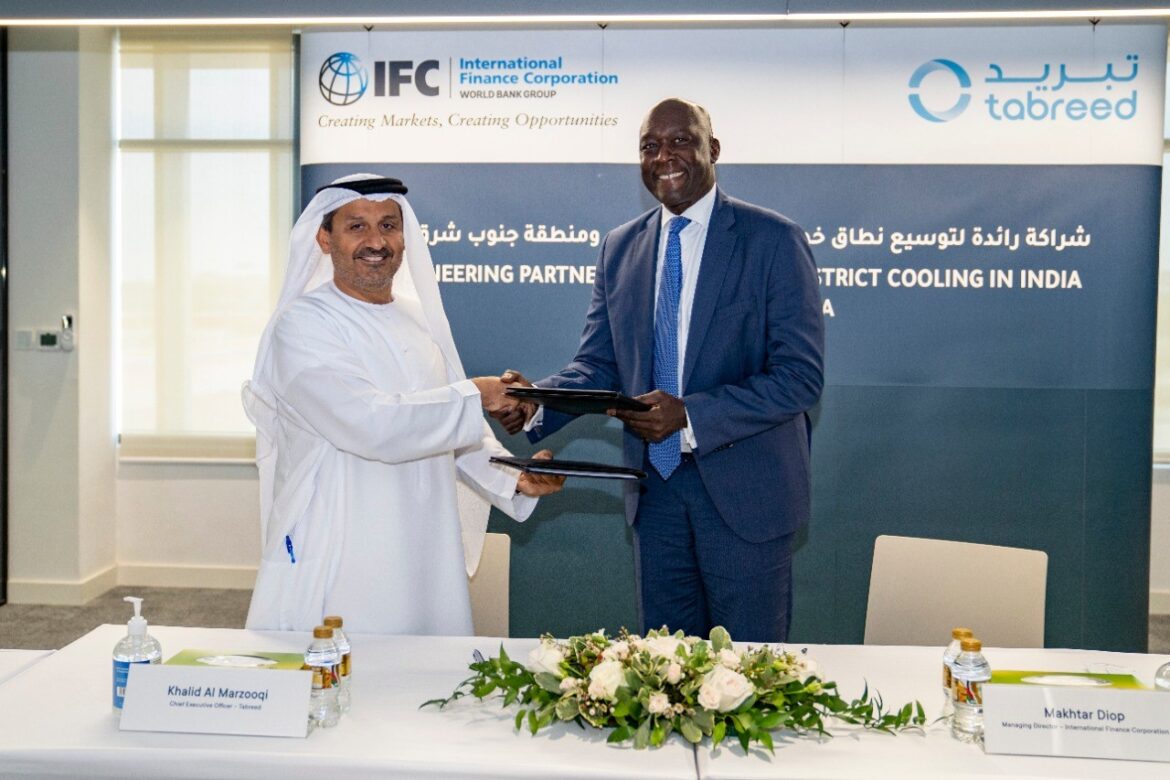
Tabreed Officially Partners with IFC to Facilitate Expansion in India

by Team Conscious Carma December 23, 2021
written by Team Conscious Carma

The partnership aims to build on Tabreed’s ongoing activities in India,  to provide more energy-efficient, end-to-end cooling solutions through an outsourced utility model for real estate developments, new urban masterplans, and ongoing redevelopments

National Central Cooling Company PJSC (DFM: Tabreed) has officially confirmed its significant strategic partnership with the International Finance Corporation (IFC), a member of the World Bank Group and the largest global development institution focused on the private sector in emerging markets. Since its establishment in 1956, IFC has invested more than $321 billion in emerging markets.

This development will see ownership of Tabreed India, currently, a wholly-owned subsidiary of Tabreed, transferred to Tabreed Asia Central Cooling Company Pte Limited, a new holding company established in Singapore, as announced on 3 March 2021. Tabreed Asia will be 75% owned by Tabreed and 25% owned by IFC with a mandate to develop projects of up to $400 million over the next five years, targeting a portfolio of approximately 100,000 refrigeration tonnes (RT), servicing industrial, commercial, and retail developments across India.

“We’re excited about our partnership with IFC and look forward to working together to develop district cooling and cooling-as-a-service in India. We are committed to providing efficient cooling to cities and have been actively supporting the initiatives undertaken by the Government. In parallel, we have engaged with several top tier real estate developers to evaluate project opportunities focusing on specific micro-markets in 6 key cities in the country. With this partnership, we aim to build on Tabreed’s ongoing activities in India, to provide more energy-efficient, end-to-end cooling solutions through an outsourced utility model for real estate developments, new urban masterplans, and ongoing redevelopments,” said Sudheer Perla, Country Manager – India, Tabreed.

Both IFC and Tabreed have agreed on an investment eligibility criteria which, beyond typical financial requirements, also includes a robust environmental, social and governance (ESG) framework that will be adopted while developing district energy projects in these geographies. With such capital-intensive infrastructure requirements, the intention will be to raise debt through project finance for individual projects.

In terms of status, both parties have agreed on the mechanics to transfer Tabreed’s existing India operations under this joint venture and are looking to ramp up teams on the ground to continue developing value accretive opportunities in India.

“As temperatures are rising, access to cooling is a major development challenge, especially in emerging economies located in the tropical climate zone. This district cooling project is at the heart of what IFC is all about,” said Makhtar Diop, IFC’s Managing Director. “By working with Tabreed, we will bring sustainable, innovative and much needed cooling solutions to India.”

District cooling has been identified as an important intervention area around which several government bodies and smart cities are now increasingly evaluating its incorporation into urban master planning. With a currently low per capita cooling consumption and a rapidly growing cooling market across all sectors, district cooling adoption is imperative for India to meet its ambitious climate goals. There have been a number of promising developments on the policy and regulatory front, including India being the first country in the world to announce a Cooling Action Plan to more holistically address how increasing demand for cooling and energy efficiency can be met more sustainably.

Khalid Abdullah al Marzooqi, CEO of Tabreed, said this is a positive and timely development for Tabreed in India. “IFC has been established in this region for many decades,” he remarked, “unlocking investment opportunities, strengthening clients’ performance and impact, as well as improving environmental, social and governance (ESG) standards. It makes perfect sense for us to join forces as we are able to lean on each other’s unrivalled expertise.

“India is strategically very important for us, with demand for energy growing faster there than anywhere else in the world right now. District cooling uses, on average, half the power consumed by conventional cooling methods, meaning it’s an essential part of many countries’ climate goals due to the enormous savings in CO2 emissions achieved through energy efficiency. For countries such as India, reliable cooling means industrial, agricultural and societal progress, and we eagerly look forward to making a meaningful contribution to its prosperity while ensuring the sustainability we know is vital to all our futures.”

For more updates from Tabreed, visit www.tabreed.ae

Tabreed india Partnership

About National Central Cooling Company PJSC (Tabreed)

Tabreed is a leading driver of progress for people, communities and environments around the world towards a more sustainable future. Founded in 1998 and publicly listed on the Dubai Financial Market, it is one of the UAE’s strongest growth companies and a founding member of the S&P/Hawkamah ESG UAE Index. The world’s largest district cooling company, Tabreed’s R&D programmes and investment in AI technology solidify its position as the industry’s global leader.

Developing and operating modern district cooling networks, Tabreed provides essential cooling to iconic developments such as the Burj Khalifa, Sheikh Zayed Grand Mosque, Louvre Abu Dhabi, Dubai Opera, Dubai Metro and Bahrain Financial Harbor. The company owns and operates 84 plants in its portfolio across the GCC, including 75 in the United Arab Emirates, three in the Kingdom of Saudi Arabia, five in Oman, one in the Kingdom of Bahrain. Energy efficiency services extend Tabreed’s impact to help businesses and organisations improve their overall energy consumption, in turn reducing CO2 emissions and assisting the achievement of carbon neutrality objectives.

About IFC

IFC—a member of the World Bank Group—is the largest global development institution focused on the private sector in emerging markets. We work in more than 100 countries, using our capital, expertise, and influence to create markets and opportunities in developing countries. In fiscal year 2021, IFC committed a record $31.5 billion to private companies and financial institutions in developing countries, leveraging the power of the private sector to end extreme poverty and boost shared prosperity as economies grapple with the impacts of the COVID-19 pandemic. For more information, visit www.ifc.org.

December 23, 2021 0 comment
0 FacebookTwitterPinterestEmail
Innovations

Livpure strengthens product portfolio; adds 3 innovative, pocket-friendly gravity water purifiers to its extensive range

by Team Conscious Carma December 18, 2021
written by Team Conscious Carma

In compliance with safety standards and equipped with breakthrough smart technology, Livpure’s new range of water purifiers are designed to upgrade consumers’ lives

The term ‘smart living’ has become a buzzword in recent times. From navigation to home appliances – be it the water we drink, air conditioners, or other devices, every aspect of our lives now has technology woven into it. Against this backdrop, Livpure, a leading manufacturer of water purifiers, air conditioners, and sleep and wellness solutions, has recently launched an array of new, state-of-the-art tech-backed products. Underlining its commitment to simplify and transform the lives of consumers with innovative, tech-driven solutions, the brand has introduced three new water purifiers with extensive features. Livpure has stepped up its innovation and introduced first-time technologies such as nanotechnology, non-electric operation, chemical-free purification, ultrafiltration technology, and gravity-based purification in water purifiers that will disrupt the kitchen appliances market.

Speaking on the new product launches, Mr. Pritesh Talwar, CEO of Livpure, said, “Livpure has always remained committed to providing consumers state-of-the-art solutions backed by cutting-edge technologies that will cater aptly to their requirements. As consumers continue to remain at home for the majority of the time, our newly launched water purifiers with an array of features will ensure they have access to purified, safe drinking water, elevating their quality of life. We are geared up to disrupt the kitchen appliances ecosystem in India and will be launching more such products soon.”

The following are the recently launched products:

Livpure Brahma Neo Gravity: Designed to blend with the contemporary Indian home setting, the device employs an advanced 4-step purification process – Particulate filter, Sediment filter, Bacteriostatic Activated Carbon filter cum Adsorber, and the Kitanu Guard (USEPA-registered disinfection technology) efficiently convert tap water into pure, clean, and safe drinking water. Featuring the Kitanu Guard for enhanced protection against bacterial or viral infections, the Brahma Neo Gravity water purifier is wall mountable and gives up to 2000 liters of purified water at room temperature. With a tank storage capacity of 16 liters, the device is made of food-grade plastic and has a purification capacity of 12 liters per hour.

Priced at – INR 2,750

Livpure Brahma Gravity: Delivering a power-packed performance, this pocket-friendly water purifier features a 5-stage purification process – Particulate Filter, Sediment Filter, Bacteriostatic Activated Carbon Filter cum Adsorber, Protector Filter, and Anti Kitanu UF membrane to filter out all the impurities. Sporting a sleek design that adds a touch of elegance to the kitchen, the Brahma Gravity water purifier has a total storage capacity of a massive 24 liters, and the filter can be replaced after 4000 liters or 15 months, whichever is earlier. It can be conveniently placed on a small counter in the kitchen and has a 1-year warranty.

Priced at – INR 2,990

Livpure Fit Gravity: The first product in its category to come with the Kitanu Guard USEPA-registered disinfection technology, the game-changing Gravity technology employed by this purifier allows the water to go through a normal gravity purification process and has a 4-step purification process similar to the Livpure Brahma Neo Gravity. With a storage capacity of 9 liters and the ability to purify 2000 liters of water in one go, the Livpure Fit Gravity can be mounted on a wall for ultimate convenience and pure drinking water.

Priced at – INR 1,799

Livpure’s products are designed to ensure there is purity in the basic necessities of life – air and water. Since its inception, Livpure has maintained a sharp focus on manufacturing products that are backed by cutting-edge technology to elevate consumers’ quality of life through state-of-the-art water purifiers and air conditioners. 

About Livpure

At Livpure, we strive to make every Indian healthy by providing them with pure water and pure air. In a short span of 8 years, we have delivered many Firsts in ensuring 100% Sampoorna Suraksha. Last year in a Consumer Survey by Forbes India, Livpure figured as “Most Respected Consumer Tech Brand” in the water category.  As we all know the world is moving towards smart, essentially, Smart Living, hence Livpure decided to play the smart game. Livpure has launched India’s first truly smart Air conditioners and Air coolers that are powered by HEKA technology and has got a very encouraging response. Livpure Water & Air purifiers are endorsed by cricketing legend Shri Sachin Tendulkar as the brand values of consistency, quality, reliability, performance resonate very strongly with him. Livpure is a venture of the SAR group founded by Mr. Rakesh Malhotra and Navneet Kapoor, who were the Founders of Luminous. https://www.livpure.com/.


Availability: https://www.livpure.com/collections/gravity-water-purifier

December 18, 2021 0 comment
0 FacebookTwitterPinterestEmail
EconomyIndustry

GIZ India, Tata Power, and NITI Aayog released a report on ‘Smart Charging Strategies Technologies for Electric Vehicles in India’

by Team Conscious Carma December 7, 2021
written by Team Conscious Carma

~The report is a first in the series of the ongoing study on ‘Simulation-based study to evaluate the effects of E-mobility smart charging strategies’~

GIZ India, in cooperation with NITI Aayog, Government of India, and Tata Power has released the first report titled, ‘A Critical Review: Smart Charging Strategies and Technologies for Electric Vehicles’. The report focuses on concepts of smart charging, a critical review of various smart charging strategies and approaches for electric vehicles, smart charging technologies, and related commercially available smart charging products along with the impact of EVs on the power system and power grid.

The report was launched by Mr. Sudhendhu Jyoti Sinha, Advisor, Infrastructure Connectivity & Electric Mobility vertical, NITI Aayog, Government of India, in a virtual event.  Dr. Steffen Koch, Minister – Head of the Department for Economic & Global Affairs Embassy of the Federal Republic of Germany graced the audience with insights from Germany in his special address. Dr. Winfried Damm, Head of the Indo-German Energy Programme, GIZ India, mentioned about the importance of e-mobility to achieve India’s climate protection commitments in his inaugural session. 

The technical session of the event witnessed discussions by key experts from the Technical University of Denmark (DTU) and the Universidad Pontificia Comillas (IIT Comillas) on the impact of EV penetration into the power system & power grid, associated challenges, and concept of smart charging to solve such challenges and bring benefits to the power system.

The report also focuses on the gaps in Indian regulation policies from the smart charging perspective and is a part of an ongoing regional project titled, ‘The Nationally Determined Contribution-Transport Initiative for Asia’ (NDC-TIA), funded under the International Climate Initiative (IKI) by the German Federal Ministry of the Environment, Nature Conservation and Nuclear Safety (BMU), and comprising of seven organisations and including the partner countries India, China, and Vietnam. The implementation partner of this NDC-TIA India project is NITI Aayog, Government of India.

Dr. Indradip Mitra, Team Leader, E-mobility, Indo-German Energy Programme, Country Coordinator for NDC-TIA India Component, GIZ India, and Dr. Norbert Henze, Fraunhofer Institute for Energy Economics and Energy System Technology IEE R&D Division Power System Stability and Converter Technology, Kassel, Germany, presented important details about the report and included discussions on the overall simulation-based study to evaluate the effects of E-mobility smart charging strategies and highlighted the importance of technical cooperation between India and Germany for achieving India’s national goals and NDC commitments.

During the launch ceremony, Dr. Praveer Sinha, CEO and Managing Director, Tata Power shared his valuable insights on importance of smart charging  which can pave  the future direction for the EV charging ecosystem across the  country . Dr. G. Ganesh Das, Chief – Strategy, Collaborations, Innovation and R&D , Tata Power- DDL delivered the vote of thanks and shared with impact of the report while elaborating  on the integration of key economic drivers like transportation and E-mobility while expressing the need for grid optimization . 

Key takeaways from the report were discussed by Prof. Zakir Hussain Rather, Indian Institute of Technology, Bombay (IITB), and Mr. Andre Hartung, Fraunhofer IEE. The report will significantly contribute to the existing framework for robust charging infrastructure. The EV ecosystem expansion is happening at a rapid pace in India. As one of the country’s largest EV charging solutions provider, Tata Power has played a key role in establishing a strong base through this study which will pave the future direction for the EV charging ecosystem in India. It is also working on solutions to power EV charging points across the country using renewable sources for offering a seamless charging experience.

The study “Simulation-based study to evaluate the effects of E-mobility smart charging strategies” has been carried out by a consortium led by Fraunhofer Institute for Energy Economics and Energy System Technology IEE, Kassel, Germany, and supported by the Indian Institute of Technology Bombay in India (IITB), Universidad Pontificia Comillas (IIT Comillas) in Madrid, Spain, and Technical University Denmark (DTU) in Copenhagen, Denmark. The main objective of this study is to understand relevant smart coordinated charging strategies that require to be adopted in different scenarios and conditions in India. Different charging strategies have been selected under the study to perform load flow analysis and simulations on real feeder level data obtained from Tata Power. Towards the end of the event, a way forward and an outlook was also presented by Prof Martin Braun, Fraunhofer Institute for Energy Economics and Energy System Technology IEE, Kassel, where he highlighted advanced technologies in e-mobility space such as Vehicle to Grid (V2X), Virtual Power Plant (VPP), etc. 

 Tata Power facilitated this study for GIZ India with real data for several feeders in its distribution network across the three Indian cities of Delhi, Mumbai, and Bhubaneswar. The company has a significant presence in all the segments of the power sector, viz Fuel & Logistics, Generation (thermal, hydro, solar, and wind), Transmission, Distribution, and Trading.

Report Link – https://greenmobility-library.org/public/index.php/single-resource/QlBDRnJiUnRSb0lmaGxGaFJNM0xuUT09

December 7, 2021 0 comment
0 FacebookTwitterPinterestEmail
EconomyGlobal

What makes Sweden the Global leader in Sustainability Competitiveness

by Team Conscious Carma December 2, 2021
written by Team Conscious Carma

Sustainability is at the top of the Swedish government’s agenda and Sweden aims to be a leader in the implementation of the 2030 Agenda. The Swedish government has set ambitious goals for sustainability, including going fossil-free by 2045 and 100 per cent renewable energy. Its green model integrates business and sustainability. Together with its Nordic neighbours, Sweden emphasises that green growth can drive transition through technical innovation rather than pose a risk. 

‘Emissions need to be reduced at a speed to ensure sustainable global growth. Transition needs to be effective and establish long-term rules,’ Swedish Prime Minister Stefan Löfven

Sweden is the first country in the world to pass an environmental protection act in 1967, Sweden also hosted the first UN conference on the global environment in 1972. Since then, Sweden has not looked back, managing to grow its economy substantially while reducing carbon emissions and limiting pollution. More than half of Sweden’s national energy supply comes from renewables and a thorough legislation aims at further reducing greenhouse gas emissions.

sweden environmental milestones

Sweden is not only among the world’s most environment friendly countries, but it also ranks at the top in sectors like technology, innovation, social stability, gender equality, government support and a responsible corporate sector, etc. All these factors make Sweden the most sustainably competitive country in the world.

It’s highly innovative

The European Commission’s European Innovation Scoreboard 2021 places Sweden in top place, followed by Finland, Denmark and Belgium. Sweden’s strengths are in Use of information technologies, Human resources and Attractive research systems. 

This year’s European innovation scoreboard (EIS) is based on a revised framework, which includes new indicators on digitalisation and environmental sustainability, bringing the scoreboard more in line with the EU political priorities.

Tops the Environment, Social and Governance indicators

International investment company RobecoSAM, which specialises in sustainability investments, ranks Sweden first of 150 countries in their RobecoSAM Country Sustainability Ranking, based on environmental, social and governance (ESG) indicators.

Ranks 5th worldwide in Gender equality

The World Economic Forum’s Global Gender Gap Report 2021 ranks Sweden fifth out of 156 assessed countries, having closed over 82.3% of its overall gender gap. It has recently seen an increase in female legislators, senior officials and managers, and has reached parity in the number of women in ministerial positions. The report compares national gender gaps based on economic, political, education and health criteria. 

3rd least corrupt country in the world 

Corruption has been identified by the World Bank as one of the greatest threats to growth. Sweden ranked as the third least corrupt country in the Transparency International’s Corruption Perceptions Index 2020, together with Finland, Singapore and Switzerland. The index ranks 180 countries and territories by their perceived levels of public sector corruption.

Few salient sustainable features of Swedish Economy 

World’s first wireless electric road

The Swedish island of Gotland has opened the world’s first wireless electric road, where electric trucks and buses can charge while driving. Electric power is transmitted to the electric vehicle through induction, a technology that uses electromagnetic fields – similar to how an electric toothbrush charger works.

One of Sweden’s climate goals is to reduce emissions from domestic transport by at least 70 per cent by 2030 compared with 2010.* 

World’s first solar-powered hydrogen filling station

In 2019 the world’s first off-grid solar-powered hydrogen-producing and filling station opened to the general public in the Swedish town of Mariestad. The station is powered by 100 per cent solar energy from a nearby solar cell park.

Solar energy is used to produce hydrogen gas, an emission-free gas that can be used as a backup power solution for the electricity grid, providing solar-powered energy at all hours of the day. The hydrogen gas can also act as fuel in cars, lorries, trains and – in the future – aeroplanes.

In this way, hydrogen may provide a competitive fossil-free source of fuel for transportation without the need for the expensive lithium batteries that electrical vehicles depend upon.

A hub for environmental research

Investment in research pays off. Swedish innovation is ranked in the world top. Sweden ranks among the world’s most innovative nations and investment in research is among the highest in the world in relation to GDP. The government invests heavily in education, and more than 3 per cent of Sweden’s GDP goes towards R&D. Around 70 per cent of Sweden’s research is financed by private companies.

Sweden’s long-term focus on education and research has a major impact on the country’s capacity for innovation. The last few decades have seen Sweden become a focus for leading environmental research, life sciences and nano technology.

Government promotes sustainable initiatives 

The Swedish government owns 46 companies of various sizes, two of which are listed companies. In 2007, Sweden became the first country to demand sustainability reports from state-owned enterprises. The reports have to comply with guidelines from the Global Reporting Initiative (GRI). Indicators include:

  • Economic: results, market presence
  • Environmental: materials, energy, emissions (air and water), waste
  • Social: work methods and processes, human rights, society, product liability

In 2012, Sweden took another step by asking state-owned companies to set several sustainability goals. The targets are to be set by the company boards, with a focus on diversity, environmental issues, human rights, working conditions, anti-corruption measures, business ethics and gender equality. The targets must also be measurable, specific and relevant to the companies’ operations.

Growing share of Renewable Energy

The share of renewable energy used in Sweden keeps growing. Already in 2012, the country reached the government’s 2020 target of 50 per cent. For the power sector, the target is 100 per cent renewable electricity production by 2040.

Sweden has a rich supply of moving water and biomass, which contributes to the country’s high share of renewable energy. Hydropower (water) and bioenergy are the top renewable sources in Sweden – hydropower mostly for electricity production and bioenergy for heating.

The Swedish school system

Few countries consume more energy per capita than Sweden, but Swedish carbon emissions are low compared with those of other countries. According to statistics from the World Bank, the average American releases almost four times as much carbon dioxide (CO₂) per year into the atmosphere as the average Swede.

The reason for Sweden’s low emission rate is that about 75 per cent of electricity production in Sweden comes from hydroelectric (45%) and nuclear (30%) power. And, more than 17 per cent of the electricity comes from wind power. Also, combined heat and power (CHP) plants account for around 8 per cent of the electricity output in Sweden, and these are mainly powered by biofuels.

Education is key in Sweden. It’s tax-financed and compulsory from the age of 6. Sweden’s long focus on education is quoted as one of the explanations for the country’s capacity for innovation.

Illegal to hit children

In 1979 Sweden made it illegal to hit children, both at home and in school – as the first country in the world. Swedish law now explicitly states that parents cannot use any form of violence or other humiliating treatment as part of bringing up their children. Corporal punishment of a child is also a criminal offence according to the Swedish Penal Code.

Electric buses are the new green

Several cities across Sweden are rolling out emission-free electric buses. Using renewable electric power in public transport contributes to improved air quality, reduced noise for the city’s inhabitants and reduced negative environmental impact.

Sweden and road safety

Sweden’s ‘Vision Zero’ has become a global road safety role model. The idea? That no one should be killed or seriously injured as a result of traffic accidents.

It is, in short, about adapting the roads, and the vehicles they carry, to match the capabilities of the people that use them.

Recycling 

Swedes recycle about 84 per cent of their used plastic drink bottles and aluminium cans. Everyone who buys a plastic bottle or can has to pay a minor deposit, a deposit the consumers get back when they recycle the empty bottles and cans.

This sustainable recycling solution is one of Europe’s oldest schemes. All drink bottles and cans ready for consumption must, by law, be included in an approved recycling system before being marketed in Sweden.

Recycling in Sweden – key figures:

  • 4,839,430 tonnes of household waste was managed in 2020, which equals 467 kilos per person per year.
  • 46% of the household waste was turned into energy in 2020.
  • 84% of bottles and cans were recycled in 2019 – 90% is the government target.
  • 70% of all packaging was recycled.

Sources: Swedish Waste Management Association, Swedish EPA

From waste to district heating

Ever since the first Swedish district heating system was introduced in 1948, extensive efforts have been made to provide energy-efficient solutions for heating homes. District heating is the most common source of heating in Sweden.  It has great environmental advantages, such as saving costs and lowering carbon dioxide (CO2) emissions.

Instead of heating each building individually with electricity or oil, this climate-smart waste-to-energy solution uses local resources such as burnt rubbish or captured excess heat from industrial production or data centres to heat up water and distribute it to everyone connected to the system. By doing so, 93 per cent of all energy in the system is either recycled or comes from renewable resources.

Sustainability through urban farming

More than half of the vegetables eaten in Sweden are imported. That’s probably part of the reason why urban farming is growing increasingly popular. It’s about bringing farming closer to the consumers.

Founded in 1921, Koloniträdgårdsförbundet (the association of allotment gardens) is one of the oldest movements in Sweden, now focusing on sustainable food consumption practices. Members get access to community urban farming land all over the country. One of the greatest benefits of having green spaces in urban areas is the increase in biodiversity, with many different species thriving on the variety of plants found in urban agriculture.

Sweden’s Food banks

Swedish food waste amounts to about 1.3 million tonnes per year. Sweden’s city mission charities, stadsmissioner, have several food banks in different parts of the country to help reduce food waste through redistribution. It’s a way for food donations from restaurants and supermarkets to be passed on to people in need at reduced prices.

Sweden’s Site Zero to become ‘world’s largest plastic recycling plant’

Swedish Plastic Recycling, owned by a large part of the Swedish business community,  is investing heavily in building the world’s largest and most modern facility for plastic recycling, Site Zero.

The facility set to complete in 2023, will be able to recycle all plastic packaging from Swedish households and make plastics circular – completely without any CO2 emissions.

Innovative Sustainable businesses 

The environmental aspects of sustainable business are very broad, including areas such as paper recycling, the sustainable use of resources, minimising environmental footprints and reducing water consumption.

 Since 2020 H&M in Stockholm is transforming its customers’ unwanted garments into new pieces of clothing through a garment-to-garment recycling system called Looop. The old garments are cleaned, shredded into fibres and spun into new yarn, which is then knitted into new fashion favourites.

Swedish company  Bee Urban is offering municipalities, companies and individuals the opportunity to adopt beehives, thus contributing to the ecosystem and biodiversity within the urban environment. 

Sege Park in the southern city of Malmö has developed a new model for sustainable and ecological urban development, combining affordable housing with a focus on building a local sharing economy. The idea is to make it easier for residents to share goods and services so that they own less but at the same time have access to more.

Source: Sweden.se

December 2, 2021 0 comment
0 FacebookTwitterPinterestEmail
EconomyGlobal News

“India to Reach Net-Zero Carbon Goal by 2070”, PM Modi at COP26 Summit

by Team Conscious Carma November 2, 2021
written by Team Conscious Carma

Sets 2030 goal for renewables, GHG reductions

Prime Minister Narendra Modi on Monday committed India to become a “carbon neutral” country through net-zero carbon emission by 2070. China has said it would reach that goal in 2060, and the US and the EU aim for 2050.

Modi held out five goals (panchamrit) to fight the devastating effects of global warming and climate change.

  1. “India will bring its non-fossil energy capacity to 500 GW by 2030. 
  2. By 2030 India will fulfil 50% of its energy requirement through renewable energy. 
  3. India will cut down its net projected carbon emission by 1 billion tonnes from now until 2030. 
  4. By 2030 India will bring down carbon intensity of its economy by more than 45%. 
  5. By 2070 India will achieve the target of ‘net zero’

COP (Conference of the Parties) is the annual UN climate change conference. The 26th COP summit is being held from Nov1-2, 2021 at Glasgow, and is attended by more than 120 heads of state and government. The two-day summit is hosted in partnership between the UK and Italy

COP26 is being billed as vital for the continued viability of the Paris Agreement, which countries signed in 2015 by promising to limit global temperature rises to “well below” two degrees Celsius, and to work for a safer 1.5C cap. With a little over 1C of warming since the Industrial Revolution, Earth is being battered by ever more extreme heatwaves, flooding and tropical storms supercharged by rising seas. “It’s one minute to midnight… and we need to act now,” British Prime Minister Boris Johnson said to start proceedings. 

Modi, in his speech, asserted that India is the only country that is delivering in “letter and spirit” the commitments on tackling climate change under the Paris Agreement, adding that India is working very hard on tackling climate change-related issues.

Calling for lifestyle changes, Modi said that environmentally conscious lifestyle choices could go a long way in tackling climate change. He urged to make ‘Lifestyle for Environment’ a global mission. The Prime Minister reiterated that developed nations must fulfil the promised $1 trillion as climate finance, saying this should be tracked the same way as climate mitigation. “India expects developed countries to make $1 trillion available as climate finance as soon as possible. As we track the progress of climate mitigation, we must also track climate finance. Justice would truly be served if pressure is put on those countries that have not lived up to their climate finance commitments, Modi said.

In his opening remarks at the summit, Modi had drawn attention to the plight of small farmers facing the effects of climate change in India, forcing them to make changes in their cropping patterns. He then espoused the need to adopt knowledge from traditional communities living close to nature and made a case to focus on ‘climate adoption’ rather than ‘climate mitigation.

“We have to make adaptation the main part of our development policies and schemes. In India, schemes like Nal Se Jal, Clean India Mission and Ujjawala have not only given adoption benefits to our citizens but also improved their quality of life,” he had said.

Top quotes from COP26 climate change summit

Here are quotes from key players at the COP26 World Leaders Summit.

A picture containing text, suit, person, person

Description automatically generated
From left to right: British Prime Minister Boris Johnson, US President Joe Biden, Sir David Attenborough and Prime Minister of Barbados Mia Amor Mottley. (AP)

British Prime Minister Boris Johnson

“Humanity has long since run down the clock on climate change. It’s one minute to midnight on at Doomsday clock and we need to act now.”

“But while COP26 will not be the end of climate change, it can and it must mark the beginning of the end.”

British Prime Minister Boris Johnson speaks during the opening ceremony of the COP26 U.N. Climate Summit, in Glasgow, Scotland, Monday, Nov. 1, 2021. (AP)

UN Secretary-General Antonio Guterres

“If commitments fall short at the end of this COP, countries must revisit their national climate plans and policies – not every five years (but) every year and every moment.”

A person standing at a podium

Description automatically generated with medium confidence
UN Secretary-General Antonio Guterres delivers a speech during the opening ceremony of the UN Climate Change Conference COP26 in Glasgow, Scotland, Monday, Nov. 1, 2021. (AP)

“Our addiction to fossil fuels is pushing humanity to the brink. We face a stark choice: Either we stop it — or it stops us. It’s time to say: enough.”

“Enough of brutalizing biodiversity. Enough of killing ourselves with carbon. Enough of treating nature as a toilet. Enough of burning and drilling and mining our way deeper.”

“The science is clear. We know what to do. First, we must keep the goal of 1.5 degrees Celsius alive. This requires greater ambition on mitigation and immediate concrete action to reduce global emissions by 45 per cent by 2030.”

US President Joe Biden

“Glasgow must be the start of a decade of shared ambition and innovation to preserve our future.”

“We can do this – we just have to make a choice to do it.”

“The US is not only back at the table, but leading by example”

“I shouldn’t apologize, but I do apologize for the fact the United States, the last administration, pulled out of the Paris Accords and put us sort of behind the eight ball a little bit.”

A person standing at a podium

Description automatically generated with medium confidence
President Joe Biden speaks during the COP26 UN Climate Summit, Monday, Nov. 1, 2021, in Glasgow, Scotland. (AP)

French President Emmanuel Macron

“Too many of us make commitments here, and then sign commercial contracts that do exactly the opposite”.

British naturalist David Attenborough

“Is this how it is doomed to end?”

“We are, after all, the greatest problem solvers to have ever existed on Earth. If working apart, we are a force powerful enough to destabilize our planet. Surely working together, we are powerful enough to save it.”

“In my lifetime, I’ve witnessed a terrible decline. In yours, you could and should witness a wonderful recovery.”

A person standing at a podium

Description automatically generated with medium confidence
Sir David Attenborough delivers a speech at the opening ceremony of the UN Climate Change Conference COP26 in Glasgow, Scotland, Monday, Nov. 1, 2021. (AP)

Maldives President Ibrahim M Solih 

“What will it take for you to listen to us?… Our islands are slowly being inundated one by one”.

Prince Charles

“Quite literally it is the last-chance saloon. We must now translate fine words into still finer actions.”

A person standing at a podium

Description automatically generated with medium confidence
Prince Charles at the COP26 Summit.

“Recent IPCC report gave us a clear diagnosis of the scale of the problem. We know what we must do.”

“I can only urge you, as the world’s decision-makers, to find practical ways of overcoming differences so we can all get down to work, together, to rescue this precious planet and save the threatened future of our young people.”

Barbados Prime Minister Mia Mottley

“Our people are watching and our people are taking note … Can there be peace and prosperity if one-third of the world lives in prosperity and two-thirds live underseas and face calamitous threats to our wellbeing?”

Malawi President Lazarus Mccarthy Chakwera 

“The money pledged to least developed nations by developed nations … is not a donation, but a cleaning fee”.

“They are a big country, with a lot of resources and a lot of capabilities, and they are perfectly well capable of living up to their responsibilities and it is up to them to do so.”

November 2, 2021 0 comment
0 FacebookTwitterPinterestEmail
india
EnvironmentGlobal

India vows to take up ‘climate justice’ combat at COP26

by Team Conscious Carma October 28, 2021
written by Team Conscious Carma

India will be a fighter for “climate justice” at the upcoming COP26 summit, seeking to make rich nations pay for measures to ease rising temperatures, the country’s environment minister said Wednesday.

And the world’s third biggest source of greenhouse gases is not yet guaranteeing that it will offer new mitigation efforts at the crucial conference which starts Sunday in Glasgow.

India, along with the world’s leading gas emitter China, is among dozens of countries still to submit fresh plans for cutting greenhouse gas emissions so they can become net zero — eliminating as much carbon as they produce.

Environment Minister Bhupender Yadav said India would set out what extra efforts it is ready to make “at the appropriate place and the appropriate time.”

India, whose Prime Minister Narendra Modi will be at the summit, said controlling carbon should be the COP26 priority over setting target dates to become net zero.

“It is how much carbon you are going to put in the atmosphere before reaching net zero that is more important,” said R.P. Gupta, the environment ministry’s top permanent official.

According to the ministry’s figures, each Indian produces about 1.9 tonnes of carbon per year, against 7.1 tonnes for the average European Union citizen, 8.4 tonnes for a Chinese and 18 tonnes for the average American.

Yadav said assessing and financing the world’s campaign to limit temperature rises will be one of the most crucial tasks at Glasgow.

“India will fill the role of the voice of developing nations,” Yadav told a small group of journalists on the eve of his departure for the talks.

“India will be a path to a solution with climate justice.”

The country of 1.3 billion people, and one of the world’s fastest growing economies, has long insisted that countries who profited from past industrialisation — Europe and North America — should pay the lion’s share of the climate crisis bill.

Yadav noted the concern of poorer nations that richer ones have failed to live up to promises made at earlier climate summits to provide hundreds of billions of dollars in financial aid and technology.

India has one of the world’s leading solar power programmes, and US climate envoy John Kerry said that the country was “red hot” for solar investment.

But it currently counts on coal for about 70 percent of generated electricity and will have to spend more than $40 billion to dismantle just 14 percent of its oldest and dirtiest coal power stations, according to the Climate Policy Initiative think tank.

Gupta said that without finance for poorer nations “it becomes extremely difficult to have green development at our own cost.”

india

Source : AFP

October 28, 2021 0 comment
0 FacebookTwitterPinterestEmail
climate
EnvironmentGlobal

Updated climate commitments ahead of COP26 summit fall far short, but net-zero pledges provide hope

by Team Conscious Carma October 26, 2021
written by Team Conscious Carma
  • Latest UNEP Emissions Gap Report finds new and updated Nationally Determined Contributions only take 7.5% off predicted 2030 emissions, while 55% is needed to meet the 1.5°C Paris goal
  • Latest climate promises for 2030 put the world on track for a temperature rise this century of at least 2.7°C
  • Net-zero commitments could shave off another 0.5°C, if these pledges were made robust and if 2030 promises were made consistent with the net-zero commitments

Nairobi, 26 October 2021 – New and updated climate commitments fall far short of what is needed to meet the goals of the Paris Agreement, leaving the world on track for a global temperature rise of at least 2.7°C this century, according to the UN Environment Programme’s (UNEP) latest Emissions Gap Report 2021: The Heat Is On.

The report, now in its 12th year, finds that countries’ updated Nationally Determined Contributions (NDCs) – and other commitments made for 2030 but not yet submitted in an updated NDC – only take an additional 7.5 per cent off predicted annual greenhouse gas emissions in 2030, compared to the previous round of commitments. Reductions of 30 per cent are needed to stay on the least-cost pathway for 2°C and 55 per cent for 1.5°C.

Released ahead of the UN Climate Change Conference (COP26), the latest round of climate talks taking place in Glasgow, the report finds that net-zero pledges could make a big difference. If fully implemented, these pledges could bring the predicted global temperature rise to 2.2°C, providing hope that further action could still head off the most-catastrophic impacts of climate change. However, net-zero pledges are still vague, incomplete in many cases, and inconsistent with most 2030 NDCs.

“Climate change is no longer a future problem. It is a now problem,” said Inger Andersen, Executive Director of UNEP. “To stand a chance of limiting global warming to 1.5°C, we have eight years to almost halve greenhouse gas emissions: eight years to make the plans, put in place the policies, implement them and ultimately deliver the cuts. The clock is ticking loudly.”

As of 30 September 2021, 120 countries, representing just over half of global greenhouse gas emissions, had communicated new or updated NDCs. In addition, three G20 members have announced other new mitigation pledges for 2030.

To have any chance of limiting global warming to 1.5°C, the world has eight years to take an additional 28 gigatonnes of CO2 equivalent (GtCO2e) off annual emissions, over and above what is promised in the updated NDCs and other 2030 commitments. To put this number into perspective, carbon dioxide emissions alone are expected to reach 33 gigatonnes in 2021. When all other greenhouse gases are taken into account, annual emissions are close to 60 GtCO2e. So, to have a chance of reaching the 1.5°C target, we need to almost halve greenhouse gas emissions. For the 2°C target, the additional need is lower: a drop in annual emissions of 13 GtCO2e by 2030.

Alok Sharma, incoming COP26 President, said the report underlined why countries need to show ambitious climate action at COP26: “As this report makes clear, if countries deliver on their 2030 NDCs and net zero commitments which have been announced by the end of September, we will be heading towards average global temperature rises of just above 2C. Complementary analyses suggest that the commitments made in Paris would have capped the rise in temperature to below 4°C.

“So there has been progress, but not enough,” he added.” That is why we especially need the biggest emitters, the G20 nations, to come forward with stronger commitments to 2030 if we are to keep 1.5c in reach over this critical decade.”

climate

Zeroing in on net-zero

Net-zero pledges – and their effective execution – could make a big difference, the authors find, but current plans are vague and not reflected in NDCs. A total of 49 countries plus the EU have pledged a net-zero target. This covers over half of global domestic greenhouse gas emissions, over half of GDP and a third of the global population. Eleven targets are enshrined in law, covering 12 per cent of global emissions.

If made robust and implemented fully, net-zero targets could shave an extra 0.5°C off global warming, bringing the predicted temperature rise down to 2.2°C. However, many of the national climate plans delay action until after 2030, raising doubts over whether net-zero pledges can be delivered. Twelve G20 members have pledged a net-zero target, but they are still highly ambiguous. Action also needs to be frontloaded to make it in line with 2030 goals.

“The world has to wake up to the imminent peril we face as a species,” Andersen added. “Nations need to put in place the policies to meet their new commitments, and start implementing them within months. They need to make their net-zero pledges more concrete, ensuring these commitments are included in NDCs, and action brought forward. They then need to get the policies in place to back this raised ambition and, again, start implementing them urgently.

“It is also essential to deliver financial and technological support to developing nations – so that they can both adapt to the impacts of climate change already here and set out on a low-emissions growth path.”

The potential of methane and market mechanisms

Every year, the Emissions Gap Report looks at the potential of specific sectors. This year, it focuses on methane and market mechanisms. Reduction of methane emissions from the fossil fuel, waste and agriculture sectors can contribute to closing the emissions gap and reduce warming in the short term.

Methane emissions are the second largest contributor to global warming. The gas has a global warming potential over 80 times that of carbon dioxide over a 20-year horizon; it also has a shorter lifetime in the atmosphere than carbon dioxide – only twelve years, compared to up to hundreds for CO2 – so cuts to methane will limit temperature increase faster than cuts to carbon dioxide.

Available no- or low-cost technical measures alone could reduce anthropogenic methane emissions by around 20 per cent per year. Implementation of all measures, along with broader structural and behavioural measures, could reduce anthropogenic methane emissions by approximately 45 per cent.

Carbon markets, meanwhile, have the potential to reduce costs and thereby encourage more ambitious reduction pledges, but only if rules are clearly defined, are designed to ensure that transactions reflect actual reductions in emissions, and are supported by arrangements to track progress and provide transparency.

Revenues earned through these markets could fund mitigation and adaptation solutions domestically and in vulnerable nations where the burdens of climate change are greatest.

COVID-19 recovery opportunity largely missed

Finally, the report finds that the opportunity to use COVID-19 fiscal rescue and recovery spending to stimulate the economy while backing climate action has been missed in most countries.

The COVID-19 pandemic led to a drop in global CO2 emissions of 5.4 per cent in 2020. However, CO2 and non-CO2 emissions in 2021 are expected to rise again to a level only slightly lower than the record high in 2019.

Only around 20 per cent of total recovery investments up to May 2021 are likely to reduce greenhouse gas emissions. Of this spending, almost 90 per cent is accounted for by six G20 members and one permanent guest.

COVID-19 spending has been far lower in low-income economies (USD 60 per person) than advanced economies (USD 11,800 per person). Gaps in finance are likely to exacerbate gaps in vulnerable nations on climate resilience and mitigation measures.

About the UN Environment Programme (UNEP)

UNEP is the leading global voice on the environment. It provides leadership and encourages partnership in caring for the environment by inspiring, informing and enabling nations and peoples to improve their quality of life without compromising that of future generations.

October 26, 2021 0 comment
0 FacebookTwitterPinterestEmail
plastic
EnvironmentGlobal

Comprehensive assessment on marine litter and plastic pollution cautions against false solutions, confirms need for urgent global action

by Team Conscious Carma October 21, 2021
written by Team Conscious Carma

Nairobi, 21 October 2021 – A drastic reduction in unnecessary, avoidable and problematic plastic is crucial to addressing the global pollution crisis, according to a comprehensive assessment released today by the UN Environment Programme (UNEP). An accelerated transition from fossil fuels to renewable energies, the removal of subsidies and a shift towards circular approaches will help reduce plastic waste at the needed scale.

From Pollution to Solution: a global assessment of marine litter and plastic pollution shows that there is a growing threat in all ecosystems from source to sea. It also shows that while we have the know-how, we need the political will and urgent action by government to tackle the mounting crisis. The report will inform discussions at the UN Environment Assembly (UNEA 5.2) in 2022, where countries will come together to decide a way forward for global cooperation.

Plastic pollution leakage into aquatic ecosystems has grown sharply in recent years and is projected to more than double by 2030, with dire consequences for human health, the global economy, biodiversity and the climate.

The assessment, released 10 days ahead of the COP26, emphasizes that plastics are a climate problem as well: Using a life cycle analysis, 2015 greenhouse gas emissions from plastics were 1.7 gigatonnes of CO2 equivalent (GtCO2e), and are projected to increase to approximately 6.5 GtCO2e by 2050, or 15 per cent of the global carbon budget.​​

The authors pour cold water on the chances of recycling our way out of the plastic pollution crisis. They warn against damaging alternatives to single-use and other plastic products, such as bio-based or biodegradable plastics, which currently pose a chemical threat similar to conventional plastics.

The report looks at critical market failures, such as the low price of virgin fossil fuel feedstocks compared to recycled materials, disjointed efforts in informal and formal plastic waste management, and the lack of consensus on global solutions.

“This assessment provides the strongest scientific argument to date for the urgency to act, and for collective action to protect and restore our oceans from source to sea,” said Inger Andersen, Executive Director of UNEP. “A major concern is the fate of breakdown products, such as microplastics and chemical additives, many of which are known to be toxic, and hazardous to both human and wildlife health, and ecosystems. The speed at which ocean plastic pollution is capturing public attention is encouraging. It is vital that we use this momentum to focus on the opportunities for a clean, healthy and resilient ocean.”

The report highlights that plastic accounts for 85 per cent of marine litter and warns that by 2040, volumes of plastic pollution flowing into marine areas will nearly triple, adding 23-37 million metric tons of plastic waste into the ocean per year. This means about 50kg of plastic per meterof coastline worldwide.

Consequently, all marine life – from plankton and shellfish to birds, turtles and mammals – faces the grave risk of toxification, behavioral disorder, starvation and suffocation. Corals, mangroves and seagrass beds are also smothered by plastic waste preventing them from receiving oxygen and light.

The human body is similarly vulnerable on multiple fronts to plastic pollution in water sources, which could cause hormonal changes, developmental disorders, reproductive abnormalities and cancer. Plastics are ingested through seafood, drinks and even common salt; they penetrate the skin and are inhaled when suspended in the air.

Marine litter and plastic pollution also significantly affect the global economy. The economic costs of marine plastic pollution with respect to its impacts on tourism, fisheries and aquaculture, together with other costs such as those of clean-ups, were estimated to be at least USD 6-19 billion globally in 2018. It is projected that by 2040 there could be a USD 100 billion annual financial risk for businesses if governments require them to cover waste management costs at expected volumes and recyclability. High levels of plastic waste can also lead to a rise in illegal domestic and international waste disposal.

The assessment calls for the immediate reduction of plastics and encourages a transformation across the whole plastic value chain. Further investments need to be made in far more robust and effective monitoring systems to identify the sources, scale and fate of plastic and the development of a risk framework, which is currently missing on a global level. Ultimately, a shift to circular approaches is necessary, including sustainable consumption and production practices, accelerated development and adoption of alternatives by businesses and increased consumer awareness to enable more responsible choices.

plastic

About the Clean Seas Campaign

The United Nations Environment Programme launched the Clean Seas Campaign in 2017 with the goal of galvanizing a global movement to turn the tide on plastic by reducing the use of unnecessary, avoidable and problematic plastics including single-use plastics and phasing out intentionally added microplastics. Since then, 63 countries have pledged to do their part to improve plastics management through, among other measures, reducing the prevalence of single-use plastic products. The campaign will now highlight source to sea issues and solutions and call for urgent global action.

The Campaign contributes to the goals of theGlobal Partnership on Marine Litter and the New Plastics Economy Global Commitment 

About the United Nations Environment Programme (UNEP)

UNEP is the leading global voice on the environment. It provides leadership and encourages partnership in caring for the environment by inspiring, informing and enabling nations and peoples to improve their quality of life without compromising that of future generations.

October 21, 2021 0 comment
0 FacebookTwitterPinterestEmail
renewable
GlobalIndustry

India ranks 3rd in the ‘Renewable Energy Country Attractiveness Index’ released by EY

by Team Conscious Carma October 16, 2021
written by Team Conscious Carma
  • US retains the top position with China and India bringing up the top 3 in the rankings
  • RECAI 57 finds that environment, sustainability and governance (ESG) goals are increasingly being prioritized on the investor agenda while institutional investors’ interest in renewables continues to grow.

India has moved up a position to the third spot in the 57th EY Renewable Energy Country Attractiveness Index (RECAI) released by EY. Also, India’s solar sector is expected to grow significantly post the COVID-19 pandemic, with generation from solar PV forecast to exceed coal before 2040. This dramatic change has been driven by the Indian government’s policy ambitions, which has led solar PV to be the most cost competitive source of power in the region and improving further with the passage of time.

In 2020, global renewable energy capacity investments grew 2% to US$303.5b, the second-highest annual figure recorded to date despite the impact of the global COVID-19 pandemic. However, the EY RECAI 57 estimates that future development to achieve net zero will require a further investment of US$5.2t and highlights the role institutional investors will need to play in financing the energy transition.

RECAI 57 finds that environment, sustainability and governance (ESG) goals are increasingly being prioritized on the investor agenda while institutional investors’ interest in renewables continues to grow.

Somesh Kumar, Partner and National Leader, Power & Utilities, EY India, says, “India has moved one position above (3rd) from the previous index (4th), this is primarily because of the exceptional performance on the solar PV front. Installed solar PV capacity in India has skyrocketed to 39 GW marginally overtaking the wind capacity for the first time. The economic attractiveness of solar PV and intense competition from the private sector has led to record low tariff bids. India also committed to set up 450 GW for renewable energy power capacity (installed) by 2030 in the recent climate summit hosted by US. This will likely increase the share of renewable energy in the overall power generation installed capacity to 54%, vis-à-vis share in overall gross generation to 36%.”

The forthcoming 2021 United Nations Climate Change Conference of the Parties (COP26) presents an opportunity to close the gap between what governments have promised to do and the level of action they have undertaken to date. RECAI 57 finds that current policy and pledge trajectories from leading nations indicate an increased commitment to greater accountability and transparency, with representatives expected to outline clear roadmaps and detail on policy measures to spur investment in renewables.

Ben Warren, EY Global Power & Utilities Corporate Finance Leader and RECAI Chief Editor, says, “The impact of the COVID-19 pandemic on economies across the globe seems to have refocused investors’ minds on the environmental, social and corporate governance agenda and there is a growing trend toward considering the climate crisis and the energy transition when deploying capital. As a result, interest in renewable energy development has risen among institutional investors who have pledged to incorporate climate-risk concerns into their decision-making processes, resulting in new models of investment to locate opportunities that satisfy their risk and return expectations.”

renewable

US retains the top position with China and India bringing up the top 3 in the rankings

The US retains the top position on the Index and is expected to hold its position under President Biden. The reacceptance of the Paris Accord, coupled with the recent announcement to cut GHG levels by 50-52% as early as 2030 and achieve 100% carbon-free power by 2035, will likely see increased investor interest in the US. Similarly, China has remained a buoyant market and maintains the second position, adding 72.4GW of new wind power in 2020, as developers rushed to beat an onshore wind subsidy cut. In April, China and the US also announced that they would work together and with other markets to tackle climate change.

India rose one place in the rankings to 3rd position as the country’s solar sector is expected to grow significantly post the COVID-19 pandemic, with generation from Solar PV forecast to exceed coal before 2040.

East Asian markets Japan and South Korea (ranking in 8th and 17th positions respectively) also made commitments toward net zero in the past year. The report highlights that East Asia has a robust pipeline of clean-energy projects, with more than 800 shovel-ready schemes and with a total investment potential of US$316b.

Other markets have climbed the Index, as numerous governments take tentative steps toward launching new offshore wind projects. Poland, now in 22nd position, has adopted a new act to promote 5.9GW of offshore wind by 2030 through competitive auctions. And Brazil’s federal environmental authority has released licensing guidelines for offshore wind projects, seeing Brazil climb to 11th position.

Germany drops by one place in the ranking to 7th position, as last-minute changes to the design of future onshore wind tenders came under criticism. These changes would allow regulators to reduce the size of auctions if undersubscribed and developers believe that this uncertainty will lead to decreasing bid volumes.

Italy climbs two places in the ranking to 15th position after receiving a grant of €209bn from the EU Recovery Fund. The Italian government has also told developers that it is willing to extend its 4.7GW program of support auctions for onshore wind and solar PV into next year after the initial round was undersubscribed.

Arnaud de Giovanni, EY Global Renewables Leader, says, “There is a clear shift away from fossil fuel investment and toward environmentally sustainable projects by institutional investors who are typically more risk averse in their investing principles. Risk-mitigation tools, structured finance mechanisms tailored specifically to the renewables sector and regulatory commitment would therefore help increase investment flows. Committed action from COP26 delegates is a must to ensure that the legacy of Paris Agreement is brought to fruition. The leading developed nations must honor existing promises to deliver US$100b per year in climate financing for developing countries, and all countries must urgently set actionable near-term targets, rather than kicking the can down the road. There is not much road left.”

About EY

EY exists to build a better working world, helping create long-term value for clients, people and society and build trust in the capital markets.

Enabled by data and technology, diverse EY teams in over 150 countries provide trust through assurance and help clients grow, transform and operate.

Working across assurance, consulting, law, strategy, tax and transactions, EY teams ask better questions to find new answers for the complex issues facing our world today.

EY refers to the global organization, and may refer to one or more, of the member firms of Ernst & Young Global Limited, each of which is a separate legal entity. Ernst & Young Global Limited, a UK company limited by guarantee, does not provide services to clients. Information about how EY collects and uses personal data and a description of the rights individuals have under data protection legislation are available via ey.com/privacy. EY member firms do not practice law where prohibited by local laws. For more information about our organization, please visit ey.com.

This news release has been issued by EYGM Limited, a member of the global EY organization that also does not provide any services to clients.

About the EY Renewable Energy Country Attractiveness Index

The EY Renewable Energy Country Attractiveness Index (RECAI) ranks the top 40 markets in the world on the attractiveness of their renewable energy investment and deployment opportunities. The rankings reflect EY assessments of market attractiveness and global market trends. This edition reflects on the glimpse of what the energy industry might look like in the future based on COVID-19 lockdown measures, when large reductions in energy demand resulted in the share of renewables soaring across most regions.

Source: EY.com

October 16, 2021 0 comment
0 FacebookTwitterPinterestEmail
carbon
IndustrySustainability

Indian Scientists develop non-toxic activated carbon using tea & banana waste

by Team Conscious Carma October 15, 2021
written by Team Conscious Carma

A team of scientists have used tea and banana waste to prepare non-toxic activated carbon which is useful for several purposes like industrial pollution control, water purification, food and beverage processing and odour removal. The newly developed process avoids usage of any toxic agent for synthesizing activated carbon thus making the product cost effective as well as non-toxic.

Dr. N. C. Talukdar, Former Director, Institute of Advanced Study in Science and Technology (IASST), Guwahati an autonomous institute of the Department of Science & Technology, Govt. of India and Dr. Devasish Chowdhury, Associate Professor, used banana plant extract as an alternative activating agent for the preparation of activated carbon from tea wastes. Oxygenated potassium compounds contained in the banana plant extract help in activating the carbon prepared from tea waste. An Indian patent has recently been granted for this.

carbon

The banana plant extract used in the process was prepared by traditional way and is known as Khar which is an alkaline extract from the ashes of burnt dried banana peels. The most preferred banana for this is called ‘Bheem Kol’ in Assamese. Bheem Kol is an indigenous variety of banana found only in Assam and parts of North East India. To make khar , first the peel of the banana is dried and then burnt to make ash out of it. The ash is then crushed and made into a fine powder. Then using a clean cotton cloth, water is filtered through the ash powder and the final solution that we get is called khar. The natural khar which is extracted from banana is called ‘Kol Khar’ or ‘Kola Khar’. This extract was used as the activating agent.

IASST team explains, “The reason for the use of tea as a precursor for the synthesis of active carbon is that in tea structure, the carbon atoms are conjugated and having polyphenols bond. This makes the quality of activated carbon better compared to other carbon precursors.”

The main advantage in this process is that starting material as well as activating agents are both waste materials. In the developed process use of any toxic activating agent (e.g., toxic acids and bases) for synthesizing active carbon are avoided. Thus, this process is green for the first time plant materials have been used as an activating agent for the first time. This novel process of synthesizing of active carbon makes the product cost effective as well as non-toxic.

About Institute of Advanced Study in Science and Technology (IASST)

Institute of Advanced Study in Science and Technology (IASST) is a premier scientific research organization in the north-east region, IASST was conceived and nurtured by the Assam Science Society in its initial years and was inaugurated by Noble Laureate Dorothy C. Hodgkin on 3rd November 1979. Subsequently, it was supported by the state govt. as its only autonomous R&D institute till March 2009. The institute was taken over in March 2009 by the Ministry of Science and Technology, Govt of India as one of its autonomous R&D Institutes.

The Institute is engaged in multidisciplinary research activities, both in fundamental and applied, across frontier areas of science and technology such as Plasma Physics, Polymer Sciences, Biochemistry, Drug Design & Development, Nano-science, Medicinal Plants, Seri Biotechnology, Microbial Biotechnology, Environmental Sciences, Microbial Fuel Cell, etc.

October 15, 2021 0 comment
0 FacebookTwitterPinterestEmail
Newer Posts
Older Posts

Recent Posts

  • India–UK Free Trade Agreement Opens Global Growth Opportunities for 3R ZeroWaste’s Circular Economy Solutions
  • Plastic Free July: Why True Sustainability Goes Beyond Swapping Plastic
  • From the Editor’s Desk: When Greed Takes Over Conscience
  • Beyond the Pose: Why Your Yoga Mat Needs a Sustainable Upgrade
  • Best Sustainable Father’s Day Gifts: Conscious Carma’s Exclusive Picks

Recent Comments

  • Team Conscious Carma on Label Shivika Agarwal – where craft meets sustainability
  • Cocomeister.jp on Label Shivika Agarwal – where craft meets sustainability
  • Team Conscious Carma on Equitable City Designs To Fight Climate Change
  • UN report calls for repurposing of USD 470 billion of agricultural support that distorts prices and steer us away from environment and social goals | Consciouscarma on UNEP & ICMR collaborate to boost understanding of environmental dimensions of antimicrobial resistance in India
  • Wild Earth : Natural body products | Consciouscarma on Sat.Suma : the true essence of flowers in your everyday skincare needs

Keep in touch

Facebook Twitter Instagram Youtube

Recent Posts

  • India–UK Free Trade Agreement Opens Global Growth Opportunities for 3R ZeroWaste’s Circular Economy Solutions

  • Plastic Free July: Why True Sustainability Goes Beyond Swapping Plastic

  • From the Editor’s Desk: When Greed Takes Over Conscience

  • Beyond the Pose: Why Your Yoga Mat Needs a Sustainable Upgrade

  • Best Sustainable Father’s Day Gifts: Conscious Carma’s Exclusive Picks

  • How Sacred Sound is Reshaping the Future of Holistic Health?

Categories

  • Community (38)
    • Campaigns (3)
  • CSR (4)
  • Economy (82)
    • Global (24)
    • Industry (42)
    • Innovations (4)
    • National (2)
  • Environment (48)
  • Expert Corner (48)
    • Authored Articles (47)
  • Featured (5)
    • Partners (1)
  • Global News (2)
  • Initiatives (31)
    • CSR (3)
    • Events (6)
  • Inspiration (22)
  • Lifestyle (9)
  • Media Coverage (6)
  • Press Releases (4,358)
  • Products (126)
    • Accessories (27)
    • Apparel (32)
    • Beauty (26)
    • Food (4)
    • Gifting (3)
    • Home Décor (15)
    • Skin-Care (14)
  • Reports (3)
  • Spirituality (10)
  • Sustainability (49)
  • Sustainable Startup Stories (28)
  • Travel (19)
  • Uncategorized (2)
  • Wellness (33)
    • Home Cleaners (3)

Archives

  • August 2026 (1)
  • July 2026 (1)
  • June 2026 (6)
  • October 2024 (1)
  • September 2024 (1)
  • July 2024 (2)
  • June 2024 (2)
  • May 2024 (1)
  • November 2023 (330)
  • October 2023 (554)
  • September 2023 (631)
  • August 2023 (718)
  • July 2023 (723)
  • June 2023 (710)
  • May 2023 (608)
  • April 2023 (114)
  • March 2023 (7)
  • February 2023 (3)
  • January 2023 (11)
  • December 2022 (18)
  • November 2022 (1)
  • August 2022 (6)
  • July 2022 (8)
  • June 2022 (24)
  • May 2022 (11)
  • April 2022 (19)
  • March 2022 (11)
  • February 2022 (11)
  • January 2022 (14)
  • December 2021 (10)
  • November 2021 (4)
  • October 2021 (14)
  • September 2021 (22)
  • August 2021 (12)
  • July 2021 (17)
  • June 2021 (17)
  • May 2021 (16)
  • April 2021 (22)
  • March 2021 (33)
  • February 2021 (16)
  • January 2021 (22)
  • December 2020 (10)
  • Facebook
  • Twitter
  • Instagram
  • Pinterest
  • Linkedin
  • Youtube

@2020 - All Right Reserved. Designed and Developed by Bizopser Technologies

Consciouscarma
  • Home
  • About Us
  • Products
  • Community
    • Campaigns
    • Inspiration
    • Initiatives
    • CSR
  • Features
    • Sustainable Startup Stories
    • Travel
    • Lifestyle
    • Partners
  • Economy
    • Industry
    • Innovations
    • National
    • Global
  • Environment
  • Expert Corner
    • Authored Articles
    • Reports
  • Magazine
  • Contact