
Consciouscarma
  • Home
  • About Us
  • Products
  • Community
    • Campaigns
    • Inspiration
    • Initiatives
    • CSR
  • Features
    • Sustainable Startup Stories
    • Travel
    • Lifestyle
    • Partners
  • Economy
    • Industry
    • Innovations
    • National
    • Global
  • Environment
  • Expert Corner
    • Authored Articles
    • Reports
  • Magazine
  • Contact
Author

Team Conscious Carma

Team Conscious Carma

carbon
IndustrySustainability

Indian Scientists develop non-toxic activated carbon using tea & banana waste

by Team Conscious Carma October 15, 2021
written by Team Conscious Carma

A team of scientists have used tea and banana waste to prepare non-toxic activated carbon which is useful for several purposes like industrial pollution control, water purification, food and beverage processing and odour removal. The newly developed process avoids usage of any toxic agent for synthesizing activated carbon thus making the product cost effective as well as non-toxic.

Dr. N. C. Talukdar, Former Director, Institute of Advanced Study in Science and Technology (IASST), Guwahati an autonomous institute of the Department of Science & Technology, Govt. of India and Dr. Devasish Chowdhury, Associate Professor, used banana plant extract as an alternative activating agent for the preparation of activated carbon from tea wastes. Oxygenated potassium compounds contained in the banana plant extract help in activating the carbon prepared from tea waste. An Indian patent has recently been granted for this.

carbon

The banana plant extract used in the process was prepared by traditional way and is known as Khar which is an alkaline extract from the ashes of burnt dried banana peels. The most preferred banana for this is called ‘Bheem Kol’ in Assamese. Bheem Kol is an indigenous variety of banana found only in Assam and parts of North East India. To make khar , first the peel of the banana is dried and then burnt to make ash out of it. The ash is then crushed and made into a fine powder. Then using a clean cotton cloth, water is filtered through the ash powder and the final solution that we get is called khar. The natural khar which is extracted from banana is called ‘Kol Khar’ or ‘Kola Khar’. This extract was used as the activating agent.

IASST team explains, “The reason for the use of tea as a precursor for the synthesis of active carbon is that in tea structure, the carbon atoms are conjugated and having polyphenols bond. This makes the quality of activated carbon better compared to other carbon precursors.”

The main advantage in this process is that starting material as well as activating agents are both waste materials. In the developed process use of any toxic activating agent (e.g., toxic acids and bases) for synthesizing active carbon are avoided. Thus, this process is green for the first time plant materials have been used as an activating agent for the first time. This novel process of synthesizing of active carbon makes the product cost effective as well as non-toxic.

About Institute of Advanced Study in Science and Technology (IASST)

Institute of Advanced Study in Science and Technology (IASST) is a premier scientific research organization in the north-east region, IASST was conceived and nurtured by the Assam Science Society in its initial years and was inaugurated by Noble Laureate Dorothy C. Hodgkin on 3rd November 1979. Subsequently, it was supported by the state govt. as its only autonomous R&D institute till March 2009. The institute was taken over in March 2009 by the Ministry of Science and Technology, Govt of India as one of its autonomous R&D Institutes.

The Institute is engaged in multidisciplinary research activities, both in fundamental and applied, across frontier areas of science and technology such as Plasma Physics, Polymer Sciences, Biochemistry, Drug Design & Development, Nano-science, Medicinal Plants, Seri Biotechnology, Microbial Biotechnology, Environmental Sciences, Microbial Fuel Cell, etc.
October 15, 2021 0 comment
0 FacebookTwitterPinterestEmail
Panasonic DiwaliWaliSawai campaign
IndustryInitiatives

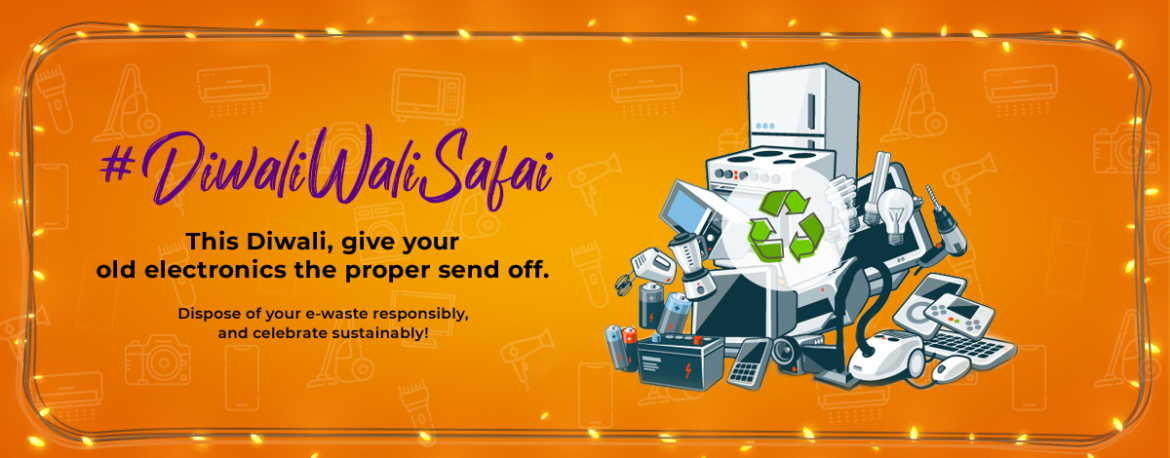
Panasonic marks International E-waste Day, announces the second edition of #DiwaliWaliSafai Campaign

by Team Conscious Carma October 14, 2021
written by Team Conscious Carma

Catch the #DiwaliWaliSafai campaign here

To mark International e-waste Day, Panasonic India, a leading diversified technology company, today announced the second edition of its awareness campaign #DiwaliWaliSafai on responsible disposal of e-waste. According to the Central Pollution Control Board report 2019-2020, India generated 1,014,960 tonnes of e-waste, which is the third-largest after China and the US. #DiwaliWaliSafai campaign is an endeavour by Panasonic to sensitize consumers around the rise of e-waste and the need for its responsible collection, disposal, and recycling.

The campaign is centred around the ritual of festive cleaning, an important and common practice in every household, during Diwali. While consumers get busy with celebrations, buying new items, they usually don’t pay attention to the disposal of their old electronics safely. With #DiwaliWaliSafai, Panasonic is urging everyone to proactively become active agents of change and make this Diwali greener by responsibly disposing of their e-waste. Panasonic is also offering free of cost home pick-ups for large appliances as well as assistance in identifying the closest collection centres.

Commenting on the campaign, Ms Ritu Ghosh, Head, Corporate Affairs & CSR, Panasonic India said, “At Panasonic, through Harit Umang – Joy of Green programme, our constant endeavour is to nurture the ecosystem by harnessing sustainable practices, imparting knowledge and inculcating responsible environmental behaviour through active engagements with consumers and communities. #DiwaliWaliSafai is a manifestation of this belief, to spread awareness on the importance of responsible e-waste disposal as it is the first step towards responsible e-waste recycling.”

Panasonic DiwaliWaliSawai campaign

As part of the #DiwaliWaliSafai campaign, Panasonic is running an engaging contest on its social media handles, encouraging consumers to share selfies with the e-waste they are disposing of responsibly this Diwali; wherein lucky participants stand a chance to win the company’s home appliances including LED TV, Washing Machine, Air Conditioner, Refrigerator, Microwave, Vacuum Cleaners and grooming kits. The contest is live till 24th October 2021.

Mr Shirish Agarwal, Head – Brand and Marketing Communications, Panasonic India said, “We launched the #DiwaliWaliSafai campaign last year and received really positive response which encouraged us to bring it back this year. The aim is to make #DiwaliWaliSafai into our flagship campaign to drive awareness on responsible disposal of e-waste during the festive season. Last year we reached out to 20 million consumers through our digital platforms and are hoping to keep the momentum going this year as well.”

To participate in the #DiwaliWaliSafaai campaign people can use any of the following social media handles of Panasonic India:

@PanasonicInNew Twitter

@PanasonicIndia Facebook  

@Panasonic_India Instagram 

@Panasonic India LinkedIn

About Panasonic India: Panasonic India is a wholly-owned subsidiary of Panasonic Corporation that is a worldwide leader in the development of diverse electronics technologies and solutions for customers in the consumer electronics, housing, automotive, and B2B businesses. The company, which celebrated its 100th anniversary in 2018, has expanded globally and now operates 528 subsidiaries and 72 associated companies worldwide, recording consolidated net sales of 6,698.8 billion yen for the year ended March 31, 2021. Panasonic commenced its operations in India in the year 1972 and the regional headquarter is located at Gurgaon, Haryana. Committed to pursuing new value through innovation across divisional lines, the company uses its technologies to create a better life and a better world for its customers. To learn more about Panasonic: https://www.panasonic.com/global.

October 14, 2021 0 comment
0 FacebookTwitterPinterestEmail
Earthum toothbrushes
AccessoriesProductsSustainable Startup Stories

A Sustainable Era Has To Begin, With ‘Earthum’ It Has

by Team Conscious Carma October 14, 2021
written by Team Conscious Carma

When it comes to keeping our environment clean and healthy, we lack awareness of it. Starting from using plastic straws to toothbrushes to cutlery to plastic bags we are harming the environment in every possible manner. Aquatic life is the one that is being hampered the most by our deeds. In helping and teaching us how to be effective and efficient in sustainable products, EARTHUM a brand that deals in sustainable products have come up in the market with an aim of bringing a change in society and our daily habitual products. 

“Back in 2019, the idea of Earthum came while brainstorming about a business idea where we can reform a product that is a huge pile-up in the garbage and can’t be reused or recycled or upcycled”,  Says Co-founder Tanishq Gupta.

Our mission and vision is to establish a brand that people could trust for good and sustainable products with hopes to bring a change towards the future of our coming generations. “In coming 5 years, we see our brand achieving the feat of bringing down the mountains of garbage all across the country by reducing the number of single-use plastic to our sustainable product line” Tanishq, adds. 

Earthum is bringing in products that are eco-friendly, biodegradable, and are naturally sourced. The top Flagship products the brand has already introduced to the market are Bamboo toothbrushes, which grows faster and doesn’t disturb the ecological balance; ToothABS, is a tablet which is a new form of toothpaste that helps in decreasing the use of plastic tubes and be minimal on non-recyclable products. 

The name of the brand EARTHUM itself tells you the vision which is EARTH + HUM = EARTHUM. We believe that earth is not our permanent asset, but our current liability and we should treat it the same way. We want to hand over a planet to the future generation for which they are thankful, clean air they can breathe in and the natural habitat they can enjoy in.

Earthum toothbrushes

We at Earthum also have been inculcated with the passion to bring a change to the regular brushing habits. Our first and foremost mission is to educate the youth of the country about the need for sustainable and organic replacements of already existing toxic substances in the shape of products. The second is to sell the product once they are educated and then to talk about the benefits of their product. We want to be selfless while educating them about the harmfulness and the need for replacement. Replacing the plastic toothpaste tube and adapting to new alternatives like, toothpaste tablets that contain no chemical ingredients and requires less water consumption pre brushing process is a brilliant step forward to sustainability. 

The market is still growing, and a number of new players are entering it with more innovation in the product line. As India is a country of millennials who are always keen and eager to find solutions to existing problems, we are here to do the same.

October 14, 2021 0 comment
0 FacebookTwitterPinterestEmail
E-waste
EnvironmentInitiatives

ASUS Announces #DiscardResponsibly Initiative on International E-Waste Day

by Team Conscious Carma October 13, 2021
written by Team Conscious Carma

With a pledge to build a greener ecosystem and in observance of the International E-waste Day, ASUS India, Taiwanese tech giant, today announced a new initiative, #DiscardResponsibly, to evoke a sense of accountability amongst citizens. The new initiative is a step taken towards building a sustainable environment by creating awareness around the impact of careless dumping of electronic waste on the environment and at the same time, enabling citizens to dispose off e-waste sensibly. There is also a digital consumer engagement activity planned wherein two winners stand a chance to win exciting ASUS goodies. The campaign will go live on International E-waste Day, 14th October, and will run till 31st October. 

With the rapid pace of innovation and easy accessibility, the adoption of new technologies has increased over the years, as we tend to frequently replace our old gadgets and electronics with the latest ones. Seldom do we pay attention to the end of our products’ lifecycle and often throw them away casually.

ASUS’ #DiscardResponsibly is an endeavor to not only educate and spread awareness but also help consumers to responsibly dispose of their e-waste, by offering free of cost home pick-up for the discarded gadgets across India during the campaign period. ASUS has released a Toll-Free Number and a microsite to efficiently activate the e-waste management drive. All the consumers need to do is call on Toll-Free Number 1800 2090 365 or visit https://asus.in/discardresponsibly/ to provide their information such as name, contact number, email, and address to schedule a pick up slot, following which ASUS representatives will come to collect the e-waste from their place. ASUS is driving the #DiscardResponsibly campaign through their retail network as well to spread maximum awareness. The sales representatives shall inform walk in customers about the initiative and the simple steps to be followed to reach out to ASUS to collect their e-waste 

Talking about the campaign, Mr. Leon Yu, Regional Director, System Business Group, Asus India & South Asia, said, “According to a recent UN report E-waste quantities are rising 3 times faster than the world’s population and 13 per cent faster than the world’s GDP during the last five years. More cooperative efforts are required to make people aware of this increasing issue and take appropriate countermeasures supported with appropriate research and training. In our endeavor to build a sustainable environment for a promising future, we are rolling out the #DiscardResponsibly initiative enabling safe collection and disposal of e-waste. Through this campaign, we aim to spread awareness and at the same time, encourage people to take accountability of their ecosystem by adopting ecofriendly practices.”

Further to motivate people to come forward towards building an e-waste free environment, ASUS is also running an exciting contest as a part of the campaign, where people need to click a picture while disposing off their e-waste to ASUS and post it on social media platforms, using #DiscardResponsibly, #ASUS hashtags and tag ASUS India handle. Two lucky participants, driving maximum engagement around e-waste on their post during the 18 days’ campaign period, will stand a chance to win ASUS goodies.

Request for E-Waste pick-up can be made through the following:

  • Toll Free Number- 1800 2090 365
  • Website- https://asus.in/discardresponsibly/

People who wish to discard their e-waste after 31st October’21, can continue to reach out through toll free number 1800 2090 365 to get the details about ASUS India disposable centres across the country.

ASUS INDIA Facebook:  https://www.facebook.com/AsusIndia/

ASUS INDIA Twitter: https://twitter.com/ASUSIndia

ASUS INDIA Instagram: https://www.instagram.com/asusindia/?hl=en

About ASUS

ASUS is a multinational company known for the world’s best motherboards, PCs, monitors, graphics cards and routers. Along with an expanding range of superior gaming, content-creation and AIoT solutions, ASUS leads the industry through cutting-edge design and innovations made to create the most ubiquitous, intelligent, heartfelt and joyful smart life for everyone. With a global workforce that includes more than 5,000 R&D professionals, ASUS is driven to become the world’s most admired innovative leading technology enterprise. Inspired by the In Search of Incredible brand spirit, ASUS won more than 11 awards every day in 2019 and ranks as one of Forbes’ World’s Best Regarded Companies and Fortune’s World’s Most Admired Companies. 

E-waste
October 13, 2021 0 comment
0 FacebookTwitterPinterestEmail
Authored ArticlesExpert Corner

Mental health and wellness takes centre stage in a pandemic stricken world

by Team Conscious Carma October 10, 2021
written by Team Conscious Carma

World Mental Health Day, Oct 10, 2021

The world has been a different place since 2019/2020. From having started living a new normal which includes being physically away from everyone to living in fear of losing our loved ones and losing our source of income, it’s been really challenging.  Mental health has taken a great toll during this period, and more than ever, it needs greater attention now. 

Mental health

Even the strongest person is shaken, either emotionally, physically or economically. However, one must not forget that if good times didn’t last, bad won’t last either. Every cloud has a silver lining. The pandemic has made us appreciate every single thing we are blessed with, be it the food on our plate, the job we still have, the company of our loved ones. It has made us more empathetic towards the ones who have not been so fortunate enough, towards the other living beings, towards the environment and the entire creation.  

“Nevertheless, let us all stay optimistic and look forward to a brighter and happier future.  Our mental well-being is of utmost importance to overcome any unwanted situations in life. It’s very important to open up and discuss your fears and anxiety, either with your family, friends or a counsellor. There are ways to deal with it, not necessarily involving medication, which is recommended, only when required”, says Ishita Kotiya, Life Coach & Energy Healer. 

During the pandemic, I came across people being frustrated with their monotonous life which was now being frozen at their own respective homes. They were not able to go out, they were not able to have human interaction as many of them lived away from their hometown for work purposes. Simple things like doing Yoga or HIIT (High-intensity interval training) & structural training with basic weights available at home helped them vent out their frustration. One of the other most used techniques which were suggested by me to my clients was Journaling. They were asked to journal their thoughts every evening before going to bed, no matter how hard the day got, this was one task that they had to maintain.  Journaling helps you to reflect on your day, to reflect on your emotions and especially makes you an observer of the kind of emotions you had throughout the day which helps you to understand yourself, your nature, your personality and your way of tackling your problems as well.

A Life Coach helps people through their problems with a slightly dynamic approach while creating a safe space but also pushing the clients to find their own solutions to problems over a period of time. A Life Coach can be many things amongst a good listener, an advisor, a guide, a spiritual help (if certified) and many more. 

Mental health

For the people who lost their jobs during the pandemic, they suffered a lot of mental health issues because of the uncertainty and the fear which got into them during the circumstances. Not knowing about how bad the situation outside would get and losing the financial security on top of it has been a dealbreaker. I have seen such people losing their sleep and looking for jobs for almost 20 hours a day which definitely makes the whole situation much more scary and toxic. We need to understand that what is done cannot be undone, but we won’t have the leverage of earning money if we don’t take care of ourselves. Many studies have already proven how bad mental health can easily turn into bad physical health and it gives us physical symptoms like headaches, fever, fatigue, anxiety cramps, palpitations and many more. 

Mental health

Some tips which helped my clients were staying away from coffee, as caffeine is unhealthy for our body and soul.  Don’t just wake up and open your laptop/job portals looking for a job – as much as it sounds like the right thing to do keeping in mind that the uncertainty is so much that you can’t think of anything else. When you do this, you end up putting a lot of pressure on your mind and your emotional well-being. It’s important for you to take that one hour and NOT think about anything at all. Just be. Talk to people who motivate you rather than the ones who tell you how bad the market situation is. The bottom line is to keep away from negativity, rather listen to motivational podcasts or watch motivational videos. Last but not the least, make a timetable. Just because you don’t have a job, does not mean that you work for 24 hours a day. It’s important to take intervals in between for your own sanity.

“For the ones, who lost their loved ones, it’s the toughest situation to overcome the pain and the loss.  All one can do is pray for the soul, spread cheer by financially, physically or even emotionally lending a hand to ones in distress.  Spreading happiness will bring inner peace and happiness within you and help you deal with your loss.  Remember, everyone has to leave this world sooner or later, try and make it easier for the loved ones who have left you, they certainly don’t want to see you unhappy”, adds Kotiya.

About Life Coach & Energy Healer Ishita Kotiya

All of 24, the young and talented Ishita Kotiya is helping increase the happiness quotient of her clients globally.  A certified life coach from Symbiosis, California and accredited by International Coaches Federation (ICF), Ishita started this journey witnessing the growing number of people suffering from low self-esteem. She has successfully coached more than 100 individuals and healed more than 200 patients globally, in the past two years of her practice.

October 10, 2021 0 comment
0 FacebookTwitterPinterestEmail
EnvironmentGlobal

Rising sea surface temperatures driving the loss of 14 percent of corals since 2009; Some show resilience, offering hope for recovery

by Team Conscious Carma October 5, 2021
written by Team Conscious Carma

Nairobi, 5 October 2021 – The “Status of Coral Reefs of the World: 2020” report, released today, documents the loss of approximately 14 per cent of the world’s coral since 2009. The report, the sixth edition produced by the Global Coral Reef Monitoring Network (GCRMN), provides the most detailed scientific picture to date of the toll elevated temperatures have taken on the world’s reefs.

This, the largest analysis of global coral reef health ever undertaken draws on data:

  • spanning 40 years
  • in 73 countries
  • across 12,000 sites
  • collected by more than 300 scientists
  • through 2 million individual observations.

Corals reefs across the world are under relentless stress from warming caused by climate change and other local pressures such as overfishing, unsustainable coastal development and declining water quality. An irrevocable loss of coral reefs would be catastrophic. Although reefs cover only 0.2 per cent of the ocean floor they are home to at least a quarter of all marine species, providing critical habitat and a fundamental source of protein, as well as life-saving medicines. It is estimated that hundreds of millions of people around the world depend on them for food, jobs and protection from storms and erosion.

Inger Andersen, Executive Director of the UN Environment Programme (UNEP), which provided financial, technical and communication support to the report said, “Since 2009 we have lost more coral, worldwide, than all the living coral in Australia. We are running out of time: we can reverse losses, but we have to act now. At the upcoming climate conference in Glasgow and biodiversity conference in Kunming, decision-makers have an opportunity to show leadership and save our reefs, but only if they are willing to take bold steps. We must not leave future generations to inherit a world without coral.” 

However, the report also found that many of the world’s coral reefs remain resilient and can recover if conditions allow, providing hope for the long-term health of coral reefs if immediate steps are taken to stabilize emissions to curb future warming.

“This study is the most detailed analysis to date on the state of the world’s coral reefs, and the news is mixed. There are clearly unsettling trends toward coral loss, and we can expect these to continue as warming persists. Despite this, some reefs have shown a remarkable ability to bounce back, which offers hope for the future recovery of degraded reefs. A clear message from the study is that climate change is the biggest threat to the world’s reefs, and we must all do our part by urgently curbing global greenhouse gas emissions and mitigating local pressures” said Dr Paul Hardisty, CEO of the Australian Institute of Marine Science

The analysis which examined 10 coral reef-bearing regions around the world[1] showed that coral bleaching events caused by elevated sea surface temperatures (SSTs) were the main driver of coral loss, including an acute event in 1998 that is estimated to have killed eight percent of the world’s corals, which, to put this in context, is more than all the coral that is currently living on reefs in the Caribbean or Red Sea and Gulf of Aden regions. The longer-term decline seen during the last decade coincided with persistent elevated SSTs.

“Coral reefs, so fragile and of such importance, are currently under serious threat. Ocean acidification, global warming, pollution: the causes of these threats are many and particularly difficult to address, insofar as they are extremely diffuse, and result from our entire development paradigm. We know that solutions exist that will help us to protect the corals more effectively, to mitigate the threats hanging over them and, by developing scientific research, to gain a better understanding of how we can save them” said Albert II, Prince of Monaco

The analysis investigates changes in the cover of both live hard coral and algae. Live hard coral cover is a scientifically based indicator of coral reef health, while increases in algae are a widely accepted signal of stress to reefs. Since 1978, when the first data used in the report were collected, there has been a 9 per cent decline in the amount of hard coral worldwide. Between 2010 and 2019, the amount of algae has increased by 20 per cent, corresponding with declines in hard coral cover.  This progressive transition from coral to algae-dominated reef communities reduces the complex habitat that is essential to support high levels of biodiversity.

The report also highlighted that although during the last decade the interval between mass coral bleaching events has been insufficient to allow coral reefs to fully recover, some recovery was observed in 2019 with coral reefs regaining 2% of the coral cover. This indicates that coral reefs are still resilient and if pressures on these critical ecosystems ease, then they have the capacity to recover, potentially within a decade, to the healthy, flourishing reefs that were prevalent pre-1998.

Key findings:

  1. Large scale coral bleaching events are the greatest disturbance to the world’s coral reefs. The 1998 event alone killed eight per cent of the world’s coral, which is the equivalent of about 6,500 square kilometres of coral.  The greatest impacts of this mass bleaching event were seen in the Indian Ocean, Japan, and the Caribbean, with smaller impacts observed in the Red Sea, The Gulf, the northern Pacific in Hawaii and the Caroline Islands, and the southern Pacific in Samoa and New Caledonia.
  2. Between 2009 and 2018, the world lost about 14 per cent of the coral on its coral reefs, which equates to around 11,700 square kilometres of coral, more than all the living coral in Australia.
  3. Reef algae, which grows during periods of stress, has increased by 20 per cent over the past decade.
  4. Prior to this, on average there was twice as much coral on the world’s reefs as algae.
  5. Coral reefs in East Asia’s Coral Triangle, which is the centre of coral reef biodiversity and accounts for more than 30 per cent of the world’s reefs, have been less impacted by rising sea surface temperatures. Despite some declines in hard coral during the last decade, on average, these reefs have more coral today than in 1983 when the first data from this region were collected.
  6. Almost invariably, sharp declines in coral cover corresponded with rapid increases in sea surface temperatures, indicating their vulnerability to spikes, which is a phenomenon that is likely to happen more frequently as the planet continues to warm.

Further resources: UNEP data visualization the Status of Coral Reefs of the World report

  • The report examines the status and trends in the world’s coral reefs since 1978 and pays special attention to increasingly frequent mass global coral bleaching events, the first of which occurred in 1998. It draws on a global dataset made up of almost 2 million observations from more than 12,000 collection sites in 73 countries across the 10 GCRMN regions: Australia, Caribbean, Brazil, East Asian Seas, Eastern Tropical Pacific, Pacific, South Asia, Western Indian Ocean, Red Sea and Gulf of Aden, and the ROPME[2] Sea Area which includes The Gulf and the Gulf of Oman.
  • The cover of live hard coral and algae were the two indicators of reef health used by the researchers. Both are widely accepted metrics of ecological degradation and standardized protocols allowed for a quantitative global analysis.
  • Confidence in estimates of the global average cover of hard coral is much greater after 1998 when monitoring effort and the availability of data increased.
  • The report was not able to assess changes in the species composition of coral and fish communities on the world’s coral reefs caused by large-scale disturbances because of the variation in the way in which coral reef monitoring programs around the world collect these data.
  • The latest IPCC report has warned that temperatures will continue rising without large-scale and immediate action and that existing ocean warming will persist for centuries to millennia.

Regional findings

  • Since 2010, almost all regions experienced coral loss with the ROPME Sea Area (around the Arabian Peninsula), South Asia, Australia and the Pacific showing the greatest declines. Statistical probabilities of decline exceeded 75 per cent in these regions, as well as in East Asia and the Western Indian Ocean—together comprising almost 50 percent of the world’s coral reefs.
  • ROPME Sea Area, Eastern Tropical Pacific, Red Sea and Gulf of Aden, Caribbean, Australia and Brazil all exhibited an increase in the cover of algae.
  • In areas where there is high confidence of the data, long-term losses of coral ranged from 5 percent in East Asia to 95 per cent in the Eastern Tropical Pacific. In Australia, the Caribbean, Eastern Tropical Pacific, and South Asia, greater than 75 per cent of areas that been repeatedly monitored for more than 15 years and had suffered a significant disturbance failed to recover fully to pre-disturbance condition.
  • A major break from this pattern was observed in East Asia’s Coral Triangle region, which contains almost 30 per cent of the world’s coral reefs, where they less impacted by thermal disturbances and in some cases recovery. Hard coral cover increased progressively from 32.8 per cent in 1983 to 40.8 percent in 2009. More recent data shows fluctuations, but coral cover remained higher in 2019 than in 1983, when the data was first collected. Resilience shown by these coral reefs may speak to advantageous traits found in the region’s diverse corals, potentially offering insights for how to protect other species and recovery in the face of warming temperatures.

About the International Coral Reef Initiative (ICRI)

The International Coral Reef Initiative (ICRI) is a proactive partnership between Nations and organisations which strives to preserve coral reefs and related ecosystems around the world. Founded in 1994 by eight governments, the initiative emerged from the recognition that coral reefs and related ecosystems were facing serious degradation. The initiative now hosts over 90 members and its actions are pivotal in continuing to highlight the importance of coral reefs and related ecosystems to environmental suitability, food security and cultural wellbeing.

About the Global Coral Reef Monitoring Network (GCRMN)

The Global Coral Reef Monitoring Network (GCRMN), founded as a network under the International Coral Reef Initiative (ICRI) in 1998, is an operational network of the International Coral Reef Initiative that aims to provide the best available scientific information on the status and trends of coral reef ecosystems for their conservation and management. The GCRMN is a global network of scientists, managers and organisations that monitor the condition of coral reefs throughout the world. The GCRMN operates through 10 regional nodes, each coordinated by a Regional Coordinator or coordinating organisation.

About the Australian Institute of Marine Science (AIMS)

The Australian Institute of Marine Science (AIMS) is Australia’s tropical marine research agency. In existence for almost half a century, it plays a pivotal role in providing large-scale, long-term and world-class research that helps governments, industry and the wider community to make informed decisions about the management of Australia’s marine estate. AIMS science leads to healthier marine ecosystems; economic, social and environmental benefits for all Australians; and protection of coral reefs from climate change. AIMS is the hosting institution for the GCRMN.

About the United Nations Environment Programme (UNEP)

UNEP is the leading global voice on the environment. It provides leadership and encourages partnership in caring for the environment by inspiring, informing and enabling nations and peoples to improve their quality of life without compromising that of future generations.

October 5, 2021 0 comment
0 FacebookTwitterPinterestEmail
ApparelSustainability

Niraa – a sustainable contemporary wear label

by Team Conscious Carma October 3, 2021
written by Team Conscious Carma

The Ideology

At the epitome of elegance and comfort, Niraa is a sustainable contemporary-wear label whose garments mirror the qualities borne by our Mother Earth. Handcrafted and hand-woven, Niraa aspires to stay true to its rich Indian heritage along with unveiling its subtly well designed and timeless attire. Chosen from a variety of ambient hues, these garments are an ultimate personification of relevance and utility. These minimal, classic drapes and clean cuts in handloom fabrics are nothing short of a luxury suited to seasons across the country and a solace against humid climates. They are prized by the efforts of artisans and their captivating crafts which have done justice to the Niraa label. Not only do these garments radiate exuberance, but have also been crafted in a sustainable environment, ensuring to revive the Indian handloom and various textiles of India. An evident selection of affection & ardour, dip into an incarnation of your ethereal- self adorning Niraa.

Niraa was created with an intention of shunning away the notions of having a perfect body and cherishing age-old traditional textile methods. Niraa makes anti-fit silhouettes, that fall beautifully on the bodies of all shapes and sizes without being clingy. Drafted on the softest and imperfectly unique natural fabrics, Niraa’s pieces are here to celebrate the perennial craftsmanship of the weavers. Each piece is unique in its inception, is sustainable, is created with love that’s handcrafted. These, one of a kind pieces can be cherished and worn delightfully even after 10 years.’ The part of nature that they are they will easily meet the nature as they came into being. These garments are a celebration of femininity of all shapes and sizes.

The struggles and the triumphs

“Being a woman owned start-up the struggles are inevitable and are many. We faced a challenge to sustain the start-up as there is a growing competition in the e-commerce world. It is not at all easy to build  trust and get sales but yes as time passes it is no more a struggle for us. It was difficult initially to be sustainable in terms of raw materials, as there were very few sustainable options available in the market to choose from, also the price points were high so to make an affordable product was taking either the customers from us or was not getting enough profit to us. The struggle with a small brand is to make a cost effective product as we don’t deal in bulk quantity. But we would say as the consumer is becoming more aware of sustainability and sustainable practices, the struggles are decreasing though not completely but we are hoping for a brighter future for sustainable start-ups”, says Jyoti Jain, fashion designer-stylist and the creative-head of NIRAA.

The passion

“While learning the nuances of fashion at the Pearl Academy, in the first three years of my fashion study, I knew little about my style, my forte, my talent. To put it in plain words, I just “learnt” what I was taught. We were encouraged to know  the crafts of India and do projects on them. While doing the projects little did I know that I would fall in love with Indian handloom and crafts and enjoy collecting as much information and skills as I could. My graduating collection was the turning point, I realised my love for weaving which till then was only in my sub-conscious mind.  My deep-never-ending love surfaced and desire to work in the Indian handloom, weaving and craft designing became even more ardent. And gradually I found that Indian textiles are becoming sustainable and thus I incorporated sustainability in my brand so I could do something for our planet and for our next generations. NIRAA is a product of my awareness of fashion and responsiveness towards the planet , my whole-hearted attempt to do something contemporary while keeping myself grounded deep to my heritage”, adds the passionate designer.

Availability : www.niraa.co

October 3, 2021 0 comment
0 FacebookTwitterPinterestEmail
Travel

The Regenerative Travel Summit 20-22 September 2021

by Team Conscious Carma October 1, 2021
written by Team Conscious Carma
Regenerative Travel, a benefit corporation, travel planning service, and a collection of independent hotels and lodges committed to regenerative hospitality, closed its second annual Regenerative Travel Summit recently. Built to foster solutions-oriented conversations, the three-day virtual summit featured a mix of panels and open discussions giving a platform to passionate conservation experts, indigenous tourism consultants, regenerative agritourism specialists, social entrepreneurs, hoteliers, and journalists. All weighed in on the question- how can we harness travel to regenerate community and place
While many topics were covered throughout the three days and though diverse in their backgrounds, missions and brand ethos, some consistent themes held strong amongst all speakers throughout each day: Day One: Whole Systems Thinking | Key Takeaway We should build on the discipline of not imposing what regenerative is and instead take into account the many perspectives and breadth of knowledge held by community and place. Human diversity is just as critical to society as biodiversity is to an ecosystem… We cannot just rename the problem, we need to also renew our mindsets and become the innovative futurists that we’re waiting for   Day Two: Honoring Sense of Place | Key Takeaway When we talk about honoring sense of place—it is an expansive definition of place, one that doesn’t just mean a location on a map. It requires we take the time to understand the full context of the place, who the knowledge holders are, and how tourism can not just reflect local values but also how it can empower knowledge holders, valuing their culture and personal experiences.   Day Three: Continual Coevolution | Key Takeaway Regeneration begins at home within ourselves and regenerative leadership is essential for us all to make the necessary changes, to create the paradigm shift within our own communities. We know that the evolution of our communities is not separate from our own evolution, that we are continually evolving and learning from one another and changing each other.

Reflecting on the close of the Summit, Co-founder of Regenerative Travel, Amanda Ho stated, “Regenerative Travel was born from the desire to effect meaningful and holistic change. To build on the existing principles of what has sustained us and to forge new ways of ensuring a lasting legacy for a thriving humanity and the planet at large. This new way however is nothing new. Nature reminds us that everything comes full circle. We return to, and regenerate forgotten wisdom which has moved us forward since the beginning time. We are now at that point where a cycle has come full circle, and are ready to begin anew. To learn from what has been and move forward in greater numbers with a unified mission of ensuring a positive legacy through travel.”

In line with the brand’s mission to drive change as the Regenerative Travel Summit wrapped up this year, the team announced its next event — the first Regenerative Travel Trade Show & Industry Forum which will unite ethics-aligned industry stakeholders and provide tools for them to engage with regenerative principles across two days on October 26 & 27th.

The Regenerative Travel Summit 2021 brought together diverse perspectives in regeneration—from established thought leaders to emerging innovators—to discuss how the travel industry can be designed to thrive and serve as a catalyst for change, generating economic, social, and environmental wealth. The summit invited changemakers from the travel industry and beyond to develop their regenerative mindset, learn about practical solutions for the industry’s greatest challenges, and tools to unite travel with conscious consumers’ desire to do good. The Regenerative Travel Summit, Sept 20-22: Harnessing Travel to Regenerate Community & Place
###

About Regenerative Travel:

Regenerative Travel is a shared benefit corporation and booking platform providing marketing and hospitality services to a network of over 50 independently owned eco-luxury boutique hotels dedicated to the highest levels of social and environmental impact located in over 24 countries worldwide. Through sharing individual best practices and through collaboration, Regenerative Travel enables the Regenerative Resorts hotel collection to work together to achieve significant economies of scale and to make a deeper impact.

—
October 1, 2021 0 comment
0 FacebookTwitterPinterestEmail
Industry

TVS Motor to launch complete range of 2- and 3-wheelers in next two years; eyes dominance in EV space

by Team Conscious Carma September 30, 2021
written by Team Conscious Carma

The company has earmarked an investment of ₹1,000 crore on its electric vehicles (EV) business, while it will also continue to invest on conventional engine vehicles.

Chennai-based TVS Motor Company will launch a complete range of electric two and three-wheelers with power output ranging from 5 to 25 kilowatts in the next two years as it seeks to play a leading role in the country’s emerging electric vehicle space, according to a top company official.

“We are excited about EVs. We’re investing in building capability and products to play a leading role in this in the EV space going forward, which we believe will grow fast,” TVS Motor Company Joint Managing Director Sudarshan Venu told PTI.

He said the company is investing over Rs 1,000 crore on the EV venture with a team of over 500 engineers engaged in development of new electric vehicles.

When asked about the new EV product road map, Venu said, “We will have a complete range, which we will launch in stages over the next two years from 5 to 25 kilowatts — two-wheelers and three-wheelers in both passenger and cargo (segments) as well.”

Besides, he said, “We will also in the next couple of months announce an upgrade on the TVS iQube (the company’s existing electric scooter).”

The iQube, which has a peak power of 4.4 kW and a range of 75 km on a single charge, is currently sold in four cities.

“Our plan is to take this nationwide before the end of the fiscal year,” he said adding in September alone, TVS Motor Company plans to expand the availability of the iQube to another 20 cities.

Asked if TVS planned to export its EVs, Venu said, “We certainly believe that TVS has a good international business and we will look to export EVs as well.”

While bullish on the EVs, Venu said, “At the same time I think the exact pace of electric vehicle adoption will depend on various factors, including the maturity of technology, the improvements in technology and the advances, subsidies and customer acceptance, creation of charging infrastructure.”

From TVS’ point of view, he said, “We will invest ahead and be ready for this…We’re also announcing charging partnerships to scale up the fast charging and convenience to customers.”

Commenting on the company’s strategy for the conventional internal combustion engine vehicles (ICE), Venu said TVS will continue to invest where it sees growth opportunities and potential.

“We will continue to invest what is needed in this space…We have a regular product cadence…These launches will be adequately funded and where we see an opportunity in this space, we will certainly continue to invest,” he added.

The company sees the ICE business certainly having good traction particularly in certain segments and also in the export markets, Venu said while adding “but EV is very important for us and we’re investing behind it”.

Source : PTI

Note: The content has been edited for style and length

September 30, 2021 0 comment
0 FacebookTwitterPinterestEmail
inkpikle
ApparelSustainability

Inkpikle : Peserving country’s heritage of fabrics just like a homemade pickle

by Team Conscious Carma September 29, 2021
written by Team Conscious Carma

Inkpikle tastes much like itself – A homemade pickle, with a tangy quirky nostalgic flavour that preserves a century old Fabric khadi/hand spun.

Aathira Mannali, a NIFT graduate always wanted to create her own label and wanted to do it consciously. The label was conceptualized in 2016, however was inactive from 2018 to 2021 as Aathira was relocated to Dubai after wedding. Having worked as designer with  companies in Bangalore and Dubai before taking a 4 year sabbatical and finally returning to Indian to relaunch her brand alongwith her husband Rahul Mangalath, an MBA and an expert in financial operations and passionate about doing his own business.

Success Mantra   

 “It is not just green choices in the food we eat and the air we breathe but to make tiny changes in our wardrobe too”, says the duo. All the prints are signature prints designed in house by Aathira, who is constantly inspired from everyday mundane objects and also the places she has travelled and wishes to travel. While Aathira is the creative head Rahul takes the role of management marketing and finance for the Organization. They both are different but they have mutual respect and trust and they have fun doing this together.

The brand philosophy

Inkpikle  believes that plush could be slow and sustainable and that global can be homebound. We take pride in celebrating the handspun, one that creates zero carbon footprint, is so versatile andeco friendly. It  lends our clothes a certain charm and authentic character. Its irregularities and imperfections makes its beauty unmatched. Khadi is such a significant fabric from our heritage after all it won us freedom. It is the brand philosophy that we have to embrace Indian to make it global.

Our fabric is handspun and handwoven from skilled artisans across remote villages in West Bengal, Indiawhom we mutually benefit in enriching their ecosystems, strengthening their livelihood and improving our fastidiousness to research the textile. All our prints are designed in studio and printed by skilled craftsmen in Kerala, India. We believe  in simple silhouettes and thoughtful ethos of print.

We connect with people who cherish their clothes and find meaning in them. Somehow our lives have been conditioned to bring us back home with the flavour of the pickle, to  the air of saffron or the kolam patterns afresh as morning ragas.

We ink them all, all of these stories always muted but bold with an element of surprise. We have global plans and we take the Gandhian chic many miles forward.

Inkpikle’s latest collection of Sarees

The Inkpikle saree caters to any age group. As saree itself is so timeless and classic, Inkpikle wanted to experiment in this category and has now received an overwhelming response. The Inkpikle saree is never flashy but versatile. It is for your everyday and festive occasions ,effortlessly making a statement . Wearing an Inkpikle saree is almost like wearing a poem or wearing a mood. It surely is an escape. “Every saree tells has a story to say and the wearer truly is someone who has a distinct charm and cherishes our clothes”, adds the proud frounders.

  • inkpikle
  • inkpikle
  • inkpikle

Vision

Inkpikle has global plans. They aim at expansion and venturing into all apparel categories and lifestyle products.

Availability : Instagram inkpikle (website coming soon)

September 29, 2021 0 comment
0 FacebookTwitterPinterestEmail
Newer Posts
Older Posts

Recent Posts

  • India–UK Free Trade Agreement Opens Global Growth Opportunities for 3R ZeroWaste’s Circular Economy Solutions
  • Plastic Free July: Why True Sustainability Goes Beyond Swapping Plastic
  • From the Editor’s Desk: When Greed Takes Over Conscience
  • Beyond the Pose: Why Your Yoga Mat Needs a Sustainable Upgrade
  • Best Sustainable Father’s Day Gifts: Conscious Carma’s Exclusive Picks

Recent Comments

  • Team Conscious Carma on Label Shivika Agarwal – where craft meets sustainability
  • Cocomeister.jp on Label Shivika Agarwal – where craft meets sustainability
  • Team Conscious Carma on Equitable City Designs To Fight Climate Change
  • UN report calls for repurposing of USD 470 billion of agricultural support that distorts prices and steer us away from environment and social goals | Consciouscarma on UNEP & ICMR collaborate to boost understanding of environmental dimensions of antimicrobial resistance in India
  • Wild Earth : Natural body products | Consciouscarma on Sat.Suma : the true essence of flowers in your everyday skincare needs

Keep in touch

Facebook Twitter Instagram Youtube

Recent Posts

  • India–UK Free Trade Agreement Opens Global Growth Opportunities for 3R ZeroWaste’s Circular Economy Solutions

  • Plastic Free July: Why True Sustainability Goes Beyond Swapping Plastic

  • From the Editor’s Desk: When Greed Takes Over Conscience

  • Beyond the Pose: Why Your Yoga Mat Needs a Sustainable Upgrade

  • Best Sustainable Father’s Day Gifts: Conscious Carma’s Exclusive Picks

  • How Sacred Sound is Reshaping the Future of Holistic Health?

Categories

  • Community (38)
    • Campaigns (3)
  • CSR (4)
  • Economy (82)
    • Global (24)
    • Industry (42)
    • Innovations (4)
    • National (2)
  • Environment (48)
  • Expert Corner (48)
    • Authored Articles (47)
  • Featured (5)
    • Partners (1)
  • Global News (2)
  • Initiatives (31)
    • CSR (3)
    • Events (6)
  • Inspiration (22)
  • Lifestyle (9)
  • Media Coverage (6)
  • Press Releases (4,358)
  • Products (126)
    • Accessories (27)
    • Apparel (32)
    • Beauty (26)
    • Food (4)
    • Gifting (3)
    • Home Décor (15)
    • Skin-Care (14)
  • Reports (3)
  • Spirituality (10)
  • Sustainability (49)
  • Sustainable Startup Stories (28)
  • Travel (19)
  • Uncategorized (2)
  • Wellness (33)
    • Home Cleaners (3)

Archives

  • August 2026 (1)
  • July 2026 (1)
  • June 2026 (6)
  • October 2024 (1)
  • September 2024 (1)
  • July 2024 (2)
  • June 2024 (2)
  • May 2024 (1)
  • November 2023 (330)
  • October 2023 (554)
  • September 2023 (631)
  • August 2023 (718)
  • July 2023 (723)
  • June 2023 (710)
  • May 2023 (608)
  • April 2023 (114)
  • March 2023 (7)
  • February 2023 (3)
  • January 2023 (11)
  • December 2022 (18)
  • November 2022 (1)
  • August 2022 (6)
  • July 2022 (8)
  • June 2022 (24)
  • May 2022 (11)
  • April 2022 (19)
  • March 2022 (11)
  • February 2022 (11)
  • January 2022 (14)
  • December 2021 (10)
  • November 2021 (4)
  • October 2021 (14)
  • September 2021 (22)
  • August 2021 (12)
  • July 2021 (17)
  • June 2021 (17)
  • May 2021 (16)
  • April 2021 (22)
  • March 2021 (33)
  • February 2021 (16)
  • January 2021 (22)
  • December 2020 (10)
  • Facebook
  • Twitter
  • Instagram
  • Pinterest
  • Linkedin
  • Youtube

@2020 - All Right Reserved. Designed and Developed by Bizopser Technologies

Consciouscarma
  • Home
  • About Us
  • Products
  • Community
    • Campaigns
    • Inspiration
    • Initiatives
    • CSR
  • Features
    • Sustainable Startup Stories
    • Travel
    • Lifestyle
    • Partners
  • Economy
    • Industry
    • Innovations
    • National
    • Global
  • Environment
  • Expert Corner
    • Authored Articles
    • Reports
  • Magazine
  • Contact