Consciouscarma
  • Home
  • About Us
  • Products
  • Community
    • Campaigns
    • Inspiration
    • Initiatives
    • CSR
  • Features
    • Sustainable Startup Stories
    • Travel
    • Lifestyle
    • Partners
  • Economy
    • Industry
    • Innovations
    • National
    • Global
  • Environment
  • Expert Corner
    • Authored Articles
    • Reports
  • Magazine
  • Contact
Author

Team Conscious Carma

Team Conscious Carma

CarbonCraft™
Home DécorProducts

CarbonCraft™: World’s first Tile made using upcycled carbon

by Team Conscious Carma November 24, 2021
written by Team Conscious Carma

CarbonCraft™, a Goa-based startup by Tejas Sidnal, has developed CarbonCraft™ Tile – a first of its kind to be made using upcycled carbon – that aims to prevent carbon emissions at scale through conventional building elements.

CarbonCraft™

Once in a lifetime pandemic has claimed over 2 million lives while air pollution kills 4.2 million people every year. 14 of the world’s 20 most polluted cities are in India. This is the most important health risk of our time. Among the toxins present in the polluted air, Particulate Matter (PM particles) are the most dangerous. Presently, 9 out of 10 people live in places where air quality exceeds WHO limits.

Air pollution has two problems:

  1. How to capture or collect carbon?
  2. What to do with the captured or collected carbon?

It is essential to address both of them to solve the big problem of air pollution completely. From our journey so far, we realised that there are various methods to capture/ collect pollution, but the next big question is what to do with the resulting carbon. Either they have to be burnt or dumped polluting our air, land & water. This directed us to solely focus on the potential and scarcity of carbon utilization solutions as our long term vision.

We have been encountering multiple companies who are addressing the first problem from tyre pyrolysis waste, crop burning, ambient pollution and indoor pollution. Previously we collaborated with one of them to build upcycled carbon products. Our cross collaboration mindset has helped us understand and look for solutions beyond mainstream understanding of air pollution. As we move ahead, we envision to solve air pollution from multiple aspects of industries, geographies, and people. CarbonCraft™ is set out to find alternate ways to upcycle this carbon into new useful forms especially for the building and construction industry. We collaborate with various capture capture/ collection companies to develop higher-grade carbon upcycled products for businesses and end consumers. Through this process, one of the carbon utilisation problems we identified was intriguing and required our immediate intervention.

Causes of air pollution have always been seen from a mainstream point of view which is through exhaust emissions from vehicles, chimneys, and factories. The frightening and apparently invisible problem is that while exhaust emissions have been tightly regulated for many years, waste tyre management is totally unregulated. With the ever-increasing growth and demand for tyres for all types of vehicles especially Electric Vehicles, the result is a humongous accumulation of waste tyres in India and other countries.

There are only two ways to deal with tyre wastes. Open incineration or Pyrolytic degradation. While the former is obviously dangerous and prohibited, the later, pyrolytic degradation of tyres at pyrolysis factories, is considered a safe way to break down tyres to oil, steel wires and tyre pyrolysis waste called recovered carbon black (rCB). 100 million waste tyres are generated in India each year, and there are over 600 registered pyrolysis plants. An estimated

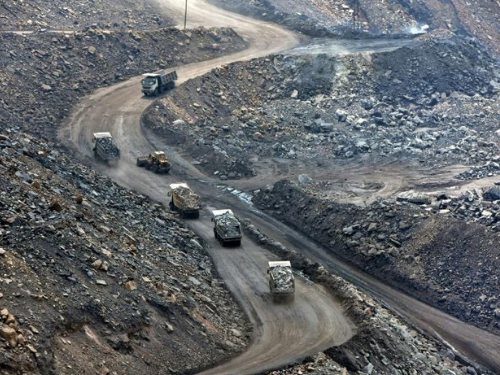
1.5 lakh tonnes of this carbon waste are produced. So far, there has been no repurposing of this material other than burning at cement and bricks kilns as a cheap fuel. This causes particulate matter air pollution around the surrounding areas of the factories leading to poor air quality levels.

Every country has the waste management problem of waste tyres and its recovered carbon waste due to its no alternative-use case other than burning at kilns. We identified this unnoticed burning of recovered carbon waste from tyre pyrolysis as a behemoth problem especially in India which has become a serious environmental issue. In recent years, the Government has taken stringent steps and, in fact, banned a large number of pyrolysis plants to regulate the issue in certain states.

CarbonCraft™: World’s first Tile made using upcycled carbon

CarbonCraft™ Tile is the first tile to be made with upcycled carbon by using recovered carbon waste as a resource. Since this material is only used to be burnt at cement kilns, we create a positive impact by repurposing this material as a building resource. Thus, we prevent air pollution through CarbonCraft™ Tiles.

Solving this problem of air pollution at scale is deeply instilled in our methodology.

Is Air Pollution only a Technological Challenge? It then dawned on us that it required an Architectural intervention to solve this issue at scale. We connect the volume-based waste management problem with the volume intensive material consuming industry with a larger intent to foster a circular economy in the material supply and consumption.

The building & construction industry is the largest consumer of raw materials and responsible for 39% of total energy-related carbon emissions according to the World Green Building Council. If 1% of this industry consumed the waste rCB as a resource, the impact will be phenomenal and would prevent it from being used as a cheap fuel material.

The annual global tile consumption is about 170+ billion sqft, and India alone consumes 9+ billion sqft. In addition, India is the second-largest producer of ceramic tiles in the world. Tiles have become a necessity for both interior and exterior spaces. So, the scalability of the product is directly proportional to the market consumption. Every sqft of CarbonCraft™ Tile is equivalent to preventing the effect of 25 kgCO2e (according to our calculations based on the GEF report on Black Carbon). An average apartment uses 500 sqft of tiles which can prevent over 12 tCO2e. So, one can imagine the scalability of climate action we can achieve by helping consumers to open up new choices like this.

CarbonCraft™ Tiles are essentially addressing Climate Change issues through local craft and sustainable design principles. These tiles are carbon upcycling solutions for architects, businesses, and end customers to take climate action through a commonly consumed building material. Our tiles are completely handcrafted for interior applications from floors to walls. Our artisans replicate the unique tile patterns that we designed by taking inspiration from various Indian cities and their industries. The end finishes not only decorate the home, office, showroom, or any other interior spaces but also will remain impactful and contemporary.

The world population is very likely to reach 9 billion of us by 2050. This imposes tremendous dependency on the construction sector to accommodate the increasing population. To sustain, it is important for us to shift towards a circular economy.

We are on a path to address Climate Change issues through craft and design. To achieve it – We build products by upcycling carbon.

TEJAS SIDNAL: Founder of CarbonCraft™

Bio: Tejas is an Architect | Biomimetic Designer | Researcher from Mumbai. Having a strong inclination towards Biomimicry he has been researching this field for the past 9 years. His passion lies in exploring sustainable innovative strategies for designing. Breathe is an international visiting school which he directs and runs at the intersection of Biomimicry – Material Science – Design. He has completed his masters from AA School of Architecture, London as a Tata Scholar and has now set up a platform for research – CarbonCraft™, in Goa to experiment challenging work at the intersection of Tech – Craft – Design.

November 24, 2021 0 comment
0 FacebookTwitterPinterestEmail
reusable water bottles
Authored ArticlesExpert Corner

Why Reusable Water Bottles are Good for the Environment

by Team Conscious Carma November 22, 2021
written by Team Conscious Carma

Rohit Sahni, Co-founder, WK Life

Do you remember those times when it was completely safe to drink water from direct water supply?  But now it’s a big no. Reason being, water pollution has become a major concern and people have shifted to portable water bottles so that they can drink safe and toxin-free water when they step out of their homes. Due to this, the usage of plastic bottles has almost tripled in the last 50 years, thereby causing a serious threat to us and our planet. The numerous plastic bottles have found their way in our water bodies including rivers, oceans and streams, making the source of our drinking water contaminated. A lot has already been said and written about how single-use plastic bottles can create a tremendous havoc in our environment right from its production to disposal.

It’s high time that we should shift our preference and opt for eco-friendly reusable water bottles. Besides contributing towards our environment, these water bottles are apt for your health, cost-effective, easy to carry and safe to use.

Here are some more reasons why you should switch to reusable water bottles:

Plastic waste can be reduced exponentially

Plastic waste generally takes almost 1000 years to degrade, making it somewhere impossible to biodegrade. If we start using reusable water bottles, we will not only decrease the plastic waste, its production but also the pollution.

Usage of oil in production can be reduced

Since oil is a non-renewable source of energy, switching to reusable water bottles is a sustainable choice. Single-use plastic bottles need more oil for production as compared to reusable water bottles. By choosing reusable water bottles, you can make eco-friendly changes right in the production stage.

Have numerous health benefits

You can have several health implications if you are using plastic water bottles. When the plastic water bottles come in contact with heat, they start leaking harmful chemical toxins including BPA, which in turn can lead to several health issues like asthma, reproductive issues and even cancer. Reusable water bottles are safe for the consumption of water. They don’t add any extra chemicals to your drinking water.

Prevent microplastic

Microplastics are the debris of small plastic pieces that are less than five millimeters and can be harmful to ocean and aquatic lives. Reports have suggested that plastic waste can kill 1.1 million marine creatures annually as they consume the microplastic mistaking it for food. Therefore, when reusable water bottles are used in more quantities, they not only save animals but also the planet.

An easy solution

While keeping you hydrated and healthy, reusable water bottles can save you money. By buying one reusable bottle, one can get back its value within one week of its use. One can get many choices in almost any retail store. You can find reusable neoprene, glass or stainless-steel bottles easily online or at the campus bookstore.

It’s always good to be the change. Switching to reusable water bottles gives a strong message not only for your health but also for the environment. Making eco-friendly and sustainable choices is the need of the hour to contribute something for our mother planet.

November 22, 2021 0 comment
0 FacebookTwitterPinterestEmail
CommunityInspiration

EdelGive Hurun India Philanthropy List 2021

by Team Conscious Carma November 3, 2021
written by Team Conscious Carma

Key Highlights

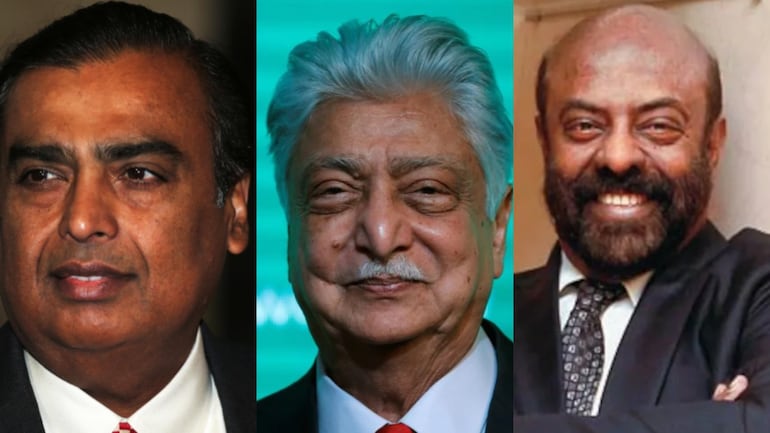
  • WITH AN ANNUAL DONATION OF INR 9,713 CRORE, AZIM PREMJI,76, RETAINS ‘INDIA’S MOST GENEROUS’ TITLE FOR THE SECOND YEAR RUNNING. HE DONATED INR 27 CRORE PER DAY! 
  • PREMJI IS THE ONLY LIVING INDIAN TO FEATURE IN EDELGIVE HURUN INDIA PHILANTHROPISTS OF THE CENTURY.
  • HCL’S SHIV NADAR, 76, RETAINS THE SECOND SPOT WITH AN ANNUAL DONATION OF INR 1,263 CRORE 
  • WITH A DONATION OF INR 577 CRORE, INDIA’S RICHEST MAN, MUKESH AMBANI,64, CAME THIRD IN EDELGIVE HURUN INDIA PHILANTHROPY LIST 2021
  • HURUN RESEARCH FINDS 11 INDIVIDUALS IN INDIA, WHO MADE AN ANNUAL DONATION OF OVER INR 100 CRORE, 20  OVER 50 CRORE AND 42 OVER 20 CRORE
  • AM NAIK, 79, GROUP CHAIRMAN OF L&T, DONATED INR 112 CRORE TO ENTER THE EDELGIVE HURUN INDIA PHILANTHROPY LIST 2021 AND IS INDIA’S MOST GENEROUS PROFESSIONAL MANAGER
  • B PARTHASARADHI REDDY & FAMILY (67), OF HETERO DRUGS INCREASED HIS DONATION BY 300% AND DONATED INR 67 CRORE
  • WITH A DONATION OF INR 50 CRORE, THE BIG BULL, RAKESH JHUNJHUNWALA STORMED INTO THE EDELGIVE HURUN INDIA PHILANTHROPY LIST 2021 AND IS THE MOST GENEROUS NEW ENTRANT
  • GIVE IT BACK LIKE INFOSYIANS – NANDAN NILEKANI, ROHINI NILEKANI, CHRIS GOPALAKRISHNAN AND SD SHIBULAL DONATED INR 183 CRORE, INR 69 CRORE, INR 50 CRORE AND INR 35 CRORE ARE RANKED 5, 14, 19, AND 23 RESPECTIVELY
  • BOLLYWOOD SUPERSTAR AKSHAY KUMAR, 54, WHO DONATED INR 26 CRORE, DEBUTS THE EDELGIVE HURUN INDIA PHILANTHROPY LIST 2021
  • ZERODHA’S FOUNDERS, NITHIN KAMATH, 42, AND NIKHIL KAMATH, 35, DEBUT THE LIST WITH A DONATION OF INR 25 CRORE
  • NIKHIL KAMATH, 35, IS THE YOUNGEST PHILANTHROPIST ON THE EDELGIVE HURUN INDIA PHILANTHROPY LIST 2021
  • 17 NEW ADDITIONS TO THE LIST; TOTAL DONATIONS BY NEW ADDITIONS AT INR 261 CRORE
  • 9 WOMEN PHILANTHROPISTS FEATURE ON THE LIST
  • WITH A DONATION OF INR 69 CRORE, ROHINI NILEKANI,62, IS THE MOST GENEROUS WOMAN PHILANTHROPIST ON THE LIST; FOLLOWED BY LEENA GANDHI TEWARI AND ANU AGA WHO DONATED INR 24 CRORE AND INR 20 CRORE RESPECTIVELY.
  • WITH A DONATION OF INR 19 CRORE, THE PHILANTHROPY COUPLE, AMIT CHANDRA (52) AND ARCHANA CHANDRA (50), ARE THE ONLY OTHER PROFESSIONAL MANAGERS IN THE LIST
  • NO. OF PHILANTHROPISTS WHO HAVE DONATED MORE THAN INR 10 CRORE INCREASED BY CIRCA 100% OVER THE LAST 3 YEARS, FROM 37 TO 72 THIS YEAR
  • ANAND MAHINDRA, 66, OF MAHINDRA AND MAHINDRA DONATED INR 63 CRORE AND IS RANKED 16TH
  • SANJIV GOENKA, 60, OF CESC DONATED INR 33 CRORE, GAINED 14 RANKS AND IS CURRENTLY RANKED 24
  • RONNIE SCREWVALA, 65, OF UNILAZER VENTURES DONATED INR 23 CRORE AND IS RANKED 37
  • KOCHOUSEPH CHITTILAPPILLY, 70, OF V-GUARD DONATED INR 22 CRORE AND IS RANKED 39
  • WITH A DONATION OF 15 CRORE, DILIP SHANGHVI, 66, DEBUTS THE EDELGIVE HURUN INDIA PHILANTHROPY LIST 2021
  • BIG B AMITABH BACHCHAN, 79, WHO DONATED INR 15 CRORE, DEBUTS THE EDELGIVE HURUN INDIA PHILANTHROPY LIST 2021
  • BINNY BANSAL, 38, WHO INCREASED HIS ANNUAL DONATIONS BY 155%, DONATED INR 14 CRORE, MOVED UP IN RANKING BY 52 SPOTS
  •      VINOD KUMAR AGARWAL (57) OF AGARWAL COAL CORPORATION INDORE, DEBUTS THE LIST WITH A DONATION OF INR 11 CRORE
  • DRIVEN BY PANDEMIC, DONATIONS TOWARD DISASTER RELIEF SHOT UP FROM 3% LAST YEAR TO 13% OR INR 1,556CRORE
  • WITH 72 PHILANTHROPISTS CUMULATIVELY DONATING INR 9,659 CRORE, EDUCATION IS THE MOST FAVOURED CAUSE.   WITH 60 DONORS, DISASTER RELIEF & MANAGEMENT REGISTERED A 433% INCREASE IN CUMULATIVE DONATION, FOLLOWED BY HEALTH CARE, WHICH HAD 65 DONORS, REGISTERING A CUMULATIVE DONATION OF INR 859 CRORE OR AN INCREASE OF 14%
  • 56 SELF-MADE PHILANTHROPISTS
  • THE AVERAGE AGE IS 67 YEARS OLD, 1 YEAR OLDER THAN LAST YEAR
  • BASED ON PLACE OF RESIDENCE, MUMBAI LED WITH 31% OF THE LIST; FOLLOWED BY NEW DELHI, ACCOUNTING FOR 17% AND BENGALURU AT 10%
  • THE PHARMA INDUSTRY HAS THE LARGEST NUMBER OF PHILANTHROPISTS ON THE LIST, ACCOUNTING FOR 20%, FOLLOWED BY AUTOMOBILE AND AUTO COMPONENTS AT 11%, AND SOFTWARE AND SERVICES AT 10%
  • HURUN REPORT, THE WORLD’S LARGEST RICH LIST COMPILER, AND EDELGIVE FOUNDATION, THE PHILANTHROPIC ARM OF THE EDELWEISS GROUP, RELEASED THE EDELGIVE HURUN PHILANTHROPY LIST FOR THE 8TH CONSECUTIVE YEAR
  • EDELGIVE and HURUN INDIA release EdelGive Hurun India Philanthropy List 2021

Hurun India and EdelGive released the EdelGive Hurun India Philanthropy List 2021. This is the 8th annual ranking of the most generous individuals in India. This is their attempt to highlight India’s remarkable givers and to capture the growing importance of individual givers in India’s philanthropic landscape towards nation-building. Donations were measured by the value of their cash or cash equivalents from 1 April 2020 to 31 March 2021. This is the eighth year of the list and it follows on from the Hurun India Rich List, a ranking of 1,007 richest individuals in India, released in September 2021 for the tenth year.

EdelGive Foundation has partnered with Hurun India towards creating this report to understand philanthropic giving in the country from a data and evidence point of view. The report is not only significant in understanding data of giving but also throws light on the sectors and geographies that are at the receiving end of this giving. Through this report, we aim to bring to notice the strength of the social sector and access areas which require further growth.

This year’s EdelGive Hurun India Philanthropy List 2021 features individuals who have donated INR 5 crore or more during the period under review.

“EdelGive Foundation and Hurun India have been collaborating on the EdelGive Hurun Philanthropy List for the last 3 years, during which time, both organisations have had the privilege of documenting and analysing the constantly evolving patterns of philanthropic giving in India. This year, the EdelGive Hurun India Philanthropy List 2021, provides us with yet another important opportunity to gain profound insights into the mindsets and motivations that drive philanthropy in India as it emerges from a paradigm-shifting Covid-19 Pandemic.” – Vidya Shah, Executive Chairperson, EdelGive Foundation.  

Commenting on the launch, Anas Rahman Junaid, MD and Chief Researcher, Hurun India, said, 

“6 times in 5 years. The cumulative donation in EdelGive Hurun India Philanthropy List has grown from just under INR 2,500 crore to more than INR 14,750 crore today. Considering the current wealth creation velocity in India, in 5 years, I expect the cumulative donation to grow to at least INR 30,000 crore. The stories of the entrepreneurs on the EdelGive Hurun India Philanthropy List, help tell the story of modern philanthropy in India today”

“Entrepreneurs from Pharmaceutical and Software & Services sectors, which are the top wealth creators in Hurun India Rich List 2021, have interestingly secured the top position in terms of the cumulative value of donations too. Some of the tech entrepreneurs, who I have interacted, are in the process of finalising substantial “giving back” plans to cause ranging from education to climate change. For instance, the Kamath brothers of Zerodha have plans to give back INR 750 crore over the next 3 years. I expect to see more such new wealth creators turned givers gaining a spot in the future editions of EdelGive Hurun India Philanthropy Lists.”

“I am very stoked that more young entrepreneurs are venturing into philanthropy. Last year’s best news was Binny Bansal being the first philanthropist under the age of 40 to enter the EdelGive Hurun India Philanthropy List. This year, Nikhil Kamath, 35, is the youngest on the list. I hope this will inspire more young wealth creators to not only donate but also to speak more about their donations.”

“Another promising trend is the increase in private donations. 80% of the cumulative donation on the EdelGive Hurun India Philanthropy List 2021 constitutes personal philanthropy, that is, the donations that are in excess of stipulated mandatory CSR spend. Number of personal philanthropists on the list has increased by 85%, from 21 last year to 39 today. “

“C-level executives have been playing a very impactful role in Indian philanthropy. This year’s list includes AM Naik who donated INR 112 crore and Amit Chandra and Archana Chandra who have donated INR 19 crore. This is impressive considering the fact that they are amongst the top 100 philanthropists in the country – ahead of more than 900 individuals who featured on the Hurun India Rich List. Some of the other professionals who are serious philanthropists, but have not yet featured on the list, include KP Balraj, VT Bharadwaj and so on.”

“The preferred cause of India’s top philanthropists has been Education, although on the back of Covid-19, Disaster Relief has grown dramatically to become the second most popular cause this year.  I hope the EdelGive Hurun Philanthropy List can help people understand the mindset of some of India’s most successful entrepreneurs and philanthropists, as well as inspire future generations to give back.”

“One of the core objectives of Edelgive Hurun India Philanthropy List is to highlight more stories about philanthropists who have donated in their personal capacity. If we were to add the taxes paid on the dividend payout, which was allocated towards philanthropy, the value of private donations would be even higher.”

“Although only 9 women have entered this year’s list, it is important to highlight the role played by women when it comes to running the family’s charitable trusts. For instance, in most of the family-run businesses that are featured on the list, the spouses of the entrepreneurs are at the helm of the charitable trusts.”

“The sense of philanthropy deeply concurs with our Indian ethos and is widely evidenced by some of the industrialists from our previous generation. For instance, In June 2021, Hurun Research and EdelGive Foundation released the 2021 EdelGive Hurun Philanthropists of the Century, a ranking of the world’s most generous individuals from the past century. With total donations value estimated at US$102.4bn, Mumbai-based Jamsetji Tata (1839-1904), was the world’s biggest philanthropist of the last century.” 

“With India boasting of the third largest billionaire population in the world at 237 billionaires and the fastest-growing one at that, we believe that we truly have the power to lead the change. Indian wealth creators have the potency to enable philanthropic structures, systems and processes for overall nation building. It is important to speak about these inspiring philanthropic stories and incite motivational action auguring India’s pace of ‘giving back’ to the society. We need to create forums to celebrate such efforts so that it percolates down to every level of the community and encourages us to embrace the spirit of altruism and humane-living,” concluded Anas Rahman Junaid, MD and Chief Researcher, Hurun India.

Top 10 Philanthropists

There was only one new face on the India Top 10 this year, despite the cut-off being up 54%.

Three individuals still make the India Top 10 after five years, led by Shiv Nadar and followed by Mukesh Ambani and Bajaj & family.

Table 1: The Top 10 in the EdelGive Hurun India Philanthropy List 2021 is shown below

RankNameDonation  (INR Cr)Change %Primary CauseCompany3yr Donation (INR Cr)
1(-)Azim Premji & family9,71323%EducationWipro18,070
2(-)Shiv Nadar & family1,26359%Arts, Culture & HeritageHCL Technologies2,884
3(-)Mukesh Ambani & family57726%EducationReliance Industries1,437
4(-)Kumar Mangalam Birla & family37747%HealthcareAditya Birla732
5(+2)Nandan Nilekani18315%Societal ThinkingInfosys546
6(+2)Hinduja family16625%EducationHinduja 351
7(+3)Bajaj family13683%HealthcareBajaj 341
8(+1)Gautam Adani & family13048%Disaster ReliefAdani302
8(-3)Anil Agarwal & family130-40%Disaster ReliefVedanta458
10(+24)Burman family114502%HealthcareDabur India151

Source: Hurun Research Institute; EdelGive Hurun India Philanthropy List 2021

With a donation of INR 9,713 crore, Azim Premji & family, 76, the founder chairman of Wipro, tops the EdelGive Hurun India Philanthropy List 2021. The Azim Premji Trust owns 10.7% of the promoter’s shareholding in Wipro and has the right to receive all money earned from promoter shares. In June 2021, The Azim Premji Foundation nearly doubled its allocation towards the pandemic from INR 1,125 crore to INR 2,125 crore to expand work on vaccination across ten states, with a commitment to increase this further if the need demands.

HCL Technologies founder-chairman Shiv Nadar & family, 76, retains the 2nd spot on the EdelGive Hurun India Philanthropy List 2021. As of 2021, Nadar has invested almost a billion USD through the foundation to impact over 30,000 students directly. In 2021 alone, the Shiv Nadar foundation donated INR 70 core towards COVID relief.

With a donation of INR 557 crore, Mukesh Ambani & family, 64, of Reliance Industries, occupies the 3rd spot in EdelGive Hurun India Philanthropy List 2021. RIL produced over 1000 MT of medical-grade liquid oxygen per day or 11% of India’s total production and supplied over 55,000 MT of medical-grade liquid oxygen across the country free of cost.

With a donation of INR 377 crore, Kumar Mangalam Birla & family, 54, ranks 4th on the      EdelGive Hurun India Philanthropy List 2021. The Aditya Birla Group donated INR 400 crore to the PM CARES Fund and INR 50 crore to FICCI-Aditya Birla CSR Centre for Excellence. Birla has also allocated INR 50 crore for supplying N95 Masks, PPE’s and ventilators in India.

EdelGive Hurun India Philanthropy List 2021

With a donation of INR 183 crore, Infosys’s Nandan Nilekani, 66, ranks 5th on the EdelGive Hurun India Philanthropy List 2021. Nandan Nilekani donated INR 138 Cr for Societal Thinking in FY 2021. Nandan Nilekani & Rohini Nilekani signed the Giving Pledge in 2017 and committed to donating half of their wealth towards philanthropy.

The Hinduja family ranks 6th rank on the EdelGive Hurun India Philanthropy List 2021 with a donation of INR 166 crore. Established in 1968, the Hinduja Foundation focuses on Water Stewardship, Healthcare, Education, Rural Development, and Arts & Culture.

With a donation of INR 136 crore, the Bajaj family ranks 7th on the EdelGive Hurun India Philanthropy List 2021. The Bajaj family has a long tradition of generous philanthropy over 100 years. In May 2021, they pledged to donate INR 200 crore to build capability and resources to tackle the pandemic.  This amount is in addition to INR 100 crore donated by the Bajaj Group in FY 21.

With a donation of INR 130 crore, Gautam Adani & family, 59, ranks 8th on the EdelGive Hurun India Philanthropy List 2021. Adani Foundation works in Education, Community Health, Sustainable Livelihood, and Community Infrastructure Development in alignment with the Sustainable Development Goals. The Foundation donated INR 122 crore to support COVID-19 related relief efforts across the country.

With a donation of INR 130 crore, Anil Agarwal & family, 68, shares 8th position on the      EdelGive Hurun India Philanthropy List 2021. In July 2021, the Anil Agarwal Foundation announced the INR 5,000 crore ‘Swasth Gaon Abhiyaan’ to provide end-to-end healthcare solutions across the rural landscape covering 1,000 villages across 24 districts and 12 states in the country.With an INR 114 crore donation, the Burman family made it to the 10th spot on the EdelGive Hurun India Philanthropy List 2021. The Dabur Group established ‘Dabur Care Fund for COVID-19’, to protect lives and livelihood, and support those affected by the COVID-19 pandemic.

November 3, 2021 0 comment
0 FacebookTwitterPinterestEmail
EconomyGlobal News

“India to Reach Net-Zero Carbon Goal by 2070”, PM Modi at COP26 Summit

by Team Conscious Carma November 2, 2021
written by Team Conscious Carma

Sets 2030 goal for renewables, GHG reductions

Prime Minister Narendra Modi on Monday committed India to become a “carbon neutral” country through net-zero carbon emission by 2070. China has said it would reach that goal in 2060, and the US and the EU aim for 2050.

Modi held out five goals (panchamrit) to fight the devastating effects of global warming and climate change.

  1. “India will bring its non-fossil energy capacity to 500 GW by 2030. 
  2. By 2030 India will fulfil 50% of its energy requirement through renewable energy. 
  3. India will cut down its net projected carbon emission by 1 billion tonnes from now until 2030. 
  4. By 2030 India will bring down carbon intensity of its economy by more than 45%. 
  5. By 2070 India will achieve the target of ‘net zero’

COP (Conference of the Parties) is the annual UN climate change conference. The 26th COP summit is being held from Nov1-2, 2021 at Glasgow, and is attended by more than 120 heads of state and government. The two-day summit is hosted in partnership between the UK and Italy

COP26 is being billed as vital for the continued viability of the Paris Agreement, which countries signed in 2015 by promising to limit global temperature rises to “well below” two degrees Celsius, and to work for a safer 1.5C cap. With a little over 1C of warming since the Industrial Revolution, Earth is being battered by ever more extreme heatwaves, flooding and tropical storms supercharged by rising seas. “It’s one minute to midnight… and we need to act now,” British Prime Minister Boris Johnson said to start proceedings. 

Modi, in his speech, asserted that India is the only country that is delivering in “letter and spirit” the commitments on tackling climate change under the Paris Agreement, adding that India is working very hard on tackling climate change-related issues.

Calling for lifestyle changes, Modi said that environmentally conscious lifestyle choices could go a long way in tackling climate change. He urged to make ‘Lifestyle for Environment’ a global mission. The Prime Minister reiterated that developed nations must fulfil the promised $1 trillion as climate finance, saying this should be tracked the same way as climate mitigation. “India expects developed countries to make $1 trillion available as climate finance as soon as possible. As we track the progress of climate mitigation, we must also track climate finance. Justice would truly be served if pressure is put on those countries that have not lived up to their climate finance commitments, Modi said.

In his opening remarks at the summit, Modi had drawn attention to the plight of small farmers facing the effects of climate change in India, forcing them to make changes in their cropping patterns. He then espoused the need to adopt knowledge from traditional communities living close to nature and made a case to focus on ‘climate adoption’ rather than ‘climate mitigation.

“We have to make adaptation the main part of our development policies and schemes. In India, schemes like Nal Se Jal, Clean India Mission and Ujjawala have not only given adoption benefits to our citizens but also improved their quality of life,” he had said.

Top quotes from COP26 climate change summit

Here are quotes from key players at the COP26 World Leaders Summit.

A picture containing text, suit, person, person

Description automatically generated
From left to right: British Prime Minister Boris Johnson, US President Joe Biden, Sir David Attenborough and Prime Minister of Barbados Mia Amor Mottley. (AP)

British Prime Minister Boris Johnson

“Humanity has long since run down the clock on climate change. It’s one minute to midnight on at Doomsday clock and we need to act now.”

“But while COP26 will not be the end of climate change, it can and it must mark the beginning of the end.”

British Prime Minister Boris Johnson speaks during the opening ceremony of the COP26 U.N. Climate Summit, in Glasgow, Scotland, Monday, Nov. 1, 2021. (AP)

UN Secretary-General Antonio Guterres

“If commitments fall short at the end of this COP, countries must revisit their national climate plans and policies – not every five years (but) every year and every moment.”

A person standing at a podium

Description automatically generated with medium confidence
UN Secretary-General Antonio Guterres delivers a speech during the opening ceremony of the UN Climate Change Conference COP26 in Glasgow, Scotland, Monday, Nov. 1, 2021. (AP)

“Our addiction to fossil fuels is pushing humanity to the brink. We face a stark choice: Either we stop it — or it stops us. It’s time to say: enough.”

“Enough of brutalizing biodiversity. Enough of killing ourselves with carbon. Enough of treating nature as a toilet. Enough of burning and drilling and mining our way deeper.”

“The science is clear. We know what to do. First, we must keep the goal of 1.5 degrees Celsius alive. This requires greater ambition on mitigation and immediate concrete action to reduce global emissions by 45 per cent by 2030.”

US President Joe Biden

“Glasgow must be the start of a decade of shared ambition and innovation to preserve our future.”

“We can do this – we just have to make a choice to do it.”

“The US is not only back at the table, but leading by example”

“I shouldn’t apologize, but I do apologize for the fact the United States, the last administration, pulled out of the Paris Accords and put us sort of behind the eight ball a little bit.”

A person standing at a podium

Description automatically generated with medium confidence
President Joe Biden speaks during the COP26 UN Climate Summit, Monday, Nov. 1, 2021, in Glasgow, Scotland. (AP)

French President Emmanuel Macron

“Too many of us make commitments here, and then sign commercial contracts that do exactly the opposite”.

British naturalist David Attenborough

“Is this how it is doomed to end?”

“We are, after all, the greatest problem solvers to have ever existed on Earth. If working apart, we are a force powerful enough to destabilize our planet. Surely working together, we are powerful enough to save it.”

“In my lifetime, I’ve witnessed a terrible decline. In yours, you could and should witness a wonderful recovery.”

A person standing at a podium

Description automatically generated with medium confidence
Sir David Attenborough delivers a speech at the opening ceremony of the UN Climate Change Conference COP26 in Glasgow, Scotland, Monday, Nov. 1, 2021. (AP)

Maldives President Ibrahim M Solih 

“What will it take for you to listen to us?… Our islands are slowly being inundated one by one”.

Prince Charles

“Quite literally it is the last-chance saloon. We must now translate fine words into still finer actions.”

A person standing at a podium

Description automatically generated with medium confidence
Prince Charles at the COP26 Summit.

“Recent IPCC report gave us a clear diagnosis of the scale of the problem. We know what we must do.”

“I can only urge you, as the world’s decision-makers, to find practical ways of overcoming differences so we can all get down to work, together, to rescue this precious planet and save the threatened future of our young people.”

Barbados Prime Minister Mia Mottley

“Our people are watching and our people are taking note … Can there be peace and prosperity if one-third of the world lives in prosperity and two-thirds live underseas and face calamitous threats to our wellbeing?”

Malawi President Lazarus Mccarthy Chakwera 

“The money pledged to least developed nations by developed nations … is not a donation, but a cleaning fee”.

“They are a big country, with a lot of resources and a lot of capabilities, and they are perfectly well capable of living up to their responsibilities and it is up to them to do so.”

November 2, 2021 0 comment
0 FacebookTwitterPinterestEmail
CommunityInspiration

“Second Meals” by Celebrity Chef Davinder Kumar

by Team Conscious Carma October 29, 2021
written by Team Conscious Carma

A coffee table book on meals by food scrap

The Coffee Table Book “Second Meals ” which is prepared by the food scrap is authored by Celebrity Chef Davinder Kumar & has been published by Shubhi publication was unveiled at Le Meridien, New Delhi recently.

The hidden ingredient of this book are the food scrap, yes you heard me right, food scraps. The book depicts the art of Cooking through food scraps in a unique way and style. It will definitely encourage cooking and eating every single part of vegetables and fruits.

Chef Davinder Kumar said ‘The art of Cooking with food scraps is a way and style that encourages cooking and eating every part of vegetables and fruits. It is the key to maximizing nutrition and minimizing food wastage. The recipes in the Second Meals promote mindful thinking besides being environmentally friendly and provide innovative options to use food scraps’

Sanjay Arya Founder Shubhi Publication said ‘Saving Natural Resources will help to sustain life for many more years as destroying them will create doom for mankind’. This book is an effort to save the environment by using food scraps which otherwise being burnt pollute the environment and this book will also help in solving the food problem for the developing countries like us and others with nutritive values.

About the Author

Chef Davinder Kumar’s experience goes way beyond words. He is not only well known for his great culinary passion, he is also an adventurous food connoisseur, who has travelled around extensively and regularly seeks the opportunity to explore the different kinds of cuisines while developing his gourmet knowledge.  An aficionado in the fine art of cooking to the gourmet’s delight, Davinder Kumar has been in this profession for more than five decades. He was the sole Indian representative in the International Cooking Festival held in Tokyo, Japan, in 1983 and was awarded a medal for his presentation of Indian cuisine.  Presently Chef Kumar is Vice President – F&B (Production) at Le Meridien, New Delhi and he is the President of Indian Culinary Forum, India

About the Book

The book includes delicious ways to maximize nutrition and minimize food wastage which results in a reduction in food wastage besides being environmentally friendly.  All the recipes in this book have been written in a manner that makes them easy to follow. Each recipe has been tried out personally to ensure that it is accurate and perfect. To make preparation simple/easy, the ingredients in this book have been listed in the order in which they are to be used.

About Shubhi Publications

A firm believer in quality, Shubhi brings to you the best books on Indian Heritage, Art, Architecture, Culture, Religion, and Philosophy. After a decade of excellence in providing offset printing for leading publishers, Shubhi itself ventured into publishing scholarly reference books in 1998.  With more than 1000 titles and the release of about 50 books in a year, Shubhi has become a name associated with the publishing academic and scholarly books of high quality and has produced several outstanding publications written by renowned authors in recent years. they encourage budding authors to publish their books also entertain scholarly and research-oriented works for publishing.

October 29, 2021 0 comment
0 FacebookTwitterPinterestEmail
GiftingProducts

Let’s have a Green Diwali for a Healthy Us and a Healthy Planet

by Team Conscious Carma October 29, 2021
written by Team Conscious Carma

Diwali, the festival of lights, celebrates the victory of good over evil.  Lord Ram killed Ravan and returned home to Ayodhya after an exile of 14 years. The entire kingdom was lighted with diyas to welcome him, signifying the end of darkness and new beginnings.

All over the country, people celebrate it with great fervor, wearing new clothes, exchanging gifts with near and dear ones, lighting their homes and offices, bursting crackers, etc.

Celebrations and festivities do add cheer and positivity and when done in the right manner, it helps keep the environment safe and protected.  This Diwali, let’s celebrate consciously and make a difference.  

  • Let’s light earthern diyas instead of lights
  • Let’s wear something which is lying in our wardrobe for quite sometime.  Or let’s wear a saree from our granny’s wardrobe and give her a pleasant surprise.
  • Let’s buy locally made sustainable gifts 
  • Let’s not burn crackers, instead let’s plant crackers   
  • Let’s think about our pets and strays who get scared from loud noise.
  • Let’s think about people who are already suffering from air borne diseases, let’s not aggravate their problem
  • Let’s bring smiles on everyone this DIWALI

Let’s indulge in the following green options this Diwali and brighten up the festive spirit

Conscious gifting collection from BEEJ

An amazingly stunning collection handcrafted from premium cork,  BEEJ has come out with special  handcrafted products for the festive season. BEEJ, a renowned label for bags and accessories made from plant-based materials, responsibly sourced from across the globe, the brand takes pride in their supply chain transparency and commitment to consciousness.

Beej’s festive range includes wine bags, photo frames, coaster sets, multi-purpose stand and men’s accessories, etc

“With this collection, we’d like to nudge festive gifting in a more mindful direction. Handcrafted, and thoughtful, we hope to give people options that are great for gifting and for the planet. And like our product, our  packaging too is zero plastic and zero waste”, says its founder Arundhati Kumar.

  • diwali
  • diwali

Contact : www.studiobeej.com

Nandi products from DHYAN FOUNDATION

Cow has been called as “Dhenu” (the giver),  by the vedic seers. Her gift to mankind is not just limited to milk, she is infact, the bestower of all bounties.

Dhyan Foundation is housing thousands of injured, abandoned and stray cows and bulls at over 40 gaushalas all over India. Towards making these gaushalas self-sustainable, hand-made, eco-friendly  Nandi Products were started, that make use of cow dung and urine.  These products also put forth an important message that our cows and bulls are relevant even when they are termed as ‘unproductive’.

The Festive range of nandi products include Green T-Lights made of soy wax and desi cow ghee, eco-friendly, non-toxic Incense Cones made of desi cow dung, herbs and essential oils, Aroma Candles made of soy wax and desi cow ghee blended with essential oils to purify as well create a soothing atmosphere,  Panchgavya Diyas made of desi cow dung, curd, milk, desi ghee and gaumutra. It purifies the environment and the ash can be used as manure for plants. Himalayan Pink Salt Lamp to dissipates negativity and create a positive atmosphere and Diffuser Kits in marble and porcelain to be used with guggul and frankincense for a positive atmosphere.

  • diwali
  • diwali
  • diwali

“Every purchase saves a cow from slaughter and helps us preserve our culture for the future generations”

Contact  : +91-9999183378 ( Whatsapp only), www.nandidhyanfoundation.com https://www.dhyanfoundation.com/nandi-products.php

Crackers that nurture from LALIT GREENS

Celebrations are an integral part of human civilization. Celebrations are usually time for feasts, sweets, lights, sound, gifts, decorations and gatherings. Lalit Greens working with Beej Patra has come out with series of eco-friendly Plantable Seed Crackers which are made by rural women from recyclable material, exploitation-free & embedded with living seeds, are nature friendly & habitat-rejuvenating. Just sow, water and see these crackers hatch into beautiful plants that can be consumed after nurturing. Variety of Seed (Plantable) Crackers include Hemp Bomb, Onion Chakkar, Micro-green Ladli, Cucumber Rocket, Golden Shower, Coriander Tikli, Laxmi Bomb, Methi Roll, Loose Ladi & Genda Guard.

Edible Crackers are Homemade chocolates with variety of flavours such as Badam, Choco chips , Butterscotch , Strawberry , Orange and so on.

  • diwali

“Instead of burning crackers, lets opt for plantable and edible crackers this Diwali.”

Contact : Facebook/Instagram @Lalitgreens, +91-9168988881 (whatsapp)

Luxury home décor and furniture from SIROHI

Sirohi,  a sustainable home & lifestyle luxury  brand that advocates a slow and simple lifestyle based on values of Indian heritage and culture. The products are handwoven by skilled women artisans that are made from waste & salvaged materially locally generated in their region. To make sustainable marketable products for a global buyer, these artisans are even  being connected with designers from all over the globe to help them understand modern design sensibilities.

Sirohi is being supported by Skilled Samaritan Foundation. The Foundation provides income opportunities to women from marginalised communities in India by recognising their existing craft skills and providing them ‘tech-based’ design support to make well designed products.

Sirohi’s vibrant festive range includes boxes, trays, baskets, home décor and furniture

  • diwali
  • diwali

“Opt for Sirohi’s handcrafted luxury that is festive, fun & functional!”

Contact :  www.sirohi.org, contact@skilledsamaritan.com or Whatsapp at +91 9310433994

October 29, 2021 0 comment
0 FacebookTwitterPinterestEmail
india
EnvironmentGlobal

India vows to take up ‘climate justice’ combat at COP26

by Team Conscious Carma October 28, 2021
written by Team Conscious Carma

India will be a fighter for “climate justice” at the upcoming COP26 summit, seeking to make rich nations pay for measures to ease rising temperatures, the country’s environment minister said Wednesday.

And the world’s third biggest source of greenhouse gases is not yet guaranteeing that it will offer new mitigation efforts at the crucial conference which starts Sunday in Glasgow.

India, along with the world’s leading gas emitter China, is among dozens of countries still to submit fresh plans for cutting greenhouse gas emissions so they can become net zero — eliminating as much carbon as they produce.

Environment Minister Bhupender Yadav said India would set out what extra efforts it is ready to make “at the appropriate place and the appropriate time.”

India, whose Prime Minister Narendra Modi will be at the summit, said controlling carbon should be the COP26 priority over setting target dates to become net zero.

“It is how much carbon you are going to put in the atmosphere before reaching net zero that is more important,” said R.P. Gupta, the environment ministry’s top permanent official.

According to the ministry’s figures, each Indian produces about 1.9 tonnes of carbon per year, against 7.1 tonnes for the average European Union citizen, 8.4 tonnes for a Chinese and 18 tonnes for the average American.

Yadav said assessing and financing the world’s campaign to limit temperature rises will be one of the most crucial tasks at Glasgow.

“India will fill the role of the voice of developing nations,” Yadav told a small group of journalists on the eve of his departure for the talks.

“India will be a path to a solution with climate justice.”

The country of 1.3 billion people, and one of the world’s fastest growing economies, has long insisted that countries who profited from past industrialisation — Europe and North America — should pay the lion’s share of the climate crisis bill.

Yadav noted the concern of poorer nations that richer ones have failed to live up to promises made at earlier climate summits to provide hundreds of billions of dollars in financial aid and technology.

India has one of the world’s leading solar power programmes, and US climate envoy John Kerry said that the country was “red hot” for solar investment.

But it currently counts on coal for about 70 percent of generated electricity and will have to spend more than $40 billion to dismantle just 14 percent of its oldest and dirtiest coal power stations, according to the Climate Policy Initiative think tank.

Gupta said that without finance for poorer nations “it becomes extremely difficult to have green development at our own cost.”

india

Source : AFP

October 28, 2021 0 comment
0 FacebookTwitterPinterestEmail
climate
EnvironmentGlobal

Updated climate commitments ahead of COP26 summit fall far short, but net-zero pledges provide hope

by Team Conscious Carma October 26, 2021
written by Team Conscious Carma
  • Latest UNEP Emissions Gap Report finds new and updated Nationally Determined Contributions only take 7.5% off predicted 2030 emissions, while 55% is needed to meet the 1.5°C Paris goal
  • Latest climate promises for 2030 put the world on track for a temperature rise this century of at least 2.7°C
  • Net-zero commitments could shave off another 0.5°C, if these pledges were made robust and if 2030 promises were made consistent with the net-zero commitments

Nairobi, 26 October 2021 – New and updated climate commitments fall far short of what is needed to meet the goals of the Paris Agreement, leaving the world on track for a global temperature rise of at least 2.7°C this century, according to the UN Environment Programme’s (UNEP) latest Emissions Gap Report 2021: The Heat Is On.

The report, now in its 12th year, finds that countries’ updated Nationally Determined Contributions (NDCs) – and other commitments made for 2030 but not yet submitted in an updated NDC – only take an additional 7.5 per cent off predicted annual greenhouse gas emissions in 2030, compared to the previous round of commitments. Reductions of 30 per cent are needed to stay on the least-cost pathway for 2°C and 55 per cent for 1.5°C.

Released ahead of the UN Climate Change Conference (COP26), the latest round of climate talks taking place in Glasgow, the report finds that net-zero pledges could make a big difference. If fully implemented, these pledges could bring the predicted global temperature rise to 2.2°C, providing hope that further action could still head off the most-catastrophic impacts of climate change. However, net-zero pledges are still vague, incomplete in many cases, and inconsistent with most 2030 NDCs.

“Climate change is no longer a future problem. It is a now problem,” said Inger Andersen, Executive Director of UNEP. “To stand a chance of limiting global warming to 1.5°C, we have eight years to almost halve greenhouse gas emissions: eight years to make the plans, put in place the policies, implement them and ultimately deliver the cuts. The clock is ticking loudly.”

As of 30 September 2021, 120 countries, representing just over half of global greenhouse gas emissions, had communicated new or updated NDCs. In addition, three G20 members have announced other new mitigation pledges for 2030.

To have any chance of limiting global warming to 1.5°C, the world has eight years to take an additional 28 gigatonnes of CO2 equivalent (GtCO2e) off annual emissions, over and above what is promised in the updated NDCs and other 2030 commitments. To put this number into perspective, carbon dioxide emissions alone are expected to reach 33 gigatonnes in 2021. When all other greenhouse gases are taken into account, annual emissions are close to 60 GtCO2e. So, to have a chance of reaching the 1.5°C target, we need to almost halve greenhouse gas emissions. For the 2°C target, the additional need is lower: a drop in annual emissions of 13 GtCO2e by 2030.

Alok Sharma, incoming COP26 President, said the report underlined why countries need to show ambitious climate action at COP26: “As this report makes clear, if countries deliver on their 2030 NDCs and net zero commitments which have been announced by the end of September, we will be heading towards average global temperature rises of just above 2C. Complementary analyses suggest that the commitments made in Paris would have capped the rise in temperature to below 4°C.

“So there has been progress, but not enough,” he added.” That is why we especially need the biggest emitters, the G20 nations, to come forward with stronger commitments to 2030 if we are to keep 1.5c in reach over this critical decade.”

climate

Zeroing in on net-zero

Net-zero pledges – and their effective execution – could make a big difference, the authors find, but current plans are vague and not reflected in NDCs. A total of 49 countries plus the EU have pledged a net-zero target. This covers over half of global domestic greenhouse gas emissions, over half of GDP and a third of the global population. Eleven targets are enshrined in law, covering 12 per cent of global emissions.

If made robust and implemented fully, net-zero targets could shave an extra 0.5°C off global warming, bringing the predicted temperature rise down to 2.2°C. However, many of the national climate plans delay action until after 2030, raising doubts over whether net-zero pledges can be delivered. Twelve G20 members have pledged a net-zero target, but they are still highly ambiguous. Action also needs to be frontloaded to make it in line with 2030 goals.

“The world has to wake up to the imminent peril we face as a species,” Andersen added. “Nations need to put in place the policies to meet their new commitments, and start implementing them within months. They need to make their net-zero pledges more concrete, ensuring these commitments are included in NDCs, and action brought forward. They then need to get the policies in place to back this raised ambition and, again, start implementing them urgently.

“It is also essential to deliver financial and technological support to developing nations – so that they can both adapt to the impacts of climate change already here and set out on a low-emissions growth path.”

The potential of methane and market mechanisms

Every year, the Emissions Gap Report looks at the potential of specific sectors. This year, it focuses on methane and market mechanisms. Reduction of methane emissions from the fossil fuel, waste and agriculture sectors can contribute to closing the emissions gap and reduce warming in the short term.

Methane emissions are the second largest contributor to global warming. The gas has a global warming potential over 80 times that of carbon dioxide over a 20-year horizon; it also has a shorter lifetime in the atmosphere than carbon dioxide – only twelve years, compared to up to hundreds for CO2 – so cuts to methane will limit temperature increase faster than cuts to carbon dioxide.

Available no- or low-cost technical measures alone could reduce anthropogenic methane emissions by around 20 per cent per year. Implementation of all measures, along with broader structural and behavioural measures, could reduce anthropogenic methane emissions by approximately 45 per cent.

Carbon markets, meanwhile, have the potential to reduce costs and thereby encourage more ambitious reduction pledges, but only if rules are clearly defined, are designed to ensure that transactions reflect actual reductions in emissions, and are supported by arrangements to track progress and provide transparency.

Revenues earned through these markets could fund mitigation and adaptation solutions domestically and in vulnerable nations where the burdens of climate change are greatest.

COVID-19 recovery opportunity largely missed

Finally, the report finds that the opportunity to use COVID-19 fiscal rescue and recovery spending to stimulate the economy while backing climate action has been missed in most countries.

The COVID-19 pandemic led to a drop in global CO2 emissions of 5.4 per cent in 2020. However, CO2 and non-CO2 emissions in 2021 are expected to rise again to a level only slightly lower than the record high in 2019.

Only around 20 per cent of total recovery investments up to May 2021 are likely to reduce greenhouse gas emissions. Of this spending, almost 90 per cent is accounted for by six G20 members and one permanent guest.

COVID-19 spending has been far lower in low-income economies (USD 60 per person) than advanced economies (USD 11,800 per person). Gaps in finance are likely to exacerbate gaps in vulnerable nations on climate resilience and mitigation measures.

About the UN Environment Programme (UNEP)

UNEP is the leading global voice on the environment. It provides leadership and encourages partnership in caring for the environment by inspiring, informing and enabling nations and peoples to improve their quality of life without compromising that of future generations.

October 26, 2021 0 comment
0 FacebookTwitterPinterestEmail
plastic
EnvironmentGlobal

Comprehensive assessment on marine litter and plastic pollution cautions against false solutions, confirms need for urgent global action

by Team Conscious Carma October 21, 2021
written by Team Conscious Carma

Nairobi, 21 October 2021 – A drastic reduction in unnecessary, avoidable and problematic plastic is crucial to addressing the global pollution crisis, according to a comprehensive assessment released today by the UN Environment Programme (UNEP). An accelerated transition from fossil fuels to renewable energies, the removal of subsidies and a shift towards circular approaches will help reduce plastic waste at the needed scale.

From Pollution to Solution: a global assessment of marine litter and plastic pollution shows that there is a growing threat in all ecosystems from source to sea. It also shows that while we have the know-how, we need the political will and urgent action by government to tackle the mounting crisis. The report will inform discussions at the UN Environment Assembly (UNEA 5.2) in 2022, where countries will come together to decide a way forward for global cooperation.

Plastic pollution leakage into aquatic ecosystems has grown sharply in recent years and is projected to more than double by 2030, with dire consequences for human health, the global economy, biodiversity and the climate.

The assessment, released 10 days ahead of the COP26, emphasizes that plastics are a climate problem as well: Using a life cycle analysis, 2015 greenhouse gas emissions from plastics were 1.7 gigatonnes of CO2 equivalent (GtCO2e), and are projected to increase to approximately 6.5 GtCO2e by 2050, or 15 per cent of the global carbon budget.​​

The authors pour cold water on the chances of recycling our way out of the plastic pollution crisis. They warn against damaging alternatives to single-use and other plastic products, such as bio-based or biodegradable plastics, which currently pose a chemical threat similar to conventional plastics.

The report looks at critical market failures, such as the low price of virgin fossil fuel feedstocks compared to recycled materials, disjointed efforts in informal and formal plastic waste management, and the lack of consensus on global solutions.

“This assessment provides the strongest scientific argument to date for the urgency to act, and for collective action to protect and restore our oceans from source to sea,” said Inger Andersen, Executive Director of UNEP. “A major concern is the fate of breakdown products, such as microplastics and chemical additives, many of which are known to be toxic, and hazardous to both human and wildlife health, and ecosystems. The speed at which ocean plastic pollution is capturing public attention is encouraging. It is vital that we use this momentum to focus on the opportunities for a clean, healthy and resilient ocean.”

The report highlights that plastic accounts for 85 per cent of marine litter and warns that by 2040, volumes of plastic pollution flowing into marine areas will nearly triple, adding 23-37 million metric tons of plastic waste into the ocean per year. This means about 50kg of plastic per meterof coastline worldwide.

Consequently, all marine life – from plankton and shellfish to birds, turtles and mammals – faces the grave risk of toxification, behavioral disorder, starvation and suffocation. Corals, mangroves and seagrass beds are also smothered by plastic waste preventing them from receiving oxygen and light.

The human body is similarly vulnerable on multiple fronts to plastic pollution in water sources, which could cause hormonal changes, developmental disorders, reproductive abnormalities and cancer. Plastics are ingested through seafood, drinks and even common salt; they penetrate the skin and are inhaled when suspended in the air.

Marine litter and plastic pollution also significantly affect the global economy. The economic costs of marine plastic pollution with respect to its impacts on tourism, fisheries and aquaculture, together with other costs such as those of clean-ups, were estimated to be at least USD 6-19 billion globally in 2018. It is projected that by 2040 there could be a USD 100 billion annual financial risk for businesses if governments require them to cover waste management costs at expected volumes and recyclability. High levels of plastic waste can also lead to a rise in illegal domestic and international waste disposal.

The assessment calls for the immediate reduction of plastics and encourages a transformation across the whole plastic value chain. Further investments need to be made in far more robust and effective monitoring systems to identify the sources, scale and fate of plastic and the development of a risk framework, which is currently missing on a global level. Ultimately, a shift to circular approaches is necessary, including sustainable consumption and production practices, accelerated development and adoption of alternatives by businesses and increased consumer awareness to enable more responsible choices.

plastic

About the Clean Seas Campaign

The United Nations Environment Programme launched the Clean Seas Campaign in 2017 with the goal of galvanizing a global movement to turn the tide on plastic by reducing the use of unnecessary, avoidable and problematic plastics including single-use plastics and phasing out intentionally added microplastics. Since then, 63 countries have pledged to do their part to improve plastics management through, among other measures, reducing the prevalence of single-use plastic products. The campaign will now highlight source to sea issues and solutions and call for urgent global action.

The Campaign contributes to the goals of theGlobal Partnership on Marine Litter and the New Plastics Economy Global Commitment 

About the United Nations Environment Programme (UNEP)

UNEP is the leading global voice on the environment. It provides leadership and encourages partnership in caring for the environment by inspiring, informing and enabling nations and peoples to improve their quality of life without compromising that of future generations.

October 21, 2021 0 comment
0 FacebookTwitterPinterestEmail
renewable
GlobalIndustry

India ranks 3rd in the ‘Renewable Energy Country Attractiveness Index’ released by EY

by Team Conscious Carma October 16, 2021
written by Team Conscious Carma
  • US retains the top position with China and India bringing up the top 3 in the rankings
  • RECAI 57 finds that environment, sustainability and governance (ESG) goals are increasingly being prioritized on the investor agenda while institutional investors’ interest in renewables continues to grow.

India has moved up a position to the third spot in the 57th EY Renewable Energy Country Attractiveness Index (RECAI) released by EY. Also, India’s solar sector is expected to grow significantly post the COVID-19 pandemic, with generation from solar PV forecast to exceed coal before 2040. This dramatic change has been driven by the Indian government’s policy ambitions, which has led solar PV to be the most cost competitive source of power in the region and improving further with the passage of time.

In 2020, global renewable energy capacity investments grew 2% to US$303.5b, the second-highest annual figure recorded to date despite the impact of the global COVID-19 pandemic. However, the EY RECAI 57 estimates that future development to achieve net zero will require a further investment of US$5.2t and highlights the role institutional investors will need to play in financing the energy transition.

RECAI 57 finds that environment, sustainability and governance (ESG) goals are increasingly being prioritized on the investor agenda while institutional investors’ interest in renewables continues to grow.

Somesh Kumar, Partner and National Leader, Power & Utilities, EY India, says, “India has moved one position above (3rd) from the previous index (4th), this is primarily because of the exceptional performance on the solar PV front. Installed solar PV capacity in India has skyrocketed to 39 GW marginally overtaking the wind capacity for the first time. The economic attractiveness of solar PV and intense competition from the private sector has led to record low tariff bids. India also committed to set up 450 GW for renewable energy power capacity (installed) by 2030 in the recent climate summit hosted by US. This will likely increase the share of renewable energy in the overall power generation installed capacity to 54%, vis-à-vis share in overall gross generation to 36%.”

The forthcoming 2021 United Nations Climate Change Conference of the Parties (COP26) presents an opportunity to close the gap between what governments have promised to do and the level of action they have undertaken to date. RECAI 57 finds that current policy and pledge trajectories from leading nations indicate an increased commitment to greater accountability and transparency, with representatives expected to outline clear roadmaps and detail on policy measures to spur investment in renewables.

Ben Warren, EY Global Power & Utilities Corporate Finance Leader and RECAI Chief Editor, says, “The impact of the COVID-19 pandemic on economies across the globe seems to have refocused investors’ minds on the environmental, social and corporate governance agenda and there is a growing trend toward considering the climate crisis and the energy transition when deploying capital. As a result, interest in renewable energy development has risen among institutional investors who have pledged to incorporate climate-risk concerns into their decision-making processes, resulting in new models of investment to locate opportunities that satisfy their risk and return expectations.”

renewable

US retains the top position with China and India bringing up the top 3 in the rankings

The US retains the top position on the Index and is expected to hold its position under President Biden. The reacceptance of the Paris Accord, coupled with the recent announcement to cut GHG levels by 50-52% as early as 2030 and achieve 100% carbon-free power by 2035, will likely see increased investor interest in the US. Similarly, China has remained a buoyant market and maintains the second position, adding 72.4GW of new wind power in 2020, as developers rushed to beat an onshore wind subsidy cut. In April, China and the US also announced that they would work together and with other markets to tackle climate change.

India rose one place in the rankings to 3rd position as the country’s solar sector is expected to grow significantly post the COVID-19 pandemic, with generation from Solar PV forecast to exceed coal before 2040.

East Asian markets Japan and South Korea (ranking in 8th and 17th positions respectively) also made commitments toward net zero in the past year. The report highlights that East Asia has a robust pipeline of clean-energy projects, with more than 800 shovel-ready schemes and with a total investment potential of US$316b.

Other markets have climbed the Index, as numerous governments take tentative steps toward launching new offshore wind projects. Poland, now in 22nd position, has adopted a new act to promote 5.9GW of offshore wind by 2030 through competitive auctions. And Brazil’s federal environmental authority has released licensing guidelines for offshore wind projects, seeing Brazil climb to 11th position.

Germany drops by one place in the ranking to 7th position, as last-minute changes to the design of future onshore wind tenders came under criticism. These changes would allow regulators to reduce the size of auctions if undersubscribed and developers believe that this uncertainty will lead to decreasing bid volumes.

Italy climbs two places in the ranking to 15th position after receiving a grant of €209bn from the EU Recovery Fund. The Italian government has also told developers that it is willing to extend its 4.7GW program of support auctions for onshore wind and solar PV into next year after the initial round was undersubscribed.

Arnaud de Giovanni, EY Global Renewables Leader, says, “There is a clear shift away from fossil fuel investment and toward environmentally sustainable projects by institutional investors who are typically more risk averse in their investing principles. Risk-mitigation tools, structured finance mechanisms tailored specifically to the renewables sector and regulatory commitment would therefore help increase investment flows. Committed action from COP26 delegates is a must to ensure that the legacy of Paris Agreement is brought to fruition. The leading developed nations must honor existing promises to deliver US$100b per year in climate financing for developing countries, and all countries must urgently set actionable near-term targets, rather than kicking the can down the road. There is not much road left.”

About EY

EY exists to build a better working world, helping create long-term value for clients, people and society and build trust in the capital markets.

Enabled by data and technology, diverse EY teams in over 150 countries provide trust through assurance and help clients grow, transform and operate.

Working across assurance, consulting, law, strategy, tax and transactions, EY teams ask better questions to find new answers for the complex issues facing our world today.

EY refers to the global organization, and may refer to one or more, of the member firms of Ernst & Young Global Limited, each of which is a separate legal entity. Ernst & Young Global Limited, a UK company limited by guarantee, does not provide services to clients. Information about how EY collects and uses personal data and a description of the rights individuals have under data protection legislation are available via ey.com/privacy. EY member firms do not practice law where prohibited by local laws. For more information about our organization, please visit ey.com.

This news release has been issued by EYGM Limited, a member of the global EY organization that also does not provide any services to clients.

About the EY Renewable Energy Country Attractiveness Index

The EY Renewable Energy Country Attractiveness Index (RECAI) ranks the top 40 markets in the world on the attractiveness of their renewable energy investment and deployment opportunities. The rankings reflect EY assessments of market attractiveness and global market trends. This edition reflects on the glimpse of what the energy industry might look like in the future based on COVID-19 lockdown measures, when large reductions in energy demand resulted in the share of renewables soaring across most regions.

Source: EY.com

October 16, 2021 0 comment
0 FacebookTwitterPinterestEmail
Newer Posts
Older Posts

Recent Posts

  • India–UK Free Trade Agreement Opens Global Growth Opportunities for 3R ZeroWaste’s Circular Economy Solutions
  • Plastic Free July: Why True Sustainability Goes Beyond Swapping Plastic
  • From the Editor’s Desk: When Greed Takes Over Conscience
  • Beyond the Pose: Why Your Yoga Mat Needs a Sustainable Upgrade
  • Best Sustainable Father’s Day Gifts: Conscious Carma’s Exclusive Picks

Recent Comments

  • Team Conscious Carma on Label Shivika Agarwal – where craft meets sustainability
  • Cocomeister.jp on Label Shivika Agarwal – where craft meets sustainability
  • Team Conscious Carma on Equitable City Designs To Fight Climate Change
  • UN report calls for repurposing of USD 470 billion of agricultural support that distorts prices and steer us away from environment and social goals | Consciouscarma on UNEP & ICMR collaborate to boost understanding of environmental dimensions of antimicrobial resistance in India
  • Wild Earth : Natural body products | Consciouscarma on Sat.Suma : the true essence of flowers in your everyday skincare needs

Keep in touch

Facebook Twitter Instagram Youtube

Recent Posts

  • India–UK Free Trade Agreement Opens Global Growth Opportunities for 3R ZeroWaste’s Circular Economy Solutions

  • Plastic Free July: Why True Sustainability Goes Beyond Swapping Plastic

  • From the Editor’s Desk: When Greed Takes Over Conscience

  • Beyond the Pose: Why Your Yoga Mat Needs a Sustainable Upgrade

  • Best Sustainable Father’s Day Gifts: Conscious Carma’s Exclusive Picks

  • How Sacred Sound is Reshaping the Future of Holistic Health?

Categories

  • Community (38)
    • Campaigns (3)
  • CSR (4)
  • Economy (82)
    • Global (24)
    • Industry (42)
    • Innovations (4)
    • National (2)
  • Environment (48)
  • Expert Corner (48)
    • Authored Articles (47)
  • Featured (5)
    • Partners (1)
  • Global News (2)
  • Initiatives (31)
    • CSR (3)
    • Events (6)
  • Inspiration (22)
  • Lifestyle (9)
  • Media Coverage (6)
  • Press Releases (4,358)
  • Products (126)
    • Accessories (27)
    • Apparel (32)
    • Beauty (26)
    • Food (4)
    • Gifting (3)
    • Home Décor (15)
    • Skin-Care (14)
  • Reports (3)
  • Spirituality (10)
  • Sustainability (49)
  • Sustainable Startup Stories (28)
  • Travel (19)
  • Uncategorized (2)
  • Wellness (33)
    • Home Cleaners (3)

Archives

  • August 2026 (1)
  • July 2026 (1)
  • June 2026 (6)
  • October 2024 (1)
  • September 2024 (1)
  • July 2024 (2)
  • June 2024 (2)
  • May 2024 (1)
  • November 2023 (330)
  • October 2023 (554)
  • September 2023 (631)
  • August 2023 (718)
  • July 2023 (723)
  • June 2023 (710)
  • May 2023 (608)
  • April 2023 (114)
  • March 2023 (7)
  • February 2023 (3)
  • January 2023 (11)
  • December 2022 (18)
  • November 2022 (1)
  • August 2022 (6)
  • July 2022 (8)
  • June 2022 (24)
  • May 2022 (11)
  • April 2022 (19)
  • March 2022 (11)
  • February 2022 (11)
  • January 2022 (14)
  • December 2021 (10)
  • November 2021 (4)
  • October 2021 (14)
  • September 2021 (22)
  • August 2021 (12)
  • July 2021 (17)
  • June 2021 (17)
  • May 2021 (16)
  • April 2021 (22)
  • March 2021 (33)
  • February 2021 (16)
  • January 2021 (22)
  • December 2020 (10)
  • Facebook
  • Twitter
  • Instagram
  • Pinterest
  • Linkedin
  • Youtube

@2020 - All Right Reserved. Designed and Developed by Bizopser Technologies

Consciouscarma
  • Home
  • About Us
  • Products
  • Community
    • Campaigns
    • Inspiration
    • Initiatives
    • CSR
  • Features
    • Sustainable Startup Stories
    • Travel
    • Lifestyle
    • Partners
  • Economy
    • Industry
    • Innovations
    • National
    • Global
  • Environment
  • Expert Corner
    • Authored Articles
    • Reports
  • Magazine
  • Contact