Consciouscarma
  • Home
  • About Us
  • Products
  • Community
    • Campaigns
    • Inspiration
    • Initiatives
    • CSR
  • Features
    • Sustainable Startup Stories
    • Travel
    • Lifestyle
    • Partners
  • Economy
    • Industry
    • Innovations
    • National
    • Global
  • Environment
  • Expert Corner
    • Authored Articles
    • Reports
  • Magazine
  • Contact
Author

Team Conscious Carma

Team Conscious Carma

AccessoriesProducts

Go Sustainable & Invest in our Planet

by Team Conscious Carma April 22, 2022
written by Team Conscious Carma

The theme for this year’s Earth Day is ‘Invest in Our Planet’, stating that a greener future is a prosperous future. It encourages humanity to act, innovate, and implement sustainable choices in our practices and daily lives.

Etsy, the global marketplace for unique and creative goods, have creative entrepreneurs that are embracing sustainability, and practicing their art to produce greener results.

Team Conscious Carma picked up three such small business owners from the fashion space who integrate eco-friendly methods in their craft such as upcycling, and mini-wastage.

1. Papermelon by Devi Chand (Tamil Nadu)

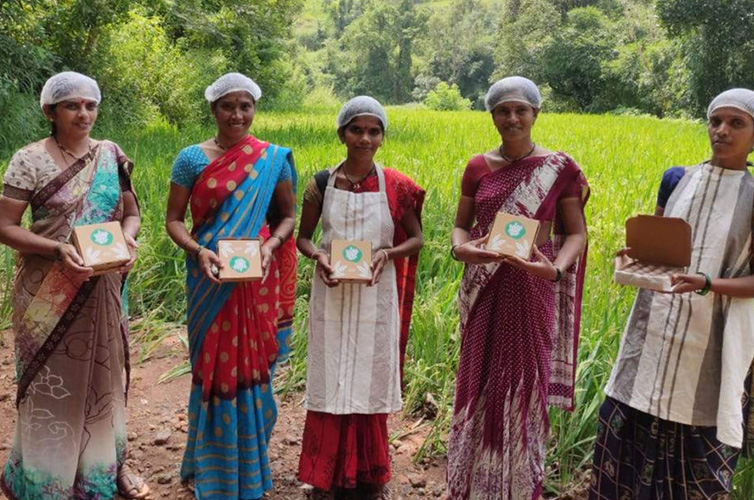
Devi Chand is the founder and artist at Papermelon, a sustainable jewellery and decor brand made with upcycled paper. Based in a small home studio in Chennai, Papermelon reflects a colourful India. Devi’s fascination for design and paper started in her younger years, when she made tiny gift boxes and glitter baubles from candy wrappers. In 2009 she decided to leave her corporate job to start Papermelon. Since then, Devi has been busy shape-shifting discarded paper materials into extraordinary pieces of jewellery.  

Papermelon is a one-of-a-kind label that weaves handcrafted jewellery using minimal tools and no machinery in production. Devi captures the essence of everything she loved about her childhood and aspires to share the same magic with her buyers. Papermelon follows a zero waste policy and strives to transform everyday objects into playful & colourful pieces of wearable art. Paper is one the few truly sustainable products as it is made with wood, and is also one of the most recycled products on the planet. Devi obsessively collects all kinds of paper – newspapers, magazines, calendars, paper bags, gift wraps, and pamphlets. She’s grateful to her network of friends, neighbours and well-wishers, who unconditionally pass on their stash of vibrant paper they have collected. All supporting beads, cords and silver findings are sourced locally from small home-run businesses.The jewellery is packed in beautiful cardboard boxes handcrafted by local artisans. These boxes are reusable and recyclable, with recycled crinkle paper used as packing filler inside the boxes. Devi follows a zero waste policy in her studio by transforming everyday objects into efficient work equipment. For example, old pens and bottles are upcycled as moulds to make the base of rings and bracelets.

Today,  Devi is shipping her stunning paper jewellery to about 35 countries

2. Ninoshka by Ninoshka Alvares E Delaney (Goa)

Ninoshka is a zero waste, Indian National Award winning, apparel brand. Designer Ninoshka Alvares E Delaney always wished that her profession would act as a means for her to give back to nature and society in her own little way. Hence, after working 10 years in the Industry in Mumbai, she relocated to Goa, where she launched her label Ninoshka which focuses on sustainable fashion. Ninoshka finds her inspiration in her collaboration with artisans. Her penchant for minimalism urges her to create silhouettes which cater to all age groups, and have an international appeal despite its Indian identity.

Ninoshka’s products aim to create social improvement and environment awareness. In 2016, Ninoshka was presented with the National award for best design for handloom Indo-western menswear by the Ministry of Textiles, Govt. of India. The label follows a philosophy of zero waste, and giving back. Keeping up with this notion, Ninoshka strives to use natural and organic materials, such as indigo, pomegranate, marigold, onion peels, coconut, and more, which are earth and skin friendly. She works closely with handloom weavers from across India to procure Khadi, Malkha, Ikat, and Chanderi among others. The label also practices dyeing techniques such as tie and dye, bandhani and shibori, and printing metaphors such as Ajrak and Kalamkari. Ninoshka works with rural Indian artisans for most of her embroidery work. With this practice, she not only creates employment opportunities, but by being a fair trade advocate, she makes sure that the artisans receive fair wages.

Following an approach of Reduce-Reuse-Recycle, she reduces wastage and the use of precious resources by creating minimalistic designs and upcycled apparel. Some of her designs are constructed in a single stitch line, while some others can be reused by wearing the garment inside-out, or in multiple ways. Ninoshka also upcycled remnant pieces of fabric and thread,  to create new products, thus making it a new zero waste brand. As of September 2020, Ninoshka is the only designer in Goa to have the Indian handloom brand mark and registration for the work she has done.

3. KnitSanyasini by Priyamvada (New Delhi)

Priyamvada is a knitter who sees hand-knitting as a medium of art, with the needles being the brush and the yarns being the paint. She believes that hand knitting is a conscious effort to connect with oneself and the environment, and is strongly inspired by a sustainable yet creative palette that makes up her vibrant creations.

Priyamvada leant the craft like most who fall in love with knitting – as a young girl watching her grandmother, aunt and mother, knit scarves, beanies, gloves with their deft hands. This awoke an interest in her to create garments that are caring, and well as pieces of self-expression.


With her drive and passion, Priyamvada pursued a Bachelor’s degree in Knitwear Design from NIFT, which helped her procure knowledge and technical skills of knitting and yarn varieties. She developed an entirely hand-knit collection of five ensembles for her final graduation project which won the award for The Best Design Collection. KnitSanyasini is a continuation of her knitting story where she upcycles all the yarn collected over the years to make unique handcrafted wearable art.

Priyamvada spends ample time experimenting in her kitchen, not baking bread or preparing food, instead she brings to boil various concoctions of beetroot, pomegranate turmeric, tea, and coffee. Each ingredient is patiently stirred and boiled up to a different temperature, all to create natural and beautiful hues for KnitSanyasini, her sustainable hand-crafted knitwear label. The process of washing, drying , rolling and winding the yarn is all done by done. The only tools involved are basic kitchen utensils and Priyamvada’s knitting needles.
April 22, 2022 0 comment
0 FacebookTwitterPinterestEmail
EnvironmentSustainability

World Earth Day 2022, The theme of this year’s Earth Day is “Invest in our Planet”.

by Team Conscious Carma April 22, 2022
written by Team Conscious Carma

Earth overshoot Day, is one such important parameter which can show how ruthlessly we are consuming the renewable resources of the Planet Earth.  And inspite of all the talks and guidelines, nothing actually is happening in controlling our greed to consume.

Earth Overshoot Day marks the date when humanity’s demand for ecological resources and services in a given year exceeds what Earth can regenerate in that year. The term “overshoot” represents the level by which human population’s demand overshoots the sustainable amount of biological resources regenerated on Earth.

Earth Overshoot Day in 2018 : Aug 1st
Earth Overshoot Day in 2019 :  July 29th
Earth Overshoot Day in 2020: Aug 22nd  
Earth Overshoot Day in  : July 29th

According to Global Footprint Network (GFN),  an organization that collects each country’s consumption data and compares those data with the biocapacity of the planet, humanity’s demand for resources is now equivalent to that of more than 1.7 Earths.  The data shows us on track to require the resources of two planets well before mid-21st century. The costs of resource depletion are becoming more evident. Climate change — a result of greenhouse gases  being emitted — is the most obvious result and widespread effects. Other biophysical effects include: deforestation, species loss or fisheries collapse. Such resource insecurity can lead to economic stress (such as monetary inflation) and conflict (such as civil unrest)

The data pertaining from the recent years have highlighted India as a role model in the context of consumption of resources. While major countries have been major exploiters of the Earth’s natural resources, the Indian lifestyle provides for a possible solution to the problem. Some of the frontline countries consuming resources are Qatar, Luxembourg, the UAE, France, the UK, Germany, China, and Indonesia. It has been found that if the entire world starts living like the Qataris, an entire year’s global natural resources will be exhausted by the 11th of February.

India finds itself in a much better position compared to the above-mentioned countries. India, with the second-largest population count in the world, still has a per capita consumption rate that is not at all in the danger area of getting unsustainable

According to the GFN, in a hypothetical situation where every citizen of the world lives like a citizen of the United States, sustainability would call for a total of 5 Earth. This figure is 4.1 for Australia and 2.2 for China. In this same list, it is defined that people of the world living like Indians would actually call for only 0.7 of the planet Earth to reach sustainability.

The above figures put India in a place where it can certainly be a role model for other nations to follow in the context of resource consumption. There are several aspects in the consumption patterns of the Indians that can actually work as solutions for the resource challenges in the world. According to the GFN list, Indian lifestyles call for only 0.7 of the planet Earth. The GFN list places 50 other countries in the same place, like India.

April 22, 2022 0 comment
0 FacebookTwitterPinterestEmail
EconomyIndustry

Sustainable Fabrics making their way in Indian market

by Team Conscious Carma April 16, 2022
written by Team Conscious Carma

India is amongst the world’s largest producers and exporters of textiles. The domestic market for textiles in India was valued at $100 billion in 2019-20 with rising exports valued at ~ $50 billion.

McKinsey’s State of Fashion report marks the ascent of India into the global fashion industry due to Asia’s economic expansion. India will occupy the centre stage in the fashion industry, with a rapidly growing middle class and powerful manufacturing sector. The Indian apparel market is estimated to cross $59 billion in 2022, making it the sixth largest in the world, according McKinsey’s Fashion Scope. Moreover, India is set to become one of the most attractive consumer markets outside the Western world moving on from being an important sourcing hub.

The flip side,  the global textile industry has grown to be one of the most natural resource guzzling and polluting sector, harming both, the environment and the people.  Over production and over consumerism has made textiles, the second largest contributor of waste in the world. It has been estimated that there are 20 new garments manufactured per person each year and we are buying 60% more than we were in 2000

In 2016, a McKinsey report on “Style that’s sustainable: A new fast- fashion formula” claimed that fashion was witnessing a major changing in buying trends, with production doubling from 2000 to 2014, and the purchase index of an average consumer increasing by 60 percent.

This has led to a “fast fashion cycle” wherein consumers are purchasing clothes for summer, autumn, spring and winter, which has forced the fashion industry towards unsustainable fashion. Meaning, the industry is producing more synthetic fibres, polyester, nylon waste water and plastic waste.

Textile industry is a highly water intensive industry and chemical intensive too. Millions of gallons of Water, the scarce natural resource is used everyday and the same is polluted by the chemicals used for producing, bleaching, dyeing and cleaning the textiles, and if not treated before releasing it, the waste water pollutes the rivers and harm the health of water bodies and humans. Non-organic cotton is responsible for the consumption of 16 percent of the world’s total production of insecticides and around 7 percent of it is pesticides. Almost 2000 different varieties of chemicals are used in this industry. Mere chemical processing in this industry constitutes 70 percent of the overall pollution. Also the synthetic textiles release microplastics in the environment. Non-organic cotton is responsible for the consumption of 16 percent of the world’s total production of insecticides and around 7 percent of it is pesticides

The resources, especially water and oil, used by the global textile industry is expected to double by 2030. The global apparel production may reach 102 million tons by 2030 if the economy and the world population increase as expected.  Synthetic fibers comprise of almost 65 percent of the total world production for fibers. They consume a lot of oil which is a non renewable resource. Natural fibers like cotton, silk, wool, etc. also make use of resources that needs to be conserved.

Textile waste is another huge issue.  Studies indicate that only 48 percent of the textile waste is recycled and converted into consumables and is mostly exported to third world countries. The rest goes to landfills.

It is imperative for the textile industry to move towards sustainability, as well as effectively recycle.  While consumers should consume less and consume sustainable and also consider options like upcycling and thrifting, etc.

Some startling facts of waste generated by textiles globally

According to the National Climate Change Journal (2018), textile production is one of the most polluting industries and produced 1.2 billion tonnes of greenhouse gas emissions, which is more than the emissions of international flights and maritime shipping put together.

The United Nations Environment Program estimates that the fashion industry produces 20% of global wastewater and 10% of global carbon emissions.

According to evaluations of the World Bank, about 17 to 20 percent of all present water pollution is solely induced by coloring and finishing patterns. Nearly 72 unique toxic synthetics are stated to be available in water only for coloring patterns.

One truck capacity of textiles is landfilled or burnt every second somewhere in the world, according to the Isle of Wight-based Ellen MacArthur Foundation

The fashion industry’s annual production is 400 billion square metre of textiles leading to cutting room floor waste of 60 billion square metre.

According to the UNFCCC, carbon emissions from the apparel industry is set to cross 60 percent by 2030. In Asian countries like India and China, emerging fashion trends have increased the carbon foot print per garment, due to the use of coal fuelled plants.

Indian textiles moving the sustainable way

The global climate crisis and the pandemic has been a resetting button for the manufacturers as well as consumers across the globe. In India too, there’s increased efforts by the government as well as manufacturers to shift to sustainable textile and move to a circular economy.

Prominent players in India are undertaking major strides in introducing sustainability in the textile manufacturing value chain, including the use of newer, more eco-friendly technologies, materials and production methods.

The industry recognizing cotton as a vital ally, is opting for organic cotton.  Organic cotton farming uses 62% less energy and 88% less water than conventional cotton. Also, switching to natural colours for dyeing clothes. The industry is also remodelling its operations from linear to circular, from sourcing raw materials to production, supply chain and waste recycling.

Recycled fabrics like Ecovera which are produced from recycled plastic bottles using biofuels and energy efficient processes, is being manufactured by India’s leading textile manufacturer and fashion retailer, Raymond Group in collaboration with India’s leading conglomerate, Reliance Industries.


Another Indian conglomerate, Aditya Birla Group, has launched Liva-branded Viscose Staple Fiber. The man-made, biodegradable fiber is derived from  wood pulp, a renewable source.

Also, the Country’s leading fashion designers and fashion brands are also  using sustainable fabrics in their collections. Designers like Anita Dongre, Ritu Kumar are leading the sustainable fashion in India. And a slew of Indian startups can be seen entering the sustainable textile and fashion market which is a very positive sign.

Coupled with this is the consumer shift towards sustainable clothing and slow fashion, Sustainable fabrics market size in India is anticipated to surpass of CAGR 11.4% by 2023, as reported in the latest study by market research future

Example of Sustainable Fabrics

Sustainable Natural and Vegan Fabrics

  • Organic Cotton
  • Recycled Cotton
  • Organic Hemp
  • Organic Linen
  • Organic Bamboo Linen
  • Cork

Examples of Sustainable Semi-Synthetic Fabrics

  • Lyocell
  • Modal
  • Bamboo Lyocell
  • EcoVero
  • Pinatex
  • Cupro

Synthetic Fabrics

  • ECONYL
  • Recycled Polyester

Animal Derived Natural Fabrics (sustainable depending on source)

  • Sheep Wool
  • Merino Wool
  • Alpaca Wool
  • Cashmere
  • Camel
  • Yak Wool
  • Ahimsa Silk

FABRICS TO AVOID

  • Acrylic
  • Elastane (a.k.a. Spandex or Lycra)
  • Nylon
  • Polyamide
  • Polyester
  • Polyurethane
  • Sequins

All of these are made using oil, processed into a plastic thread, and then woven into wearable fabric. When  washed, they shed microplastics. And when they’re thrown away, they take hundreds of years to degrade.

150 billion clothes: The number of clothes produced annually in the world; enough to provide 20 new clothes to each person in the world every year

A.Water Consumption

20,000 litres: The amount of water consumed to produce one kilogram of cotton production; equivalent to the amount a person drinks in 15 years

7,000 litres: The amount of water consumed to produce 1 pair of jeans only; equivalent to the amount a person drinks in 5-6 years

2,700 litres: The amount of water consumed to produce 1 t-shirt; equivalent to the amount a person drinks in 2.5 years

Why this is important?

Our access to clean water only accounts for 1% of the global water supply. By 2025, over 2.8 billion people in almost 48 countries are likely to face water problems including scarcity. This would get even worse with numbers reaching 7 billion by 2050.

2 billion jeans: are produced every year in the world

B. Raw materials

70 million barrels: The amount of crude oil consumed every year to produce the most commonly used fiber in textiles — polyester

70 million trees: The number of trees logged every year to produce fabrics like rayon, viscose, lyocell, and modal

Why this is important?

Two mature trees can provide enough oxygen for a family of four. We can save oxygen for around 35 million families.

90% of cotton: is genetically modified which uses huge amount of water and chemicals

18% of pesticide: in the world is used for the cotton production while 25% of total insecticides in the world is used for the same

25% of chemicals: produced in the world are consumed by the textiles industry

C. Energy Consumption – by fiber type

30% of clothes: The percentage of clothes that are never sold

$210 billion dollars: is the value of inventory distortion in the global apparels and fashion industry. This is the gap between consumer’s wants and what retailers provide in their store.

One-in-six people: in the world work in the fashion and textiles industry

80% of garment workers: are women

1%: The percentage of retail price of one clothing item is what the living wage of garment workers constitute of

Number 1: is the rank of Germany in providing the highest hourly compensations in the apparel manufacturing industry when compared to other international apparel manufacturing countries

Lowest rank: Philippines ranks the lowest in providing the hourly compensations among the countries studied

90% of labours: in Bangladesh cannot afford the basic necessity of life – food for themselves and/or their families

Consumption

80 billion: clothing pieces are consumed every year in the world; 400% more as compared to 20 years ago

$460 billion: The value of clothes being discarded every year which consumers could continue to wear

50% of clothes: The percentage of clothes are discarded within one year of buying

> 3 years: The lifetime of a clothing item in the developed countries is less than 3 years

36%: The worldwide utilization of clothes (before discarding it completely to waste) has been reduced by 36% as compared to 15 years ago

Why this is important?

The lifetime of a clothing item is reducing and the purchase of regular new clothing pieces is rising, thereby increasing the total consumption of fashion and garments.

250% increase: in google searches (made by the consumers) for sustainable fashion between 2017-1

Emissions

A. Production

1.2 billion tons: The amount of total greenhouse gases emitted globally due to textile production; produced more than than all the international flights and maritime combined

8 percent: of global greenhouse emissions come from the apparel and footwear industry

262 percent: more CO2 is emitted to manufacture one polyester t-shirt as compared to one cotton t-shirt

Why this is important?

Substituting polyester offers: 60% reduction in energy consumption, around 40% less emissions, and 90% less toxic substances

B. Consumption

24 percent: of emissions can be reduced if we double the useful life of clothing from one year to two years

400 percent more carbon emissions: is produced per item per year when we wear fast fashion garments, which are only worn 5 times and kept for 35 days, as compared to clothing items worn at least 50 times and kept for one full year.

Why this is important?

Increasing greenhouse gas emissions cause earth’s atmosphere to trap excessive heat which can cause global warming

Waste

20% of waste: in the world is generated by the textiles industry

92 million tons of textile waste: is generated by the global fashion industry; around 12.3 kg per capita across the globe

85% of plastics: in the ocean is due to microfibers that come from synthetic textiles

15% of fabric: is wasted in the cutting room which could’ve been used for clothing production

70 pounds: of clothing and shoes are being discarded by one person annually instead of recycling

70% of people: in the world consume second hand clothes

$550 on unworn clothing: According to a survey of 2137 women (aged 18 and above), around $550 worth of clothing in their closet has never been worn by them.

20% of clothing: is not even worn once by the consumers in the world

Landfills

12.8 million tons of clothing: ends up on landfills every year

Only 10% of the clothes: that are donated to thrift stores or charity organizations are actually sold, while the rest goes to landfill.

95% of textile waste: that ends up on landfills every year could actually be recycled

200 years: The number of years for polyester to break down

20,000 litres of water: can be saved if we start using recycled cottn

Country stats

3rd largest water wasting industry: Textiles is the third largest water wasting industry in China, discharging more than 2.5 billion tons of wastewater each year

2.5 billion tons: of wastewater is generate by Chinese textile industry every year 253 tons of textile waste

ends up in landfills in Hong Kong every day

91 percent: The percentage of Australian fashion brands who do not pay their workers a living wage. Second largest

Australia is the second largest consumer of textiles in the world, after the US

27 kilograms: is the average unit of new clothing and textiles are bought by Australians every year 

23 kilograms: is the average unit of clothing that Australians discard every year 

40% of apparels: that are sold in the United States are imported from China; the US is also the largest apparels importer in the world

1 billion pounds of used clothing: is exported from the United States, making it the largest exporter of second hand clothing

10.5 million tons of textile: in the United States are sent to landfill each year

70 pounds of clothing: is discarded by an American every year

70 clothing items: are bought on an average per consumer in the United States every year

$46.7 billion: is the value of unworn clothes by the consumers in the United Kingdom

$66 billion: is the total consumption of clothes per household in the United Kingdom every year

Source : https://www.sustainablefashion.earth/the-reality/

April 16, 2022 0 comment
0 FacebookTwitterPinterestEmail
ProductsSustainable Startup Stories

Neeman’s – shoes made for you and the environment

by Team Conscious Carma April 15, 2022
written by Team Conscious Carma

The launch story of the brand might sound peculiar, but it came into being when Taran Chhabra and Amar Preet Singh, were going to Spain for a holiday. While packing their shoes, they realized that we were packing more than a couple of pairs for different purposes and occasions, which led to space and weight. So, they started looking for one pair that would suffice all their needs. When it didn’t happen, the duo themselves decided to produce comfortable footwear for all-day wear, but with the added trait of making them sustainable. Thus started the journey of Neeman’s.

Prior to his entrepreneurial venture, Taran has worked in the USA in business analytics and strategy for various companies. While Amar, a veteran in operations with over 15 years of experience, has worked with various start-ups. Started in the year 2018 by two shoe aficionados, Neeman’s is India’s first footwear brand that uses Natural, Renewable, Recycled and biodegradable fibres in its shoes. Thus, the driving force behind the brand is innovation.

Neeman’s uses natural and renewable materials that reduce carbon footprints. Furthermore, all the materials usedfrom the uppers, insoles, soles to packaging, are high quality and eco-friendly. It also fills the gap of one shoe for anytime, anywhere purpose.He leads the R&D and is the visionary behind launching some unique fibres in the Indian footwear industry that were unheard of and unexplored. “Research shows (according to Quantis, a sustainability consulting group) sneaker production accounts for 1.4% of the global greenhouse gas emissions. And let’s not forget that India is the 15th highest plastic polluter globally.

The challenges, Victories and the milestones

The challenge for any new brand entering the market is to garner attention, especially since marketplaces have become increasingly crowded and competitive. However, at Neeman’s, it was also about informing people about sustainable footwear and its importance. So marketing and sharing the story, USP, is essential during the initial months. Furthermore, as all companies dealt with the pandemic and the lockdown, so for us too, it was a speed breaker but, thankfully, not a roadblock. Victory for brand Neeman’s come in the form of customer’s acceptance. As a relatively new footwear brand trying to do something different by introducing revolutionary sustainable footwear, the customers have appreciated the comprehensive collection of shoes.

Since the launch, the brand has introduced many revolutionary fibres in the Indian market. The journey started with Merino Wool Sneakers made with Merino Wool that comes from Australian Sheep and is the finest and the softest wool and also apt for all year wear. People have valued the planet-friendly pairs made from natural yarns and materials that are harmful to the environment. This feedback indicates that the Indian customer is open to sustainable and comfortable footwear.

Future Plan

In addition, it is also looking at expanding categories and strengthening its commitment to the planet by being a sustainability champion through comprehensive research and development. Expanding offline presence and opening a flagship store in the future is also on the cards. Launching the international operations of Neeman’s is another aspect under consideration.

Vision: Creating Neeman’s, a brand that is synonymous with comfortable and sustainable shoes for all day wear. Being in the business of sustainable footwear, we took a revolutionary step of recycling the PET bottles into a shoe that offers supreme comfort and reduces carbon footprints. Every pair of ReLive Knits uses eight PET bottles . Neeman’s has so far recycled over one million PET bottles

April 15, 2022 0 comment
0 FacebookTwitterPinterestEmail
Wellness

Livpure unveils pocket-friendly gravity water purifiers

by Team Conscious Carma April 13, 2022
written by Team Conscious Carma

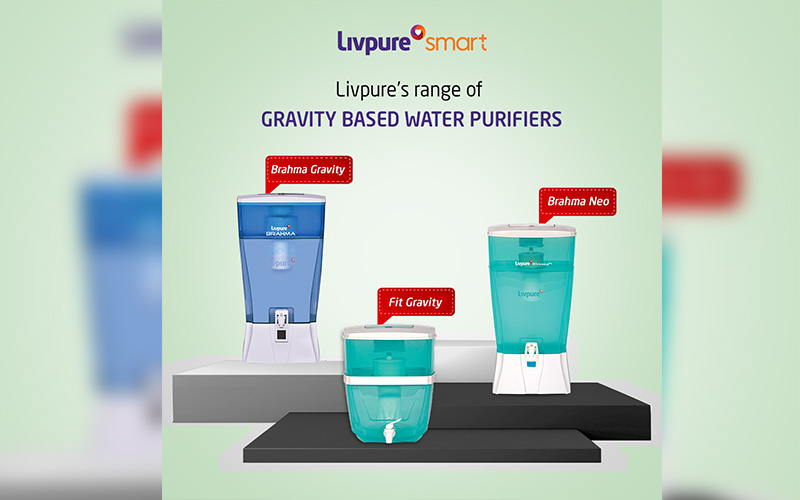
The term ‘smart living’ has become a buzzword in recent times. From navigation to home appliances – be it the water we drink, air conditioners, or other devices, every aspect of our lives now has technology woven into it. Against this backdrop, Livpure, a leading manufacturer of water purifiers, air conditioners, and sleep and wellness solutions, has recently launched an array of new, state-of-the-art tech-backed products. Underlining its commitment to simplify and transform the lives of consumers with innovative, tech-driven solutions, the brand has introduced three new water purifiers with extensive features.

Livpure has stepped up its innovation and introduced first-time technologies such as nanotechnology, non-electric operation, chemical-free purification, ultrafiltration technology, and gravity-based purification in water purifiers that will disrupt the kitchen appliances market. The products launched are  Livpure Brahma Neo Gravity, Livpure Brahma Gravity and Livpure Fit Gravity

In a short span of 8 years, Livpure has delivered many Firsts in ensuring 100% Sampoorna Suraksha. Last year in a Consumer Survey by Forbes India, Livpure figured as “Most Respected Consumer Tech Brand” in the water category. 

Availability: https://www.livpure.com/collections/gravity-water-purifier

April 13, 2022 0 comment
0 FacebookTwitterPinterestEmail
Authored ArticlesWellness

Natural Ways to Keep a Check on Your Mental Health

by Team Conscious Carma April 12, 2022
written by Team Conscious Carma

It’s extremely imperative to take adequate care of yourself and get the most from life. Here are some practical ways I recommend to take respite from situations affecting your mental health. 

Talk about your feelings 

Talking about your feelings can help you stay in good mental health and deal with times when you feel troubled. It is in no way a sign of weakness.  Just being listened to can help you feel supported and less alone. And it works both ways. If you open up, it might encourage others to do the same.

Move More

Experts believe exercise releases chemicals in your brain that make you feel good. Regular exercise can boost your self-esteem and help you concentrate, sleep and feel better. Exercise also keeps the brain and your other vital organs healthy. Exercising doesn’t just mean doing sport or going to the gym. Walks in the park, gardening or housework can also keep you active. 

Simple tip: Walk 10K steps throughout the day. Start at 5K and build up. Every step you take counts, like going to the bathroom or walking in the aisle of your office. It all counts.

Eat Better
There are strong links between what we eat and how we feel, for example, caffeine and sugar can have an immediate effect. But food can also have a long-lasting effect on your mental health. Your brain needs a mix of nutrients to stay healthy and function well, just like the other organs in your body. 

SIMple tip: Eat at least 2 cups of vegetables and 2 seasonal fruits a day to get the best nutrition for yourself.

Stay Hydrated 
Water has been shown to have natural calming properties, likely as a result of addressing dehydration’s effects on the body and brain.  Drinking enough water is an important step in managing your anxiety. Even if you’re not experiencing anxiety, drinking sufficient water can create feelings of relaxation. We often drink alcohol to change our mood, but the effect is only temporary.  Drinking alcohol is not a good way to manage difficult feelings. So hydrate your body sensibly. 

SIMple tip: Drink 3 litres of water every day. This depends on a lot of aspects, check with you nutritionist for their recommendations too.

Keep in Touch 
Strong family ties and supportive friends can help you deal with the stresses of life. Friends and family can make you feel included and cared for.  There’s nothing better than catching up with someone face-to-face. But that’s not always possible. Give them a call, drop them a note or chat with them online instead. Talking about your feelings with someone will help calm you down too.

SIMple tip: Keep the lines of communication open. It’s good for you! Take the initiative to communicate if you wish to talk to someone.

Switch on Recovery Mode
A change of pace is good for your mental health. A few minutes can be enough to de-stress you. Take a deep breath… and relax. Try yoga or meditation, or just putting your feet up. Listen to your body. If you’re really tired, give yourself time to sleep. Without good sleep, our mental health suffers and our concentration goes downhill. Sometimes the world can wait. 

SIMple tip: Get at least 6-7 hours of sleep per night. This is very important for your health as a whole.

Indulge in Self Care 
When it comes to your mental health, self-care can help you manage stress, lower your risk of illness, and increase your energy. Even small acts of self-care in your daily life can have a big impact.

SIMple tip: Journal your gratitude and accomplishments. Write down 3 things you are grateful for each day, and 3 things you have accomplished. This can be as small as “added veggies to lunch”. Every small accomplishment matters. After doing this consistently, experience your life change for the better!

Spend Time with Yourself
Most people believe that because socializing helps relieve stress, it should be done from time to time. While there is no harm in that, it is also a good idea to know how to spend time with yourself and enjoy your own company. Giving yourself alone time means you can explore these things without the pressures and judgments that others may impose. Having time to yourself is critical for growth and personal development. Instead of worrying about the needs, interests, and opinions that others may have, alone time lets you focus on yourself.

SIMple tip: Read / Meditate for 5 – 10 minutes a day. Or choose an activity you would love to do, draw, paint, read, dance! Do what you like doing at least for a little time in the day to help you!

By Simrun Chopra, Deep Health Coach, Nutritionist and Founder of Nourish with Sim

April 12, 2022 0 comment
0 FacebookTwitterPinterestEmail
Authored ArticlesSpirituality

Choice at Conception, The ancient science of yoga is based on laws of nature.

by Team Conscious Carma April 11, 2022
written by Team Conscious Carma

In nature you will find that for every aspect there exists an equal and opposite. Darkness is nothing but absence of light. Similarly, silence is nothing but the absence of sound. It is only the duality in nature, the coexistence of positive and negative that gives meaning to the existence of the whole. The ancient scriptures speak of a masculine energy Shiv or the doer and a feminine energy Shakti or the force. In reality, the whole Creation derives its energy from Shakti and without her even the Lord is also just a form, the same applies to all aspects of Creation. At the same time, Shakti without the Lord is just pure energy, which needs a vehicle to carry out desires. The complete evolution thus becomes Lord Ardhanareshwar. This is the form of the sacred union of Shiv and Mata Parvati as one. Interestingly, a union between a married man and woman also symbolically represents the ‘Ardhanareshwar’.

The Vedic Rishis saw the union between a man and woman not for lust or gratification of sensual desires but a sacred union for the purpose of procreation. Vedic Rishis set yogic techniques and Sanatan Kriya, which when followed can give a child of one’s choice. Parents often wish to decide everything about their child even before conception. They wish to fulfill their unfulfilled dreams through their children but these dreams cannot be fructified without Guru Kripa. However, there are certain basic guidelines that can be followed for children of a particular pravriti.

In a day, energy patterns keep changing. Similarly, day-to-day patterns also keep changing. Every object of creation, all lokas (dimensions of existence) and yugas (dimensions of time), as per the revelation of the ancient yogis, exist as energy forms. The movements of earth changes the dimension of time, it lies tilted on its axis, when the axis tilts, yugas change and when it moves on the axis, the seasons change. Every movement from one dimension to the other brings about a change or transformation as every day comes with its unique energy patterns.

To better understand energy changes that occur daily we must first understand the concept of sandhya, that is, when one energy transforms into another. Vedic philosophy describes four types of sandhyas that occur on any given day. The first, Brahma Sandhya occurs an hour before and after sunrise. Positive forces are at their peak. Since this period is the best time for communion with higher energies, a child that is conceived during the Brahma Sandhya will be a pure and saintly soul. As the day progresses, energies transform, positive energies go down while negative energy starts to rise, leading to the Tantrik sandhya. This occurs between 10.20 am and 11.30 am, where the positive and negative forces are equal in strength. This sandhya aids material gain, thus a child conceived during this time will have a strong hold over the material. At sunset again energies change giving rise to the third sandhya where negative energies are at their peak. A child conceived during this period can show negative traits. However, practices like the Sanatan kriya are done during this time to protect the child from the negative energies in the environment. The last and fourth sandhya occurs at midnight, when negative energies are going down and positive energies are going up.

Interaction with the spirit world is very easy during this time. Children conceived during this time will be level headed and with potentiality to interact with the world of ether.

However, at the end of it all, if your child has Guru Kripa, no matter the time or day of birth, there is nothing he/she will not be able to achieve.

Yogi Ashwini, Dhyan Ashram

April 11, 2022 0 comment
0 FacebookTwitterPinterestEmail
Authored Articles

Is the Era of Efficiency Over? The efficiency paradox in the sustainable world is making us rethink what it means to be super-efficient!

by Team Conscious Carma April 9, 2022
written by Team Conscious Carma

Nona Walia, Has the pandemic slowed down the industrial trait of super efficiency? Does maximization of efficiency give maximum returns or has the pandemic slowdown made us realise that we are more than efficiency machines. Are we witnessing the law of diminishing returns in being super-efficient? The price of efficiency is too high and creates an emotional vacuum. Says psychologist Gitanjali Sharma, “The cult of super efficiency lures you into a trap where you trade-off your mental health. Personal efficiency systems make you want to do everything at once. We take our personal efficiency to workplace and start working like machines, we have become machines in our personal lives too. It’s taking a huge emotional toll on our health.”    

In the pandemic, the efficiency paradox has exposed how humans as super-efficient machines become more stressed. The internet is full of efficiency apps, telling you how to be super-efficient; how to sort out to-do lists; how to boost your productivity… We live in a culture that worships efficiency: same day deliveries, doing more with less. We believe, efficiency is good, inefficiency is wasteful. Even as management gurus debate that we can’t afford an inefficient world, the price of efficiency isn’t sustainable, as continuous super efficiency takes the joy out of life. The pandemic has witnessed a catastrophic drop in employee productivity. According to Champion health survey, 67% of workers are experiencing high level of stress, admitting productivity has been impacted. In the industrial world, we wanted to squeeze systems into super-productivity. In the wellness world, we want to be efficient, creative and mentally healthy. Creativity is not an outcome of efficiency. The cultural world does not believe in tightening the systems but rather going with the flow. Instability is the new normal in business. In the workplace of 2022, super efficiency will be replaced by resiliency and agility. As we walk into a new age, just being efficient isn’t enough as systems are fragile and vulnerable. We need to create new paradigms of wellbeing, where humans are more than just machines.  

Escape the Tyranny of Efficiency

Escaping the world of efficiency doesn’t mean getting trapped in limitless inefficiency. Right now, everyone wants to scale efficiencies, to speed up processes, optimize behaviours, and maximize time, but it doesn’t result in super productivity. The future belongs to people who do things differently. The global wellness movement is rethinking efficiency. Super-efficient systems weigh the world with social disorder, it creates competition and stress. Wellness gurus who advocate maximization of happiness believe efficiency isn’t in favour of happiness index. When we look at our personal efficiency during the day, we want to get everything done at once. We try to juggle different tasks quickly. We have internalized a factory owner’s mindset, trying to take most productivity out of every hour. We treat our bodies like machines. We measure the value of our days by how much got done rather than other qualities like joy, appreciation and connectedness. Young parents are forever trying to drive their children to be over-efficient; this is stressing them out young. This unnecessary focus on efficiency ends up tyrannizing people in all age groups, as a result everyone is more stressed. According to Psychology Today, it is time to soften the need to function like a machine. Escape the cult of personal efficiency, focus on well-being rather than efficiency. Let’s rethink what it means to be personally and professionally efficient!

Nona Walia is a successful journalist and writer. She’s the author of The Art of Mental Toughness: Survival Lessons from the Pandemic. A motivational expert, she is passionate about helping people live their lives in the best possible way. A wellness warrior and a wellness blogger, Walia has done certified online course on Science of Well-Being from the Yale University. She runs a Wellness Channel on YouTube. She has worked with The Times of India for 24 years as a Senior Assistant Editor and is also the acclaimed writer of many articles for Thrive Global.

April 9, 2022 0 comment
0 FacebookTwitterPinterestEmail
Inspiration

Sandhya Dhar wheeling the change for disabled

by Team Conscious Carma April 8, 2022
written by Team Conscious Carma

Sandhya Dhar, a specially abled woman from Gangyal, Jammu, was conferred the prestigious “Nari Shakti Puraskar” by President Ram Nath Kovind at Rashtrapati Bhawan recently for her contribution and dedication towards the rights of under privileged and disabled persons.

Her family stood by her

Sandhya who is confined to wheel chair since the age of 3, did not allow her disability to become an impediment in her life, instead worked hard to carve a niche for herself in the society. With undying support and love from her family, she not only completed her studies but took up a job and from her earnings started helping other disabled people and later founded founding JIGER (Jammu Institute General Education and Rehabilitation) in 2015. She has a Masters Degree in Commerce, P G Diploma in Business Administration and BCA in Computer Education.

Her inspiration

Sandhya belongs to the clan of Mata Roop Bhawani, a spiritual saint of medieval Kashmir who started a revolution in education over 400 years back in Kashmir and this inspired her to dedicate herself to education of differently abled children. JIGER is working for inclusive education of disabled and underprivileged children and at present educating and rehabilitating  over 400 children in her institute as well as other institutes being supported by JIGER.

Her message to people with disabilities

“Tell people about your inbuilt qualities. Don’t hide. Build your confidence. In 2014, I visited my brother at Melbourne alone. I travelled within the city alone, using the public transportation and came back home at 3 am. For the first time I experienced what an independent life is. That motivated me to start JIGER”

April 8, 2022 0 comment
0 FacebookTwitterPinterestEmail
Sustainable Startup Stories

Mitti Ke Rang – A social venture to empower women across the country

by Team Conscious Carma April 7, 2022
written by Team Conscious Carma

Hailing from Bhusawal, Maharashtra, Amit Jain, Co-founder, MItti Ke Rang, was barely  3 years old when he lost his father. His grandfather opened a tailoring shop for his mother and his cousins supported them which helped him to survive.

After graduation, Jain came to Pune in 2012 with 1,000 INR to look for a job and within a month’s struggle got a job at The Bank of New York Mellon. And his life took a drastic change.

Mitti Ke Rang took shape

He was lucky to get support from his relatives during their struggling day, now when he had enough, he wanted to help and support the needy. In 2014, he started a social group with Saket Deshmukh, where they started collecting clothes from people and donating them NGOs and slum areas. Soon volunteers started joining them and their group started getting bigger, and they named it Mitti Ke Rang (MKR).  For a couple of years, they kept doing various social activities alongwith their full-time jobs.

Having realized  there were many women in their community Pune, looking for opportunities to earn a livelihood, In 2019, Amit took a drastic step and left his cushy bank job to give MKR his full time and attention and help empower women economically..

Soon, they started training women entrepreneurs to make cloth and paper bags and got a few orders which helped them introduce more products for Diwali like tea light candles and sold more than 52,000 units in 40 days and generated Rs 17,500 each for five women entrepreneurs.

After Diwali, Amit decided to backpack across India, to meet women entrepreneurs across rural areas and understand the women entrepreneur ecosystem and challenges they faced in their businesses. “I had a plan to backpack across India covering Kanyakumari to Kashmir, Arunachal to Bombay. I started from Mumbai and went till Kanyakumari, then from there till Arunachal Pradesh. Then a lockdown happened due to which I got stuck in Guwahati for 70 days”, says the young social entrepreneur

During that journey, he met a lot of women entrepreneurs in different cities and after interacting with them, concluded that while many women want to start their own business, technology and social media as a means to promote and sell their products posed a big challenge for them.

“We thought that we already have a platform, so why not assist all such women entrepreneurs with the platform to ease the process and help them get the customers from across the globe. And by end of December 2020,  they started full-fledged operations of their e-commerce site by end of December 2020. We feel proud to say the MKR turned the Covid crisis into an opportunity for several women entrepreneurs. Many of them started the business at home as an experiment and now they are looking at making it mainstream and expanding it”.

Roadblocks and important milestones

There were many roadblocks, when we took this full time we did not have a full-proof plan of what products we would be making. Then, slowly we kept improvising. When we thought now we have some good plan, Covid came in. Everything got halted for some time.

Initially, Logistics was a big challenge and making people aware of the platform. But, over a period of time with everyone’s support and hardwork, we were able to pass all hurdles and create more livelihood opportunities for women entrepreneurs.

In a year of launch of our e-Commerce platform, we have bagged 5,281 Ordersfor our women entrepreneurs from all over the country. Also, we have onboarded more than 200+ Women entrepreneurs from 25 states in India.  And, Shipped to more than 250+ cities, and 5 countries.

Your mission and vision

Amit, all of 30 years and Saket 33, are currently bootstrapping this beautiful social venture and are aiming to support more and more women entrepreneurs with livelihood opportunities by selling online through Mitti Ke Rang

April 7, 2022 0 comment
0 FacebookTwitterPinterestEmail
Newer Posts
Older Posts

Recent Posts

  • India–UK Free Trade Agreement Opens Global Growth Opportunities for 3R ZeroWaste’s Circular Economy Solutions
  • Plastic Free July: Why True Sustainability Goes Beyond Swapping Plastic
  • From the Editor’s Desk: When Greed Takes Over Conscience
  • Beyond the Pose: Why Your Yoga Mat Needs a Sustainable Upgrade
  • Best Sustainable Father’s Day Gifts: Conscious Carma’s Exclusive Picks

Recent Comments

  • Team Conscious Carma on Label Shivika Agarwal – where craft meets sustainability
  • Cocomeister.jp on Label Shivika Agarwal – where craft meets sustainability
  • Team Conscious Carma on Equitable City Designs To Fight Climate Change
  • UN report calls for repurposing of USD 470 billion of agricultural support that distorts prices and steer us away from environment and social goals | Consciouscarma on UNEP & ICMR collaborate to boost understanding of environmental dimensions of antimicrobial resistance in India
  • Wild Earth : Natural body products | Consciouscarma on Sat.Suma : the true essence of flowers in your everyday skincare needs

Keep in touch

Facebook Twitter Instagram Youtube

Recent Posts

  • India–UK Free Trade Agreement Opens Global Growth Opportunities for 3R ZeroWaste’s Circular Economy Solutions

  • Plastic Free July: Why True Sustainability Goes Beyond Swapping Plastic

  • From the Editor’s Desk: When Greed Takes Over Conscience

  • Beyond the Pose: Why Your Yoga Mat Needs a Sustainable Upgrade

  • Best Sustainable Father’s Day Gifts: Conscious Carma’s Exclusive Picks

  • How Sacred Sound is Reshaping the Future of Holistic Health?

Categories

  • Community (38)
    • Campaigns (3)
  • CSR (4)
  • Economy (82)
    • Global (24)
    • Industry (42)
    • Innovations (4)
    • National (2)
  • Environment (48)
  • Expert Corner (48)
    • Authored Articles (47)
  • Featured (5)
    • Partners (1)
  • Global News (2)
  • Initiatives (31)
    • CSR (3)
    • Events (6)
  • Inspiration (22)
  • Lifestyle (9)
  • Media Coverage (6)
  • Press Releases (4,358)
  • Products (126)
    • Accessories (27)
    • Apparel (32)
    • Beauty (26)
    • Food (4)
    • Gifting (3)
    • Home Décor (15)
    • Skin-Care (14)
  • Reports (3)
  • Spirituality (10)
  • Sustainability (49)
  • Sustainable Startup Stories (28)
  • Travel (19)
  • Uncategorized (2)
  • Wellness (33)
    • Home Cleaners (3)

Archives

  • August 2026 (1)
  • July 2026 (1)
  • June 2026 (6)
  • October 2024 (1)
  • September 2024 (1)
  • July 2024 (2)
  • June 2024 (2)
  • May 2024 (1)
  • November 2023 (330)
  • October 2023 (554)
  • September 2023 (631)
  • August 2023 (718)
  • July 2023 (723)
  • June 2023 (710)
  • May 2023 (608)
  • April 2023 (114)
  • March 2023 (7)
  • February 2023 (3)
  • January 2023 (11)
  • December 2022 (18)
  • November 2022 (1)
  • August 2022 (6)
  • July 2022 (8)
  • June 2022 (24)
  • May 2022 (11)
  • April 2022 (19)
  • March 2022 (11)
  • February 2022 (11)
  • January 2022 (14)
  • December 2021 (10)
  • November 2021 (4)
  • October 2021 (14)
  • September 2021 (22)
  • August 2021 (12)
  • July 2021 (17)
  • June 2021 (17)
  • May 2021 (16)
  • April 2021 (22)
  • March 2021 (33)
  • February 2021 (16)
  • January 2021 (22)
  • December 2020 (10)
  • Facebook
  • Twitter
  • Instagram
  • Pinterest
  • Linkedin
  • Youtube

@2020 - All Right Reserved. Designed and Developed by Bizopser Technologies

Consciouscarma
  • Home
  • About Us
  • Products
  • Community
    • Campaigns
    • Inspiration
    • Initiatives
    • CSR
  • Features
    • Sustainable Startup Stories
    • Travel
    • Lifestyle
    • Partners
  • Economy
    • Industry
    • Innovations
    • National
    • Global
  • Environment
  • Expert Corner
    • Authored Articles
    • Reports
  • Magazine
  • Contact