Consciouscarma
  • Home
  • About Us
  • Products
  • Community
    • Campaigns
    • Inspiration
    • Initiatives
    • CSR
  • Features
    • Sustainable Startup Stories
    • Travel
    • Lifestyle
    • Partners
  • Economy
    • Industry
    • Innovations
    • National
    • Global
  • Environment
  • Expert Corner
    • Authored Articles
    • Reports
  • Magazine
  • Contact
Author

Team Conscious Carma

Team Conscious Carma

Sustainable Startup Stories

ecoSansar – a Zerowaste online store for the conscious urban consumer

by Team Conscious Carma May 20, 2022
written by Team Conscious Carma

“At ecoSansar, we are creating a market place for end-to-end sustainable options– Everything that you would need for a zero-waste lifestyle from a sustainable source”, Gayatri Joshi, Founder, ecoSansar. Gayatri, an engineer working in the IT industry is now a mom and a social entrepreneur!

Every inch of the road was covered with plastic and dead entangled marine lives…yes, that really happens…not somewhere far away, but very close to our own homes, in oceans, in lakes and streams and we are directly impacted!

Inspiration

Having been brought up in Mumbai before settling in Bengaluru, oceans and beaches had always been a very integral part of my life. During the Mumbai floods in July 2005 the ocean literally threw all the garbage back into the city and that’s when the magnitude of our disposable plastic problem really hit me! and I stopped using plastic as much as possible. Thats when the seed of ecoSansar was actually sown which later took root in June 2018, starting with rural handicrafts

Moreover, after having a family I realised how it was getting increasingly difficult to run a household without plastic. I figured that like me many other consumers must be wanting to live a more ecofriendly life but may not be able to due to lack of options. That’s when the idea and vision of ecoSansar was born, with the goal of being part of a solution to the single use plastic problem.

ecoSansar took shape in 2018

ecoSansar started almost 5 years ago in Bengaluru with sustainability and equal opportunities as its core business values. What began as a venture to promote rural plant fiber based handicrafts in the urban market, went on to improve the sustainability impact further and added daily life items like groceries, home essentials and self-care products.

To ensure end to end sustainability and to avoid plastic packaging, ecoSansar began working on the principles of circular economy which states that all resources should be put to use until its end of life and only then sent for recycling. Their USP is that all the packaging is collected back for reuse, thus AVOIDING single use packaging waste.

We take back our packagings and Reuse for Refill. This is an essential part of our zerowaste delivery process as we make sure that our packagings are repurposed, functional and make use of existing resources. 

The Struggles

Awareness and consciousness towards carbon footprint was very low when we had started. And so every consumer had to be nearly taught about sustainability. Also, switching to sustainable lifestyle is a habit breaking process for everyone which requires a bit of unlearning and so even if the consumers are aware of the benefits of sustainability for themselves and the earth, the adaptability has been slow. A complete lack of any government support in terms of subsidies and environment friendly policies, the change is not economically competitive compared to the current ‘Use and Throw’ lifestyle. This limits the market size of sustainability to only the ones who can afford it which in turn limits the impact. The pandemic of course came with its own share of problems and we were forced to shut our store to cut costs. We are currently working only in an online format and still going strong. 

The Milestones

Every single packaging that gets repurposed/reused for refill is a victory for us as we save almost 58 gallons of water for every 1500 packagings saved from landfills. 

Mission & Vision

ecoSansar wishes to enable an urban lifestyle that can be guilt free and sustainable. We want to give our consumers the choice of conscious consumerism, where you can live without harming the beautiful environment! Nature has a circular system to ensure everything is back in the cycle and nothing is wasted, a wonderful rhythm which allows every living being to thrive! This circular cycle is what we are immensely inspired by and are trying to incorporate it into the urban lifestyle! Zerowaste can be a reality and we are inching towards it one product at a time, one conscious citizen at a time!

Website: www.ecosansar.com
May 20, 2022 0 comment
0 FacebookTwitterPinterestEmail
EconomyNational

Federation of Indian Women Entrepreneurs (FIWE) empowering women entrepreneurs globally

by Team Conscious Carma May 19, 2022
written by Team Conscious Carma

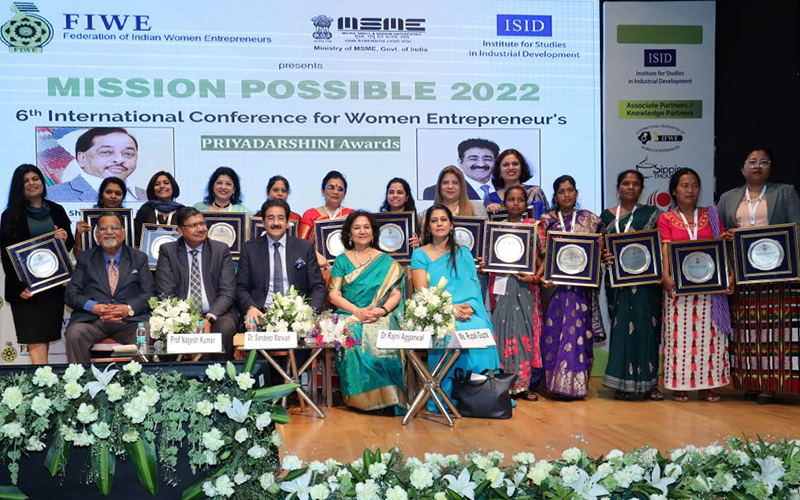
More than 200 women entrepreneurs from India and abroad participated in FIWE’s  6th International Conference of women entrepreneurs held recently in the capital from Mar 23rd-25th, 2022. The conference themed, “Mission Possible”, was organized in association with Ministry of MSME (Micro, Small & Medium Enterprises) in collaboration with ISID (Institute for Studies in Industrial Development) and included participation from countries like Bangladesh, Maldives, Nepal, Nigeria, Singapore and Sri Lanka.

Federation of Indian Women Entrepreneurs (FIWE), a National-level organization, founded in 1993, is one of India’s Premier Institution for Women thoroughly devoted towards Entrepreneurship Development in the country. With its branches in different states of India and 28 member associations spread throughout India, it  has been mentoring and empowering women entrepreneurs since past three decades. It has a  membership base of 15,000 individual members/professionals

MSME Joint Secretary Ateesh Kumar Singh inaugurated the Conference. Speaking at the occasion, Singh said, “One of the areas picked by the Conference is to dig into the current challenges being faced by the sector, another is inclusion. We would love to receive the outcome of the conference which would be of immense value in policy formulation, program implementation and future planning for the sector by the government.

“The pandemic has thrown new challenges for MSMEs, while the sector is already grappling with generic challenges. MSMEs need to chart new paths, new strategies and systems to put in place. The govt has been leading the recovery effort through a slew of programmes and schemes for the MSME sector”, he further added.

“Women entrepreneurs as well as employed women suffered economically more than their men counterparts due to the pandemic. A report by Bain and Company reveals that almost 73 per cent of women-run enterprises in India were negatively impacted by COVID-19; while the revenue of almost 20 per cent of women entrepreneurs dwindled to zero. However, they are more than willing to turn around the situation, the outcome of our conference just proves the same. They are confident of quick revival”, said Dr. Rajni Aggarwal, President, FIWE

“While we witnessed many women entrepreneurs shutting shops, there were also many new women entrepreneurs springing up during the pandemic, some who lost their jobs and others who left their jobs to turn entrepreneurs. Certain women led enterprises also witnessed an increase in revenue. As seen in EdelGive’s Landscape Study on Women Entrepreneurship that was spread across 13 states and had a sample size of 1,200 women, 19 per cent of the women surveyed cited an improvement in their fiscal gains”, said  Poonam K Malhotra, Vice President, FIWE.

Equipped with the resilience of spirit and adaptability, active support across the ecosystem is all that Women need to succeed as entrepreneurs. Keeping the above in mind, the three day conference was specifically designed to include expert sessions on various important aspects like access to finance through innovative technologies, leveraging e-commerce and digital marketing for business growth and chat sessions with successful entrepreneurs, etc.

The Conference also included one-to-one business meetings, factory visits, exhibition and Priyadarshini Award ceremony. FIWE felicitated over 30 women entrepreneurs with the coveted Priyadarshini awards in three different categories.  Women entrepreneurs were applauded for their exemplary achievements

“The Conference discussed how to expand access to finance through use of fintech and how to leverage technologies and start-ups. Also, how e-commerce and digital marketing can be game-changing tools for women entrepreneurs empowering them to conduct their businesses from their homes. The need for building capacity to harness the potential of digital marketing by women entrepreneurs was emphasized. In that context, UNESCAP South Asia Office was seen to be playing an important role. The India’s Government-e-marketplace (GEM) has helped 1.3 lakh women-led MSMEs sell their products directly to the Government. ISID will be taking the discussions forward in the context of its work on MSMEs and entrepreneurship”, said Prof Nagesh Kumar, Director, Institute for Studies in Industrial Development (ISID)

May 19, 2022 0 comment
0 FacebookTwitterPinterestEmail
Travel

Be water wise – The water story of Grape Country Eco Resort

by Team Conscious Carma May 18, 2022
written by Team Conscious Carma

By Freeda Maria, Consulting Editor – Sustainable Tourism, Conscious Carma, As I write this piece for a story on how a barren land, touched by rough summers can be replete with water, all year round. I am reminded of the quote from the famous Amol Palekars’ Hindi film, “Thoda sa Romani ho jaye” wherein ‘Barishkar’ played by Nana Patekar speaks about water (jal).  What better way to emulate the dialogues and the strong scenes that invokes the activist in ‘Barishkar’? He promises to bring rain in a drought affected area for 5000 Rupees. And while asked by a man, if it was real water, his stellar response, shook the audience and created history.  It seems rather impossible to get such a feat of a job done, but there seem shocking stories of how people who did it.
The water story of Grape County is nothing short of a similar effort.
As I sit by the “Deck” (The restaurant of Grape County Eco Resort) and look around I see yonder that it’s not a terrain to have water all-round the year. The summers can get very harsh, dry, and with heat waves hitting you hard.

Read on to know, of the many concerted efforts and the pains to get perennial waters to the confines of Grape County Eco Resort

The picture says it all. as we look around the landscape is different from the green patch of GC
Extracted from map carta on 13/04/2022, you will notice the large lake and the greenery of GC.
(source: https://mapcarta.com/Grape_County_2611173/Map)

Synergy has been created to fetch, conserve and preserve water. A well thought through system with months of research; gradient catchment from one pond to another allows filling up of all the ponds and lakes. The resort is almost tucked on slopes, with a stream skirting along one side of the boundary and roads winding through its undulating landscape. Focal points have been identified to allow digging of underground land for water to seep through and remain stored. Connecting mouths and the watershed systems are woven beautifully well, as seen the pictures if you look carefully.

The lake, the lifeline of Grape County Eco Resort

Water has a deep connection to the vision of our place, “Vasudaiva Kutumbhakam” “where all elements of nature co-exist peacefully and interact joyfully”, quotes the Chairman of Grape County Eco Resort, Kiran Chavan.

Its not always green, a lot of efforts go into making it one. the Director Mr Tejas (Left) at the site during construction days

He adds further, “The rivulet formed a natural source, that was vital for us, we had to keep it perennially water fed and that took care of our water system and our requirement.”

As I continue my conversation with the visionary Mr. Chavan, he relived every moment of their water story and explained vividly the process. “The landscape made it easy,” he says, “we planned to capture rainwater through four phases; in the hills, in the valleys, the plains and through planting of saplings/trees.”  My inquisitiveness rose, my ears grew more alert and the mind couldn’t wait to listen. Mr. Chavan mentioned, rainwater falling on the hills, was collected through the making of contours; which otherwise would ensure the water would run off.”  “The beauty of application of the technique running water must be made to walk, walking waters must be made to stand and the standing waters should be made to enter the sub soil and recharge the water table!” What an enamour.

Check dams were built to capture and store water in the valleys of this landscape and in the plains connecting ponds were dug, if one filled up the other would automatically fill to the brim. Though the distance of the ponds were not close to each other. Nature took course and acted the way it needed to. The most important of all the phases was the planting of 45,000 saplings/trees, the rainwater that falls on the leaves travels through the stem to reach the roots and remains there to reach the aquifers and recharge the water table.

And I pen down the thoughts of Mr. Tejas Chavan, Director and future torch bearer of the future of Grape County Eco Resort, “The most precious resource in today’s time is Water. It is our responsibility to conserve it for future generations. I wish everyone does take some small steps or big leaps towards this effort”. The Lakes at GC, the Bada Talaav (Big Lake), and two Chota Talaavs’ (Small lakes) in the plains store almost 21,000 crore litres of water! Where is the need to depend on outside sources?

Water is Vital, it gives life to a place. The fluid element has healing properties. I see and feel that vibration here at Grape County Eco Resort. As I finish writing this piece, I walk through this terrain to find the lakes full of water, the trees brightly coloured green and the birds singing and dancing to their tunes…a voila we are in the peak of summer.

Grape County is Replete with Water!
To know more, log on to www.grapecounty.in
The article is published in collaboration with Grape County.

May 18, 2022 0 comment
0 FacebookTwitterPinterestEmail
Sustainable Startup Stories

GOADOS – a 100% women-led ethical & sustainable fashion brand

by Team Conscious Carma May 16, 2022
written by Team Conscious Carma

For Kolkata born and raised Sanah Agrawal, her natural inclination had always been to create something that will preserve India’s varied crafts and culture. Thus, growing up in the beautiful state of West Bengal, which is home to incredible craftsmen and artisans, the zeal to bring these heritage textiles and techniques into contemporary wear began. And, given the current state of the fashion industry, which is dominated by polyester, nylon, and synthetic fabrics that are harmful to the environment, the idea of creating a sustainable and eco-friendly brand GOADOS.

She completed her MBA with a specialization in marketing, and after a series of roles as a digital marketing and branding specialist, she began working with Tata Trust as a behavior change consultant for Swachh Bharat Gramin and never returned to the corporate sector. After working in the development sector with Tata Trusts, Sanah founded GOADOS in 2021.

“GOADOS is an ethical & sustainable fashion brand where we use indigenous textiles and techniques to make contemporary clothing. All our products are 100% handwoven and plastic-free. We believe in making a sustainable lifestyle and wardrobe more accessible and available to all. From the very start have strived to give back, from using Handwoven Khadi to using Coconut Waste Fibres for our upcoming collection”, says Sanah, the young and dedicated designer.

Sustainability is the key Pillar

One of the key pillars of GOADOS is sustainability. The brand has a dual approach to being sustainable. First: it is an eco-friendly and ethical brand that can give a new silhouette, aesthetic, and market to the dying indigenous crafts, and provide an opportunity for artisans and craftsmen to continue their generation-old rich art. Their  first collection was made entirely of handwoven Khadi cotton. The materials were sourced, woven, dyed, and built locally.

The second is by using environmentally friendly techniques, fabrics, and closures. They are using Coconut Fibre waste and Banana Peel waste fabrics alongside the Handwoven Khadi Cotton in their upcoming collection. And do not use or incorporate elastic and synthetic blends in their products at all.

An all-women team

GOADOS is a 100% women-led company including all its vendors and employees. “This wasn’t intentional but has somehow just shaped itself this way, and we are very proud of that”.

Initial roadblocks

Starting something new is bound to bring challenges and they did and still do face our fair share of them, starting with – Starting a fashion brand on a small budget, Navigating the unfamiliar fashion industry, entering the competitive market of homegrown brands, figuring out a secure and swift way to connect with the artisans and follow deadlines, as most of their craftsmen reside in the rural parts of the state- establishing an effective communication was a challenge yet a priority. And the biggest challenge was to curate a solid design team, create clothing that did not use elastics or any synthetic material, and to still make it fit the body. These were to name a few of their initial roadblocks and struggles.

Future plan and the vision

With dedication and hard work, the brand aims to incorporate textiles and techniques from all over the country, not just from Bengal. “We want to make indigenous textiles a part of people’s daily lives and clothing and encourage our consumers of all ages and preferences to choose a sustainable brand over fast fashion. And we intend to use new and innovative textiles in our upcoming collection, which heavily incorporates food/crop waste textiles”.

Check out their collections at www.goados.co


May 16, 2022 0 comment
0 FacebookTwitterPinterestEmail
EconomyIndustry

Borosil Renewables to invest Rs 1,500 cr in two years to add capacity by 2.5 times

by Team Conscious Carma May 14, 2022
written by Team Conscious Carma

The company will also invest in its German plant to increase its capacity to 500 TPD from 300 TDP now by 2023
Solar panel glass manufacturer Borosil Renewables on Monday said it will invest Rs 1,500 over the next two years to expand its capacity by nearly 2.5 times and supply 15 GW of solar modules by FY25.

”We are doubling down on our investments because being the first and the only domestic manufacturer of solar panel glasses we see sky is the limit for demand. Accordingly, we are investing another Rs 1,500 crore to take our capacity to 1,550 TPD by FY24 and to 2,100 TPD by FY25 which will help us supply 15 GW of solar modules,” Pradeep Kheruka, executive chairman of Borosil Renewables, told PTI.

The company will also invest in its German plant to increase its capacity to 500 TPD (Tonnes Per Day) from 300 TDP now by 2023, he said. ”With these capacity augmentation, by FY25 we will be able to supply 2,600 TDP of solar panel glasses that can generate 15 GW of power and make us the largest non-Chinese-owned company in the world,” Kheruka said, adding all the domestic expansion will be in and around the company’s Baruch facility in Gujarat. The Borosil Group firm in late April acquired German company Interfloat Group — the largest solar glass manufacturer in Europe — for 55.5 million euro.

The deal involved an upfront cash payout of 30 million euro, and 22.5 million euro through issuing of fresh equity (by Borosli Universal) and 50 per cent sharing of earned profit from 2023, a top Borosil official said. ”While our ongoing expansion has been delayed by a few months due to the pandemic-induced supply disruptions and the resultant cost increase to Rs 680 crore from the initially-planned Rs 500 crore. Now the brownfield expansion in Baruch should be ready by September from the originally planned commissioning of July, and more than double our domestic capacity to 1,000 TPD (Tonnnes Per Day)”, Kheruka said.

Kheruka said that the company’s expansion is underway which ”will take our capacity to 1,000 TPD by September”. In the next expansion phases, he said, the company will reach 1,550 TPD capacity by the end of FY24, and 2,100 TPD by the end of FY25 and add another 500 TPD in Germany. ”This means that, we will have about 2,600 TPD manufacturing capacity by FY25, and we will be able to supply solar glass for more than 15 GW of solar modules while de-risking production from a single location,” Kheruka said. On the cost escalation since the pandemic and of late due to the Russia-Ukraine war, he said the cost of steel and labour has jumped 30-40 per cent. In the first nine months of FY22, Borosil earned Rs 502.3 crore in revenue, up from Rs 465.2 crore in FY21. Its exports in FY21 stood at 20 per cent or worth Rs 110 crore, which included Rs 70 crore from SEZ exports.

The company ships to Germany Poland, Canada, the US, Mexico, and the Middle East. About the company’s deal with German firm, Kheruka said the acquisition will further cement its position as the largest non-Chinese-owned solar glass producer in the world. The French major Saint Gobain was producing solar panel glasses till April 2021 but stopped since then due to Chinese imports, he said. On the Interfloat Group, Kheruka said the German firm is currently profitable and debt-free and had closed 2021 with a revenue of 60 million euro. He hopes to complete the deal over the next 18 weeks. The Interfloat Group consists of Glass Manufacturing Brandenburg, located at Tschernitz near Berlin, that operates a solar glass plant with 300 tonnes per day and Interfloat Corporation based in Ruggell in the Liechtenstein.

The group has also been manufacturing glass for solar thermal plants and greenhouse glass markets since 2010 and servicing customers in Europe for close to 40 years. Borosil Renewables, part of the six decades old Borosil Group, commissioned its first solar glass manufacturing facility at Baruch in Gujarat in January 2010 with 180 TPD capacity, which was then expanded to 450 TPD or 2.8 GW of solar modules. The Borosil Group was founded in 1962 in collaboration with Corning Glass of the US, comprises two publicly listed entities — Borosil and Borosil Renewables. Borosil manufactures around 600 consumer and laboratory glass products such as laboratory glassware, pharma packaging, microwavable kitchenware, and now cookwares tableware and solar glass at its Jaipur, Nashik, Pune and Tarapur plants. The Borosil counter shed over 5.6 percent to close at Rs 595.60 on the BSE which closed down 67 basis points over Friday close.

Source: PTI


May 14, 2022 0 comment
0 FacebookTwitterPinterestEmail
AccessoriesProducts

BOTTLETOP AND #TOGETHERBAND PARTNER WITH THE INDIGENOUS YAWANAWÁ COMMUNITY TO LAUNCH A YAWANAWÁ JEWELLERY COLLECTION IN SUPPORT OF THE AMAZON RAINFOREST AND INDIGENOUS RIGHTS

by Team Conscious Carma April 30, 2022
written by Team Conscious Carma

BOTTLETOP’s #TOGETHERBAND campaign is partnering with the Yawanawá, an Indigenous Brazilian community living in the heart of the Amazon rainforest, to create a range of unisex, vegan and zero-waste jewellery, hand-crafted from açaí seeds, the natural by-product from collecting the fruit to make juice for the community. 

The timeless collection of bracelets and necklaces acts as a powerful symbol from Indigenous Peoples, our true guardians of the natural world, to stand by them in support of climate action and protecting our forests. They make up less than 5% of the world’s population yet preserve 80% of the world’s remaining biodiversity.

The seeds are hand-painted, then woven together using fine Parley Ocean Plastic® thread. The bracelets have been created in natural, black, green, red, blue and a special edition multicolour featuring each of the 17 UN Sustainable Development Goal colours. The necklaces are available in two different lengths and have been created in natural, black and special edition multicolour. Each product also features a distinctive single seed cast from Humanium Metal, which is repurposed from decommissioned, illegal firearms, seized from the streets of Central America. In this way, the production of Humanium Metal helps to end armed violence and rebuild conflict-torn societies.

BOTTLETOP and #TOGETHERBAND have proudly committed to working with the Yawanawá community, having funded a permanent Rainforest Atelier and Workshop, with the aim of providing sustainable, long-term employment opportunities. The ongoing partnership will help protect the community’s cultural heritage and artisan skills in creating sustainable products made from materials that are natural to the forest. It will also provide a source of independent income for the Yawanawá people and allow them to continue with their traditional way of life. 

Right now, Indigenous Peoples in the Amazon are fighting a series of legislation that aims to throw Indigenous lands open to exploitation. Empowering Indigenous communities to protect their natural ecosystems is fundamental for us all in the fight against climate change.

‘Our precious forest is under great threat. It is burning. We protect the forest and she protects us. We live in harmony. The forest provides us with medicine. With shelter. With sacred knowledge. And with a livelihood. A healthy forest is vital not just for us. But for the healthy future of all humankind. For our children and their children. The açaí fruit is very special to our people. We are partnering with BOTTLETOP to create the Yawanawá collection as a symbol of hope for the future of the forest and our community. With this jewellery, we can preserve the cultural heritage and craft of our community. And provide a livelihood for our people. Help us protect mother nature. Help us protect our home.’ Tashka Yawanawá, Chief of the Yawanawá

‘Indigenous communities have lived in harmony with the planet for centuries. They are nature’s guardians and yet continually face issues from outsiders who threaten their very existence. I was privileged enough to spend time with the Yawanawá in Brazil and saw first-hand how they care for and protect the rainforest. This partnership will not only enable the community to thrive and achieve their goals but will allow them to protect the lungs of the planet.’ Cameron Saul, Co-Founder of BOTTLETOP and Co-Creator of #TOGETHERBAND

The jewellery collection starts at £25 and is available from www.togetherband.org By supporting the Yawanawá community and helping them achieve their goals, BOTTLETOP and #TOGETHERBAND hope to raise awareness of the struggles Indigenous communities face and provide a long-term sustainable livelihood.

ABOUT BOTTLETOP

BOTTLETOP is a luxury, sustainable accessories brand that began in 2002 through a handbag design collaboration with iconic British fashion house Mulberry, supporting artisans in Africa and local health education projects. With the BOTTLETOP atelier in Brazil and workshops in Nepal, the brand continues to provide skills and livelihoods for artisans in disadvantaged parts of the world.

BOTTLETOP is also a technical innovator; working to develop and apply the most innovative waste and sustainably sourced materials to its collection, including upcycled metal, marine plastic, Humanium metal (recycled decommissioned firearms), Zero Deforestation Leather and wild rubber. In November 2017 BOTTLETOP opened on Regent Street with the first ever 3D printed store created from waste plastic.

ABOUT #TOGETHERBAND

The #TOGETHERBAND campaign was launched on Earth Day 2019 by sustainable accessories brand BOTTLETOP in partnership with the UN Foundation. It uses creativity and culture to raise public awareness of the UN Sustainable Development Goals and inspire action to achieve them. The campaign has achieved a reach of over 7 billion, bringing together active citizens connected through sustainable fashion, contemporary art, music and documentary film. Ambassadors range from David Beckham and Naomi Campbell, to Halima Aden, Lewis Hamilton and Jameela Jamil. Every #TOGETHERBAND is made from reclaimed Parley Ocean Plastic®, decommissioned firearm metal and is handcrafted by artisans in Nepal, creating skills and livelihoods for local women. 

ABOUT THE YAWANAWÁ COMMUNITY

The Yawanawá, known as the people of the Wild Boar, are an Indigenous community from the State of Acre, Brazil. They live in harmony with their surroundings due to their centuries-old observation and interaction with nature, subsistence economy and spiritual connection to lands and territories. They ensure the balance of the Amazon rainforest, so it may continue to provide water, fertile soil, food, shelter and medicine. 

For hundreds of years they have survived outsiders stealing their land and resources, being enslaved, and having their traditional customs and livelihoods taken away from them. Their ancestral land was finally delineated in the 1980s by the Brazilian government which legally marked out their territory. Their threats, however, are far from over with the introduction of bills PL 490/2007 and PL191/2020 will take away their land rights and leave the Amazon open to being burnt down and mined.

April 30, 2022 0 comment
0 FacebookTwitterPinterestEmail
Environment

Sand is the world’s second most exploited resource and must be wisely managed, says UNEP report

by Team Conscious Carma April 27, 2022
written by Team Conscious Carma
  • Strategic recognition for sand and actions across sectors needed, report urges
  • Sand is the world’s second most exploited resource and must be wisely managed
  • Legal changes, recycled building material, crushed rock and ‘ore-sand’ from mining, among solutions.  

50 billion tons: enough to build a wall 27 metres wide and 27 metres high around planet Earth. This is the volume of sand and gravel used each year, making it the second most used resource worldwide after water. Given our dependency on it, sand must be recognised as a strategic resource and its extraction and use needs to be rethought, finds a new report by the United Nations Environment Programme (UNEP). The UN Environment Programme is the leading global voice on the environment. It provides leadership and encourages partnership in caring for the environment by inspiring, informing and enabling nations and peoples to improve their quality of life without compromising that of future generations. 

The report, Sand and Sustainability: 10 strategic recommendations to avert a crisis, released on Apr 26th, 2022 by UNEP’s GRID-Geneva team, provides the necessary guidance gathered from world experts to switch to improved practices for the resource’s extraction and management.

Extracting sand where it plays an active role, such as rivers, and coastal or marine ecosystems, can lead to erosion, salination of aquifers, loss of protection against storm surges and impacts on biodiversity, which pose a threat to livelihoods through, among other things, water supply, food production, fisheries, or to the tourism industry. 

According to the report’s authors, sand must be recognised as a strategic resource, not only as a material for construction, but also for its multiple roles in the environment. They stress that governments, industries and consumers should price sand in a way that recognises its true social and environmental value. For example, keeping sand on coasts may be the most cost-effective strategy for adapting to climate change due to how it protects against storm surges and impacts from sea level rise – such services should be factored into its value. 

An international standard on how sand is extracted from the marine environment should also be developed, the report proposes. This could bring about dramatic improvements as most marine dredging is done through public tenders open to international companies. Meanwhile, the report recommends that the extraction of sand from beaches be banned due to its importance for coastal resilience, the environment and the economy.

“To achieve sustainable development, we need to drastically change the way we produce, build and consume products, infrastructures and services. Our sand resources are not infinite, and we need to use them wisely. If we can get a grip on how to manage the most extracted solid material in the world, we can avert a crisis and move toward a circular economy,” said Pascal Peduzzi, Director of GRID-Geneva at UNEP and overall programme coordinator for this report.

Infrastructure, homes, food and nature at stake 

Sand is critical to economic development, needed to produce concrete and build vital infrastructure ranging from homes and roads to hospitals. By providing habitats and breeding grounds for diverse flora and fauna, sand also plays a vital function in supporting biodiversity, including marine plants that act as carbon sinks or filter water. The resource will be crucial to achieving the Sustainable Development Goals and tackling the triple planetary crisis of climate change, pollution and biodiversity loss. However, it is being used faster than it can be naturally replenished, so its responsible management is crucial.

A circular economy is within reach 

The authors note that solutions exist for moving towards a circular economy for sand, including  banning the landfilling of mineral waste and encouraging sand to be reused in public procurement contracts are among the policy measures cited. Crushed rock or recycled construction and demolition material, as well as ‘ore-sand’ from mine tailings are among the viable alternatives to sand that should also be incentivised, the report details.

They add that new institutional and legal structures are needed for sand to be more effectively governed and best practices shared and implemented. Sand resources must furthermore be mapped, monitored and reported on, the report recommends. Meanwhile, all stakeholders must be involved in decisions related to the management of sand to allow for place-based approaches and avoid one-size-fits-all solutions, the paper stresses. 

The report follows a resolution on Mineral resource governance adopted at the fourth United Nations Environment Assembly (UNEA) that called for actions on sustainable sand management. This mandate was confirmed at UNEA-5 in 2022 in the new resolution titled Environmental aspects of minerals and metals management, adopted by all member states.  

April 27, 2022 0 comment
0 FacebookTwitterPinterestEmail
CommunityInitiatives

Annual Farmers and Flea Market, Nashik

by Team Conscious Carma April 26, 2022
written by Team Conscious Carma

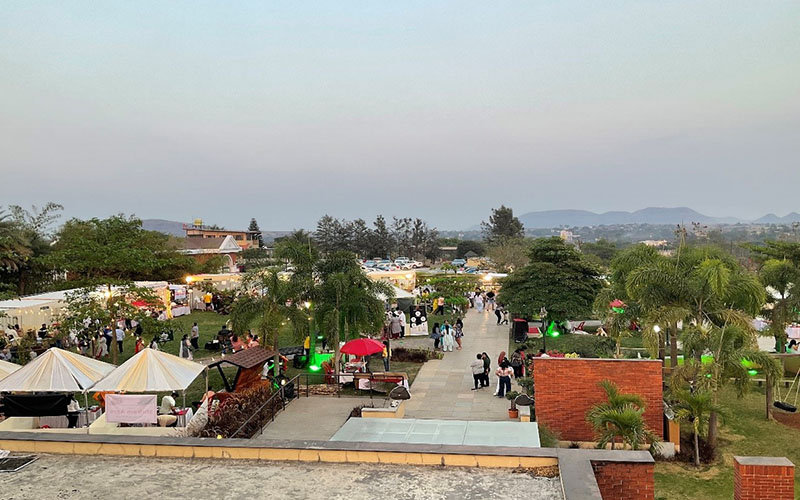
It was raining “Organic” at the Grape County’s precincts –By Dr. Freeda Maria

There is no greater joy than seeing your hard work, being recognized and the fruits of your labor being appreciated. There is no greater joy for a farmer who has toiled on his fields, fighting the harsh weathers with a grit to see his blooms. There is no greater joy, than to finally see his blooms and produce, laid out for people to buy and consume. The joy gets doubled, when he finds his produce displayed in a place which is frequented by all kinds of people, local and from outside, for its green practices…

A 20-acre property fanning out within the 250-acre sprawling biodiverse rich area. A 2000-acre reserve forestland just a stone’s throw away!

Welcome to the annual Flea and Farmer’s Market conceptualized by Green Spaces’, Grape County Resort, Nashik (https://www.grapecounty.in/). And this is the fourth time in a row for four years that they have hosted the event, in their resort premise. Carefully curated and crafted: for the best producers around this beautiful countryside, come together to showcase their labor of love.

The Valley as we call it, Nasik lies on the western edge of the Deccan Plateau, an ancient volcanic formation. Flowing through these open fertile lands are the Girna and the Godavari rivers. Being a grape country, half of our country’s vineyards and wineries are located here. A whopping 90 percent of all wine produced in our country comes from these Valleys. The strategic location of this place the bounty that is water and fertile land present, farmers have seen some good crops and are constantly thinking of employing good and sustainable practices in farming. They pride themselves of growing organic vegetables with zero use of chemical pesticides and insecticides.

What stands apart with this Farmers market and Flea market is that both have been combined. The flea market which is essentially a large open-air market where goods that are second hand, home-made crafts or merchandise are spread out for sales. Whereas Farmers markets are more retail markets that allows people to sell homegrown fruits and vegetables directly from the farmer to the customer. These markets are not limited to fruits and vegetables and can also have meat, live animals, baked goods, dairy products, poultry, and various other food items.

The Nashik Valley is a Sugarcane, Onions, Grapes and Pomegranate land. Every aim of this Market is to promote the indigenous farmers, who have marginalised lands. The stalls are given free of cost for three days with an aim to add it as an annual activity.

The Concept of having a Framers’ market and Flea market at GC (Grape County) was to give an opportunity to both kinds. The stalls at GC, reflect the sheer variety and innovation in their products and blooms. There even was an organic sugarcane juice maker bidding his business of zero maintenance and pure freshly pressed juice with the work his hands! The Machine runs with no motor or battery, the turning of the two wheels is the magic behind that refreshing glass of pure pleasure!

I chanced upon a brick slab on which few loosely packed products were placed and sitting by it this very elegant and smiling lady… neatly dressed in her traditional attire and going about her day, with her weary eyes looking for customers. Her offer was that of packets of homemade jaggery powder, from sugarcane grown on her fields, ragi powder and chakki (mill stone)pressed green gram, unpolished and broken down and unpolished raw rice.

One individual caught my immediate attention as I walked past, throwing glances at the many counters that had an array of things displayed. Shrushti organics grows its products using “Jeevamruth” to control pests replacing the chemical ones.  This is the traditional Indian  bio pesticide and organic manure that is prepared combining and fermenting cow dung, cow urine, jaggery, pulses flour, soil and water. His specialties include Rice, Sugarcane and Jaggery, processed products like Oils of Mustard, groundnut, sunflower, sesame and Desi Ghee.

A special mention goes out to the counter of Viveda Wellness Village, a unique concept of self-care and healing, this wellness centre has become a place of organic and wellness products. The centre uses traditional knowledge and local ingredients to make products like face packs, healing oils, bathing, and self-care products. (https://vivedawellness.com/). The counter of Grape County had its fruits, juices and other delectables, from farm to the counter, fresh and organic.

Our Flea Market was abuzz with Colours, and with creations from Local Women Entrepreneurs. Paintings, natural stones, Homemade soaps and cosmetics, I was spoilt for choices! Here are some pictures ….

April 26, 2022 0 comment
0 FacebookTwitterPinterestEmail
BeautyProducts

Arbū, the new generation of clean beauty

by Team Conscious Carma April 25, 2022
written by Team Conscious Carma

“Beauty is not only about how you look but how you live according to your moral values as a daily practice. Beauty is also in the small steps leading to environmental conscientiousness. arbū (arbū comes from the Latin root for tree), is a manifestation of the innate knowledge of how to always be in tune with the true needs of the mind and body.” – Violeta Malinova

Founded by Violeta Malinova, arbū was thoughtfully created not only as a unique skincare system that uses pure organics and modern science but as a philosophical concept. A leading innovator within the clean beauty market, arbū is a skincare brand which uses natural ingredients to guarantee high performance and visible results.

Violeta has always been drawn to living in tune with nature. An accomplished synchronized swimmer in her youth, she observed a regimen of wholesome food and natural remedies. And later, as a television producer and anchor, she instilled in her audience appreciation for sustainable living.

Extensive research was carried out to ensure the best practices and ingredients were being used throughout the range. Malinova consulted with leading dermatologists to ensure each product was created based on firm scientific evidence. And so, the need to replace man-made chemistry in beauty products with pure natural ingredients was born. All chemicals that are typically used in skincare products were replaced with powerful high quality natural ingredients.

arbū’s signature ingredient is Rosa Damascena Oil. The oil is extracted by water stream distillation and each Bulgarian Rose is meticulously hand-picked. The Rosa Damanscena Oil has the richest and most complex aroma, which makes it popular and sought after in the cosmetics industry. Furthermore. It has uplifting and relaxing properties for the nervous system, has the ability to calm and harmonize.

The collection also includes the Rejuvenating cream, Time Shift, a glamourous formula infused with Diamond Dust and Rose Essential Oils designed to restore the youthful appearance of the skin. Eye creams, rich moisturisers, and lip balms, including products for men and children complete the collection offering an extensive range for the whole family.

“We are the new generation of clean beauty, creating precisely targeted natural skincare that delivers results”, adds Violeta who is supported by her husband, Vlado, in this venture.

“Clean food for the mind and the body, along with care for the environment, are essential human virtues,” Violeta shares. “To Vlado and me beauty is not just how you look, but how you live in accordance with your moral values. arbū embodies this balance. We created arbū in our search of harmony with the natural world that surrounds us.”

Products range from £11- £170

Available to buy online at: https://arbucosmetics.com/

April 25, 2022 0 comment
0 FacebookTwitterPinterestEmail
BeautyProducts

Kiehl’s has planned a future with zero waste

by Team Conscious Carma April 23, 2022
written by Team Conscious Carma

As global citizens it is a responsibility to reduce plastic waste and help in curbing the global environmental crisis on plastic. In the beauty industry, 153 billion units of plastic is products and 40% of that is single use plastic that would end up at a landfill. In a movement to stop use of single use plastic there has been a rise of eco conscious consumers who are giving a boost to products that support sustainable beauty. Hence Kiehl’s as a brand has planned a future with zero waste.

Kiehl’s India has devised a programme to get consumers to kickstart their sustainability journey. As part of the Recycle & Be Rewarded Programme, all Kiehl’s stores have a recycle box where they can take their empty product containers for recycling. They are rewarded for taking this step towards a better future, and earn points that can later be accumulated and redeemed for Kiehl’s products.

In this journey Kiehl’s plans to Refill today, Reduce the waste by tomorrow and in the future rethink on making future more sustainable. This requires a paradigm shift –as the first step towards zero-waste vision, looking at ways to reduce waste, especially from a packaging perspective. Kiehl’s India products are also manufactured sustainably. The formulas are made with 98% renewable ingredients, 80% post recycled material and use renewable electricity.

Since its inception in 2020, the Co2 emissions have been reduced by 82%, water consumption has been reduced by 21% and waste generation has been drastically reduced by 36%. The Recycle & Be Rewarded Programme has increasingly gained popularity and brings in a growing number of consumers to the store to participate in the initiative.  

Since 1851, Kiehl’s has always strived for better – from responsible formulations, packaging & manufacturing to supporting communities and helping to reduce environmental impact. Kiehl’s is proud to continue its journey towards a Future Made Better™ with its first foray into refillable beauty – Kiehl’s Pouch Refillables. Refill, reuse & reduce single-use plastic waste in your daily routine with rich, gentle & refreshing body care. The Creme De Corps is a sumptuous all-over body moisturizer enriched with cocoa butter and squalene that helps visibly restore dull and dry skin into radiant, soft and supple skin.

Simple yet mindful steps taken by a beauty brand such as Kiehl’s is helping transform consumers as well to join hands and ensure a better. To innovate and execute such initiatives that promote the greater good is key to cleaning up our act as a society and becoming a powerful force against the environmental crisis. The Earth is our home and we must work tirelessly to sustain it in its entirety for the generations to come.  

April 23, 2022 0 comment
0 FacebookTwitterPinterestEmail
Newer Posts
Older Posts

Recent Posts

  • India–UK Free Trade Agreement Opens Global Growth Opportunities for 3R ZeroWaste’s Circular Economy Solutions
  • Plastic Free July: Why True Sustainability Goes Beyond Swapping Plastic
  • From the Editor’s Desk: When Greed Takes Over Conscience
  • Beyond the Pose: Why Your Yoga Mat Needs a Sustainable Upgrade
  • Best Sustainable Father’s Day Gifts: Conscious Carma’s Exclusive Picks

Recent Comments

  • Team Conscious Carma on Label Shivika Agarwal – where craft meets sustainability
  • Cocomeister.jp on Label Shivika Agarwal – where craft meets sustainability
  • Team Conscious Carma on Equitable City Designs To Fight Climate Change
  • UN report calls for repurposing of USD 470 billion of agricultural support that distorts prices and steer us away from environment and social goals | Consciouscarma on UNEP & ICMR collaborate to boost understanding of environmental dimensions of antimicrobial resistance in India
  • Wild Earth : Natural body products | Consciouscarma on Sat.Suma : the true essence of flowers in your everyday skincare needs

Keep in touch

Facebook Twitter Instagram Youtube

Recent Posts

  • India–UK Free Trade Agreement Opens Global Growth Opportunities for 3R ZeroWaste’s Circular Economy Solutions

  • Plastic Free July: Why True Sustainability Goes Beyond Swapping Plastic

  • From the Editor’s Desk: When Greed Takes Over Conscience

  • Beyond the Pose: Why Your Yoga Mat Needs a Sustainable Upgrade

  • Best Sustainable Father’s Day Gifts: Conscious Carma’s Exclusive Picks

  • How Sacred Sound is Reshaping the Future of Holistic Health?

Categories

  • Community (38)
    • Campaigns (3)
  • CSR (4)
  • Economy (82)
    • Global (24)
    • Industry (42)
    • Innovations (4)
    • National (2)
  • Environment (48)
  • Expert Corner (48)
    • Authored Articles (47)
  • Featured (5)
    • Partners (1)
  • Global News (2)
  • Initiatives (31)
    • CSR (3)
    • Events (6)
  • Inspiration (22)
  • Lifestyle (9)
  • Media Coverage (6)
  • Press Releases (4,358)
  • Products (126)
    • Accessories (27)
    • Apparel (32)
    • Beauty (26)
    • Food (4)
    • Gifting (3)
    • Home Décor (15)
    • Skin-Care (14)
  • Reports (3)
  • Spirituality (10)
  • Sustainability (49)
  • Sustainable Startup Stories (28)
  • Travel (19)
  • Uncategorized (2)
  • Wellness (33)
    • Home Cleaners (3)

Archives

  • August 2026 (1)
  • July 2026 (1)
  • June 2026 (6)
  • October 2024 (1)
  • September 2024 (1)
  • July 2024 (2)
  • June 2024 (2)
  • May 2024 (1)
  • November 2023 (330)
  • October 2023 (554)
  • September 2023 (631)
  • August 2023 (718)
  • July 2023 (723)
  • June 2023 (710)
  • May 2023 (608)
  • April 2023 (114)
  • March 2023 (7)
  • February 2023 (3)
  • January 2023 (11)
  • December 2022 (18)
  • November 2022 (1)
  • August 2022 (6)
  • July 2022 (8)
  • June 2022 (24)
  • May 2022 (11)
  • April 2022 (19)
  • March 2022 (11)
  • February 2022 (11)
  • January 2022 (14)
  • December 2021 (10)
  • November 2021 (4)
  • October 2021 (14)
  • September 2021 (22)
  • August 2021 (12)
  • July 2021 (17)
  • June 2021 (17)
  • May 2021 (16)
  • April 2021 (22)
  • March 2021 (33)
  • February 2021 (16)
  • January 2021 (22)
  • December 2020 (10)
  • Facebook
  • Twitter
  • Instagram
  • Pinterest
  • Linkedin
  • Youtube

@2020 - All Right Reserved. Designed and Developed by Bizopser Technologies

Consciouscarma
  • Home
  • About Us
  • Products
  • Community
    • Campaigns
    • Inspiration
    • Initiatives
    • CSR
  • Features
    • Sustainable Startup Stories
    • Travel
    • Lifestyle
    • Partners
  • Economy
    • Industry
    • Innovations
    • National
    • Global
  • Environment
  • Expert Corner
    • Authored Articles
    • Reports
  • Magazine
  • Contact