Consciouscarma
  • Home
  • About Us
  • Products
  • Community
    • Campaigns
    • Inspiration
    • Initiatives
    • CSR
  • Features
    • Sustainable Startup Stories
    • Travel
    • Lifestyle
    • Partners
  • Economy
    • Industry
    • Innovations
    • National
    • Global
  • Environment
  • Expert Corner
    • Authored Articles
    • Reports
  • Magazine
  • Contact
Category:

Global

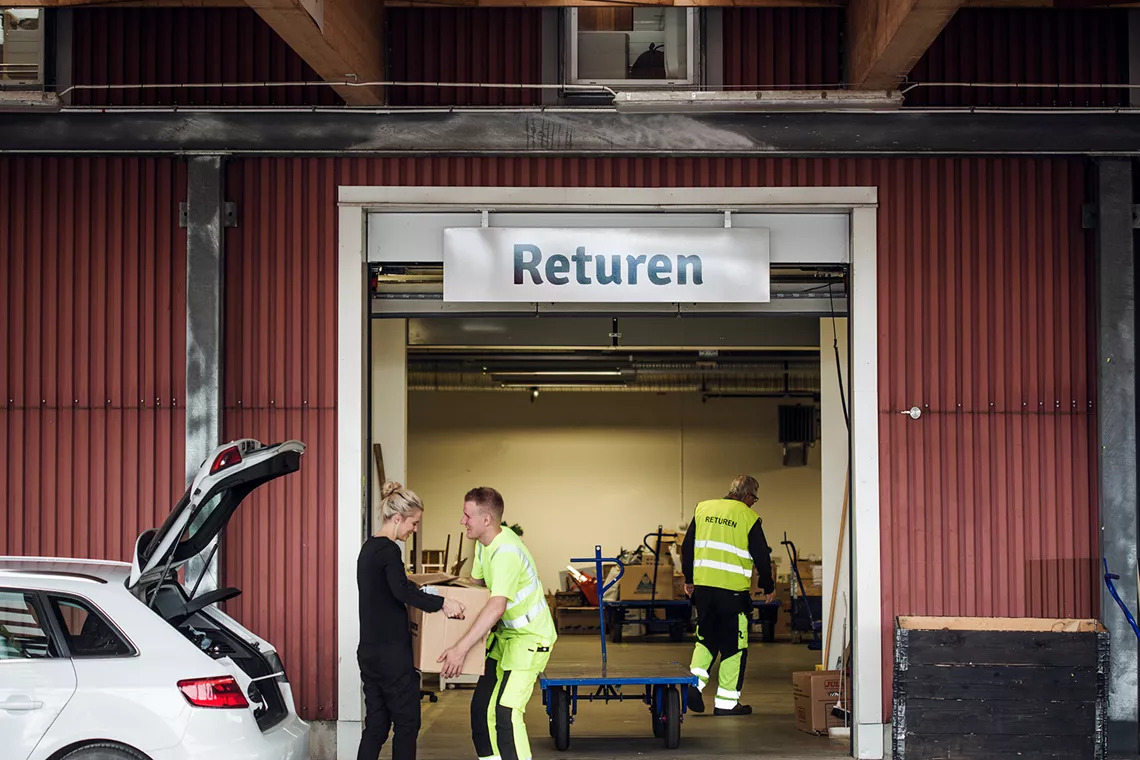
ReTuna shopping mall
EconomyGlobal

ReTuna – the World’s first recycling Mall in Sweden

by Team Conscious Carma February 23, 2021
written by Team Conscious Carma

ReTuna Återbruksgalleria is the world’s first recycling mall, revolutionizing shopping in a climate-smart way. Old items are given new life through repair and upcycling. Everything sold is recycled or reused or has been organically or sustainably produced. 

ReTuna was set up by Eskilstuna’s local government and implemented by its subsidiary Eskilstuna Energi och Miljö (EEM) in 2015. The mall has grown into an international success story and reached SEK 11.7 million in sales for pre-owned products in 2018. Moreover, the mall has generated 50 new jobs in a city that has been struggling with high unemployment rates and a drain of young people.

The mall is called ReTuna. “Tuna” because that’s the nickname for the city where it is based – Eskilstuna, an hour’s train journey west of Stockholm – and “Re” because the goods on sale have been recycled or repurposed.

The case of ReTuna is a strong example of a city acting as a circular catalyst. The strength of the recycling mall is that it makes sustainable shopping much easier and less time-consuming. Second-hand stores exist everywhere in the world, but ReTuna enables you to do all your circular shopping in one place. In addition, unlike many traditional second-hand shops, the stores in ReTuna have a diverse range of products, such as sportswear, furniture, fashion items, or toys. 

In addition, ReTuna has been successful in developing a self-sustaining system at local level. All goods that are being sold in the stores as well as the staff members of ReTuna are sourced within the region. The mall is located next to Eskilstuna’s recycling centre where citizens come approximately once a month to discard their used products. The initial selection of what is usable and what is not is performed at the centre by the staff from AMA (the resource unit of the municipality for Activity, Motivation and Work). Afterwards, the goods are transported to the mall where they are sorted and distributed to the shops by the mall’s staff members. Many shops have a workshop corner where they renovate or upgrade the used items before sale.

The success story of ReTuna provides some important lessons, which should be taken into account in similar future projects or initiatives:

  • It is important to keep in mind that consumers are influenced by the shopping environment and the aesthetics of pre-owned products.
  • It is important to brand secondary products and to put efforts in how both the store and its products look.
  • There is a need for educating citizens on the value of waste materials and products.
  • A city government plays a crucial role in the initiation and facilitation of circular initiatives. In addition to providing financial support, a city government should take action to lower implementation barriers, such as legal barriers around waste transportation.
  • ReTuna shows how re-using, repairing and upcycling of discarded items can be organised effectively to attract consumers at a local level and simultaneously spur local business development and generate new jobs.

Source: https://www.circularcityfundingguide.eu

February 23, 2021 0 comment
0 FacebookTwitterPinterestEmail
PM moves to declare climate emergency
EconomyGlobal

New Zealand declares climate emergency, promises carbon-neutral Govt by 2025

by Team Conscious Carma January 31, 2021
written by Team Conscious Carma

New Zealand promised its public sector would become carbon neutral by 2025 as it declared a climate emergency on Dec 2, 2020, a symbolic move that critics said needed to be backed with greater actions to reduce emissions.

Prime Minister Jacinda Ardern said the climate emergency declaration was based on the Intergovernmental Panel on Climate Change’s findings that to avoid more than 1.5 degree Celsius rise in global warming, emissions would need to fall by around 45% from 2010 levels by 2023 and reach zero by around 2050.

Video Source: The Guardian

“This declaration is an acknowledgement of the next generation. An acknowledgement of the burden that they will carry if we do not get this right and do not take action now,” Ardern told lawmakers in parliament.

New Zealand joins 32 other countries including Japan, Canada, France and Britain that have declared a climate emergency.

Ardern, who returned to power in October delivering the biggest election victory for her centre-left Labour Party in half a century, has called climate change the “nuclear-free moment of our generation”.

In her first term, she passed a Zero Carbon Bill, which sets the framework for net-zero emissions by 2050 with an exemption for farming, and banned new offshore oil and gas exploration.

Nearly half of New Zealand’s greenhouse gas emissions come from agriculture, mainly methane.

The programme will be backed by a NZ$200 million ($141 million) fund to finance replacing coal boilers and help purchase electric or hybrid vehicles. 

Greenpeace welcomed the declaration but challenged the government to follow through with policy and action.

“For Jacinda Ardern’s climate emergency declaration to be more than just words, that means tackling New Zealand’s largest source of climate pollution: agriculture,” said Greenpeace agriculture and climate campaigner Kate Simcock.

Source: Reuters

To checkout more Global news, Click Here

Checkout other Latest posts from Conscious Carma

  • India–UK Free Trade Agreement Opens Global Growth Opportunities for 3R ZeroWaste’s Circular Economy Solutions
  • Plastic Free July: Why True Sustainability Goes Beyond Swapping Plastic
  • From the Editor’s Desk: When Greed Takes Over Conscience
  • Beyond the Pose: Why Your Yoga Mat Needs a Sustainable Upgrade
  • Best Sustainable Father’s Day Gifts: Conscious Carma’s Exclusive Picks
January 31, 2021 0 comment
0 FacebookTwitterPinterestEmail
oil industry machines
EconomyGlobal

Denmark set to end all new oil and gas exploration

by Team Conscious Carma January 12, 2021
written by Team Conscious Carma

Denmark will end all new oil and gas exploration in the North Sea, as part of a wider plan to stop extracting fossil fuels by 2050.

Its government also agreed to cancel its latest licensing round, which gives firms permission to search for and produce oil and gas.

“We are now putting a final end to the fossil era,” said Denmark’s climate minister Dan Jorgensen. “We’re the European Union’s biggest oil producer and this decision will therefore resonate around the world. We want to be climate neutral in 2050. And if we are to have any credibility in that, then this is a necessary decision,” he added. 

Greenpeace Denmark described the announcement as a “watershed moment”.

men beside an oil industry machine

Denmark is currently the largest oil producer in the European Union. Although it produces much less than non-EU members Norway or the UK.

It pumped 103,000 barrels a day in 2019, according to an analysis by UK oil giant BP

There are 55 drilling platforms on its territory, across 20 oil and gas fields.

The decision will cost Denmark about 13 billion kroner (£1.1bn). According to estimates by the energy ministry, it said this amount was subject to substantial uncertainty.

Denmark is regarded as having one of the world’s most ambitious climate targets. It aims to reduce greenhouse gas emissions from 1990 levels by 70% by 2030, as well as reach net zero emissions by 2050 – both targets which have been passed into law.

men working in oil industry
IMAGE COPYRIGHTGETTY IMAGES

Governments around the world have also committed to taking further action on climate change as part of a wider plan to meet the goals of the Paris Agreement.

The UK will aim to cut its carbon emissions by at least 68% of what they were in 1990 by the end of 2030, Prime Minister Boris Johnson announced. 

Scientists have said, however, that even if the UK and other nations keep their promises on cutting emissions there was no guarantee the world would avoid serious global warming.

Source: www.bbc.com

Checkout our other Latest posts from below:

  • India–UK Free Trade Agreement Opens Global Growth Opportunities for 3R ZeroWaste’s Circular Economy Solutions
  • Plastic Free July: Why True Sustainability Goes Beyond Swapping Plastic
  • From the Editor’s Desk: When Greed Takes Over Conscience
  • Beyond the Pose: Why Your Yoga Mat Needs a Sustainable Upgrade
  • Best Sustainable Father’s Day Gifts: Conscious Carma’s Exclusive Picks

January 12, 2021 0 comment
0 FacebookTwitterPinterestEmail
EconomyGlobal

BHUTAN: World’s only Carbon Negative Country

by Team Conscious Carma December 16, 2020
written by Team Conscious Carma

Bhutan has built Sustainability into
its National Identity

Bhutan, a country spanning approximately 14,800 square miles, is situated between India and China, which are major producers of carbon dioxide and yet, it has managed to achieve complete carbon neutrality in the past years. The World needs to learn from this small country which has its country’s mission to put happiness before economic growth and set a world standard for environmental preservation.

With a small population of approximately 8,00,000 people, Bhutan is believed to be one of the greenest countries in the world, removing nearly three times as much CO2 as it produces. Bhutan provides a tangible example of a country seeking to balance care for the environment, preservation of culture and economic growth. Promising to remain carbon neutral into the future is something all nations can strive for “Our enlightened monarchs have worked tirelessly to develop our country, balancing economic growth carefully with social development,environmental sustainability, and cultural preservation, all within the framework of good governance,” Tshering Tobgay, Bhutan’s former Prime Minister said at a 2016 TED talk.

In fact, the Country developed its signature Gross National Happiness index based on four pillars: sustainable development, environmental protection, cultural preservation, and good governance. In a global society obsessed with economic measures, this model provides a revolutionary and holistic understanding of development. It recognises the importance of economic growth but asserts that it must not undermine the nation’s distinct culture or pristine environment.

IImage Credits: Karun Giri (Unsplash)

NOTHING AT THE EXPENSE OF ENVIRONMENT

The nation is not without its problems of course. But the country is no doubt unique in a world that has too often valued economic growth above all else, often at the expense of the environment. On the other hand, Bhutanese are less focused on materialistic things and appreciate nature to a greater extent.

Considering this feat, one is left to ask themselves how it comes that only Bhutan, this small rather undeveloped nation, could achieve something that every first world nation will not be able to achieve in the near future. Part of the answer lies in the question. Bhutan, as mentioned, is not very developed, most people work in agriculture or forestry. Practices such as protecting forests, planting trees in abundance, using electric vehicles and renewable hydro energy have made this possible for a small nation like Bhutan. As an example, the first paved road in Bhutan was only build in the 1960’s, which results in very few people having cars. The cars that are around are mainly electric, as the Bhutanese government has closed a deal with Nissan.

Clean Bhutan, Green Bhutan

Bhutan is the only country in the world that by its own constitution protects its forests. Environmental protection is enshrined in their constitution. Not only have they outlawed export logging, but have also an article in their constitution that states that the Himalayan nation needs to have at least 60% of its surface area forested. Currently, the nation has over 70% of the total surface area wooded, including the mountainous terrain on which trees can hardly grow. Another factor that helps to keep the level of forestation and thus the level of carbon dioxide absorption at an elevated level is the fact that as a celebration, for example at the birth of their Monarch’s child, Bhutanese people plant trees. At the aforementioned date, for example, over 100,000 trees were planted as each household planted at least one. 

Bhutan utilises its extensive river resources to generate large amounts of renewable hydro energy, propelling the nation to carbon negative status. Almost all the country’s electricity comes from hydropower. In fact, it produces so much hydroelectricity that it sells it to neighbouring countries, which Bhutan claims offsets another 4.4 million tons of annual CO2 emissions. And Bhutan says that by 2025, increased hydroelectricity exports will let the country offset up to 22.4 million tons of CO2 per year in the region.

The Government’s commitment to environmental protection is further evident in their provision of free electricity to rural farmers, investment in sustainable transport and national programs Clean Bhutan and Green Bhutan.

IImage Credits: Pema Gyamtsho (Unsplash)

“Bhutan is on a “green and low-carbon development pathway” with government initiatives to make the country’s agriculture 100% organic by 2020 and waste-free by 2030. The country is also looking at increasing its share of renewables while decreasing its reliance on hydropower and electricity imports in the winter. So, it’s currently exploring wind, biogas and solar”, Juergen Nagler, of the UN Development Program in Bhutan.

Bhutan even limits the number of visitors entering the country with a daily fee of $250 per person to ensure the environment is not spoiled by mass tourism. The fee covers lodging in 3-star accommodations, all meals, a licensed tour guide, camping and trekking equipment, domestic travel and taxes and fees. A daily sustainable fee of $65 is also included in the package. This goes towards funding education, healthcare and poverty alleviation, along with the building of infrastructure to accommodate growing tourism.

“The health facilities in Bhutan are free and education up to high school is also free. For those who advance, the education is free until the college degree,” a representative of the Bhutan Tourism Council says. “Bhutan (could have said) ‘we want to be more connected to our neighbours, we want more industrialization, we want more economic development … but they didn’t.

“Leadership is all about deciding what to do and doing it, and the leadership of Bhutan have decided they’re going to remain carbon negative … and they’re sticking to their guns.”

“The country can act as an example to others. “Climate change is human-made – we caused the problems, we can also create the solutions,” he says. “And the solutions are there if we can muster the willingness. In Bhutan the willingness comes from its wisdom and enlightened leadership”, says Nagler.

Bhutan is carbon negative. This label doesn’t sound like it is something worthy, however, it is not only respectable but extremely remarkable. Most countries struggle with trying to be carbon neutral or not too carbon positive, meaning that they try to absorb as much carbon dioxide as they propel into our atmosphere, or at least try to not propel disproportionate amounts in comparison to the carbon dioxide they can filter from the environment.

In conclusion, these measures that Bhutan has taken are not feasible for every country, especially considering the state of development and culturalas well as social mind-set of most nations. However, Bhutan’s achievement does demonstrate what can be achieved when environmental sustainability is at the forefront of the political agenda.

Sources : https://edition.cnn.com/2018/10/11/asia/bhutan-carbon-negative/index.html

December 16, 2020 0 comment
1 FacebookTwitterPinterestEmail
Newer Posts
Older Posts

Recent Posts

  • India–UK Free Trade Agreement Opens Global Growth Opportunities for 3R ZeroWaste’s Circular Economy Solutions
  • Plastic Free July: Why True Sustainability Goes Beyond Swapping Plastic
  • From the Editor’s Desk: When Greed Takes Over Conscience
  • Beyond the Pose: Why Your Yoga Mat Needs a Sustainable Upgrade
  • Best Sustainable Father’s Day Gifts: Conscious Carma’s Exclusive Picks

Recent Comments

  • Team Conscious Carma on Label Shivika Agarwal – where craft meets sustainability
  • Cocomeister.jp on Label Shivika Agarwal – where craft meets sustainability
  • Team Conscious Carma on Equitable City Designs To Fight Climate Change
  • UN report calls for repurposing of USD 470 billion of agricultural support that distorts prices and steer us away from environment and social goals | Consciouscarma on UNEP & ICMR collaborate to boost understanding of environmental dimensions of antimicrobial resistance in India
  • Wild Earth : Natural body products | Consciouscarma on Sat.Suma : the true essence of flowers in your everyday skincare needs

Keep in touch

Facebook Twitter Instagram Youtube

Recent Posts

  • India–UK Free Trade Agreement Opens Global Growth Opportunities for 3R ZeroWaste’s Circular Economy Solutions

  • Plastic Free July: Why True Sustainability Goes Beyond Swapping Plastic

  • From the Editor’s Desk: When Greed Takes Over Conscience

  • Beyond the Pose: Why Your Yoga Mat Needs a Sustainable Upgrade

  • Best Sustainable Father’s Day Gifts: Conscious Carma’s Exclusive Picks

  • How Sacred Sound is Reshaping the Future of Holistic Health?

Categories

  • Community (38)
    • Campaigns (3)
  • CSR (4)
  • Economy (82)
    • Global (24)
    • Industry (42)
    • Innovations (4)
    • National (2)
  • Environment (48)
  • Expert Corner (48)
    • Authored Articles (47)
  • Featured (5)
    • Partners (1)
  • Global News (2)
  • Initiatives (31)
    • CSR (3)
    • Events (6)
  • Inspiration (22)
  • Lifestyle (9)
  • Media Coverage (6)
  • Press Releases (4,358)
  • Products (126)
    • Accessories (27)
    • Apparel (32)
    • Beauty (26)
    • Food (4)
    • Gifting (3)
    • Home Décor (15)
    • Skin-Care (14)
  • Reports (3)
  • Spirituality (10)
  • Sustainability (49)
  • Sustainable Startup Stories (28)
  • Travel (19)
  • Uncategorized (2)
  • Wellness (33)
    • Home Cleaners (3)

Archives

  • August 2026 (1)
  • July 2026 (1)
  • June 2026 (6)
  • October 2024 (1)
  • September 2024 (1)
  • July 2024 (2)
  • June 2024 (2)
  • May 2024 (1)
  • November 2023 (330)
  • October 2023 (554)
  • September 2023 (631)
  • August 2023 (718)
  • July 2023 (723)
  • June 2023 (710)
  • May 2023 (608)
  • April 2023 (114)
  • March 2023 (7)
  • February 2023 (3)
  • January 2023 (11)
  • December 2022 (18)
  • November 2022 (1)
  • August 2022 (6)
  • July 2022 (8)
  • June 2022 (24)
  • May 2022 (11)
  • April 2022 (19)
  • March 2022 (11)
  • February 2022 (11)
  • January 2022 (14)
  • December 2021 (10)
  • November 2021 (4)
  • October 2021 (14)
  • September 2021 (22)
  • August 2021 (12)
  • July 2021 (17)
  • June 2021 (17)
  • May 2021 (16)
  • April 2021 (22)
  • March 2021 (33)
  • February 2021 (16)
  • January 2021 (22)
  • December 2020 (10)
  • Facebook
  • Twitter
  • Instagram
  • Pinterest
  • Linkedin
  • Youtube

@2020 - All Right Reserved. Designed and Developed by Bizopser Technologies

Consciouscarma
  • Home
  • About Us
  • Products
  • Community
    • Campaigns
    • Inspiration
    • Initiatives
    • CSR
  • Features
    • Sustainable Startup Stories
    • Travel
    • Lifestyle
    • Partners
  • Economy
    • Industry
    • Innovations
    • National
    • Global
  • Environment
  • Expert Corner
    • Authored Articles
    • Reports
  • Magazine
  • Contact