Consciouscarma
  • Home
  • About Us
  • Products
  • Community
    • Campaigns
    • Inspiration
    • Initiatives
    • CSR
  • Features
    • Sustainable Startup Stories
    • Travel
    • Lifestyle
    • Partners
  • Economy
    • Industry
    • Innovations
    • National
    • Global
  • Environment
  • Expert Corner
    • Authored Articles
    • Reports
  • Magazine
  • Contact
Author

Team Conscious Carma

Team Conscious Carma

Swasidda’s Crowning Glory
BeautyProducts

Swasidda’s Crowning Glory revitalising hair oil

by Team Conscious Carma August 3, 2021
written by Team Conscious Carma

“We all like to flaunt our hair and style it to suit our attire and occasion. It adds to our looks. Over the years, I realised that maintaining a hair routine is important. I navigated through a large number of ineffective hair maintenance systems and developed my own version of hair care” says Pavani, the founder of Swasidda’s Crowning Glory revitalising hair Oil.

Since the past ten years, Pavni, then 44 years, started losing lot of hair without any reason. She tried many varieties of oils with big claims for years and even then kept on loosing hair. “I even invested in hair spas and treatments, with no great results. Tired of all this, I  used  food grade oils and some fresh herbs from my kitchen to make my own hair oil. The combinations were inspired by intergenerational knowledge of ingredients good for hair that I had learnt from my mother, grandmother, and relatives. When I started using the oil, I couldn’t believe the regrowth in the empty pockets on my scalp. Several of my friends and relatives gave positive feedback about the oil as well!”, adds Pavni.  This is how the oil took birth.

An ICF certified Emotional Energy Coach and Meditation trainer, she has invested most of her lifetime in understanding what gives a human being the power to turn around an adversity into a celebration. In Swasidda’s birth, she turned her adverse situation into a celebration.  

Happy Clients

In the last 18 months, I have had about 100 happy customers, both men and women, who have different hair lengths and textures. Here are some of the stories people shared after using the oil:

  • 62 year old bald man, saw hair growing on his head after using it for 6 weeks.
  • A 30 year old lady had difficulties managing her curly hair which used get fizzy. The hair and scalp are conditioned, and she is enjoying styling her hair.
  • A 23 year old girl started greying and thinning. In six months both the conditions are reversed.

How to apply

Swasidda’s Crowning Glory revitalising hair oil is specially curated for conditioning the scalp. It is advised to use at least 3 times a week. Vigorously massage into the scalp, leave it for a 45mins to 2hrs and wash with lukewarm water using any shampoo and conditioner. The chemical-free hand-crafted formulation is made in small batches. Fresh herbs are handpicked, sorted, before adding to oil. Iron utensils are used to prepare the oil. It takes about 2 days to make one batch of oil.

Here is a pro tip from the founder about oiling your hair:

“We must oil our hair and leave it overnight. Usually, leaving oil in the hair for one-two hours should suffice. If you apply more oil than you need, thinking you need to coat every strand of your hair with oil, you will need the same amount of shampoo to get it off. This may lead to dryness, which is counterproductive. The primary purpose of oiling is as a prerequisite to condition the scalp. An oil massage also increases hair growth by stimulating the hair follicles and improving blood circulation to the scalp.” 

Contact : 9448450569

August 3, 2021 0 comment
0 FacebookTwitterPinterestEmail
Home DécorProducts

Aardra – Lending a makeover to paper waste

by Team Conscious Carma August 1, 2021
written by Team Conscious Carma

Aardra means new or fresh in Sanskrit. Now, it also means giving the much-loved newspaper a long-overdue makeover. It’s about weaving used newspaper into products to carry around, take home, and hold precious memories.

“At aardra, the aim is to upcycle newspaper. So it’s not turned into papier-mâché or pulp. Instead, we make sure the newspaper can no longer absorb moisture, then roll and manoeuvre tubes of the paper into clever patterns of warps and wefts, before priming and finishing. What you get is a product that not only looks good and strong but can be immediately used”, says its founder Vidya Nag who started the venture in 2014.

A native of Bangalore, Vidya Nag has worked for startups and enjoyed corporate life at Wipro before turning to art, full-time.  Her formal education has been in Engineering from RVCE and a Master’s degree in Marketing from Symbiosis.  

She has been practising art since her childhood, inherited the skill from her mother. A self-taught artist, she spent her growing years focusing on academics to lead her to corporate life. But her heart was in the paints and the canvas. Once she created a good financial cushion for herself, she was ready to risk moving towards what she wanted to do, PAINT. 

Her first public presentation as an artist was through a series of paintings, which were transcreations of temple architecture and monuments. She chose to celebrate the splendour of Hoysala sculptures by recreating them in paint and by visualizing the ruins as completed works of art. Two years of extensive research and travelled to these creations. While her explorations in art continue strong,  Vidya has initiated Aardra, upcycling the humble daily newspaper for personal, lifestyle and interior décor purposes. 

What’s unique about Aardra?

The choice of the newspaper as the primary material. “Let’s consider some of the existing alternatives. Comparable products made of plastic or rubber will have to be made from scratch and will eventually turn up as non-biodegradable waste. On the other hand, newspapers are easily available and in huge numbers. By upcycling, we would be eliminating an entire layer of landfills”, adds Vidya.

Why should someone buy it?

Because you’re not simply buying the product, you’re buying into a more sustainable and responsible lifestyle choice.

The Aardra ecosystem

Aardra products are typically created using a two-stage process. The first part being drawing tubes using newspaper strips. The second part is weaving the tubes into functional products. Every stage requires skill and dexterity.

We found both attributes readily available in the elderly – it’s one reason why our ecosystem heavily relies on their strengths and availability as our workforce. Our experience in working with them has also made us realize that they bring along an abundance of patience, perseverance and an irrepressible zest to contribute to the creative process. On their part, when they see the final product, they see a solid, tangible result that they have hand-woven and hand-made. We have witnessed the joy and triumph they feel as much as the tactile sensation that is created by working with their hands. We find that fills them with a sense of purpose, which is infectious. We could not ask for a more enthusiastic or energetic bunch of co-creators. And, It has benefitted them physically, mentally and financially.

Aardra Coaster set

While the happiness of a hand-made product is arguable, we have found evidence and encouragement through research that indicates that working with hands can forge new neurological pathways in our brains. Such pathways are not possible in a less physically active environment.

Working with hands has been known to help people struggling with anxiety, depression, panic attacks or post-traumatic stress. Physical activities such as knitting or weaving can bring back much-needed focus, purposefulness, calm and satisfaction. 

Aardra’s product line includes totes, market bags, sling bags, clutches, handy organiser boxes and trays, packing cases, jewellery chests, book racks, and magazine holders to name a few. 

Available at: Selling it through word of mouth so far.  The website is coming soon as they plan to spread their wings

August 1, 2021 0 comment
1 FacebookTwitterPinterestEmail
Only Earth products
AccessoriesProducts

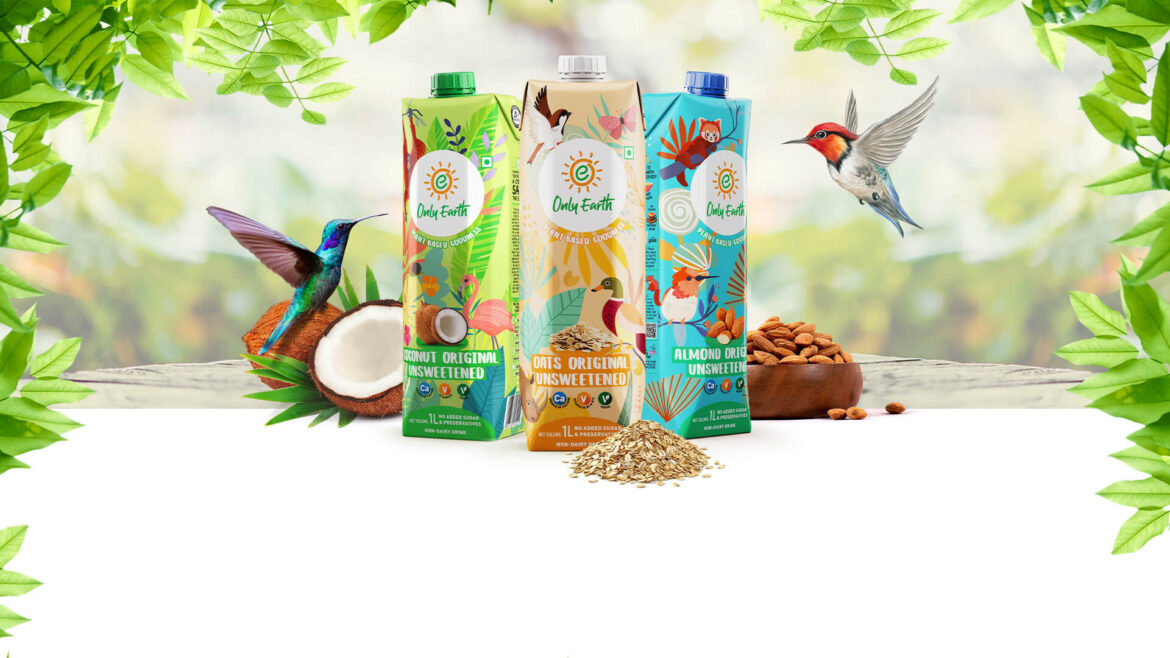
Plant-based nutrition from Only Earth

by Team Conscious Carma July 31, 2021
written by Team Conscious Carma

Changing your diet counters climate change.  This is because food production accounts for 26% of global greenhouse gas emissions. While we need food and can’t really stop producing it, there are a few things we can change about how we do it!. Launched in 2021,  Only Earth, is offering a vegan-plant based beverage with an objective to save our Only Planet. “With plant-based nutrition, one can get a meal with a much lower carbon footprint without compromising on nutrition”, says its founder Kunal Mehta, who shifted to veganism two years ago and is an athlete in making. The message is simple: changing your diet helps to fight climate change one step at a time.

“Our vision is to save the only planet we have. We believe in giving an option to our audience for a greener choice so we can save our planet! We humans have evolved in every aspect of life, be it exploring outer space, living longer or travelling at supersonic speeds. But our food system is still extremely inefficient and unsustainable as a majority of us are still consuming the required nutrients from secondary sources through meat & dairy. One of the key ways to save our planet is to change the way we eat.”, adds Mehta.

This becomes clear when we see that we dedicate 83% of our farmland to livestock which provides only 18% of our calories. This is not sustainable and just doesn’t make sense. We need to find more efficient and cruelty-free ways of meeting the global population’s food requirements. You can start combating climate change by reducing your dependence on dairy. 

We at Only Earth are committed to taking animals out of the food equation and start combating climate change by reducing dependency on dairy so that it can be good for you and good for the environment too! With these beverages, we promise the goodness of a planet-friendly, plant-based drink.


Only Earth has launched Oat and Coconut variants of the beverage and will be soon coming out with the almond variant.

Oats Variant; rich and creamy oats beverage packed with the best of nature, free from gluten, lactose and nuts. A drink that is packed with flavour and what’s best for your body – proteins, fibre, calcium, potassium, iron, and vitamins A and D.

Coconut; the global demand for plant-based milk has been fueled by the growth of natural food products and customer preference for a vegan diet.

Among the diverse alternatives available in plant-based products – coconut milk, made from the white flesh of a coconut, has gained popularity in the healthcare community and as an alternative to dairy milk. Often praised for its health benefits, coconut milk is a crowd-pleaser. Filled with proteins, fats (the good kind), carbs, potassium, magnesium, calcium and much more in every swig of creamy delight.

Only Earth products

Availability: They are available throughout India via  Amazon, Big Basket and QTROVE. The product comes in a 1L package and is priced at Rs 300.

July 31, 2021 0 comment
0 FacebookTwitterPinterestEmail
Tata Chemicals sustainable development
CommunityInspiration

Tata Chemicals promotes sustainable development while empowering communities

by Team Conscious Carma July 29, 2021
written by Team Conscious Carma

The company demonstrates a high level of commitment towards environmental regeneration  and ecological conservation

Every year, World Nature Conservation Day is observed around the globe, as a reminder to conserve the flora and fauna, essential for ecological balance, that are now on the verge of extinction. On this day, Tata Chemicals reaffirmed its commitment to the environment by making a conscious effort to sustain people and the planet. Through the mission of ‘Serving Society through Science’, Tata Chemicals aims to empower communities. The company works towards issues of biodiversity conservation and forest regeneration to build sustainable societies for a better tomorrow.

Tata Chemicals various initiatives such as Whale Shark conservation, Protect the Pollinators, conservation of Coral Reefs and Mangroves are focused on ensuring environmental integrity that promotes the protection and preservation of biodiversity. The Whale Shark project, which was launched with an aim to raise awareness and save the gentle giant, has successfully saved and rescued 813 whale sharks to date. The Coral Reef conservation programme has covered an area of 2,000 m2 and through its Mangroves Regeneration initiative, 1.15 lakh mangroves have been planted last year. 

Ms Alka Talwar – Chief, Sustainability & CSR, Tata Chemicals, said “With sustainability at the core of our strategy, we are strengthening our long-term resilience by undertaking pioneering initiatives that contribute to a thriving society. We actively engage with the communities to create sustainable social and economic development that empowers livelihood generation and encourages ecological conservation. Going forward, we will continue to give an impetus to biodiversity and ecosystem preservation, that will directly contribute to primary development and community well-being.” 

As a recognition of the company’s work in this space, Tata Chemicals was recently conferred with the prestigious D&B award for its work in ESG, which further reiterates its commitment towards the said goals. Tata Chemicals Ltd. was also ranked 3rd amongst the Indian corporates for its Sustainability and CSR practice in responsible business ranking 2020.

Tata Chemicals ecology restoration

About Tata Chemicals Ltd.

A part of the over US$ 106 billion Tata Group, Tata Chemicals Limited, is a global company with interests in businesses that focus on Basic Chemistry Products and Specialty Chemistry Products. The story of the company is about harnessing the fruits of science for goals that go beyond business. The company’s Basic Chemistry product range provides key ingredients to some of the world’s largest manufacturers of glass, detergents, and other industrial products. Tata Chemicals currently is the world’s third-largest producer of soda ash with manufacturing facilities in Asia, Europe, Africa and North America. The company has a strong position in the crop protection business through its subsidiary company Rallis India Ltd. Tata Chemicals has established world-class R&D capabilities with a dedicated band of research and scientific personnel working at its facilities in Pune and Bangalore in the emerging areas of material sciences, nutritional sciences, nanotechnology, biotechnology and agriculture sciences.

July 29, 2021 0 comment
1 FacebookTwitterPinterestEmail
emotional wellbeing
Authored ArticlesExpert Corner

The Importance of Emotional Wellbeing

by Team Conscious Carma July 28, 2021
written by Team Conscious Carma

By Nilofa Kabir

Why do I need Counselling?

Phrases like,

“I am fine”

“I am strong enough to handle this situation”

“This shall pass too”

“I have my family and friends beside me”

“I am not that weak”

“I am not going crazy”

Have you ever wondered how many emotions lie behind the sentence “I AM FINE“? Leave about others, we ourselves do not understand how much we are holding behind our smile. Did you ever hold up your physical health till the time you are on the verge of going to death bed? Then why do we do the same with our mental health?

We all grew up not treating the mind as an important part of our body. For us, the mind is only to represent intelligence. And people dealing with mental health issues, are always been treated as insane. Nothing can justify the indifferent treatment that our emotional health gets, even in an educated society. Counselling is not for Crazy people, it never was. Counselling is for anyone and everyone, who may be bothered by a short term or, temporary phase like any other physical trouble. It’s really sad to see, that the amount of importance a broken finger gets, comparison to a broken heart.

Till the time, we do not understand the importance of our own emotional wellbeing, and we start taking good care of it, we won’t be able to change the stereotype around it.

Which are the areas counselling can help with?

Even if we take one step ahead, and at any point in time realize that counselling is not for insane people, still few questions always bother us about its usability, like:

Is counselling capable to help people dealing with difficult childhood problems? Which is still bothering me?

Is it good enough to handle our fear of losing someone special or the disgusting feeling after a breakup?

Can this help me deal with the kind of harassment I face every day in my workplace?

Is it helpful for the kind of mental situation I am in, after my childbirth?

I don’t know, what is wrong with me, but I always have this fear of talking to a group of people. How can counselling help me, when I myself don’t know the problem I have?

While the number of questions can be many, but the answer is very simple and one, that is “YES“

Counselling has the power to bring out the strength in you, look at the issues, from a different perspective, which in a way helps you to deal with the problems, you are struggling with.

Counselling is talk therapy, where the counsellor is not there to advise or guide you with your problems. The counsellor gives you a platform to express your feelings, freely, without being judged, or being afraid of anyone. You can share whatever you intend to in a safe and confidential environment. The whole idea of counselling is to empower you through rationalizing thoughts and feelings. The counsellor will provide you with a safe place to share your feelings and thoughts in a confidential way. And after intently listening to your problems, he/she will help you discover your own coping mechanism and identify a plan of action to deal with your problems. Counselling empowers in a way, that you can help yourself deal with your issues, even after the sessions are over.

It is true, that talking to a friend or family is always therapeutic. But when we have a fear of being judged or have the feeling that sharing with your known people might embarrass you in the future, or they might not understand what we are going through. Then what is the point of struggling alone?

Even if you are able to share your feeling with your near ones, sometimes their suggestions or advice might not help you get over it, or even your feeling might be misunderstood or not understood at all. That time, the only feeling which works as an add on to our problem is “NO ONE UNDERSTANDS ME“. And these makes you even more prone to disturbed emotional health.

Counselling provides expert support in a safe space for you to share your concerns,  that employs therapeutic techniques and aids that help you heal from past hurts, overcome difficult thought patterns, give you a fresh perspective and empower you into a better self with preparedness to face future challenges.

If you want to understand where did a thought, action, emotion originates, then counselling helps to put the pieces of your life puzzle together.

Counselling sessions are a great tool to enhance “SELF AWARENESS“. When you understand yourself better, you make better decisions, get to know your trigger points, learn to handle tough situations. Identify opportunities to improve and navigate through life. It can help to turn a challenging life situation/transition into a period of growth and change.

So the bottom line is ANYONE may need counselling at any point in their life. We don’t have to be crazy enough to need it.  It’s your life, and you have all the rights to take care of your emotional wellbeing.

Nilofa Kabir, Founder Director – LoveThyLife Wellness Services with a dual master’s degree in Industrial & Organizational Psychology and an MBA in HR, Nilofa Kabir is more inclined towards the betterment of the everyday life of human life. Over the years of her experience in corporate and in her private practice, she realized that the area of emotional wellness is the most neglected part of modern human life. From the fear of being stigmatized by society, people tend to suffer alone. Or most cases they don’t even realize that they need some help for their mental health.
From this, she got the idea to use both her qualification and experience in one place and started her online counselling portal. Where one doesn’t have to visit physically to consult with a professional. They can just log in from their mobile and get the benefit from the comfort of their home. So in this way people who understand the importance of mental health, but cannot talk about their issue openly due to social stigma, can be getting benefited.
Nilofa aims to spread awareness about mental health as much as possible and strongly recommends people to take their mental health as seriously as they do for their physical health.

July 28, 2021 0 comment
0 FacebookTwitterPinterestEmail
tata power
EconomyIndustry

Tata Power set to reduce emissions in alignment with Science-Based Targets initiative (SBTi)

by Team Conscious Carma July 26, 2021
written by Team Conscious Carma
  • Company’s commitment accepted by SBTi, published under the companies taking action category
  • SBTi is a partnership between CDP, UN Global Compact, World Resources Institute, WWF and We Mean Business Coalition to drive climate action in the private sector

Tata Power, India’s largest integrated power company, has committed to set emission reduction targets in alignment with the Science-Based Targets initiative (SBTi). SBTi is an initiative that drives ambitious climate action in the private sector by enabling companies to set science-based emissions reduction targets. It is a partnership between CDP (Carbon Disclosure Project), the United Nations Global Compact, World Resources Institute (WRI), the World Wide Fund for Nature (WWF) and We Mean Business Coalition. The company’s commitment to the SBTi has been accepted and published under the companies taking action category on the website.

“Mitigating the impact of global warming requires swift and strong action. Tata Power has committed to SBTi and is working on an ambitious plan to drive the transition to decarbonized energy models, aiding the global climate action agenda. To achieve the emission reduction targets, we are moving rapidly to a green energy portfolio and continuously exploring and adopting technology-based solutions. We are confident of being #FutureReady and will continue lighting up lives!” said Dr Praveer Sinha CEO & MD, Tata Power.

The latest climate science sends a clear warning to curb temperature rise to avoid the catastrophic impacts of climate change. The power sector will play a key role in decarbonizing the global economy and meeting the goals of the Paris Agreement. 

To lead the reformation of the process for sustainable power, Tata Power has pledged to set scientific targets as proposed by Science-Based Target initiatives. It is the first Indian power company to commit to carbon neutrality before 2050 and is accelerating the transition to a sustainable future. 

Tata Power has already announced the planned phase-out of coal-based capacity and is rapidly expanding its clean and green portfolio with an intent of achieving 80% by FY30. Through its business offerings, Tata Power is spearheading the development of integrated solutions, focusing on mobility and lifestyle and empowering customers through emerging smart and green technologies.

List of Companies working with SBTi link- Companies taking action – Science-Based Targets

About Tata Power: 

Tata Power is India’s largest integrated power company and, together with its subsidiaries and jointly controlled entities, has an installed/ managed capacity of 12,808 MW. A pioneer in the field, it has a presence across the entire power value chain – generation of renewable as well as conventional power including hydro and thermal energy, transmission & distribution, coal & freight, logistics and trading. The company had developed the country’s first 4000 MW Ultra Mega Power Project at Mundra (Gujarat) based on super-critical technology. With nearly 3.9 GW of clean energy generation from solar, wind, hydro and waste heat recovery accounting for 31% of the overall portfolio the company is a leader in clean energy generation. It has successful public-private partnerships in generation, transmission & distribution in India viz : Powerlinks Transmission Ltd. with Power Grid Corporation of India Ltd. for evacuation of Power from Tala hydro plant in Bhutan to Delhi, Maithon Power Ltd. with Damodar Valley Corporation for a 1050 MW Mega Power Project at Jharkhand. Tata Power is currently serving around 12 million consumers via its Discoms, under public-private partnership model, in India viz Tata Power Delhi Distribution Ltd. with Government of Delhi for distribution in North Delhi; Tata Power Ajmer Distribution Ltd. with Ajmer Vidyut Vitran Nigam Ltd. for distribution in Ajmer, Rajasthan; TP Northern Odisha Distribution Limited,  TP Central Odisha Distribution Limited, TP Western Odisha Distribution Limited and TP Southern Odisha Distribution Limited with Government of Odisha.With a focus on sustainable and clean energy development, Tata Power is steering the transformation of all its Discoms into integrated solutions providers by looking at new business growth in distributed generation through rooftop solar and micro grids, storage solutions, EV charging infrastructure, ESCO, home automation & smart meters et al. 
With its 107 years track record of technology leadership, project execution excellence, world-class safety processes, customer care and green initiatives, Tata Power is well poised for multi-fold growth and committed to lighting up lives for generations to come. For more information visit us at: www.tatapower.com

July 26, 2021 0 comment
0 FacebookTwitterPinterestEmail
Environment

Reusing 10% Will Stop Almost Half of the Plastic Waste From Entering the Ocean

by Team Conscious Carma July 22, 2021
written by Team Conscious Carma

A new ‘reuse’ consumption model shows how to tackle plastic waste and add value across the economy

  • Three scenarios outline the future of reusable plastic and how it can help society regain lost ground
  • Findings based on in-depth interviews, data analysis and scenario modelling that presents a new global picture and common ways forward across geographies

Geneva, Switzerland, 22 July 2021 — It is possible to prevent almost half of annual plastic ocean waste by reusing just 10% of our plastics products. This is just one of the key findings of The Future of Reusable Consumption Models Report.

The report is a collaboration between the World Economic Forum and Kearney and suggests that shifting from single-use towards a ‘reuse’ model of consumption can help society regain ground in the fight against plastic waste. Currently, 50% of global plastic production is single-use and only 14% of global plastic packaging is collected for recycling. The report outlines the urgent need to drive a systemic shift towards reuse models as an integral part of the reduce-reuse-recycle agenda.

‘Reuse’ is a production and consumption model gaining ground around the world as an alternative to single-use. In this model, consumer items are designed to be used several times, generating added value across the economy.

The findings are based on proposals by governments and NGOs around the world and research conducted with senior leaders from the private and public sectors. The team conducted in-depth interviews, data analysis and scenario modelling to create first of its kind framework that can be applied across consumer product categories and geographies.

Three scenarios show how much plastic waste could be reduced from ocean and landfills if a reuse model is used.

Scenario One: Between 10 and 20% of plastic packaging could be reusable by 2030. This equates to 7-13 million tonnes of plastic packaging, representing 45-90% of annual plastic ocean waste.

Scenario Two Reusables make up between 20% and 40% of packaging, equivalent to 90–185% of annual plastic ocean waste or 25–50% of plastic landfill waste.

Scenario Three If between 40-70% of all packaging is reusable, it would equal anywhere from 185% to 320% of annual plastic ocean waste or 50–85% of plastic landfill waste.

Image: World Economic Forum

Zara Ingilizian, Head of Consumer Industries and Consumption at World Economic Forum, said: “The shift from disposable consumer goods to reusables is still in its early stages, but there are already signs of progress. Just as recycling and composting were once considered eccentric and electric cars were written off as science fiction, when it comes to sustainability, attitudes about just what is viable are changing rapidly. Reuse may well prove to be among the most potent manifestations of that shift.”

Beth Bovis, Project Leader, Partner, Leader of Global Social Impact & Sustainability at Kearney, said: “We need to shift from merely “treating” or “handling” waste to simply never creating it in the first place. But any shift towards reusable consumer goods will depend on the choices and actions of the three driving forces of our economy: consumers, the private sector and the public sector. Each of these groups has a unique role to play in making reuse a reality. The need for a more reuse-centred economic model is urgent and grows more so with each passing year. It is up to all stakeholders to answer the call.”

reusing plastic waste

Mayuri Ghosh, Head of Consumers Beyond Disposability initiative, Future of Consumption Platform at World Economic Forum, said: “When we talk of the three scenarios, it is worth emphasizing that any of these scenarios would represent extremely valuable progress over the present status quo. The plastic waste challenge has grown too large for us to simply recycle our way out of. With no global agreement over an ambition level to target plastic waste, the sooner we can make systemic and meaningful advance towards reuse, the better.”

The report goes into these scenarios in depth and provides detailed information on the methodology. It addresses some of the key challenges businesses and the public sector have faced about reuse, namely, how to make reuse scalable and viable.

The report aims to give leaders in business, government, civil society a clear picture of an alternative plastic waste-reduction model. The first half of the report discusses the three primary actors of systems change required. The second half presents the Reuse Viability Framework to help leaders make reuse scaleable and viable. It calls for the public and the private sectors to collaborate on the development of reuse systems to meet the needs of our economy and the environment. It is part of the World Economic Forum‘s Consumers Beyond Disposability initiative, which focuses on innovative reuse solutions, and has been working to test and scale such solutions.

July 22, 2021 0 comment
0 FacebookTwitterPinterestEmail
AccessoriesProducts

#TOGETHERBAND Launches #TOGETHER Eyewear

by Team Conscious Carma July 21, 2021
written by Team Conscious Carma

A Collection Crafted From Plastic Waste And Funds Blindness Prevention

 #TOGETHERBAND expands its core #TOGETHER sustainable product offering to include sunglasses (#TOGETHER Eyewear) crafted using recycled plastic sourced from CDs and electrical appliance cases that are recycled into polycarbonate. All products that would’ve ended up in landfills, had they not been recycled to create new products. 

Additionally, for every pair sold, #TOGETHERBAND is working with Sightsavers to help protect 25 people from losing their sight to river blindness. River blindness is caused by an infection with a parasitic worm; symptoms include severe itching, bumps under the skin and eventually leading to blindness. 

The #TOGETHER Eyewear collection is comprised of three styles available in up to four colourways and finished with the #TOGETHER logo on the right lens, a 5 barrel hinge & wide arms for a sturdy fit.

  • Ale – An iconic round frame design available in black, tortoiseshell, khaki green and yellow
  • Kai – A 90s throwback style with wide rectangular lens design available in tortoiseshell, khaki green and yellow
  • Rae – Wayfarer-style sunglasses available in black, tortoiseshell and khaki green
#Together Eyewear

The full collection offers CAT1 UV protection and is heat resistant, durable and can be fully recycled once it reaches the end of its life cycle. 

All proceeds from the #TOGETHER EYEWEAR collection will further the advancement of the UN Sustainable Development Goals. Black and tortoiseshell styles will support all UN Goals whereas khaki green will be focused on Goal 13: Climate Action. The sunglasses collection retails £40 each and is available from #TOGETHERBAND’s Regent Street flagship and www.togetherband.org.

#TOGETHER, ANYTHING IS POSSIBLE

About #TOGETHERBAND

The #TOGETHERBAND campaign was launched on Earth Day 2019 by sustainable accessories brand BOTTLETOP in partnership with the UN Foundation and UBS. It uses creativity and culture to raise public awareness for the UN Sustainable Development Goals and inspire action to achieve them. The campaign has created a global community of active citizens with a reach of 5.4 billion, connected through sustainable fashion, contemporary art, music and documentary film. Ambassadors range from David Beckham and Naomi Campbell to Halima Aden, Lewis Hamilton and Jameela Jamil. Every #TOGETHERBAND is made from reclaimed Parley Ocean Plastic®, decommissioned firearm metal and handcrafted by artisans in Nepal creating skills and livelihoods for local women.

About BOTTLETOP

BOTTLETOP is a luxury, sustainable accessories brand that began in 2002 through a handbag design collaboration with iconic British fashion house Mulberry supporting artisans in Africa and local health education projects. With the BOTTLETOP atelier in Brazil and workshops in Nepal, the brand continues to provide skills and livelihoods for artisans in disadvantaged parts of the world.

BOTTLETOP is also a technical innovator; working to develop and apply the most innovative waste and sustainably sourced materials to its collection including up-cycled metal, marine plastic, Humanium metal (recycled decommissioned firearms), Zero Deforestation leather and wild rubber. In November 2017 BOTTLETOP opened on Regent Street with the first-ever 3D printed store created from waste plastic.

July 21, 2021 0 comment
0 FacebookTwitterPinterestEmail
Authored ArticlesExpert Corner

Equitable City Designs To Fight Climate Change

by Team Conscious Carma July 19, 2021
written by Team Conscious Carma

by Swathi Vajjhala Marthi, Advocate

The vast drought lands and heatwaves in western parts of Northern America floods in West Europe, and record wildfires in Australia during its summer have strengthened voices against the globally established regime. The change towards so-called “renewables” has accelerated, and more and more factories are retrofitted to build electric cars. According to Climate Change Performance Index (CCPI), the above countries have taken no measures to control changes in climatic conditions and hence are worst affected. India stands at tenth position with high measures taken. 

Globally there is a greenification of the problem, and green is the new black in the market. Electric cars are promoted as a silver bullet.

City Designs that prevent Climate Change

Do policymakers and leading thought leaders believe that the shift towards electric vehicles neutralizes the carbon footprint that has piled up over the past century? 

This article drills down to the bottom of the problem and identifies the changes needed, be it socioeconomic or technological.

The history of humanity has taught us that simple solutions to persistent problems have further complicated the problems. That is precisely what electric cars for personal transportation will do. Indeed, electric cars have lesser greenhouse gas emissions than their counterparts, such as gas power or diesel power motor vehicles, but they carry forward the same legacy and mindset. 

The penetration of cars into human society has ingested road users with a ‘me first’ mindset. The bigger the car, the loud the horn apparently has the first right of way. In short, it is a bullying mindset. This behaviour puts pedestrians, cyclists, and other vulnerable road users at risk. If the system continues prioritizing car users since they clog up the roads more often, then pedestrians will disappear sooner. All we will see are cars lined up in the city, inside the city, in front of homes, and inside the housing complex. 

However, there is a solution that is simple in thought but challenging to implement because it requires a mindset change and has diverse stakeholders. It needs to give up greed and other vices. 

The wide adoption of the Euclidean zone divided towns into districts based on permitted uses, and in doing so, creates specific zones where certain land uses are permitted or prohibited. This was helpful in the past when industrial pollution was so common, and workspaces are primarily based in factories. The separation of industrial land uses from residential land uses protected the residents against pollution risks. However, we live in a different world now, not many of us work in factories, there is no harm in having an IT park near a residential space. This brought up the thought of 15-minute-cities. The 15-min city is essentially a minicity, it contains all aspects of a city but in small proportions, this is opposite to Zoned city which has nothing located near and everything is far off and connected via automobile, since everything is separated and need to serve the whole city population, each of them is mega-sized. It means vast malls, big cinemas, big schools, and large playfields. Such far-off distances need cars for commute and unsafe for children to cycle or walk.

A minicity like the one developed in Paris is a good start. There are also good examples in India, like Magarpatta city in Pune and Vashi in Navi Mumbai. These are minicities, meaning a city within a city. The idea behind building a minicity is to reduce the need for cars. 

Housing, workspace, restaurants, coffee shops, schools, and shops are within walking distance, connected with well-laid pavements fit for use in all weather conditions with an excellent pre-covered on either side of the roads to make walking less stressful on a sunny day. None of the facilities like pool or park needs to be mega-size since it only caters to the public in minicity, thus smaller block size. That will eventually lead to less concretization with more pre-covered parks, urban forests, lakes, and sustainable cooling solutions, which will have an enormous influence over the microclimate of the cities. 

Every city planner can take many cues from cities like Amsterdam and Utrecht. Children and others can only shift to cycling or walking when it is safe, secure, and purposeful. Safety can be achieved by repurposing the streets and roads, and security is a law enforcement subject. For instance, driving a motorcycle in a pedestrian walkway needs to be strictly punished. All incidents that can put pedestrians and bicyclists at risk must be continuously monitored until risks are minimized to zero. 

The city/region can become sustainable and remain sustainable if it is equipped with multi transit-oriented infrastructure. Its citizens are mature enough to avoid temptations to drive for pleasure but prefer walking and cycling for purpose or pleasure. The respective governments need to take up the responsibility of facilitating minicities with mixed zoning so that walking can suit the daily commuting needs. Walkways have to be comfortable with no waterlogging on a rainy day with full tree cover to avoid sunburn during summers. 

The minicity concept is not just for bigger cities like Mumbai or Delhi. It can also be easily integrated into our ongoing national RURBAN mission (Shyama Prasad Mukherji RURBAN Mission). This puts our country on the frontline in fighting climate change. 

Mobility is a necessity for all those in living cities and towns. Thus, it has to be equitable. As Marco Bizzarri famously said, “Diversity and inclusion, which are the real grounds for creativity, must remain at the center of what we do.”

Swathi Vajjhala Marthi, Advocate
Swathi is a legal professional and has extensive experience in dealing with banking and corporate litigation. Her interests are in the areas of International Arbitration and Investment Laws. 

July 19, 2021 2 comments
1 FacebookTwitterPinterestEmail
Disability Inclusion event by EU
EventsInitiatives

Strengthening EU-India partnership on Disability Inclusion

by Team Conscious Carma July 15, 2021
written by Team Conscious Carma
  • European Disability Forum (EDF) along with Sightsavers India organised a webinar on Disability Inclusion in the attainment of SDG
  • The webinar was organised as part of the EU-supported project, ‘Building Partnerships for Sustainable Development Goals – Empowering Disabled People’s Organisations’

New Delhi, July 15th: The European Disability Forum along with Sightsavers India organized a webinar on ‘Strengthening EU-India partnership on Disability Inclusion in the Attainment of SDGs: Engagement of organisations of people with disabilities in SDG localisation’. Indian Organisations of People with Disabilities (OPDs), European Disability Forum (EDF) members, Sightsavers, Indian and Global Disability Experts, and civil society organisations (CSOs) along with EU and State government officials participated in the virtual event.  Speakers from both India and the EU shared perceptions of people with disabilities, their role in the implementation of Sustainable Development Goals (SDGs), and localization at national and international levels.

The project behind the webinar, ‘Building Partnerships for Sustainable Development Goals – Empowering Disabled People’s Organisations’, supported by the European Union, is being implemented since March 2018. The project’s overall objective is to work towards ensuring that women and men with disabilities engage in, shape, and monitor the implementation of the SDGs in India. Along with EDF as its partner at the EU level, Sightsavers is implementing this project in 5 Indian states of Chhattisgarh, Jharkhand, MP, Odisha, and Rajasthan. While working with 15 OPDs, the project intends to establish and strengthen policy dialogue and partnership between Indian OPDs and their European counterparts, the EDF.

In her keynote address, Cecilia Costa, Team leader – Cooperation Manager, EU Delegation to India and Bhutan, said, “Human dignity, freedom, democracy, equality, the rule of law and respect for human rights are at the heart of the EU’s external action: be it in the programmes and projects it funds in different parts of the world or in the policy dialogue and cooperation with partner countries, international organisations and other stakeholders. In India with whom the EU has a long-standing relation in terms of development and other cooperation, it has followed a similar approach, and this project, implemented by Sightsavers India and European Disability Forum is one such example. While much is being done, by the Government of India, Donor organisations, and civil society, much more needs to be done to achieve inclusivity.”

Sandeep Rajak – Commissioner Disability, Madhya Pradesh, said in his keynote address, “India respects the UN SDG goals, and they have been the base for our Rights of Persons With Disabilities Act, 2016. With a global to local focus, and with the support of institutions such as Sightsavers, we are striving to build an inclusive society for persons with disabilities by providing them with facilities in key areas such as education, livelihood, housing, etc.  

In his welcome address, RN Mohanty, Chief Executive Officer-Sightsavers India, said, “Extreme inequalities are divisive and undermine societies and communities. Not just income inequalities but those inequalities that exist between different groups and result from persistent patterns of discrimination, unequal rights and historic disadvantage. The 2030 agenda is a powerful framework for addressing these issues.  Working towards this, we, at Sightsavers believe that people with disabilities have an equal right to achieve their full potential, just like everyone else. I look forward to continuing this crucial partnership with EU and EDF towards our shared vision of an Equal World.”

Welcoming the audiences to the webinar, Catherine Naughton-Director of the European Disability Forum, said, “The EDF promotes the rights of persons with disability in the EU and across Europe. Since the EU is an important global development partner, donor, with an important diplomatic arm around the world, we also advocate, for the EU to be a global leader in disability inclusion development. This project with Sightsavers is a strong example of the impact the EU can have on the rights of persons with disabilities in its work around the world. We are honored to partner with India to work on disability inclusion. This partnership has also helped enrich our work in the EU. As we come to the close of the project, I hope it is a beginning of longer-term cooperation in the relationship that we will have with all of you.” 

Marion Steff, International Cooperation Manager, European Disability Forum, said, “Given the position of the EU as the only region in the world having ratified the Convention on the Rights of Persons with Disabilities, one of the largest donors of Overseas Development Assistance, and a major trade partner with India, the EU must lead by example. It must apply its leadership and champion the rights of persons with disabilities. We hope that the EU funded project between Sightsavers India and the European Disability Forum is the beginning of future promising work to respect, protect and fulfill the human rights of women, men and children with disabilities in India.” 

The webinar’s focus was to highlight the intersectionality of gender and disability and related project initiatives and to share best practices and experiences of localising SDGs through the Disability Inclusive Score Card (DISC) process.  Sightsavers, European Disability Forum, Together 2030, and Newcastle University, developed the Disability Inclusion Score Card (DISC) with a focus on women with disabilities as participatory monitoring and accountability mechanism. 

Archana Bhambal, Area Director, and Namrata Mehta, Programme Manager – Sightsavers India moderated a series of short sessions on key themes such as Strategies For Empowering People With Disabilities, the roadmap to implementation, and advocacy for policy implementation. Arman Ali from the National Centre for Promotion of Employment of Disabled People (NCPDEP), Hussaina Bi from Mewar Viklang Samiti, Nomesh Verma from Kalyan Divyang Sangh, and Meelis Joost from the Estonian Chamber of Disabled, participated in the prorgramme. The webinar was supported with international and Indian Sign interpretation and captioning for the benefit of the participants with disabilities.

July 15, 2021 0 comment
0 FacebookTwitterPinterestEmail
Newer Posts
Older Posts

Recent Posts

  • India–UK Free Trade Agreement Opens Global Growth Opportunities for 3R ZeroWaste’s Circular Economy Solutions
  • Plastic Free July: Why True Sustainability Goes Beyond Swapping Plastic
  • From the Editor’s Desk: When Greed Takes Over Conscience
  • Beyond the Pose: Why Your Yoga Mat Needs a Sustainable Upgrade
  • Best Sustainable Father’s Day Gifts: Conscious Carma’s Exclusive Picks

Recent Comments

  • Team Conscious Carma on Label Shivika Agarwal – where craft meets sustainability
  • Cocomeister.jp on Label Shivika Agarwal – where craft meets sustainability
  • Team Conscious Carma on Equitable City Designs To Fight Climate Change
  • UN report calls for repurposing of USD 470 billion of agricultural support that distorts prices and steer us away from environment and social goals | Consciouscarma on UNEP & ICMR collaborate to boost understanding of environmental dimensions of antimicrobial resistance in India
  • Wild Earth : Natural body products | Consciouscarma on Sat.Suma : the true essence of flowers in your everyday skincare needs

Keep in touch

Facebook Twitter Instagram Youtube

Recent Posts

  • India–UK Free Trade Agreement Opens Global Growth Opportunities for 3R ZeroWaste’s Circular Economy Solutions

  • Plastic Free July: Why True Sustainability Goes Beyond Swapping Plastic

  • From the Editor’s Desk: When Greed Takes Over Conscience

  • Beyond the Pose: Why Your Yoga Mat Needs a Sustainable Upgrade

  • Best Sustainable Father’s Day Gifts: Conscious Carma’s Exclusive Picks

  • How Sacred Sound is Reshaping the Future of Holistic Health?

Categories

  • Community (38)
    • Campaigns (3)
  • CSR (4)
  • Economy (82)
    • Global (24)
    • Industry (42)
    • Innovations (4)
    • National (2)
  • Environment (48)
  • Expert Corner (48)
    • Authored Articles (47)
  • Featured (5)
    • Partners (1)
  • Global News (2)
  • Initiatives (31)
    • CSR (3)
    • Events (6)
  • Inspiration (22)
  • Lifestyle (9)
  • Media Coverage (6)
  • Press Releases (4,358)
  • Products (126)
    • Accessories (27)
    • Apparel (32)
    • Beauty (26)
    • Food (4)
    • Gifting (3)
    • Home Décor (15)
    • Skin-Care (14)
  • Reports (3)
  • Spirituality (10)
  • Sustainability (49)
  • Sustainable Startup Stories (28)
  • Travel (19)
  • Uncategorized (2)
  • Wellness (33)
    • Home Cleaners (3)

Archives

  • August 2026 (1)
  • July 2026 (1)
  • June 2026 (6)
  • October 2024 (1)
  • September 2024 (1)
  • July 2024 (2)
  • June 2024 (2)
  • May 2024 (1)
  • November 2023 (330)
  • October 2023 (554)
  • September 2023 (631)
  • August 2023 (718)
  • July 2023 (723)
  • June 2023 (710)
  • May 2023 (608)
  • April 2023 (114)
  • March 2023 (7)
  • February 2023 (3)
  • January 2023 (11)
  • December 2022 (18)
  • November 2022 (1)
  • August 2022 (6)
  • July 2022 (8)
  • June 2022 (24)
  • May 2022 (11)
  • April 2022 (19)
  • March 2022 (11)
  • February 2022 (11)
  • January 2022 (14)
  • December 2021 (10)
  • November 2021 (4)
  • October 2021 (14)
  • September 2021 (22)
  • August 2021 (12)
  • July 2021 (17)
  • June 2021 (17)
  • May 2021 (16)
  • April 2021 (22)
  • March 2021 (33)
  • February 2021 (16)
  • January 2021 (22)
  • December 2020 (10)
  • Facebook
  • Twitter
  • Instagram
  • Pinterest
  • Linkedin
  • Youtube

@2020 - All Right Reserved. Designed and Developed by Bizopser Technologies

Consciouscarma
  • Home
  • About Us
  • Products
  • Community
    • Campaigns
    • Inspiration
    • Initiatives
    • CSR
  • Features
    • Sustainable Startup Stories
    • Travel
    • Lifestyle
    • Partners
  • Economy
    • Industry
    • Innovations
    • National
    • Global
  • Environment
  • Expert Corner
    • Authored Articles
    • Reports
  • Magazine
  • Contact