Consciouscarma
  • Home
  • About Us
  • Products
  • Community
    • Campaigns
    • Inspiration
    • Initiatives
    • CSR
  • Features
    • Sustainable Startup Stories
    • Travel
    • Lifestyle
    • Partners
  • Economy
    • Industry
    • Innovations
    • National
    • Global
  • Environment
  • Expert Corner
    • Authored Articles
    • Reports
  • Magazine
  • Contact
Author

Team Conscious Carma

Team Conscious Carma

ApparelSustainable Startup Stories

Sanya Garg, born in a family of medical professionals, Sanya didn’t follow in their footsteps, rather went on to carve a niche for herself in the fashion industry.

by Team Conscious Carma January 23, 2022
written by Team Conscious Carma

Inspired by her mother and her maternal grandmother who used to stitch beautiful clothes for her, Sanya was intrigued by the varied textiles, colours, and patterns they use to design for her. Soon after passing out of school, she showed her interest to pursue fashion and inspite of objecting her decision, her family encouraged and supported her.

The Delhi girl went to NIFT, Gandhi Nagar, Gujarat for her formal education in Fashion.  She came back to Delhi after the course and worked for an Export House for a year and then worked with a renowned designer for a year.  However, her zest to have her own label and create what she really believes in, she set out to launch her sustainable fashion label, SANYA GARG.

In her own words….

“My love for colour and creativity led me to explore the beautiful Indian crafts and embroideries. I work with artisans from Gujarat and Rajasthan, two of the most vibrant states of the Country.  And with natural fabrics and even create my own fabrics using various natural fibres”, says the enthusiastic designer.

Sustainable fashion aims to create clothing that is environment friendly and is ethically made by providing better working conditions and a fair pay to its workers and employees. Sustainability not only plays a positive role in preventing climate change, it also helps in creating long lasting clothes of higher quality. You do have to pay a little more for them but they stay in your wardrobe for years. 

I am glad to see the change in consumers mindset as well. Now a days people come to me with old clothes from the wardrobes of their mother or granny for redesigning them  and creating a new outfit which can fit in today’s fashion. Using a garment and not reusing it is a waste of resource.

Sustainable clothing has started making its mark in the Indian market. From paying workers fairly to use of natural dyes.  However, the idea of creating a sustainable wardrobe is still a daunting one. There is a prospect of not being able to wear the brand you are used to or is of your choice in terms of trends. This mindset needs to be changed.

Though, Sustainability is not new in Indian market. Most of our leaders and fighters have always promoted the use of swadesi and organic fabrics for making their attires.

Gone are the days when organic fashion was synonyms with the old boring clothes. The young Indians are realizing that they can contribute to saving the planet while looking good at the same time.

Hurdles and Milestones

Being a woman entrepreneur from a non-business family, initially, Sanya did face difficulty in managing everything on her own, from creating designs to sourcing fabrics, overseeing production and ensuring timely delivery, but she never gave up.  Within a couple of years, she could establish her brand in the market and orders started pouring in through word of mouth and social media. And soon she launched her Menswear collection.

Today, her label is  known for stylish and innovative ethnic wear and has a loyal customer base in Delhi and NCR.  She’s also exporting to Israel. Sanya has participated in several fashion weeks in India

Latest collection

Taking inspiration from the age old craft of Kutch Gujarat : lipan kaam ( mud and mirror work ) we have created our new collection using cotton and silk as base fabrics with all hand work. This craft is done by the women of Rabari community. The women are so experienced that they don’t have to draw or trace the pattern before working on the design. The craft attracted our attention for its intricate patterns and aesthetic perfection.

Presence

She is presently retailing from a multi-designer store in Delhi. Her label will soon be available in leading multi designer stores in Delhi and Ahmedabad.

Mission & Vision

To make SANYA GARG, a high-end label and to have her signature studio in Delhi

To check out her collection, please visit her instagram page sanyagargcouture

January 23, 2022 0 comment
0 FacebookTwitterPinterestEmail
Travel

Wrap-up 2021, Sustainable Tourism A two-year tough period, of a pandemic that stooped in like an apocalypse, invoking the highest levels of uncertainty in the minds of people

by Team Conscious Carma January 21, 2022
written by Team Conscious Carma

By Dr. Freeda Maria

2022 looked promising as people were contemplating little respite, to travel and see some normalcy, with fingers crossed!

But to dire dismay, the news of the third wave of Omicron, the tourism industry will probably have to wait for a comeback like the pre-pandemic times. What everyone is left with is an obvious choice to undertake conscious travel; options that throw good sustainability standards.

The World Tourism and Travel Council (WTTC) reported that in 2020 a total of 62 million jobs were lost, representing a drop of 18.5% and leaving just 272 million (334 million in 2019) employed across the Tourism sector globally. WTTC also confirmed that Domestic visitor spending decreased by 45%, while international visitor spending went down by 69.4%.  

From dismal statistics that were being strewn, there was still hope for the Travel, Tourism and Hospitality (TTH) business, for the Ministry of Tourism, Government of India, (MoT, GoI), had come out with schemes that had one of the best intentions of quality tourism promotion; besides in-bound, the focus was on Domestic Tourism.

To boost domestic Travels, the Government had introduced some of the finest of programs, viz., Dekho Apna Desh, Swadesh Darshan Scheme, Pilgrimage Rejuvenation and Spiritual Heritage Augmentation Drive (PRASHAD) under the Incredible India 2.0 campaign; which not only focused on ‘footfalls’, but spoke of enhancing tourist experience and employment opportunities in a sustainable fashion. These programs had come into existence by 2019 and the Indian TTH eco-system was looking for a phenomenal opportunity when Covid-19 struck. 

Moreover, the Travel and Tourism Competitiveness Index (TTCI) Report of 2019 had ranked India at 34th Position (out of 136 countries) (Up from 40th position in 2017). “India showed the greatest percentage improvement to its overall TTCI score, which has helped it become the only lower-middle-income country in the top 35,” the report said and lauded its natural and cultural assets and price competitiveness.  

From a sub-regional perspective, the nation (India) has better air infrastructure (33rd) and ground and port infrastructure (28th), international openness (51st) and natural (14th) and cultural resources (8th). This meant, that India was in a phase of a phenomenal increase in the number of visitors both domestic and international. With more visitors relying on sustainable tourism products for visitations. Referring to the findings of the research conducted by booking.com, 56% of the visitors agreed to the fact that they will seek out more rural, off the beaten-track experiences to immerse themselves into the outdoors. The nuance of sustainable tourism would be cherished and will become the need of the hour. 

Many states in India are doling out sustainable tourism options viz., states like Karnataka, Tamil Nadu, Uttarakhand, Odisha, Maharashtra, Madhya Pradesh, in no order of ranking or importance; who have to be leveraged at the State Administration level. 

Gujarat Tourism has gone a step forward to usher in Global certifications and accreditations that will further the cause of Global visitors by encouraging the Tour Operators to get certified under the GSTC norms through the 2021-25 Tourism Policy. This will ensure a thought process change in the way Tour Operators, Hotels and Tourists, will become Ambassadors of Sustainable Tourism promotion. The draft sustainable tourism roadmap of the ministry of tourism has clear mandates to adopt to the GSTC Criteria. The Strategy is yet to see the light of the day.

A recent survey by booking.com shows that 83% of the travellers are to make sustainable travel a priority in the future and over half the global travellers (53%) acknowledged the desire to travel more sustainably as a direct result of Coronavirus. For instance, the TUI group shows a preference for GSTC certified hotels – 9.2 million TUI customers stayed in hotels certified to a GSTC-Recognized standard (81% of TUI’s Hotels) in 2018. Online Travel Agencies (OTA) are developing plans to provide consumers with indicators in search results of certified hotels.

It comes with great respite; an official working group has been launched by GSTC (Global Sustainable Tourism Council) to augment the functions of Globally agreed on principles of sustainability in the Indian subcontinent. Global Sustainable Tourism Council was initiated by the Rainforest Alliance, the United Nations Environment Programme (UNEP), the United Nations Foundation (UN Foundation), and the United Nations World Tourism Organization (UNWTO), USA. It provides for global standards for sustainable travel and tourism; as well as providing international accreditation for sustainable tourism Certification Bodies.

This apart, the industry players and giants in the sustainability business have made large promises, as major companies set more aggressive targets around metrics like carbon emissions, water, and waste. The year that went by saw great ideas emerging out of industry leaders and governments to go past the pandemic and show resilience. Concepts like travel bubbles, net-zero models, staycations, transformative and regenerative tourism, tourism for communities and circular economy, sustainable gastronomy, decarbonising: all in the context of sustainable travel were coined and spoken of.

Governments were chalking out agendas and plan to tackle this grave situation, considering the employment loss. Some notable initiatives that are worth a mention are the Paris agreement climate emergency and sustainable tourism Agenda, Turismo de Portugal launched Tourism Sustainability Plan 2020-2023, the Swisstainable scheme launched by Switzerland, Utah and its Red Emerald Strategic Plan. 

On 9 November 2021, at the UN Climate Conference in Glasgow (COP26), UNEP and the World Travel and Tourism Council (WTTC) launched ‘A Net Zero Roadmap for Travel and Tourism’ – an ambitious plan for the tourism industry to reach net-zero by 2050. The new roadmap sets targets and benchmarks for the travel industry and offers practical recommendations for businesses on how they can achieve their net-zero targets. This leads the tourism, travel and hospitality businesses to work towards sustainable certifications, ecolabeling and even self-certifications in many a case; thence, keeping the businesses in tune with Global norms.

Moving away from fossil fuels to sustainable energy sources could greatly reduce tourism-related emissions. Hotels could and will usher in measures to improve energy efficiency, while new ones will have to be built using sustainable design practices. Airlines can improve existing aircraft technology by retrofitting and reducing weight, which increases fuel efficiency and lowers emissions. The cruise industry can reduce emissions by upgrading existing ships (through HVAC and lighting upgrades) and designing new ships to maximise energy efficiency. 

“Climate action needs a dramatic step-up if we are to have a shot at limiting global temperature rise to 1.5°C,” said Inger Andersen, the Executive Director of UNEP. “The travel and tourism sector has a big stake in decarbonization because a destroyed planet serves no one’s purpose.” The tourism sector has a widespread economic impact. Its revival and longevity will be critical to ensure its continued contribution to livelihoods and economies – but only if it can be made sustainable.

(The Author is  Consulting Editor- Sustainable Tourism with Conscious Carma and is a Member of the Global Sustainable Tourism Council’s India Working Group)

January 21, 2022 0 comment
0 FacebookTwitterPinterestEmail
Sustainable Startup Stories

Connecting NER – a passion to connect NorthEast India to the World

by Team Conscious Carma January 17, 2022
written by Team Conscious Carma

“Connecting NER is an ode to handicrafts, especially of the north-east of India. We are trying to take our audience through what our region is all about. Along with that, Connecting NER is also on its way to be part of a movement, started by our predecessors, wherein an artisanal item, untouched by machines, gets its deserved value”, says Aayushi Patwari, founder Connecting NER

Hailing from Guwahati, Assam, Aayushi started Connecting NER as a passion project.

“At first it was just plain old research about what people knew about northeast India, its product, crafts etc. There was not much available from and on our region. We learnt how not many enterprises and entrepreneurs from the NE have gained limelight for what they do, and while there are quite a few sellers from our region across the internet, not many talk about the origin of goods made using cane, rattan, bamboo, kauna, meteka, longpi. We started Connecting NER in order to correct that while also giving the artisans here another platform to work with and secure their livelihoods by doing so”, adds Aayushi.

Though, not been formally trained as a designer, creation was a part of a desire with respect to my career trajectory but until CNER I never imagined how it would come to life. With CNER I get to learn from master artisans every day as to what is possible to make along with many technical aspects of the raw material while working out details for custom products and so on. What I have learnt is that sky is the limit when it comes to handmade goods but it needs to be coupled with time and patience to get the ultimate result. Investment is huge too while prototyping but the return with respect to creativity and product created is massive on its own.

Products at Connecting NER

Connecting NER offers a broad range of artisanal goods made using generations-old skills and environment-friendly raw materials such as bamboo, cane. The product range also includes other traditional crafts such as bell-metal, a skill particular to Assam; Longpi pottery and jewellery from the villages of Manipur. 

The product range includes home decor and utility items such as trays, baskets planters in rattan, cane, bamboo, water hyacinth or locally known as water reed. It also includes lifestyle products, such as bags and organisers, made using kauna grass from Manipur.  

The price of the products cost anywhere between INR500 to INR5000. 

Struggles & achievements For a completely new brand with limited connects, it has been tough to form a customer base given the low advertisement budgets and so on. But the backbone of the brand has been their B2B clientele because of they are able to stabilize the prices owing to the large quantities they order. 

Communication with artisans and visits to clusters also get limited as they are all stationed very far away and given the pandemic we try and work out as much as possible via video and it’s very heartening to see artisans adopt technology on such a fast scale. 

The market is yet to understand the value of handmade goods and the time it takes to make these items with finesse. Depending on time and skill, a handmade product looks no lesser than a factory produced good. 

Vision & Mission

We hope to see customers tend more warmly to handmade goods made in the Far East regions of India. 

And we are now going to be working with young designers who want to experiment with these new raw materials.

Availability: www.connectingner.com

January 17, 2022 0 comment
0 FacebookTwitterPinterestEmail
ProductsWellness

Green And Beige, A Clean Beauty Brand launches body scrub and body lotion

by Team Conscious Carma January 14, 2022
written by Team Conscious Carma

Established by Dr Merin Liza Jacob, Abraham Marett, and Jacob John, Green And Beige was with an aim to protect their children from unnecessary chemicals in the name of face/skin/hair care, that would do more harm than good.

Green And Beige look to help consumers tackle their skin and hair issues with products created to work holistically Following a policy of complete transparency, the labels reveal every ingredient that goes into making each of its products, in scientific terms as well as layman language, allowing customers to know exactly what goes into their products.

The brand launched its Body Care range in April 2021, with marquee products like its most unique and reputed Armpit Mask that tackles body odour and addresses years of stubborn, ingrained deodorant build-up, allowing the sensitive underarm skin to finally breathe. Its range of human, environment, and aquatic life safe products also includes deep hydration body butter, exfoliating coffee body scrub, intense hydration body lotion, and several soaps for dry skin, normal skin, and baby skin.

Their latest product additions are as follows:

1) Body Scrub Exfoliating Coffee Scrub: It is important that your body scrub has the right ingredients to help you exfoliate, without leaving your skin too dry. And also that your exfoliator helps smoothen skin. Coffee is our chief ingredient and it boosts collagen levels and reduces the premature ageing of the skin. Cocoa butter and moisturizing oils then help smoothen skin. Give yourself a scrub at home and come out glowing (and feeling like a million bucks).

Application: Apply on wet skin, massage gently using circular strokes to remove surface dead cells and polish the skin. Leave on for a minute or two to allow the ingredients to work their way under the skin. Rinse off with water. Pat dry. Use twice a week, ideally

Price: INR 949 Availability: https://www.greenandbeige.com/shop/skincare/body-scrub/

2) Body Lotion- Intense Hydration: Skin lotions are one area we are spoiled for choice. And maybe that is the reason that the entire space is a little soiled. There are enough and more products floating around and even more claims. This is why it is essential to know what you are applying to your skin and more importantly, what you need to. This Green And Beige body lotion is created from vegetable oils, the lamellar structure of this lotion makes it quick-absorbing and therapeutic to skin and senses. It rehydrates skin, revives rough and dry spots, smoothens calluses, and softens rough skin. And most important, it is not sticky and does not make your skin feel oily.

Application: Apply onto towel-dried skin immediately after a shower. Use as often as required.

Price: INR 1599

Availability:https://www.greenandbeige.com/shop/skincare/body-lotion-2/

With a strategic outlook, Green And Beige envisions being among the Top 10 promising brands in India by 2022 and becoming the preferred brand for customers for their skin, body, and hair care. Furthermore, the brand will be opening international shipping by April 2022 and will foray into ASEAN and the Gulf markets by Q3 of 2022.

January 14, 2022 0 comment
0 FacebookTwitterPinterestEmail
FoodProducts

Pahaadi Organics – an organic venture by a 16-year-old

by Team Conscious Carma January 12, 2022
written by Team Conscious Carma

Aryan Kaistha, a 16-year-old, class XII student living in a village called Naggar just 20km from Manali, started Pahaadi Organics in May 2021.

“I was inspired by such similar ventures promoting healthy organic food of the hills and decided to start one myself during the COVID 19 lockdown of 2021.  My goal was to help the small traditional farmers as well as to provide chemical-free and healthy food to our customers from cities where such products are rarely available. So I decided to buy my produce from villages and small farmers to help them out during the lockdown since they didn’t have much income during that time”, says the young entrepreneur.

I found many farmers who grew things like rajma and red rice using traditional methods without any chemicals, instead using organic fertilizers like cowdung and compost and I decided to start with that. I also found a very rare type of honey here which was collected from traditional Himalayan beehives. They are of 2 types, one is a hollowed out log and the second is a box attached to the wall of the house. This honey is really dense and tasted like nothing I’ve ever had before. My customers loved it too. 

Soon, I added himalayan ghee for which demand was quite high. Our ghee comes from Himalayan cows which are kept in traditional himachali households for cowdung to use as fertilizer and milk, from which ghee is made using traditional methods. We don’t buy any of our produce from farms but instead, we go house to house looking for it. For example our ghee is collected in little quantities from local villagers who keep some cows at home for personal needs and to sell the surplus.

Currently, he is handling all of it himself with some help from his dad, who helps in finding the produce in villages.

The main challenge, in the beginning, was to get my first customers but after that, as the brand grew, it became easier. 

Slowly, I started distributing some of my products in shops around my place and we got quite good feedback from there as well. Now I am also planning to add different kinds of local nuts and dry fruits for sale as well.

This year I also tried to sell some organic fruits like persimmons and some apples which went quite good! Although people didn’t know much about persimmons and they are not available in states other than Himachal and Uttarakhand and they were trying them for the first time. They absolutely loved them! “So for next year I can expect to get more orders as people tasted them and know what they are already”, says the bullish young kid. Next year I am also planning to introduce other fresh fruits like plums, pears and apricots.

What’s more, this young chap has also created the website on his own by learning it online. And his future plan is to expand his business to benefit as many farmers and customers as possible.

Availability: www.pahadiorganics.in

January 12, 2022 0 comment
0 FacebookTwitterPinterestEmail
ProductsWellness

Himalayan Origins: promoting a holistic way of living

by Team Conscious Carma January 10, 2022
written by Team Conscious Carma

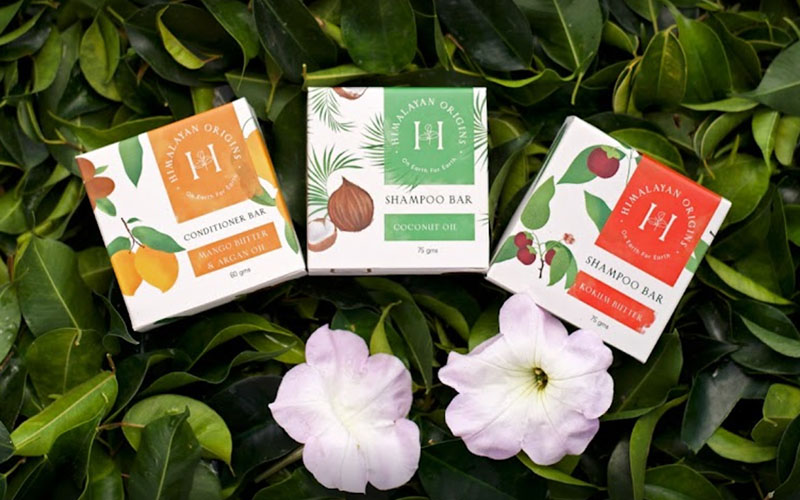
Himalayan Origins, was launched in Uttarakhand towards the end of 2020. “The idea behind the creation of this brand was to promote a more holistic way of living while respecting our moral and ethical responsibility towards Mother Nature. We used our natural surroundings in the lower Himalayas to build products that are natural and devoid of any harmful chemicals while ensuring they were zero-waste and plastic-free”, says founder sisters Neha Parmar and Soumya Parmar

The shampoos and conditioners come in soap bar formats versus bottles, serums and oils come in glass bottles versus plastic and the body soaps are packaged in paper versus plastic. All our products are safe and gentle for you as well as for the earth. As we like to believe we are “On Earth, For Earth”.Our vision is to be able to come up with products which allow a person to make a switch to a plastic-free alternative in their daily lives. We want to be able to make a change in consumer habits right from the consumption get-go. So when a person thinks of buying a liquid shampoo they think twice about it given the wastage that is there in the whole supply chain and consumption of liquid shampoos

We are also glad to share that our venture also helped in generating employment for the local women and men in Uttarakhand which has proved to be very empowering for them during these difficult COVID driven times. 

While Neha is an environmentalist and a wildlife photographer, Soumya has been an avid traveller and a leading digital marketing expert, both on a never-ending quest for a plastic-free and chemical-free life. We like to believe that human beings were put on this earth to be the gardeners and guardians of this beautiful and bountiful planet. Somewhere the tribe has lost track and instead of harmony chosen the path of utter destruction.

From the time they started, till now, the brand has come a long way.  They started with 6 products, now have almost 16 products ranging from zero waste skin, to haircare and accessories.  They started with their online store and marketing via social media and now they are retailing across 8 platforms including Amazon and 3 retail stores, 2 hotels. And have recently launched their first external market outside of India in Singapore and are now available across key online platforms there as well.

Along the way we have faced several challenges, especially in getting the right kind of packaging which is plastic-free, so as to ensure we minimise plastic. We tried recycling programs with our customers, but we still have a long way to go to scale those. Getting materials to the hills and dispatching finished goods across the country is always an issue but over time we have made headway as to how to streamline it. We are a small team, and each time we make people switch to using our plastic-free range of products we are making an impact for the betterment of the planet

Our vision is to be able to come up with products which allow a person to make a switch to a plastic-free alternative in their daily lives. We want to be able to make a change in consumer habits right from the consumption get go. So when a person thinks of buying a liquid shampoo they think twice about it given the wastage that is there in the whole supply chain and consumption of liquid shampoos

Available at

Online: https://himalayanoriginsindia.com, Amazon India, Kindlife.in, Vanity Wagon, Sustainkart.com, OneGreen, Sublime etc. 

Offline Retail stores: Arista Organic Store Mumbai, Naturessoul Delhi, HelloOrganik Pune 

January 10, 2022 0 comment
0 FacebookTwitterPinterestEmail
EconomyGlobal

Norway has more electric vehicles per capita than any other country

by Team Conscious Carma January 8, 2022
written by Team Conscious Carma

Norway, one of the World’s largest petroleum exporters, is switching its own gears to electric vehicles. Electric cars made up nearly two-thirds of Norway’s new sales in 2021. Norway’s Electric Vehicle sales are 65 per cent of total car sales. While Norway, with a population of 5.4 million, has the world’s highest proportion of electric vehicles, China with its 1.4 billion people is by far the biggest overall car market.

FAST FACTS

  • OFFICIAL NAME: Kingdom of Norway (Kongeriket Norge)
  • FORM OF GOVERNMENT: Constitutional monarchy
  • CAPITAL: Oslo
  • POPULATION: 5,372,191
  • OFFICIAL LANGUAGES: Bokmal Norwegian and Nynorsk
  • MONEY: Norwegian kroner
  • AREA: 148,726 square miles (385,199 square kilometers)

Oil-producing Norway has encouraged the switch to zero-emission cars by exempting battery electric vehicles (BEVs) from taxes imposed on internal combustion engines (ICE). This tax break is expected to help drive the proportion of overall electric sales as high as 80% in 2022, ahead of a deadline to end petrol and diesel-powered car sales by 2025.

Overall new sales in Norway rose by 25% in 2021 to a record 176,276 cars, of which 65% were fully electric, in addition, 22% were plug-in hybrids, only y 14% of new cars were sold without a plug. EV market share was 54% in 2020.

According to estimates from industry tracker EV-Volumes, plug-in electric vehicles accounted for 4.2% of global light vehicle sales last year, up from 2.5% in 2019.

As many as 13 countries managed to push electric vehicles past 10% of new light-vehicle sales in 2020.

According to WEF analytics, Norway’s highest share of plug-in EVs is because of policies like–tax exemptions, toll exemptions, and other incentives. In Norway, an electric car owner is exempted from paying road tax or sales tax. The Nordic country imposes hefty vehicle import duties and car registration taxes, making cars significantly more expensive than the US.

China, which is by far the largest market for electric cars in terms of unit sales, fell out of the top-10 with electric cars accounting for 6.2% of passenger car sales in the country.

How could Norway achieve this?

  1. Government policy and incentives for purchasers in form of tax exemptions, toll exemptions, free parking space, free charging and other incentives. Vehicle tax has always been high in Norway and exempting these taxes has made EV cheaper.
  2. Increased taxes on traditional cars for eg., pollution tax.
  3. Shorter driving distances, thus making EVs a viable option
  4. Ample supply of renewable electricity at one of the cheapest prices in the world. Hydropower provides around 98 per cent of all electricity in Norway
  5. Norway’s sovereign wealth fund is the world’s largest at approximately $1tn for a population of just over 5 million. This has provided a very clear advantage compared with the budget constraints found in other countries.

An introduction to Norway

The Kingdom of Norway is a sovereign nation on the Scandinavian peninsula in northern Europe.

Norway is a constitutional monarchy and divides state power between the Parliament, the Cabinet, and the Supreme Court. The current prime minister is Erna Solberg, who has held the post since 2013. She leads a centre-right coalition government.

Norway maintains a combination of a market economy and a Nordic welfare model with universal healthcare and a comprehensive social security system. According to both the World Bank and IMF, Norway has the fourth-highest per capita income in the world.

The oil and gas industry remains of critical importance to the nation’s economy. Outside of the Middle East, Norway is the world’s largest producer of oil and natural gas. The industry accounts for around 25% of Norway’s GDP.

However, Norway’s economy is in a state of transition. The oil and gas will not last forever, and the government is making a substantial investment in other technologies. Norway’s domestic power needs are met almost exclusively by renewable energy. Seafood, shipping and tourism are among the other important industries.

With inputs from Reuters, lifeinnorway.net

January 8, 2022 0 comment
0 FacebookTwitterPinterestEmail
EconomyIndustry

Vedanta Aluminium and GEAR India to deploy one of India’s largest Lithium-Ion Forklift Fleets

by Team Conscious Carma January 6, 2022
written by Team Conscious Carma
  • 23 lithium-ion battery-powered electric forklifts to be deployed at Vedanta’s Aluminium Smelter at Jharsuguda (Odisha)
  • IOT- based Smart Fleet Management system for enhanced safety at site
  • Potential for greenhouse gas (GHG) emission reduction of ~690 tonnes of CO2 equivalent annually

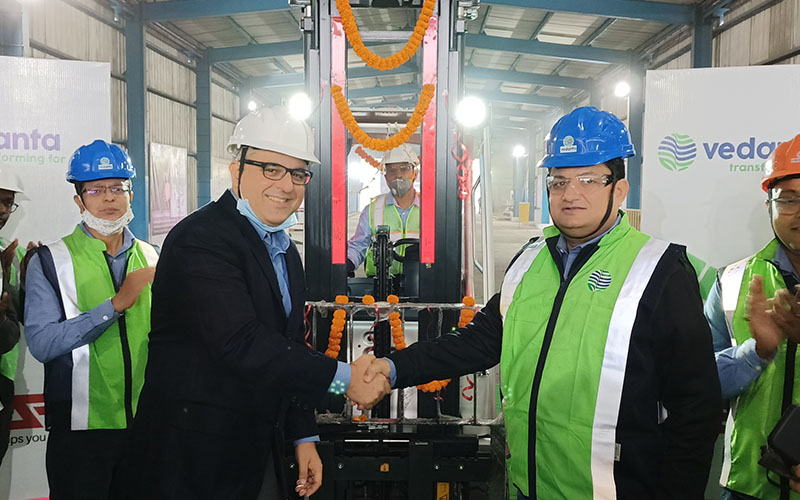
Mumbai: Vedanta Aluminium Business, India’s largest producer of aluminium and value-added products, has signed an agreement with GEAR (Gemini Equipment and Rentals Private Limited) India, to deploy one of the largest fleets of lithium-ion battery-powered electric forklifts, becoming the first in Indian aluminium industry to undertake such an initiative. The company shall commission 23 such forklifts in a phased manner over the next few months at its aluminium smelter in Jharsuguda, Odisha, which is one of the world’s largest single-location aluminium smelters. Substituting diesel-fuelled forklifts with this green fleet will reduce diesel consumption by more than 2.5 lakh litres annually, thereby ensuring GHG (greenhouse gas) emission savings of nearly 690 tonnes of CO2 equivalent.

Vedanta Aluminium currently operates a large fleet of forklifts for finished goods handling, material movement, etc. The new lithium-ion forklifts will help maximise productivity of operations by enabling longer working cycles via rapid charging. What’s unique about the lithium-ion batteries is that they avoid the hassles of frequent battery change and have a substantially longer life than conventional lead-acid batteries, while being virtually maintenance-free, as they are completely sealed.

These forklifts make use of the cutting-edge ‘Smart Fleet Management’ system to help ensure the highest levels of safety at site. The Smart Fleet Management system uses IOT (Internet of Things) technology to integrate the data collected by intelligent terminals and provide Vedanta Aluminium insights on a real-time basis with respect to forklift speed, access to operate, collision avoidance, optimization analysis for operational efficiency and equipment maintenance, among others. Further, these electric forklifts are equipped with forward and reverse cameras, ensuring complete visibility to the operators, red-zone light and blue spotlights that create a safe operating zone around the forklift, as well as automatic deceleration mechanism while turning, for enhanced safety. 

Speaking about the partnership, Mr Rahul Sharma, CEO – Aluminium Business, Vedanta Limited, said, “Vedanta Aluminium is committed to achieving Net Zero Carbon emissions by 2050. Our partnership with GEAR to deploy one of India’s largest and most advanced electric forklift fleets, is in line with our endeavour towards leveraging the power of innovation and technology to make our operations future-ready. In addition to reducing carbon footprint, this initiative uses cloud computing to provide real-time analytics to enhance productivity and further bolster our people’s safety.”

Mr. Varun Chopra, Executive Chairman of GEAR India, added, “Vedanta Aluminium’s endeavour to replace fossil-fuelled heavy vehicles with technologically-advanced lithium-ion forklifts at such a mammoth scale is a praiseworthy move. It is our privilege to be Vedanta’s partner in this pioneering venture, which will go a long way towards decarbonizing their industrial vehicle fleet. This will serve as an inspiration for the Indian manufacturing industry to explore emerging technology solutions for achieving their Net Zero vision.”

Founded in 2007, GEAR is one of India’s leading Warehousing/Intralogistics Material Handling Equipment (MHE) rental service providers. GEAR prides itself on providing efficient and cost effective MHE Rental and Sale solutions for tasks such as stacking, lifting and moving, facilitating its customers to focus singularly on their core business for better productivity.

Vedanta Aluminium Business, a division of Vedanta Limited, is India’s largest manufacturer of aluminium, producing half of India’s aluminium i.e., 1.97 million tonnes in FY21. It is a leader in value-added aluminium products that find critical applications in core industries. With its world-class Aluminium Smelters, Alumina Refinery and Power Plants in India, the company fulfils its mission of spurring emerging applications of aluminium as the ‘Metal of the Future’ for a greener tomorrow.


About Vedanta Limited:

Vedanta Limited, a subsidiary of Vedanta Resources Limited, is one of the world’s leading Oil & Gas and Metals company with significant operations in Oil & Gas, Zinc, Lead, Silver, Copper, Iron Ore, Steel, and Aluminium & Power across India, South Africa and Namibia. For two decades, Vedanta has been contributing significantly to nation building. Governance and sustainable development are at the core of Vedanta’s strategy, with a strong focus on health, safety, and environment. Vedanta has put in place a comprehensive framework to be the ESG leader in the natural resources sector. Vedanta is committed to reducing carbon emissions to zero by 2050 or sooner and has pledged $5 billion over the next 10 years to accelerate the transition to net zero operations. Giving back is in the DNA of Vedanta, which is focused on enhancing the lives of local communities. The company’s flagship social impact program, Nand Ghars, have been set up as model anganwadis focused on eradicating child malnutrition, providing education, healthcare, and empowering women with skill development. Under the aegis of the Anil Agarwal Foundation, the umbrella entity for Vedanta’s social initiatives, the Vedanta group has pledged Rs 5000 crore over the next five years on social impact programmes with a thrust on nutrition, women & child development, healthcare, animal welfare, and grass-root level sports. Vedanta and the group companies company have been featured in Dow Jones Sustainability Index 2020, and was conferred Frost & Sullivan Sustainability Awards 2020, CII Environmental Best Practices Award 2020, CSR Health Impact Award 2020, CII National Award 2020 for Excellence in Water Management, CII Digital Transformation Award 2020, ICSI National Award 2020 for excellence in Corporate Governance, People First HR Excellence Award 2020, ‘Company with Great Managers 2020’ by People Business and certified as a Great Place to Work 2021. Vedanta’s flagship Nand Ghar Project was identified as best CSR project by Government of Rajasthan. Vedanta Limited is listed on the Bombay Stock Exchange and the National Stock Exchange. For more information, please visit www.vedantalimited.com

About Vedanta Aluminium Business:

Vedanta Aluminium Business, a part of Vedanta Limited, is India’s largest producer of Aluminium, producing almost half of India’s aluminium or 1.97 million tonnes per annum (MTPA) in FY21. Vedanta is a leader in value-added aluminium products that find critical applications in core industries. With its world-class Aluminium Smelters, Alumina Refinery and Power Plants in India, the company fulfils its mission of spurring emerging applications of aluminium as the ‘Metal of the Future’ for a greener tomorrow. For more information, please log on to www.vedantaaluminium.com

About GEAR (Gemini Equipment And Rentals Pvt. Ltd.) India:

Founded in the year 2007, GEAR is one of India’s leading Warehousing/Intralogistics Material Handling Equipment (MHE) rental service providers. GEAR, in its pursuit of providing world class MHE to its customers in India, is offering products powered with ‘green lithium-ion technology’, which apart from being environmentally friendly, offer significant other benefits that maximise productivity and safety of its customers. These products have the potential to usher in a New ‘Green Revolution’ in India with its applications cutting across industries. GEAR also runs NIFOT (National Institute For Operator Training) with the vision of providing MHE operator training with respect to Operating MHEs, driving Efficiency and the highest level of Safety and Quality. For more information, please visit https://www.gear-india.com/ & https://nifot.com/

January 6, 2022 0 comment
0 FacebookTwitterPinterestEmail
Sustainability

Sustainability will be the driving force in 2022

by Team Conscious Carma January 3, 2022
written by Team Conscious Carma

Sushobhan Mahanty

The idea that the health of the planet is as important as human health is gathering steam and sustainability will be its driving force. Be it the net-zero goals set at the 2021 Climate Change Conference in Glasgow (COP26) or the launch of the Green Grids Initiative-One Sun One World One Grid (GGI-OSOWOG)—sustainability will be the keyword. The ongoing threat from the COVID-19 pandemic will continue to act as a catalyst for embedding sustainability in all walks of life. Both COP26 and COVID-19 will prove to be inflection points for the future reset.

This year, we should expect to see stricter laws to expose ‘green washers’ and rising demand for clear disclosure and reporting standards. The prolonged coronavirus pandemic continued to force seismic shifts in public policy and company behaviour. It brought about important fixes in the financial system and altered how businesses reacted to the impacts of climate change. Before the COP26 climate conference in Glasgow, more than 1,000 companies had committed to adopt science-based targets to reduce emissions in line with the Paris Agreement goals. At the landmark summit, governments and businesses put forth more grand pledges and ambitious plans to decarbonize. These governments and corporates, however, have given scant detail on how they plan to meet their climate pledges. In the year 2022, there would be a need to push for more transparency, to ensure that the promises are matched with genuine action. The key outcomes from COP26 are expected to influence climate action.

Sustainability, as the new normal for the conduct of life and business, will give a push to the ongoing trends as well as throw up new trends. Here are some sustainability trends to watch out for in 2022:

All about data:  With the spotlight on sustainability, data will be the ticket to not only the low-carbon bandwagon but also to showcase results to the regulators, investors, and other stakeholders. All this while the data analytics lifecycle keeps getting more nuanced to better measure, manage, record, and showcase results. Companies will have to keep track of emerging products like leading asset manager Arabesque’s recently launched ESG Book, a data platform for companies and investors to disclose ESG data in real-time.

Rise in ESG investment: Investing is being guided more and more by ESG (Environmental, Social, and Governance) considerations. Triggered by COVID-19, ESG investment, which factors in a lasting impact on the environment and the society, has got a boost. The surge in ESG investments is expected to continue and now has a helping hand from the Omicron coronavirus variant, which may not even be the last variant.

Push for renewable power: The phasing down of the use of unabated coal and subsidies for fossil fuels were mentioned in the Glasgow Climate Pact adopted by 197 countries. That can be achieved, to a large extent, on the back of retiring coal power plants that are warming up the planet and by increasing the share of renewables in the energy mix. More investments will flow for the setting up of solar, wind, and other renewable energy facilities as compared to fossil fuel facilities.

Push for carbon offsetting: Carbon offsetting is about the replacement or reduction of carbon emissions. Usually, high-emission companies fund projects that either prevent the emission of greenhouse gases (GHGs) or remove GHGs. These projects can range from planting trees to deploying technology to capture carbon emissions. With the framing of carbon market rules, low-carbon emitters will increasingly tap the carbon offset market.

From net-zero to climate-positive: Nations and companies committed to net zero or climate neutrality will sooner or later set the climate-positive or carbon-negative goals. While cutting down on emissions and removing carbon dioxide is expected to check global warming, climate positivity is needed to enrich the environment to reverse degradation.

More stringent regulations: While emission reduction regulation will keep getting tighter, reporting and compliance will be enforced strictly as we go forward and as the process deadlines of net-zero near. Leaders indulging in a lofty talk on sustainability will have to walk the talk under the scrutiny of not only regulators but also investors.

Increase in stakeholders’ influence: Mass awareness about sustainability is on an upswing. Not just investors, even customers, employees, and job seekers are subjecting companies to the lens of sustainability. From being only shareholder-centric, companies will have to become stakeholder-sensitive. 

More shelf space for green products: The younger population is more concerned about the environmental challenges that threaten to become bigger with each day. Add to that the future generation and the two will together make up a major share of the eco-conscious population. From food to fashion to lifestyle, green products will occupy not only a larger mind space but also a bigger shelf space.

Work from homestays for good: It is convenient for a lot of employees and is also beneficial for the environment as it reduces commute and vehicles on the road and also energy use in office buildings, thereby reducing emissions. It is a win-win situation for the employees and employers as well as the planet. Work from home will continue and become permanently institutionalized as part of a more acceptable hybrid working model.

Electric car concept running on the road

Electric vehicles to rev up: At present, it is one of the lesser-known annual days but World EV Day, first celebrated on September 9, 2020, is set to become popular. While India seeks to achieve its vision of 100% electric vehicles by 2030, there will be pressure on the industry to source its raw material responsibly. The bigger issue will be to overcome the challenge of sourcing electricity from renewable sources to charge vehicles.

Innovation will be the key as always. We need to groom innovative minds so that we can eliminate the cons we discuss all around. Let’s hope for a cleaner future.

About the Author : Sushobhan Mahanty is pursuing Electrical Engineering. Having a keen interest in sustainability, he is currently exploring various sustainable fields like renewables and electric vehicles, etc and is running a newsletter on Linkedin, “Sustainability Vibes”.

January 3, 2022 0 comment
1 FacebookTwitterPinterestEmail
ApparelProductsSustainable Startup Stories

Label Shivika Agarwal – where craft meets sustainability

by Team Conscious Carma January 1, 2022
written by Team Conscious Carma

Shivika Agarwal, a budding designer born and brought up in Agra, is all set to add the oomph factor in sustainable fashion.

“Being the youngest in the family, I always stayed close to everybody. I remember growing up around all sorts of crafts, painting, knitting, either done by my mother, maternal grandmother or aunts which kind of embraced me into who I am today. I always had an extraordinary love and inclination towards crafts which I didn’t realise until the last year of my graduation which gave birth to my brand which is devoted in uplifting lost crafts in India”, says the young designer.

In the final year of my college when I had to choose a graduation project, I was determined to choose something that will not only be enjoyable but would also make a difference in today’s era. I have always been an environmentalist and thought of doing something for the indigenous craft. I have seen ample of designers bringing out the innate beauty from the interiors of India, but the catch was that they worked only with ethnics, and I had to give my flavor to it, thus I conceived the idea of resort wear in indigenous fabrics. Thus, in the March of 2021 as a follow up of my graduation project, which made me realize who I really am and what I truly believe in i.e., crafts and craftsmanship I started this label. It is a small initiative of mine towards the upliftment of lost crafts in India through an innovative, pioneering and visionary brand ‘Shivika Agarwal’.

The brand works in collaboration with different NGO’s and artisans to create timeless meticulously crafted pieces for each collection.  Mixing heritage sophistication with the modern twist, we highly value our artisans who pass on their skills and experience from generations. 

Their first collection is named Teikirshy inspired by the lives of a tribal group living in the Nilgiri hills. These craftswomen carry on an age-old tradition of embroidering designs inspired by mother nature. The collection is dedicated towards the upliftment and recognition of the craft to the rest of the world. Language being a barrier in communication it was a real struggle to get in touch with the actual craftswomen and we are totally dedicated towards mitigating the effects of mediators who cut the profits of the local artisans, hence our team personally visited the village with a translator, stayed with them for a week, appreciated and bolstered their skills and this made them trust us and make the profits reach straight to their pockets, hence when our valued customer buys from us, we make sure that their money is not filling up the pockets of a mediator, instead supporting a true artisan.

The materials used are 100% cotton whether they are laces or fabrics and recycled Lycra for swimwear.  A slow fashion label, where comfort is the utmost priority and a commitment to empower women by designing transcend trends and seasons. Our pieces are made to love, collect and last.

The brand uses two packaging bags- inner and outer. These bags are 100% plastic free and are made entirely from vegetable starch and other natural extracts.  These bags are harmless to the plants, animals and all the environment which can even dissolve in water and are biodegradable.

Availability :  www.shivikaagarwal.com, Pernia’s Pop-up Shop and 6 degree store.

Created with perfection, Damba Halter Neck Maillot is a statement choice for your next getaway. Crafted from regenerated lycra, it features embroidery on neck & cross back straps with a cut out detail forming at back hand crafted by tribal women artisans of Toda based in the Nilgiri hills. Pair it with a midi skirt and strap sandals for a brunch.

These flare pants are tailored from lightweight fabric and embroidered : inspired by tribal lifestyle in india. corded with a wrap round top with raglan sleeves. The Duo is perfect for any day or night party.

January 1, 2022 2 comments
0 FacebookTwitterPinterestEmail
Newer Posts
Older Posts

Recent Posts

  • India–UK Free Trade Agreement Opens Global Growth Opportunities for 3R ZeroWaste’s Circular Economy Solutions
  • Plastic Free July: Why True Sustainability Goes Beyond Swapping Plastic
  • From the Editor’s Desk: When Greed Takes Over Conscience
  • Beyond the Pose: Why Your Yoga Mat Needs a Sustainable Upgrade
  • Best Sustainable Father’s Day Gifts: Conscious Carma’s Exclusive Picks

Recent Comments

  • Team Conscious Carma on Label Shivika Agarwal – where craft meets sustainability
  • Cocomeister.jp on Label Shivika Agarwal – where craft meets sustainability
  • Team Conscious Carma on Equitable City Designs To Fight Climate Change
  • UN report calls for repurposing of USD 470 billion of agricultural support that distorts prices and steer us away from environment and social goals | Consciouscarma on UNEP & ICMR collaborate to boost understanding of environmental dimensions of antimicrobial resistance in India
  • Wild Earth : Natural body products | Consciouscarma on Sat.Suma : the true essence of flowers in your everyday skincare needs

Keep in touch

Facebook Twitter Instagram Youtube

Recent Posts

  • India–UK Free Trade Agreement Opens Global Growth Opportunities for 3R ZeroWaste’s Circular Economy Solutions

  • Plastic Free July: Why True Sustainability Goes Beyond Swapping Plastic

  • From the Editor’s Desk: When Greed Takes Over Conscience

  • Beyond the Pose: Why Your Yoga Mat Needs a Sustainable Upgrade

  • Best Sustainable Father’s Day Gifts: Conscious Carma’s Exclusive Picks

  • How Sacred Sound is Reshaping the Future of Holistic Health?

Categories

  • Community (38)
    • Campaigns (3)
  • CSR (4)
  • Economy (82)
    • Global (24)
    • Industry (42)
    • Innovations (4)
    • National (2)
  • Environment (48)
  • Expert Corner (48)
    • Authored Articles (47)
  • Featured (5)
    • Partners (1)
  • Global News (2)
  • Initiatives (31)
    • CSR (3)
    • Events (6)
  • Inspiration (22)
  • Lifestyle (9)
  • Media Coverage (6)
  • Press Releases (4,358)
  • Products (126)
    • Accessories (27)
    • Apparel (32)
    • Beauty (26)
    • Food (4)
    • Gifting (3)
    • Home Décor (15)
    • Skin-Care (14)
  • Reports (3)
  • Spirituality (10)
  • Sustainability (49)
  • Sustainable Startup Stories (28)
  • Travel (19)
  • Uncategorized (2)
  • Wellness (33)
    • Home Cleaners (3)

Archives

  • August 2026 (1)
  • July 2026 (1)
  • June 2026 (6)
  • October 2024 (1)
  • September 2024 (1)
  • July 2024 (2)
  • June 2024 (2)
  • May 2024 (1)
  • November 2023 (330)
  • October 2023 (554)
  • September 2023 (631)
  • August 2023 (718)
  • July 2023 (723)
  • June 2023 (710)
  • May 2023 (608)
  • April 2023 (114)
  • March 2023 (7)
  • February 2023 (3)
  • January 2023 (11)
  • December 2022 (18)
  • November 2022 (1)
  • August 2022 (6)
  • July 2022 (8)
  • June 2022 (24)
  • May 2022 (11)
  • April 2022 (19)
  • March 2022 (11)
  • February 2022 (11)
  • January 2022 (14)
  • December 2021 (10)
  • November 2021 (4)
  • October 2021 (14)
  • September 2021 (22)
  • August 2021 (12)
  • July 2021 (17)
  • June 2021 (17)
  • May 2021 (16)
  • April 2021 (22)
  • March 2021 (33)
  • February 2021 (16)
  • January 2021 (22)
  • December 2020 (10)
  • Facebook
  • Twitter
  • Instagram
  • Pinterest
  • Linkedin
  • Youtube

@2020 - All Right Reserved. Designed and Developed by Bizopser Technologies

Consciouscarma
  • Home
  • About Us
  • Products
  • Community
    • Campaigns
    • Inspiration
    • Initiatives
    • CSR
  • Features
    • Sustainable Startup Stories
    • Travel
    • Lifestyle
    • Partners
  • Economy
    • Industry
    • Innovations
    • National
    • Global
  • Environment
  • Expert Corner
    • Authored Articles
    • Reports
  • Magazine
  • Contact