Consciouscarma
  • Home
  • About Us
  • Products
  • Community
    • Campaigns
    • Inspiration
    • Initiatives
    • CSR
  • Features
    • Sustainable Startup Stories
    • Travel
    • Lifestyle
    • Partners
  • Economy
    • Industry
    • Innovations
    • National
    • Global
  • Environment
  • Expert Corner
    • Authored Articles
    • Reports
  • Magazine
  • Contact
Monthly Archives

June 2023

Press Releases

Tetra Pak Makes Further Progress on Sustainability Transformation

by June 6, 2023
written by

Today, Tetra Pak publishes its Sustainability Report FY22[1], highlighting the company’s progress across various aspects of sustainability. Now in its 24th edition, the report demonstrates how sustainability remains core to Tetra Pak’s strategy and continues to be prioritised in decision making.

Tetra Pak Makes Further Progress on Sustainability Transformation

During the year 2022, Tetra Pak achieved significant milestones, reducing operational greenhouse gas (GHG) emissions by 39%[2], with 84% of the energy coming from renewable sources[3]. This puts the company on track to achieve net zero within its own operations by 2030. Additionally, the sale of 8.8 billion plant-based packages[4] and 11.9 billion plant-based caps translated into 131 kilo tonnes of CO2[5] savings. Tetra Pak also invested nearly €30 million[6] to accelerate collection and recycling of beverage cartons, while working with food technology incubators and start-ups to explore the future of sustainable food.

This was in the context of a year marked by considerable uncertainty, driven by the after-effects of COVID-19, supply chain issues, and geo-political challenges such as Russia’s invasion of Ukraine. The combination of all these factors has resulted in significant financial challenges for businesses and consumers, driving up the cost of living and resulting in food insecurity for many.

Adolfo Orive, President & CEO at Tetra Pak, says, “The current operating environment has emphasised the need for integrated, systemic solutions. This is the only way we can meet the scale and speed of change required to strengthen food access while reducing the environmental impact, in a way that leaves no one behind. This is why we have taken a holistic approach across five interconnected and interdependent areas where we can contribute the most – food systems, circularity, climate, nature and social sustainability.”

Tetra Pak’s Sustainability Report FY22 highlights the company’s achievements in the past year, and the ongoing initiatives to protect food, people and the planet. These include:

Testing an industry-first fibre-based barrier to replace the thin aluminium foil layer in aseptic carton packages – a breakthrough in the company’s journey towards a fully renewable aseptic package.

Recognition for leadership in corporate transparency and performance on climate change and forests by global environmental non-profit CDP, securing a place on its prestigious ‘A List’ for the fourth year running.

Designing a new processing method for soya drinks, as well as a new technology to transform Brewer’s Spent Grain[7] into a plant-based beverage – for less waste and more nutrition.

Enabling 66 million children in 44 countries to get access to nutritious beverages through school feeding programmes, helping to improve children’s health, increase school attendance and support agricultural development.

Delivering milk to dairies in 22 Dairy Hub projects through approximately 44,000 farmers, in most cases smallholders, as part of the company’s long-term work to build local dairy value chains.

Restoring 87 hectares of land – the equivalent of 136 football fields – through the Araucaria Conservation Programme in Brazil.

Implementing UN Guiding Principles on Business and Human Rights[8] and making progress on diversity, equity and inclusion (DE&I).

Adolfo concludes, “With a solid environmental track record and a strong commitment to the future, we will continue to drive ourselves and others to work ever more closely and find sustainable solutions to the challenges we face as a society. After all, this is core to our purpose: ‘We commit to making food safe and available, everywhere. And we promise to protect what’s good: food, people, and the planet.'”

The full FY22 report can be found here.

Notes to editors

Tetra Pak recognised for fourth consecutive year as part of CDP ‘A List’ for action on climate change and forests (December 2022)

Tetra Pak develops breakthrough ‘whole soya’ processing method (December 2022)

Tetra Pak announces first collaboration with food processing technology incubator (November 2022)

Tetra Pak tests an industry-first: a fibre-based barrier to replace the aluminium layer (May 2022)

Tetra Pak launches pioneering initiative to help restore biodiversity and mitigate the effects of climate change (May 2022)

Tetra Pak launches world’s first tethered caps on cartons (April 2022)

Read more about the actions we’re taking to mitigate environmental impact

About Tetra Pak

Tetra Pak is a world leading food processing and packaging solutions company. Working closely with our customers and suppliers, we provide safe, innovative and environmentally sound products that each day meet the needs of hundreds of millions of people in more than 160 countries. With more than 25,000 employees around the world, we believe in responsible industry leadership and a sustainable approach to business.

Our promise, “PROTECTS WHAT’S GOOD™,” reflects our vision to commit to making food safe and available, everywhere.

More information about Tetra Pak is available at www.tetrapak.com.

[1] Financial year 2022 (FY22) is the period from 1 January 2022 to 31 December 2022

[2] Scopes 1, 2 and business travels

[3] As a result of increasing the company’s on-site solar photovoltaics (PVs) capacity from 5.55MW in 2021 to 8.47MW in 2022

[4] Volumes exclude Blend in BIO (BiB) sold in Brazil. BiB is a mix of 75% LDPE and 25% plant-based LDPE

[5] Compared to the amount of CO2 which would have been emitted if using fossil-based plastic. Based on climate accounting internal calculations (volume x emission factor) considering 72.7 kilo tonnes of plant-based plastic purchased in 2022. To calculate the avoided emissions number, Tetra Pak uses a third-party emission factor for the plant-based polymers from public available lifecycle assessment by Braskem. Source: www.braskem.com.br/portal/imgreen arquivos/LCA%20PE%20I’m%20green%20bio-based_FINAL%20EN.pdf

[6] Operational and capital expenditures

[7] Brewers Spent Grain is the industrial moniker used to describe the malt after a brewery has already used it to make beer. Source: www.regrained.com/blogs/upcyclist/what-is-spent-grain

[8] The UN Guiding Principles on Business and Human Rights (UNGPs) are the global standard for business conduct concerning human rights. Theyre composed of 3 pillars: First, the state has a duty to protect people against human rights harm by business. It requires states to use all the tools at their disposal-law, policy, regulation, and adjudication-to protect against human rights harm by business. Second, businesses have a responsibility to respect human rights. That is, businesses should not infringe on human rights in their own operations, or in their business relationships (e.g. with partners, suppliers, and customers). That responsibility of businesses is much harder to realise when the state does not do its job, but the responsibility remains, nonetheless. Third, there is a need for greater access to remedy. This requires states & businesses to play roles in providing access to effective remedy-both judicial and non-judicial-for those harmed by business-related human rights abuse.
June 6, 2023 0 comment
0 FacebookTwitterPinterestEmail
Press Releases

Tetra Pak Makes Further Progress on Sustainability Transformation

by June 6, 2023
written by

Today, Tetra Pak publishes its Sustainability Report FY22[1], highlighting the company’s progress across various aspects of sustainability. Now in its 24th edition, the report demonstrates how sustainability remains core to Tetra Pak’s strategy and continues to be prioritised in decision making.

Tetra Pak Makes Further Progress on Sustainability Transformation

During the year 2022, Tetra Pak achieved significant milestones, reducing operational greenhouse gas (GHG) emissions by 39%[2], with 84% of the energy coming from renewable sources[3]. This puts the company on track to achieve net zero within its own operations by 2030. Additionally, the sale of 8.8 billion plant-based packages[4] and 11.9 billion plant-based caps translated into 131 kilo tonnes of CO2[5] savings. Tetra Pak also invested nearly €30 million[6] to accelerate collection and recycling of beverage cartons, while working with food technology incubators and start-ups to explore the future of sustainable food.

This was in the context of a year marked by considerable uncertainty, driven by the after-effects of COVID-19, supply chain issues, and geo-political challenges such as Russia’s invasion of Ukraine. The combination of all these factors has resulted in significant financial challenges for businesses and consumers, driving up the cost of living and resulting in food insecurity for many.

Adolfo Orive, President & CEO at Tetra Pak, says, “The current operating environment has emphasised the need for integrated, systemic solutions. This is the only way we can meet the scale and speed of change required to strengthen food access while reducing the environmental impact, in a way that leaves no one behind. This is why we have taken a holistic approach across five interconnected and interdependent areas where we can contribute the most – food systems, circularity, climate, nature and social sustainability.”

Tetra Pak’s Sustainability Report FY22 highlights the company’s achievements in the past year, and the ongoing initiatives to protect food, people and the planet. These include:

Testing an industry-first fibre-based barrier to replace the thin aluminium foil layer in aseptic carton packages – a breakthrough in the company’s journey towards a fully renewable aseptic package.

Recognition for leadership in corporate transparency and performance on climate change and forests by global environmental non-profit CDP, securing a place on its prestigious ‘A List’ for the fourth year running.

Designing a new processing method for soya drinks, as well as a new technology to transform Brewer’s Spent Grain[7] into a plant-based beverage – for less waste and more nutrition.

Enabling 66 million children in 44 countries to get access to nutritious beverages through school feeding programmes, helping to improve children’s health, increase school attendance and support agricultural development.

Delivering milk to dairies in 22 Dairy Hub projects through approximately 44,000 farmers, in most cases smallholders, as part of the company’s long-term work to build local dairy value chains.

Restoring 87 hectares of land – the equivalent of 136 football fields – through the Araucaria Conservation Programme in Brazil.

Implementing UN Guiding Principles on Business and Human Rights[8] and making progress on diversity, equity and inclusion (DE&I).

Adolfo concludes, “With a solid environmental track record and a strong commitment to the future, we will continue to drive ourselves and others to work ever more closely and find sustainable solutions to the challenges we face as a society. After all, this is core to our purpose: ‘We commit to making food safe and available, everywhere. And we promise to protect what’s good: food, people, and the planet.'”

The full FY22 report can be found here.

Notes to editors

Tetra Pak recognised for fourth consecutive year as part of CDP ‘A List’ for action on climate change and forests (December 2022)

Tetra Pak develops breakthrough ‘whole soya’ processing method (December 2022)

Tetra Pak announces first collaboration with food processing technology incubator (November 2022)

Tetra Pak tests an industry-first: a fibre-based barrier to replace the aluminium layer (May 2022)

Tetra Pak launches pioneering initiative to help restore biodiversity and mitigate the effects of climate change (May 2022)

Tetra Pak launches world’s first tethered caps on cartons (April 2022)

Read more about the actions we’re taking to mitigate environmental impact

About Tetra Pak

Tetra Pak is a world leading food processing and packaging solutions company. Working closely with our customers and suppliers, we provide safe, innovative and environmentally sound products that each day meet the needs of hundreds of millions of people in more than 160 countries. With more than 25,000 employees around the world, we believe in responsible industry leadership and a sustainable approach to business.

Our promise, “PROTECTS WHAT’S GOOD™,” reflects our vision to commit to making food safe and available, everywhere.

More information about Tetra Pak is available at www.tetrapak.com.

[1] Financial year 2022 (FY22) is the period from 1 January 2022 to 31 December 2022

[2] Scopes 1, 2 and business travels

[3] As a result of increasing the company’s on-site solar photovoltaics (PVs) capacity from 5.55MW in 2021 to 8.47MW in 2022

[4] Volumes exclude Blend in BIO (BiB) sold in Brazil. BiB is a mix of 75% LDPE and 25% plant-based LDPE

[5] Compared to the amount of CO2 which would have been emitted if using fossil-based plastic. Based on climate accounting internal calculations (volume x emission factor) considering 72.7 kilo tonnes of plant-based plastic purchased in 2022. To calculate the avoided emissions number, Tetra Pak uses a third-party emission factor for the plant-based polymers from public available lifecycle assessment by Braskem. Source: www.braskem.com.br/portal/imgreen arquivos/LCA%20PE%20I’m%20green%20bio-based_FINAL%20EN.pdf

[6] Operational and capital expenditures

[7] Brewers Spent Grain is the industrial moniker used to describe the malt after a brewery has already used it to make beer. Source: www.regrained.com/blogs/upcyclist/what-is-spent-grain

[8] The UN Guiding Principles on Business and Human Rights (UNGPs) are the global standard for business conduct concerning human rights. Theyre composed of 3 pillars: First, the state has a duty to protect people against human rights harm by business. It requires states to use all the tools at their disposal-law, policy, regulation, and adjudication-to protect against human rights harm by business. Second, businesses have a responsibility to respect human rights. That is, businesses should not infringe on human rights in their own operations, or in their business relationships (e.g. with partners, suppliers, and customers). That responsibility of businesses is much harder to realise when the state does not do its job, but the responsibility remains, nonetheless. Third, there is a need for greater access to remedy. This requires states & businesses to play roles in providing access to effective remedy-both judicial and non-judicial-for those harmed by business-related human rights abuse.

June 6, 2023 0 comment
0 FacebookTwitterPinterestEmail
EnvironmentIndustry

Largest Sustainable Packaging platform in India and South Asia

by Team Conscious Carma June 6, 2023
written by Team Conscious Carma

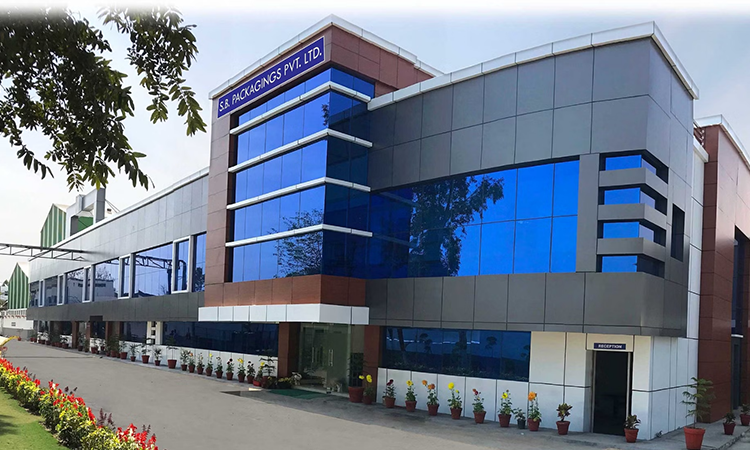
Constantia Flexibles and SB Packagings kick off joint venture

Constantia Flexibles, Premji Invest and SB Packagings, have finalized the joint venture to create one of the largest sustainable packaging platforms in India and South Asia, following the regulatory approval from Competition Commission of India. The joint venture (SB-Constantia Flexibles), between two flexible packaging industry leaders and Premji Invest as shareholders, will leverage each company’s unique strengths and resources to achieve greater success in the Indian market.

 “I have full confidence in the partnership’s ability to be an effective solution provider to its customers in India through innovation and excellence. We will drive growth and profitability for all stakeholders,” said Pim Vervaat, Global CEO, Constantia Flexibles.

“The joint venture positions us as a clear leader to drive the sustainable packaging agenda in India and beyond with a unique product offering,” noted Amit Banga, Managing Director, SB Packagings.

Strong synergy potential with a focus on sustainability

SB-Constantia Flexibles will operate in the food and hygiene markets, offering medium to high-barrier packaging solutions. It will have close to 2,700 employees across nine plants spread across the country.

The JV will pursue organic and inorganic growth opportunities in higher value-added market segments, continuing its strong growth trajectory in the hygiene, food and HPC segment even as it further develops the sustainable mono-material EcoLam product range. It will bring together the mono-material capabilities of both Constantia Flexibles India and SB Packagings and offer medium to high-barrier packaging solutions to food and hygiene markets.

About the joint venture partners:

Constantia Flexibles is the world’s third largest producer of flexible packaging. Based on the guiding principle of ‘People, Passion, Packaging’, 8,700 employees manufacture tailor-made packaging solutions at 37 sites in 17 countries. Many international companies and local market leaders from the consumer and pharma industries choose Constantia Flexibles’ more sustainable and innovative products. Sustainability is a top priority at Constantia Flexibles: the company was rated Level A by Climate Change Leadership (CDP) in 2021 and Gold by EcoVadis in 2022.

SB Packagings, founded in 1989 by Mr. O.P Banga & Mr. Amit Banga, is one of the leading flexible packaging companies based out of India. SBP group over the past 4 decades, has been at the forefront of manufacturing mono-polymer sustainable packaging much ahead of its peers. It has won various awards and global accolades for its innovation & printing excellence. In 2022, it was chosen as the ‘Packaging Company of the Year’ by PrintWeek and won the “WorldStar” award in Milan for sustainable packaging and also the ‘Gold’ at the Asian Packaging Excellence Awards. SBP with over 50% market share, is by far the largest company manufacturing hygiene packaging for leading global and Indian brands. SBP also has a strong footprint in the Food and Beverages space.

Premji Invest’s (PI) investments primarily support the philanthropic initiatives of the Azim Premji Foundation, a not-for-profit organisation that seeks to help improve the lives of the underserved and underprivileged in society. PI invests in India and overseas with the objective of building long-term sustainable capital to fund philanthropic initiatives and nurture the spirit of entrepreneurship in the country.  PI invests in sectors including healthcare, technology and financial services, with the overwhelming aim to make sure that global companies with scale are created using the access and capital that PI is able to provide.

June 6, 2023 0 comment
0 FacebookTwitterPinterestEmail
Press Releases

Tetra Pak Makes Further Progress on Sustainability Transformation

by June 6, 2023
written by

Today, Tetra Pak publishes its Sustainability Report FY22[1], highlighting the company’s progress across various aspects of sustainability. Now in its 24th edition, the report demonstrates how sustainability remains core to Tetra Pak’s strategy and continues to be prioritised in decision making.

Tetra Pak Makes Further Progress on Sustainability Transformation

During the year 2022, Tetra Pak achieved significant milestones, reducing operational greenhouse gas (GHG) emissions by 39%[2], with 84% of the energy coming from renewable sources[3]. This puts the company on track to achieve net zero within its own operations by 2030. Additionally, the sale of 8.8 billion plant-based packages[4] and 11.9 billion plant-based caps translated into 131 kilo tonnes of CO2[5] savings. Tetra Pak also invested nearly €30 million[6] to accelerate collection and recycling of beverage cartons, while working with food technology incubators and start-ups to explore the future of sustainable food.

This was in the context of a year marked by considerable uncertainty, driven by the after-effects of COVID-19, supply chain issues, and geo-political challenges such as Russia’s invasion of Ukraine. The combination of all these factors has resulted in significant financial challenges for businesses and consumers, driving up the cost of living and resulting in food insecurity for many.

Adolfo Orive, President & CEO at Tetra Pak, says, “The current operating environment has emphasised the need for integrated, systemic solutions. This is the only way we can meet the scale and speed of change required to strengthen food access while reducing the environmental impact, in a way that leaves no one behind. This is why we have taken a holistic approach across five interconnected and interdependent areas where we can contribute the most – food systems, circularity, climate, nature and social sustainability.”

Tetra Pak’s Sustainability Report FY22 highlights the company’s achievements in the past year, and the ongoing initiatives to protect food, people and the planet. These include:

Testing an industry-first fibre-based barrier to replace the thin aluminium foil layer in aseptic carton packages – a breakthrough in the company’s journey towards a fully renewable aseptic package.

Recognition for leadership in corporate transparency and performance on climate change and forests by global environmental non-profit CDP, securing a place on its prestigious ‘A List’ for the fourth year running.

Designing a new processing method for soya drinks, as well as a new technology to transform Brewer’s Spent Grain[7] into a plant-based beverage – for less waste and more nutrition.

Enabling 66 million children in 44 countries to get access to nutritious beverages through school feeding programmes, helping to improve children’s health, increase school attendance and support agricultural development.

Delivering milk to dairies in 22 Dairy Hub projects through approximately 44,000 farmers, in most cases smallholders, as part of the company’s long-term work to build local dairy value chains.

Restoring 87 hectares of land – the equivalent of 136 football fields – through the Araucaria Conservation Programme in Brazil.

Implementing UN Guiding Principles on Business and Human Rights[8] and making progress on diversity, equity and inclusion (DE&I).

Adolfo concludes, “With a solid environmental track record and a strong commitment to the future, we will continue to drive ourselves and others to work ever more closely and find sustainable solutions to the challenges we face as a society. After all, this is core to our purpose: ‘We commit to making food safe and available, everywhere. And we promise to protect what’s good: food, people, and the planet.'”

The full FY22 report can be found here.

Notes to editors

Tetra Pak recognised for fourth consecutive year as part of CDP ‘A List’ for action on climate change and forests (December 2022)

Tetra Pak develops breakthrough ‘whole soya’ processing method (December 2022)

Tetra Pak announces first collaboration with food processing technology incubator (November 2022)

Tetra Pak tests an industry-first: a fibre-based barrier to replace the aluminium layer (May 2022)

Tetra Pak launches pioneering initiative to help restore biodiversity and mitigate the effects of climate change (May 2022)

Tetra Pak launches world’s first tethered caps on cartons (April 2022)

Read more about the actions we’re taking to mitigate environmental impact

About Tetra Pak

Tetra Pak is a world leading food processing and packaging solutions company. Working closely with our customers and suppliers, we provide safe, innovative and environmentally sound products that each day meet the needs of hundreds of millions of people in more than 160 countries. With more than 25,000 employees around the world, we believe in responsible industry leadership and a sustainable approach to business.

Our promise, “PROTECTS WHAT’S GOOD™,” reflects our vision to commit to making food safe and available, everywhere.

More information about Tetra Pak is available at www.tetrapak.com.

[1] Financial year 2022 (FY22) is the period from 1 January 2022 to 31 December 2022

[2] Scopes 1, 2 and business travels

[3] As a result of increasing the company’s on-site solar photovoltaics (PVs) capacity from 5.55MW in 2021 to 8.47MW in 2022

[4] Volumes exclude Blend in BIO (BiB) sold in Brazil. BiB is a mix of 75% LDPE and 25% plant-based LDPE

[5] Compared to the amount of CO2 which would have been emitted if using fossil-based plastic. Based on climate accounting internal calculations (volume x emission factor) considering 72.7 kilo tonnes of plant-based plastic purchased in 2022. To calculate the avoided emissions number, Tetra Pak uses a third-party emission factor for the plant-based polymers from public available lifecycle assessment by Braskem. Source: www.braskem.com.br/portal/imgreen arquivos/LCA%20PE%20I’m%20green%20bio-based_FINAL%20EN.pdf

[6] Operational and capital expenditures

[7] Brewers Spent Grain is the industrial moniker used to describe the malt after a brewery has already used it to make beer. Source: www.regrained.com/blogs/upcyclist/what-is-spent-grain

[8] The UN Guiding Principles on Business and Human Rights (UNGPs) are the global standard for business conduct concerning human rights. Theyre composed of 3 pillars: First, the state has a duty to protect people against human rights harm by business. It requires states to use all the tools at their disposal-law, policy, regulation, and adjudication-to protect against human rights harm by business. Second, businesses have a responsibility to respect human rights. That is, businesses should not infringe on human rights in their own operations, or in their business relationships (e.g. with partners, suppliers, and customers). That responsibility of businesses is much harder to realise when the state does not do its job, but the responsibility remains, nonetheless. Third, there is a need for greater access to remedy. This requires states & businesses to play roles in providing access to effective remedy-both judicial and non-judicial-for those harmed by business-related human rights abuse.

June 6, 2023 0 comment
0 FacebookTwitterPinterestEmail
Newer Posts
Older Posts

Recent Posts

  • India–UK Free Trade Agreement Opens Global Growth Opportunities for 3R ZeroWaste’s Circular Economy Solutions
  • Plastic Free July: Why True Sustainability Goes Beyond Swapping Plastic
  • From the Editor’s Desk: When Greed Takes Over Conscience
  • Beyond the Pose: Why Your Yoga Mat Needs a Sustainable Upgrade
  • Best Sustainable Father’s Day Gifts: Conscious Carma’s Exclusive Picks

Recent Comments

  • Team Conscious Carma on Label Shivika Agarwal – where craft meets sustainability
  • Cocomeister.jp on Label Shivika Agarwal – where craft meets sustainability
  • Team Conscious Carma on Equitable City Designs To Fight Climate Change
  • UN report calls for repurposing of USD 470 billion of agricultural support that distorts prices and steer us away from environment and social goals | Consciouscarma on UNEP & ICMR collaborate to boost understanding of environmental dimensions of antimicrobial resistance in India
  • Wild Earth : Natural body products | Consciouscarma on Sat.Suma : the true essence of flowers in your everyday skincare needs

Keep in touch

Facebook Twitter Instagram Youtube

Recent Posts

  • India–UK Free Trade Agreement Opens Global Growth Opportunities for 3R ZeroWaste’s Circular Economy Solutions

  • Plastic Free July: Why True Sustainability Goes Beyond Swapping Plastic

  • From the Editor’s Desk: When Greed Takes Over Conscience

  • Beyond the Pose: Why Your Yoga Mat Needs a Sustainable Upgrade

  • Best Sustainable Father’s Day Gifts: Conscious Carma’s Exclusive Picks

  • How Sacred Sound is Reshaping the Future of Holistic Health?

Categories

  • Community (38)
    • Campaigns (3)
  • CSR (4)
  • Economy (82)
    • Global (24)
    • Industry (42)
    • Innovations (4)
    • National (2)
  • Environment (48)
  • Expert Corner (48)
    • Authored Articles (47)
  • Featured (5)
    • Partners (1)
  • Global News (2)
  • Initiatives (31)
    • CSR (3)
    • Events (6)
  • Inspiration (22)
  • Lifestyle (9)
  • Media Coverage (6)
  • Press Releases (4,358)
  • Products (126)
    • Accessories (27)
    • Apparel (32)
    • Beauty (26)
    • Food (4)
    • Gifting (3)
    • Home Décor (15)
    • Skin-Care (14)
  • Reports (3)
  • Spirituality (10)
  • Sustainability (49)
  • Sustainable Startup Stories (28)
  • Travel (19)
  • Uncategorized (2)
  • Wellness (33)
    • Home Cleaners (3)

Archives

  • August 2026 (1)
  • July 2026 (1)
  • June 2026 (6)
  • October 2024 (1)
  • September 2024 (1)
  • July 2024 (2)
  • June 2024 (2)
  • May 2024 (1)
  • November 2023 (330)
  • October 2023 (554)
  • September 2023 (631)
  • August 2023 (718)
  • July 2023 (723)
  • June 2023 (710)
  • May 2023 (608)
  • April 2023 (114)
  • March 2023 (7)
  • February 2023 (3)
  • January 2023 (11)
  • December 2022 (18)
  • November 2022 (1)
  • August 2022 (6)
  • July 2022 (8)
  • June 2022 (24)
  • May 2022 (11)
  • April 2022 (19)
  • March 2022 (11)
  • February 2022 (11)
  • January 2022 (14)
  • December 2021 (10)
  • November 2021 (4)
  • October 2021 (14)
  • September 2021 (22)
  • August 2021 (12)
  • July 2021 (17)
  • June 2021 (17)
  • May 2021 (16)
  • April 2021 (22)
  • March 2021 (33)
  • February 2021 (16)
  • January 2021 (22)
  • December 2020 (10)
  • Facebook
  • Twitter
  • Instagram
  • Pinterest
  • Linkedin
  • Youtube

@2020 - All Right Reserved. Designed and Developed by Bizopser Technologies

Consciouscarma
  • Home
  • About Us
  • Products
  • Community
    • Campaigns
    • Inspiration
    • Initiatives
    • CSR
  • Features
    • Sustainable Startup Stories
    • Travel
    • Lifestyle
    • Partners
  • Economy
    • Industry
    • Innovations
    • National
    • Global
  • Environment
  • Expert Corner
    • Authored Articles
    • Reports
  • Magazine
  • Contact