Consciouscarma
  • Home
  • About Us
  • Products
  • Community
    • Campaigns
    • Inspiration
    • Initiatives
    • CSR
  • Features
    • Sustainable Startup Stories
    • Travel
    • Lifestyle
    • Partners
  • Economy
    • Industry
    • Innovations
    • National
    • Global
  • Environment
  • Expert Corner
    • Authored Articles
    • Reports
  • Magazine
  • Contact
Monthly Archives

September 2021

baro
CommunityInitiatives

BARO MARKET : A zero-waste fashion pop-up at Cache, Bandra.

by Team Conscious Carma September 20, 2021
written by Team Conscious Carma

Baro Market, a physical pop up at Cache, the Arts and Craft Gallery, Turner Road, Bandra West, will be held from Sep 24th-26th, 2021.

With the festivities around the corners, Baro Market’s second edition of sustainable and slow fashion pop up will be held physically at Cache, the Arts and Craft Gallery, Turner Road, Bandra West, from Sep 24th-26th, 2021.

The pop up will include a wide collection of apparels from homegrown brands that strongly believe in sustainable living. “What makes Baro Market’s collection unique is that all their products are mainly handcrafted and created in small batches with a commitment to conscious living” says its founder Srila Chatterjee.

 “Out of the 24 brands on display at this 3 day pop up, there are about 10 brands that are completely conscious and the rest of them believe in slow fashion and produce in small batches.  The pop will have apparels and accessories for both men and women”, she adds.

Founded by Srila Chatterjee in 2019, Baro Market is all about crafts, culture, community and a commitment to conscious living.  It is a platform that showcases the work of over 60 designers, artists and craftsmen from all over India.  

For more information log on to : https://baromarket.in/ 

Sustainable brands at Baro Market :

LataSita 

LataSita is a pioneering design studio creating zero-waste fashion. Hunting down fabric from diverse and sometimes unexpected sources – ranging from treasured private heirlooms to the wardrobes of everyday women and even a Durga Puja pandal, designer Meghna Nayak champions the circular economy.  Acclaimed nationally and internationally with sold out exhibitions from Stockholm to Taipei, Nayak’s work is exciting, fresh and dynamic.

Bandit

A part rebel, part Underground brand that is brave, honest and colorful even as it has cutting edge design, Bandit chose to re-look at how products were designed and made in the context of a planet being destroyed by single use plastic. They took a common material – tarpaulin – and with 2 years of research and repeated development, created bags that are technically unparalleled, help keep excess tarpaulin away from land fills and look so cool that they are becoming a cult… Also, 10% of their profits goes to SETHU – an NGO that works for the development of special needs children in Goa.

Earthaments

Engineering student Monalisha found herself drawn to the metal smiths in the lanes of Kolkata, grasping techniques while she watched magic unfold. She watched jewelry become an identity maker, and in the wearing, telling the stories of travel, of heritage and of history. The tribal woman became her muse : fierce, infinite, indescribable and absolute. She thus set out to create jewelry that had much to tell : heartfelt stories, close to the earth – Earthaments.

Earthroute

EarthRoute has a very unique approach towards fashion, lifestyle and the well-being of our mother earth. They believe in eco fashion, slow and ethical fashion. They work with handmade artisanal fabric. Handspun and handwoven are not just cosmetic words for them, but are mantras to grow and create a sustainable future. They blend their technical product knowledge and design aesthetics with the traditional skill of the artisans to create beautiful, unique and ergonomic product range that is not only creatively challenging, but can engage maximum number of artisans in the process, thus creating a sustainable livelihood for them. 

Help in suffering

Do good, buy good! Help in Suffering is the voice of the voiceless : shop for a cause with this 40 year old animal welfare charity. 100 percent of the proceeds go towards the treatment of all animals in and around Jaipur. Their wonderful products are thoughtfully created with prints that have been specially made for the organisation. There is something for every age group, from toys to boxer shorts!

Ira

Ira was born out of immense passion to reinvent Indian textile art fitted to today’s context, a determination to uphold the traditional crafts of Jamdani and Kantha of Bengal in the form of minimalistic and contemporary designs.

Ira believes in the beauty of handmade products, where every product spells distinct uniqueness of the art and the artisans we work with. Each of our pieces is meticulously handcrafted by our artisans in Bengal.


Kaisori

Kaisori is a celebration of Indian culture and storytelling as seen through it’s ancient crafts. It is a collective journey into the heart of India’s crafted marvels, reaching into cities for you to rediscover a love for all things handmade. Their designs are perfected by artisan’s labour of love. They present stories of India through a wide range of handcrafted products made by master artisans from different parts of India.

Kos

Centuries of artisanal values go into the handspun fabrics that these men’s shirts are created from. Its a journey around India as you feel the luxury of Ikkat, Jamdani and Khadi. Only taking these textiles into contemporary clothing will keep the master skills alive

Moirra

Handcrafted fabric jewellery representing an amalgamation of our rich Indian heritage crafted into a contemporary design. All pieces are fabric based with Zari, mirror work and french knots highlighted with surface ornamentation, each piece unique, telling the story of the person who made it. 

Padukas Artisans

Padukas is an NGO working with the Warli tribe in the Palghar district of Maharashtra to help them earn a livelihood from their Native art, sewing skills, and their innate ability to learn and master a new craft. In 2014, Jeanette Haley started it with 8 women and they have grown to a family of 62 women from 31 nearby villages. They are not only aiming for making these women financially Independent but also nurturing the artists in them. Indian fabric scraps produced by the fashion industry are collected, segregated, combined and hand stitched into beautiful objects of art by their team of seamstresses. Each Padukas product is handmade, therefore unique and original.

Project 1000

A social enterprise that creates home and lifestyle products indigenously designed and made by rural women to create a sustainable ecosystem. The products are made from 100% natural cotton supporting the Indian cotton farmers. 


Sienna

Sienna began as a home-grown project in Kolkata, dabbling in pottery, and soon became a vehicle which would enable rural artisans to reach a larger metropolitan marketplace. Through design collaboration and putting together people of various skills, Sienna enables individual artisans and cooperatives from remote villages to have access to the urban public, while still keeping alive their ancient art forms.

Manka – Bags

MANKA – ‘from the heart’, where each piece is sourced and constructed by hand, making each one unique! Their banjara bags are embellished with mirror work, embroidery, beads and tribal jewellery by the very talented banjara women! 

Neelanjana Ghose – Kantha Sarees and Stoles 

Neelanjana has been working with the kantha craft for over three decades. Shestarted in the early 80s, assisting her mother – the pioneer of kantha revival – Sreelata Sarkar, and has since dedicated her life in carrying forward this legacy. Neelanjana has weaved in her eclectic sensibilities in the traditional art form and has significantly contributed to making its appeal more global. Neelanjana is also a well know costume designer for films and have worked in over 20 feature films including those of Goutam Ghose (all his features), Bedabrata Pyne (Chittagong), Suman Ghosh (Podokkhep), Anjan Das (Shanjbatir Roopkathat). She has held several exhibitions of her kantha creations in Kolkata, Dhaka, Hyderabad, Bombay, Delhi, Rome.

Bhomra Design Co

Bhomra was born from Sriparna’s love of Bengal’s legacy of the unassuming taant, dhakai and tangail Jamdani saris that she grew up watching her grandmother wear. She wanted to celebrate the craftsmanship of the weavers, forever inspired by nature, by bringing its unassuming elegance, lightness and simplicity back into our everyday lives in the form of thoughtfully designed clothing that resonated these qualities and artistry, so long found only in the sari form. Thus the adventurous little bumbling bee –  Bhomra – fluttered its wings.

September 20, 2021 0 comment
0 FacebookTwitterPinterestEmail
AccessoriesProductsSustainable Startup Stories

Agrajain : a sustainable brand where every piece of fashion is a work of art

by Team Conscious Carma September 19, 2021
written by Team Conscious Carma

Designer Agraj Jain fell in love with sustainable fashion while participating for “The Kering award for Sustainable fashion”  during his final year of bachelors of Fashion Design Technology from University of the Arts London. “I proposed an idea of using a cruelty-free silk which is a Ahimsa Silk/‘Peace Silk’ which got invented in India only & is certified by the government. The entire journey of that competition was an eye opener for me because that’s when I realised that sustainability in fashion industry is way more than just recycling & reusing. The sustainability has to be present in each DNA of a fashion brand from production to marketing,  consumer awareness to environmental impact, selling of goods to sourcing one”, says the young designer hailing from city of Agra, India. 

Post graduation, he worked with Designer Sabyasachi Mukherjee as a Design Assistant and later started his fashion label ‘Agrajain’ in 2018. “Rather than making it just another sustainable label, we work more towards the luxury couture side of it. Our idea here was to propose the fact that sustainable fashion can also be glamorous, luxurious and fun rather than just being earthy & organic. We at Agrajain believe that every piece of fashion is also a work of art. Art, is a celebration of Life itself and we believe that it should not cause suffering to any living being, however small. Therefore we don’t use any animal skin, silks or leather materials. Our brand is committed to showcasing the best of couture yet in a sustainable and eco-friendly way”, adds the talented young designer.

Being in sustainable fashion, the biggest challenge we face is the mindset of consumers as they think that sustainable fabrics are rough textured, faded colours and sticky.  At Agrajain, our aim here is to give them the best quality fabric, and made in eco-friendly manner without any compromise on design and colour. Our clients are really surprised to witness that sustainable fashion can be cool & contemporary too.

In 2021, the label launched its first Indian wear collection for men & women. The collection has been made with a sustainable approach. They have used shaded dye technique which requires less water & energy loss. Along with that they have used non plastic cann cann skirts being developed by them with smart fabrics and techniques. It is 50% less in weight than usual market plastic cann cann, more comfortable more durable, easy to carry, easy to maintain, etc. Similarly, they have used many other different sustainable processes which makee the wholesome experience more positive & eco friendly. The collection is inspired by paintings of Mughal empire. 

SUSTAINABILITY & AGRAJAIN

MATERIAL  SUSTAINABILITY

Being a Jainist and a cruelty free brand, we don’t use any kind of skin, leather, fur or any material which requires an animal slaughtering or cause harm to any living being. As part of this approach, we use ‘Ahimsa silk or Peace silk’ which is a fabric that is created in the most humane manner possible. While normal silk is created by boiling millions of silk- worms to their death in order to create the ultimate fabric. In case of Peace silk, we wait while the silkworm has completed its natural life cycle to use the silk yarn which is used to create the ultimate fabric. We use different variants of this fabric which is woven beautifully and use it to create different looks and styles. This fabric portrays the philosophy behind our brand, which is to strengthen sustainable fashion and makes our clothes beautiful while celebrating life in all its forms. Along with ‘Peace Silk’, we also use other sustainable fabrics like ‘Khadi’, Organic Cotton, Natural dyed cambric fabric, Viscose, Cotton sheer fabric etc. 

UPCYCLING & RECYCLING

Up-cycling is one of the most important part of our studio where we recycle or use all the unwanted fabric scraps, kept aside during the production. We are in constant touch with different export houses and their vendors, who supplies us the good quality of excessive ordered or unused leftover embroidery yarns and threads. These threads have been intricately used in creating our iconic french knots embroidered menswear and womenswear ensemble.

TEXTILE SUSTAINABILITY

Hand Painting is the technique which is widely used in our textiles. It is one of the most hand made artistic technique. Also the water consumption in this technique is equivalent to nil as compared to other printing techniques. We have also started developing a new technique where we create high couture embroidered flowers & other elements using the waste scrap fabric.

 ZERO WASTE  PATTERN  CUTTING

We also use the technique of Zero waste Pattern cutting in our designs where there isn’t any kind of fabric waste during the production.

PACKAGING

We as a team follows an eco-friendly packaging guidelines in which we don’t use any kind of plastics. All our packaging tapes and stickers are made up of paper. The boxes we use are sustainable and are made from high quality up-cycled cardboard sheets.The threads we use in our tags are recycled thread yarn from rugs industry. And the thick muslin cloth we use for the outer packaging is also stiff and can be used again.

LESS  CARBON  FOOTPRINTS

All our goods are produced locally to help reducing carbon footprints.

Check more designs at www.agrajjain.com

September 19, 2021 0 comment
0 FacebookTwitterPinterestEmail
ProductsWellness

Sanfe : natural and environment conscious intimate hygiene and skincare products for women

by Team Conscious Carma September 18, 2021
written by Team Conscious Carma

At Sanfe, we take a sensible approach to self-care that’s body-positive, based on science, poured with natural ingredients, and environmentally conscious. Our products help women give their skin extra love and break out self-doubt by addressing the root cause of these issues with the natural ingredients formulation. We are catering to the unsaid and unheard needs of women like intimate skincare, body grooming, and daily hygiene. As You need care & love for the unseen. Because with Sanfe – It’s Safe!

Sanfe’s journey started with sustainable Intimate hygiene products like Stand and Pee, Bamboo Fibre Sanitary Napkins, Reusable Menstrual Cup etc. which evolved to intimate skincare. The products are designed keeping in mind to meet the consumer needs which doesn’t compromise nature and a sustainable future. We run a campaign #SanfeSustainableSwitch to educate users about sustainable living and how making a simple switch can be helpful for a better future. “It starts with a single move that you make towards nature, as a brand we are highly mindful at meeting consumer needs without compromising the quality and being mindful about the sustainable future via our products and intimate hygiene and lifestyle solutions.” Nalini Prasad, Sr. Brand Manager.

Some of Sanfe’s products include :

1)    Sanfe Reusable Menstrual Cup

Sanfe Menstrual cup is a sustainable choice for all. It is reusable for up to 10 years and can be recycled ensuring no harm to the planet. The cup is chemical-free, fragrance-free, and made of medical-grade silicone that is extremely safe. They are designed for long-term use and save cost. It comes with a breathable pink cotton pouch to ensure regular airflow when stored. It comes with a proper instruction manual to guide you on how to use it.

2)    Sanfe Stand And Pee

Sanfe’s Stand and Pee urinary device allow women to pee without squatting and having to make contact with the commode. The device opens up into a funnel so that women could stand and pee without the risk of UTI and other infections. It is also great for those with knee pain due to the strain of squatting and pregnant women.

It is made of biodegradable material, completely leak-proof, and easy to use. It is good for you and the environment.

3)    Sanfe Scented Panty Liners

Sanfe Scented Panty Liners, made of bamboo fiber, are specially designed with multi-layer absorption formula that can be used for everyday vaginal discharge, light menstrual blood flow, and light urinary incontinence. They are super thin, comfortable, and cause no rashes on the skin. These organic and disposable panty liners cause NO harm to your intimate areas or the environment.

4)     Sanfe Reusable Sanitary Pads

Sanfe reusable pads are a sustainable alternative to disposable plastic-based menstrual pads. Designed with True-Lock technology, they ensure hassle-free and comfortable periods that are both good for the environment and your pocket too! These reusable pads by Sanfe are soft and gentle on the skin to avoid any rashes or irritation that is common with disposable pads. They can be used for up to 12+ months. It is a sustainable and zero-waste product to cater to period care needs.

  • Sanfe Rash Free Bamboo Sanitary Pads

Sanfe Rash Free Bamboo Sanitary Pads are eco-friendly and free of any harmful chemicals, ingredients, and fragrances. Sanfe introduced an extensive range of organic sanitary pads for womxn to maintain their intimate health.

These organic padsare safe to use and designed to maintain good vaginal health. It doesn’t cause any irritation. Sanfe sanitary pads offeryou a 100% safe and worry-free period. The super hygienic and light-weighted pad keeps you healthy and comfortable even on a heavier flow day.

www.sanfe.in

September 18, 2021 0 comment
0 FacebookTwitterPinterestEmail
suta
Apparel

Suta : A sustainable and slow fashion brand

by Team Conscious Carma September 18, 2021
written by Team Conscious Carma

With female representation in leadership roles across various industries on the rise, one male-dominated field in specific which has hardly any female representation at the top is fashion. Women working within this proverbial boys’ club are trying to bring about a paradigm shift in order to foster a larger sense of inclusiveness and a balanced definition of sustainable and slow fashion. Sujata Biswas and Taniya Biswas are two such women who have lifted the veil while carving out her own niche in the field of fashion with their enterprise Suta.

An alumna of IIFT Delhi, Sujata always felt something was missing in her job. Whenever she went back to visit her parents, she came across a lot of traditional weavers with whom she used to end up chatting and they used to pour their hearts out about lack of work and menial wages. Their amazing skills were awe-inspiring but she came to know that their livelihoods were a question mark in many cases. These conversations were etched deeply in her heart and prodded her on to a path of working to improve the livelihood of these disempowered communities. Taking a plunge into an industry with no prior experience or knowledge was one of the biggest risks she took in her career. But what drove her to do the same was her passion and belief in the weavers and the urge to make a difference in the lives of many such communities across India. ‘The idea isn’t about working with a single weaver or a couple of weavers but adopting the entire family of weaver and empowering them. Thereby, making our own family bigger, one weaver at a time’, says Sujata Biswas. 

Taniya, an engineer from NIT Rourkela and IIM Lucknow post graduate, worked for almost three years with the Tata group and IBM. A voice within her drove her towards entrepreneurship and she took the bold step of listening to it. She calls herself an observer and loves to watch how everything in life is so beautifully intertwined with nature and the world around us. This kindled the creative streak in her to paint and to take photographs.  After quitting her cushy corporate jobs, she grappled with many ideas, even tried her hands at product photo-shoots, before realizing that her true potential was not in the pictures but in the products itself. “I had designed a few clothes and had posted them, but instead of getting requests for shoot we were asked about the products,” Taniya says. She found that her affinity for simple, minimalistic, nostalgic sarees that reminded her of a bygone decade, which were very rare to find in the market, was loved by people. What followed next was a quick pivot where she went on a hunt for the right fabric and skilled weavers across the nooks and crannies of rural India. The search took her to the remote villages of Madhya Pradesh; Meghalaya; the home of Banarasi sarees – Varanasi; Maniabandha in Odisha etc. There has been no turning back for her since then.

  • suta
  • suta

The sisters take pride in complementing each other’s skill-sets while having the same vision. From playing games in childhood, where they brought their cousins together to make products out of waste fabric and selling it on carts, to creating a Suta family today, theirs has been a heartwarming story. Suta is an extension of their strong intention to make a positive impact on the society and spread love and warmth to create a happy little world.

September 18, 2021 0 comment
0 FacebookTwitterPinterestEmail
Products

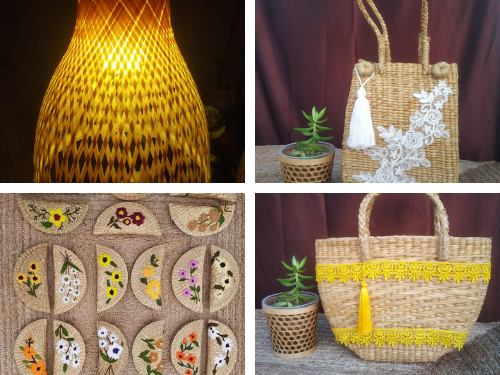
ABALONE : Natural handmade products

by Team Conscious Carma September 17, 2021
written by Team Conscious Carma

ABALONE journey started in 2015 by fashion designer Sristi.  With a deep knowledge in various natural fibers, weaving techniques and product designs and an indomitable spirit, Sristi inspired many to be a part of this journey. Today, there are many skilled tribal artisans who are inseparable part of ABALONE family. 

“Plastic debris is found absolutely everywhere, from the Arctic to Antarctica. It clogs street drains in our cities; it litters grounds and national parks, and is even piling up on Mount Everest. Plastics survive even the harshest conditions, such as floating around in a marine environment under blistering, unrelenting sunshine or frozen into Arctic ice for years to come”, says the conscious designer 

“Then there are side effects of industries. Most of the pollution on the planet can be traced back to industries of some kind. Industrial pollution takes on many faces. It contaminates several sources of drinking water, releases unwanted toxins into the air and reduces the quality of soil all over the world.

At the same time , cheap Chinese products are destroying Indian rural artisans and economy. Due to cheap prices, wide availability and huge profit dissemination to the dealers, China has become the second-largest export-focussed country in the world. There are many manufacturers in India that import cheap Chinese goods and then sell them under their own label”, she adds

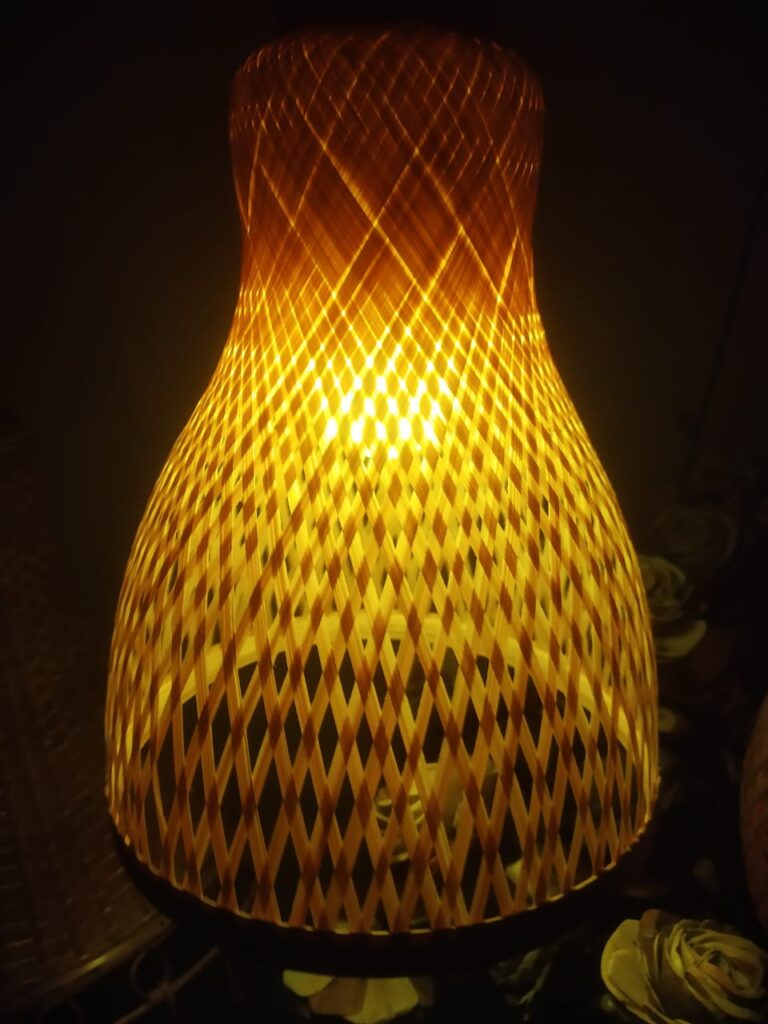
Her concern towards the growing use of plastic, artificial toxic materials, industrial pollution and cheap Chinese products, encouraged her to launch Abalone, where they make products with Indian natural fibers which are alternatives to imported products from China, Indonesia etc. These natural products can replace plastic very easily and are durable, ecofriendly and sustainable. The natural fiber is beautiful to look at. It has an interesting grain that is both elegant and natural looking. While aesthetics are important for any quality product, they also have multiple benefits. 

Jute fabric presents a lot of benefits due to its wonderful property, pollution free environment and especially contributes to a sustainable development. This biodegradable material has a high moisture retention capacity and fire resistant properties too. It is usually used as geotextile. Kauna grass (water reed) is naturally resistant to insects and helps combat water pollution by absorbing toxic microorganisms and poisonous metals. Sabai grass is known for their flexibility and strength, the leaves are utilized for making ropes and other rope-based utility items. 

Sristi started working with local artisans who were in this business for generations. We provided further training and insights, and we gave them new product design and ideas. People also started liking our products. In ABALONE workshop, all natural and ecofriendly products are used, no toxic waste is generated. In our production process no harmful waste is released in the environment which is common in machine based production. We are supporting all local poor skilled craftsman and tribal people. 

Initially we struggled to educate people about various natural fibers, many people thought Jute and Water reed are same. We explained the difference between various natural fibers, their features and usability. We had to explain what are the difference between natural handmade products and machine made products and why price is different. People started appreciating our vision and our customers base also started growing slowly but steadily. 

Key features which separate ABALONE from other sellers in the market. 

????Highly customizable – order as per your space and requirements

????Product replacement if not satisfied with quality

????Request for your product making video

????Your health and your families health – built with safe, natural, ecofriendly materials

????Your mental wellbeing – sustainably made products positively impact your feelings of wellbeing

????Supporting sustainable business – supporting a local poor skilled craftsman, tribal people, 

????Reduced carbon footprint – all natural, ecofriendly products are used, no toxic waste is generated

????Sustainable fabric – jute, cane, grass, azo free dyes are used 

????Ethically made – All ABALONE artisans are business partners

????Reduced waste – no harmful waste is released in the environment which is common in machine based production. 

Contact : 6290744782 / 6291514742  Instagram :https://www.instagram.com/invites/contact/?i=14xv8s72kkohe&utm_content=lewbp6r

September 17, 2021 0 comment
0 FacebookTwitterPinterestEmail
ApparelSustainability

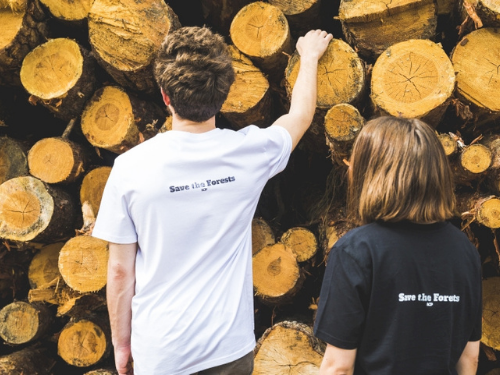
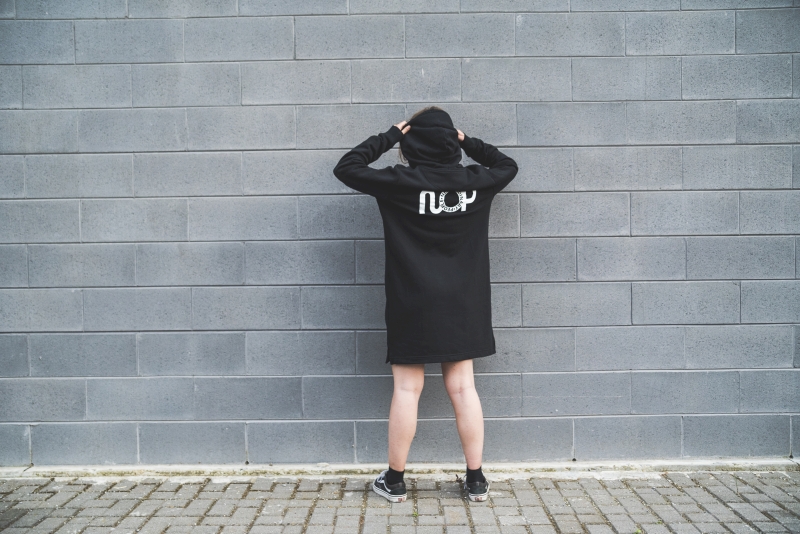
NOP, New Ordinary People, is a sustainability movement brand that makes urban streetwear.

by Team Conscious Carma September 16, 2021
written by Team Conscious Carma

“NOP is a sustainable clothing brand born from the deep desire to at least try to do something about our future”, says Grete Merlyn Kaljumaee, founder, NOP.

The journey of the idea

When I was a small kid and just started to discover the world, I picked up a beautiful flower. My grandma told me that I just killed it. She is not a bad person as could be imagined from this short story, but that day she made me cry. It was a lesson that made me acknowledge that everything around me is alive.

When I was 14, I moved to Italy with my family. I wanted to study fashion as I loved to sew, but I ended up studying design. One day I casually saw the Minimalism movie trailer which made me think: everything we produce ends up somewhere.

This opened up a whole new world for me and I started to do some research to know more about what is underneath our consumerism society. Nothing good I’d say…

The start

It’s easy to feel too small to do something about the climate change, but we do have one thing that gives us power: our choices. The more I know the better I choose what to buy and from whom. All this ended up in me being eager to share my newly discovered reality. I’m personally a zero-waster, so I want to know how everything I use is sourced, I need to touch the clothes I buy to feel the quality and I like to wear smart streetwear. Which came to be a problem – I didn’t like anything zero-waste shops had to offer.

This is the exact moment when NOP was born. NOP is New Ordinary People/Person which is, in few words, the new conscious consumer. The intent is to make sustainability normal, awesome and wearable. I don’t make anything I wouldn’t love wear. 

It’s not easy to start a brand, there are so many aspects to look after if you want to be sustainable: you must consider all points of the supply chain from the raw materials to the end product. The workers should and must have decent working conditions and the material itself has to have minimal impact for the planet. Not to mention about the carbon footprint, not an easy one to handle.

In fact, there is a dilemma: is it better to use locally sourced materials and have a zero carbon footprint, or is it better to choose an international Fair Wear certified producers in emergent countries? In the first case we’re ignoring the bad working conditions in countries that are exploited by the fashion industry, in the second it’s nearly impossible to have a zero carbon footprint.

We proudly source our certified raw organic cotton from small farms in India and the production of the textile in Bangladesh. The change in the quality of life comes from the change of the working conditions. The change of the working condition comes when we choose to buy from who treats people well.

  • NOP
  • NOP

The brand and the industry

New Ordinary People is a sustainability movement brand that makes urban streetwear. It’s also zero-waste because waste as a concept, is not sustainable. If you look at the nature, there is no such thing as waste – it’s a human invention. You can actually bury our T-shirts and there will be nothing left after a month. But at the same time, NOP goes all in to address fast fashion.

People buy new stuff in every season to feel fulfilled or happy somehow. Why? It’s a mix between lifestyle commercials telling how happy people look like and the stress the modern lifestyle gathers. We basically don’t even need the clothes we buy. Even if we’d use all the clothes we buy until they’re done, they’ll be done in a couple of months because of the low quality of the material. That’s logical, because Fast Fashion implies that a garment doesn’t have to last for more than a season. This costs A LOT on our overall wallet and on our planet.

And therefore, NOP doesn’t have seasonal sales. We produce only if a piece is ordered. This mindset cuts down leftovers as we have none. It’s not necessary to make more than a person needs, but it is important to make something that lasts for years. Just like in the old times. And as every shirt we make has 0,27 kg of CO2 emissions, to give the air back to the planet, we plant a tree with each product bought.

Fashion industry is just a small piece of the whole puzzle, but we believe if we’d all do something good for our planet, in a way we can afford to, we can still save our planet. 

www.newordinarypeople.com

September 16, 2021 0 comment
0 FacebookTwitterPinterestEmail
agricultural
EnvironmentGlobal

UN report calls for repurposing of USD 470 billion of agricultural support that distorts prices and steer us away from environment and social goals

by Team Conscious Carma September 14, 2021
written by Team Conscious Carma
  • 87% – out of $540 billion – of annual government support to agricultural producers includes measures that can be harmful to nature and health
  • Agriculture is one of the main contributors to climate change through greenhouse gas emissions from different sources
  • Optimizing support for the agricultural sector using a transparent, customised and evidence-based approach, will benefit our planet

Nairobi/Rome/New York, 14 September 2021 – Global support to producers in the agricultural sector amounts to USD 540 billion per year, making up 15 per cent of total agricultural production value. By 2030, this is projected to soar up more than three times to USD 1.759 trillion. Yet 87 per cent of this support, approximately USD 470 billion, is price distorting and environmentally and socially harmful. These are findings of a new UN report calling for repurposing damaging incentives to achieve more of the 2030 Sustainable Development Goals and realize the UN Decade of Ecosystem Restoration.

The report, A multi-billion-dollar opportunity: Repurposing agricultural support to transform food systems, launched by the Food and Agriculture Organisation (FAO), the UN Development Programme (UNDP) and the UN Environment Programme (UNEP) finds that current support to producers mostly consists of price incentives, such as import tariffs and export subsidies, as well as fiscal subsidies which are tied to the production of a specific commodity or input. These are inefficient, distort food prices, hurt people’s health, degrade the environment, and are often inequitable, putting big agri-business ahead of smallholder farmers, a large share of whom are women.

In 2020, up to 811 million people in the world faced chronic hunger and nearly one in three people in the world (2.37 billion) did not have year-round access to adequate food. In 2019, around three billion people, in every region of the world, could not afford a healthy diet.

While the majority of agricultural support today has negative effects, about USD 110 billion supports infrastructure, research and development, and benefits the general food and agriculture sector. Reconfiguring agricultural producer support, rather than eliminating it, will help end poverty, eradicate hunger, achieve food security, improve nutrition, promote sustainable agriculture, foster sustainable consumption and production, mitigate the climate crisis, restore nature, limit pollution, and reduce inequalities.

The Director-General of FAO, Qu Dongyu, said: “This report, released on the eve of the UN Food Systems Summit, is a wake-up call for governments around the world to rethink agricultural support schemes to make them fit for purpose to transform our agri-food systems and contribute to the Four Betters: Better nutrition, better production, better environment and a better life.”

Agriculture is one of the main contributors to climate change through greenhouse gas emissions from different sources, including manure on pastureland, synthetic fertilizers, rice cultivation, burning crop residue, and land-use change. At the same time, agricultural producers are particularly vulnerable to impacts of the climate crisis, such as extreme heat, rising sea levels, drought, floods, and locust attacks.

agricultural

Continuing with support-as-usual will worsen the triple planetary crisis and ultimately harm human well-being. Meeting the goals of the Paris Agreement requires shifting support especially in high-income countries for an outsized meat and dairy industry, which accounts for 14.5 per cent of global greenhouse gas emissions. In lower-income countries, governments should consider repurposing their support for toxic pesticides and fertilizers or the growth of monocultures.

“Governments have an opportunity now to transform agriculture into a major driver of human well-being, and into a solution for the imminent threats of climate change, nature loss, and pollution,” said Inger Andersen, Executive Director of UNEP. “By shifting to more nature-positive, equitable and efficient agricultural support, we can improve livelihoods, and at the same time cut emissions, protect and restore ecosystems, and reduce the use of agrochemicals.”

The report highlights cases where such a process began: the Indian state of Andhra Pradesh that adopted a policy of Zero Budget Natural Farming; the 2006 reform of agricultural policies in China that supports decreased use of mineral fertilizers and chemical pesticides; the Single Payment Scheme in the United Kingdom that removed subsidies in agreement with the National Farmers’ Union; the European Union, where crop diversification has been incentivized through reform of the Common Agricultural Policy (CAP) and the Senegalese programme PRACAS to incentivize farmers to cultivate more diverse crops.

Although there is no one-size-fits-all strategy for repurposing agricultural producer support, the report recommends a broad six-step approach for governments:

  • measuring the support provided;
  • understanding its positive and negative impacts;
  • identifying repurposing options;
  • forecasting their impacts;
  • refining the proposed strategy and detailing its implementation plan; 
  • finally, monitoring the implemented strategy.

“Repurposing agricultural support to shift our agri-food systems in a greener, more sustainable direction — including by rewarding good practices such as sustainable farming and climate-smart approaches — can improve both productivity and environmental outcomes,” said UNDP Administrator, Achim Steiner. “It will also boost the livelihoods of the 500 million smallholder farmers worldwide — many of them women — by ensuring a more level playing field.”

By optimizing support for the agricultural sector using a transparent, customised and evidence-based approach, our planet will benefit from a healthier, more sustainable, equitable and efficient global agri-food system. The report is launched ahead of the 2021 Food Systems Summit (September), COP15 on biodiversity (October) and COP26 on climate change (November). These events will allow governments to make multilateral commitments to rethink outdated agricultural subsidies, build forward better for the post-COVID-19 era, to commit to such a strategy and to coordinate and monitor its implementation. 

About the Food Systems Summit

On 23rd September 2021, UN Secretary-General Antoìnio Guterres will convene a Food Systems Summit as part of the Decade of Action to achieve the Sustainable Development Goals (SDGs) by 2030. The Summit will launch bold new actions to deliver progress on all 17 SDGs, each of which relies to some degree on healthier, more sustainable and equitable food systems.

About the United Nations Environment Programme

UNEP is the leading global voice on the environment. It provides leadership and encourages partnership in caring for the environment by inspiring, informing and enabling nations and peoples to improve their quality of life without compromising that of future generations.

About the Food and Agriculture Organization

FAO is a specialized agency of the United Nations that leads international efforts to defeat hunger. Its goal is to achieve food security for all and make sure that people have regular access to enough high-quality food to lead active healthy lives. With over 194-Member Nations, FAO works in over 130 countries worldwide.

About the UN Development Programme

UNDP works in about 170 countries and territories, helping to eradicate poverty, reduce inequalities and exclusion, and build resilience so countries can sustain progress. As the UN’s development agency, UNDP plays a critical role in helping countries achieve the Sustainable Development Goals.

September 14, 2021 0 comment
0 FacebookTwitterPinterestEmail
BeautyProductsWellness

Wild Earth : Natural body products

by Team Conscious Carma September 12, 2021
written by Team Conscious Carma

“Life is too short to live by someone else’s expectations of you!. The only regrets you have at the end of life are the chances you didn’t take. So live your dreams and make them come true. Life’s too short for procrastination.”

Passionate, effervescent and forever in motion, Shabia, the founder of Wild Earth,  is a whirlwind of energy and fun.  A Bsc graduate in chemistry, Author of bestselling book Mamma Mania, Winner of the Rex Karmveer Chakra Award for two consecutive years and also awarded with the TOP 50 Rising Stars Award by UK based We are the City, ICICI Advantage Woman Awards, Woman of Influence Award, WoW personality award, She The People Digital Achievers Award, Times She Unltd Award by Bombay Times and many more.

After being a part of the entertainment industry for close to 2 decades, Shabia had begun to be disillusioned by the industry, the culture and its people.  The erratic schedule coupled with her desire to spend quality time with her daughter had started to weigh on her mind.

Lot of us have this habit of reading scraps of papers lying around, the stories behind classmate notes and the ingredients in the multitude of cosmetics we buy for us and our family. Shabia also had this habit and every time she read the things that actually went into the soaps, creams her concern grew. She was increasingly growing unhappy with the products she was using, especially for her daughter.

And one fine day on a cold January morning, a very simple recipe of a body scrub caught her attention. Armed with the knowledge that all the ingredients are available at her home, she set out to concoct it up. All done, and after bathing with it; She came out of the bathroom smiling. “I had an epiphany. That’s how Wild Earth was born”, grins Shabia.

Wild Earth makes natural body products free of harmful chemicals. All their products are made with the best of natural ingredients and, essential oils and most importantly handcrafted with love. The products range from soaps to luscious body butter to lip-smacking lip balms, sulphate free shampoos and delicious body scrubs.

  • body
    Wild Earth Ayurvedic Three Soap Set
  • body
    Wild Earth Strawbeery Lip BAlm
  • body
    Wild Earth – Oceanic Clm Body Wash
  • body
    Wild Earth Rose Honey face & Body Wash
  • Wild Earth Anti Acne Kit

A journey that began by using the products for self and close friends moved on to selling online for the first two years, participating in exhibitions and started to grow purely by word of mouth. Being bootstrapped every leg of the way helped them to keep things under control and enhanced their growth. “In our third year, we scaled our operations and now have got into retail in a big way. Corporate gifting is another avenue where we do very well as our products make great gifts. We are also venturing into exports now” elaborates Shabia.

Being handmade and full of natural ingredients, Wild Earth has a huge target base. Anyone with a willingness to lead a healthy, natural lifestyle be it, Women, babies, kids and men are their target audience as Wild Earth’s products are safe for the entire family.

Soaps, cream and scrubs that let us give our skin a royal treatment at affordable prices is their biggest selling point. Awesome quality and diligent customer service have let them enjoy great customer loyalty from the early stages.

A simple entrepreneur with her right attitude and at the right place she strongly believes that if our intentions are right, the product is good, and you give its marketing the right spin, the venture is bound to make its mark. “Innovation is the name of the game and today the online space is a huge boon for new entrepreneurs like me. How you use it to your advantage is what sets you apart from the rest of them. Finally, there is no one in this world who will believe in your product more than you do. So make it the best, believe in it and then let your customers shout out loud for you. That’s her mantra!”.

Website – www.wildearth.in

September 12, 2021 0 comment
0 FacebookTwitterPinterestEmail
policies
EconomyGlobal

Governments are increasingly adopting policies on air quality, but significant gaps hinder global progress towards cleaner air

by Team Conscious Carma September 7, 2021
written by Team Conscious Carma

Nairobi, 7 September 2021 – A global review of policies and programmes to improve air quality shows that over the past five years more countries have adopted policies on all major polluting sectors. Yet large gaps in implementation, financing, capacity, and monitoring mean that air pollution levels remain high. This data is published today, the International Day of Clean Air for blue skies, in a new report by the UN Environment Programme (UNEP).

The report, Actions on air quality: a global summary of policies and programmes to reduce air pollution, is based on recent survey data from 195 countries. It assesses policies and programmes in key sectors that contribute to air pollution: transportation, power generation, industrial emissions, solid waste management, household air pollution, and agriculture. It also looks at air quality monitoring, air quality management and air quality standards as key policy instruments to mitigate the impacts of air pollution.

As of 2020, 124 countries (about two-thirds) were found to have national ambient air quality standards, 17 more than reported in 2016. However, only 9% of these adhere to the limits established by the World Health Organisation (WHO) guidelines.

The report finds that although low-income countries suffer more from air pollution, actions to reduce air pollution have multiple development benefits, including climate mitigation, agricultural productivity, energy security, and economic growth.

Inger Andersen, Executive Director of UNEP, said: “When governments act on air quality, they help prevent seven million premature deaths annually. They also improve the overall health and economic well-being of 92% of the world population that lives where air quality levels exceed World Health Organization (WHO) limits. Today, we have more policies in place than ever before, but it is absolutely critical that we focus on implementation, especially where people are disproportionately affected by poor air quality.”

policies

Since 2016, when UNEP began tracking government actions on air quality, there have been improvements from industrial emissions, transportation, solid waste management, and household air pollution. For the first time, the report also reviews current policies and programmes on agriculture, air quality management and standards:

  • Since 2016,18 more countries have added new vehicle emission standards equivalent to Euro 4/IV or higher, bringing the total to 71 countries. Despite most low-income countries still lacking regulations for emission standards of imported used vehicles, a growing number of national regulations are emerging to reduce the maximum age of imported vehicles and incentivize citizens to get rid of old polluting vehicles. For example, Morocco only permits the import of vehicles less than five years old and those meeting the EURO4 European vehicles emission standard; as a result, it receives only relatively advanced and clean used vehicles from Europe, in line with UNEP’s recommendations;
  • 21 more countries have adopted policies for cleaner production bringing the total number of countries to 108;
  • 95 countries have programmes promoting clean cooking and heating, with 13 new countries compared to 2016. This has led to lower rates of diseases born from household air pollution, mostly in South and East Asia and the Pacific;
  • Though it remains a widespread phenomenon, 26 more countries now strictly regulate burning of solid waste (bringing the total to 38 countries), including landfill gas capture, improved collection, the separation of waste and sound disposal methods;
  • 58 countries have incentives in place to promote sustainable agriculture, and in deploying effective ways to mitigate methane emissions, including alternatives to open burning of agricultural residues, improved livestock manure management, composting to reduce food waste, and using methane capture for energy use;
  • Yet among the 124 countries with air quality standards, only 57 continuously monitor air quality, while 104 countries have no monitoring infrastructure in place. Thisreflects existing data gaps and capacity issues that hinder global progress on air quality.

Despite new clean air policies in countries worldwide and the steady decline of the burden of disease from household air pollution in some regions, health statistics suggest that ambient and indoor air pollution remain a leading global health risk factor. To improve air quality, there would need to be better enforcement of existing policies and regulations, more substantial financing, and more widespread monitoring and stronger capacities.

UNEP is calling on countries to incorporate investments in air pollution clean-up into their post-COVID-19 recovery plans. It is also calling for setting benchmarks to assess current and future actions towards cleaner air and to remove barriers in the implementation of policies and programmes, including financing and capacity gaps, and to overcome affordability and maintenance challenges of monitoring equipment.

The Actions on air quality: a global summary of policies and programmes to reduce air pollution report is complemented by regional report summaries (from Africa, Asia and the Pacific, Europe, Latin America and the Caribbean, North America and West Asia) documenting more in-depth actions in key sectors, as well as regional trends and priorities. UNEP will build on the findings of this report and continue using input from member states to track progress on action to improve air quality and inform efforts to address gaps and challenges globally.


About the International Day of Clean Air for blue skies

Emphasizing the need to make further efforts to improve air quality, including reducing air pollution, to protect human health; acknowledging that improving air quality can enhance climate change mitigation and that climate change mitigation efforts can improve air quality; the United Nationals General Assembly decided to designate 7 September as the International Day of Clean Air for blue skies.

About the United Nations Environment Programme (UNEP)

UNEP is the leading global voice on the environment. It provides leadership and encourages partnership in caring for the environment by inspiring, informing and enabling nations and peoples to improve their quality of life without compromising that of future generations.

September 7, 2021 0 comment
0 FacebookTwitterPinterestEmail
BeautyProductsWellness

Sat.Suma : the true essence of flowers in your everyday skincare needs

by Team Conscious Carma September 6, 2021
written by Team Conscious Carma

Sat•Suma’s journey began during the lockdown in 2020. We’ve been working towards living a more sustainable life for a few years now and through the lockdown found myself simplifying and trying to minimalize our lifestyle even more. And so, I started making cold process soaps out of the need to find a safe, eco-friendly soap for our family. After spending a few months researching and reading up about how to do it, I finally dived straight in and made my first batch and there was no looking back from then.


Story behind the name


While Satsuma is commonly known to be a citrus fruit, our version of Sat•Suma finds its roots in Sanskrit. ‘Sat’ translates to the true essence of something while ‘Suma’ means flowers. We thought that it made for a lovely portmanteau while also going hand in hand with the values of our brand.

Our goal with Sat•Suma is to be an honest, conscious skincare brand that provides its customers with clean yet luxurious skincare products while helping them take one step closer to a more sustainable lifestyle. All our soaps are handcrafted in small batches using only responsibly sourced natural ingredients. These skin-loving oils, butters, herbs and clays are all nourishing and gentle on your skin and safe for the Earth. Our soaps are inspired by the magic of Mother Earth and Handmade with love.

About the founder

Part-time filmmaker, full-time mama, co-founder at @JunglegymStudio. All this while moonlighting as a soapmaker for her new business @sat.suma.skin . Clearly, Naina loves to keep herself busy.

A filmmaker by profession, Naina spent many years in Mumbai working on commercials and feature films. She moved back to Pune a few years ago to help set up Junglegym Studio along with her husband Nikhil and currently freelances as a director. She is also mama to a delightful 3-year-old named Maya and two cats, Kaza and Tabo.

Over the last few years, Naina has been consciously working towards living a more sustainable lifestyle. And so, while trying to find the perfect eco-friendly soap, she decided to try her hand at making soap at home. And that’s how @sat.suma.skin was born.

“I love making things. I had been spending all my time at home (Schools being shut for our daughter), there was barely any film work going around and I really needed to find something to do for myself. So I decided to figure out what it takes to make soap. And as they say, the rest is history!”, adds Naina.

Naina’s goal with Sat.Suma is to create a conscious skincare brand that uses natural ingredients to create clean, honest yet luxurious products that are good for you and safe for the Earth. Currently, Naina makes only cold-process soaps but hopes to expand into other skincare/bathing essentials as well. 

Products available on their website:

Winter Sky:
This creamy, nourishing bar is made with restorative Indigo and gently cleansing French Green Clay to soothe and refresh your skin. A breezy blend of zesty Lemon and Lime along with earthy Rosemary will leave your skin renewed, making this soap a perfect addition to your skincare routine.


Duneflower:
Awaken your senses with this refreshing floral, scented bar. The sweet notes of Rose Geranium, Lavender, Grapefruit and Bergamot help create a calming bathing ritual. With soothing French Pink and Red clays and restorative Indigo this bar will leave you skin soft and hydrated.

Grasslands:

The luxurious butters in this formulation help nourish dry winter skin. Turmeric is believed to have anti-inflammatory and antioxidant properties and helps boost the radiance of your skin. Moringa has antibacterial properties and is known to be helpful in preventing breakouts on your skin. Walnut shell helps gently exfoliate your skin. The essential oil blend of this bar is a match made in heaven, with Lemongrass and Honeysuckle oils.

Seascape

Inspired by the tranquil, azure waters of Havelock, Andamans. Seascape smells like the cool sea breeze on an evening stroll on the beach.

A gentle soap loaded with skin loving ingredients like Shea Butter, Cocoa butter, Sweet Almond oil and more. This bar uses a mix of French Green Clay, a natural exfoliant that gently removes dead skin and Indigo, known for its skin restorative properties.

Naturally scented with a fresh blend of Rosemary, Lavender, Lemon and Tea tree essential oils, this bar smells like the cool sea breeze on an evening stroll on the beach.

September 6, 2021 1 comment
0 FacebookTwitterPinterestEmail
Newer Posts
Older Posts

Recent Posts

  • India–UK Free Trade Agreement Opens Global Growth Opportunities for 3R ZeroWaste’s Circular Economy Solutions
  • Plastic Free July: Why True Sustainability Goes Beyond Swapping Plastic
  • From the Editor’s Desk: When Greed Takes Over Conscience
  • Beyond the Pose: Why Your Yoga Mat Needs a Sustainable Upgrade
  • Best Sustainable Father’s Day Gifts: Conscious Carma’s Exclusive Picks

Recent Comments

  • Team Conscious Carma on Label Shivika Agarwal – where craft meets sustainability
  • Cocomeister.jp on Label Shivika Agarwal – where craft meets sustainability
  • Team Conscious Carma on Equitable City Designs To Fight Climate Change
  • UN report calls for repurposing of USD 470 billion of agricultural support that distorts prices and steer us away from environment and social goals | Consciouscarma on UNEP & ICMR collaborate to boost understanding of environmental dimensions of antimicrobial resistance in India
  • Wild Earth : Natural body products | Consciouscarma on Sat.Suma : the true essence of flowers in your everyday skincare needs

Keep in touch

Facebook Twitter Instagram Youtube

Recent Posts

  • India–UK Free Trade Agreement Opens Global Growth Opportunities for 3R ZeroWaste’s Circular Economy Solutions

  • Plastic Free July: Why True Sustainability Goes Beyond Swapping Plastic

  • From the Editor’s Desk: When Greed Takes Over Conscience

  • Beyond the Pose: Why Your Yoga Mat Needs a Sustainable Upgrade

  • Best Sustainable Father’s Day Gifts: Conscious Carma’s Exclusive Picks

  • How Sacred Sound is Reshaping the Future of Holistic Health?

Categories

  • Community (38)
    • Campaigns (3)
  • CSR (4)
  • Economy (82)
    • Global (24)
    • Industry (42)
    • Innovations (4)
    • National (2)
  • Environment (48)
  • Expert Corner (48)
    • Authored Articles (47)
  • Featured (5)
    • Partners (1)
  • Global News (2)
  • Initiatives (31)
    • CSR (3)
    • Events (6)
  • Inspiration (22)
  • Lifestyle (9)
  • Media Coverage (6)
  • Press Releases (4,358)
  • Products (126)
    • Accessories (27)
    • Apparel (32)
    • Beauty (26)
    • Food (4)
    • Gifting (3)
    • Home Décor (15)
    • Skin-Care (14)
  • Reports (3)
  • Spirituality (10)
  • Sustainability (49)
  • Sustainable Startup Stories (28)
  • Travel (19)
  • Uncategorized (2)
  • Wellness (33)
    • Home Cleaners (3)

Archives

  • August 2026 (1)
  • July 2026 (1)
  • June 2026 (6)
  • October 2024 (1)
  • September 2024 (1)
  • July 2024 (2)
  • June 2024 (2)
  • May 2024 (1)
  • November 2023 (330)
  • October 2023 (554)
  • September 2023 (631)
  • August 2023 (718)
  • July 2023 (723)
  • June 2023 (710)
  • May 2023 (608)
  • April 2023 (114)
  • March 2023 (7)
  • February 2023 (3)
  • January 2023 (11)
  • December 2022 (18)
  • November 2022 (1)
  • August 2022 (6)
  • July 2022 (8)
  • June 2022 (24)
  • May 2022 (11)
  • April 2022 (19)
  • March 2022 (11)
  • February 2022 (11)
  • January 2022 (14)
  • December 2021 (10)
  • November 2021 (4)
  • October 2021 (14)
  • September 2021 (22)
  • August 2021 (12)
  • July 2021 (17)
  • June 2021 (17)
  • May 2021 (16)
  • April 2021 (22)
  • March 2021 (33)
  • February 2021 (16)
  • January 2021 (22)
  • December 2020 (10)
  • Facebook
  • Twitter
  • Instagram
  • Pinterest
  • Linkedin
  • Youtube

@2020 - All Right Reserved. Designed and Developed by Bizopser Technologies

Consciouscarma
  • Home
  • About Us
  • Products
  • Community
    • Campaigns
    • Inspiration
    • Initiatives
    • CSR
  • Features
    • Sustainable Startup Stories
    • Travel
    • Lifestyle
    • Partners
  • Economy
    • Industry
    • Innovations
    • National
    • Global
  • Environment
  • Expert Corner
    • Authored Articles
    • Reports
  • Magazine
  • Contact