Consciouscarma
  • Home
  • About Us
  • Products
  • Community
    • Campaigns
    • Inspiration
    • Initiatives
    • CSR
  • Features
    • Sustainable Startup Stories
    • Travel
    • Lifestyle
    • Partners
  • Economy
    • Industry
    • Innovations
    • National
    • Global
  • Environment
  • Expert Corner
    • Authored Articles
    • Reports
  • Magazine
  • Contact
Monthly Archives

March 2021

women working
CommunityInitiatives

Budget 2021-22: What Does it Hold for Women ‘s Safety, Employment and Life?

by Team Conscious Carma March 3, 2021
written by Team Conscious Carma

While there have been some small announcements for women in the budget, women’s core concerns over food and nutrition, employment and livelihoods, and prevention of violence and safety after a year of unprecedented hardship need a further boost.

The Finance Minister’s speech in the Union Budget 2021-22 acknowledged the role of frontline workers in battling the pandemic throughout last year and expressed gratitude for their efforts. It is important to note that almost all of these frontline workers are women and budget announcements have an important impact on the lives of women.

Gender-responsive budgeting in India was adopted in 2005 and since then there have been steady budgetary allocations to different programmes specific to women and in women–related programmes, which are usually part of the gender budget statement of the Annual budget documents. This year has also not been an exception. However, it will be important to note that the pandemic year witnessed hardships for women in terms of securing food and nutrition security, a crisis of employment and livelihood opportunities, increased burden of unpaid work for women and also increased incidence of violence. It is in this backdrop we look at the provisions made for women in this budget.

Two significant announcements that directly impact women’s labour force participation were made by the Finance Minister in her speech.

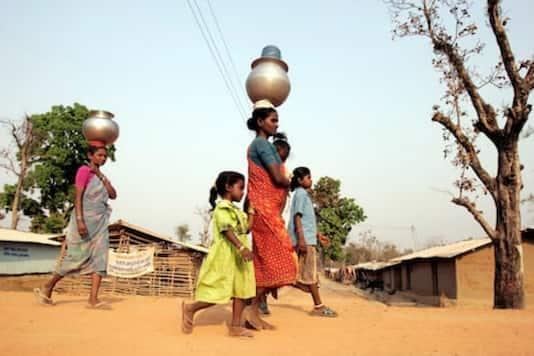
The first was to universalise water supply facilities through the Jal Jeevan Mission in both rural and urban areas and allocating a massive Rs. 50,000 crores to the programme.

This allocation needs to translate into the reality of providing clean drinking water facilities across households in the remotest parts of the country. This is a welcome step that has the potential to reduce women’s time spent on collecting water. The recent time use survey 2019 shows that women spend on an average up to 55 minutes daily to fetch water for the household. Having provided a steady source of the water supply has immense potential to reduce this time and cater to the urgent need to improve household infrastructure for women.

The second announcement pertained to extending the coverage of social security benefits for gig and platform workers. It is important in the current context as these are emerging avenues of women’s employment in urban India. The IWWAGE report shows how attractive these opportunities are for women and extending the social security coverage makes the sector even better.

The budget allocations under the social security schemes for workers show an increased allocation of Rs. 3100 crores under Atmanirbhar Bharat Rojgar Yojana – a programme launched as a new scheme to encourage new employment in post lockdown period by providing a fixed share of wages into the EPF funds. While this may be important, the budget does not provide extra allocations for the social security of gig and platform workers separately.

In the wake of the pandemic and its unequal impact on women, an analysis of the GB however reveals certain underwhelming trends. The gender budget (GB) stands at Rs. 153,326 crore for 2021-22 BE. Last year’s allocation was Rs. 143,461 crore (BE). As a proportion of total expenditure, the current allocation has fallen to 4.4%, from 4.7% last year.

In the same vein, the allocations to women-specific programmes reported in part A of the GB statement Rs. 28,568 crores last year to Rs. 25,261 crores – a decline of almost 12%. Similarly, allocations to the Ministry of Women and Child Development also show a decline of 18.5% since last year.

While the quantum of allocations to the most important programmes for women reported in the budget 2021-22 shows a status quo or a decline, few accounting changes and a couple of interesting allocations towards women could be located. The announcement of Saksham Anganwadi and Poshan 2.0 clubs the erstwhile umbrella ICDS, Poshan Abhiyan, Scheme for Adolescent Girls, and National Crèche Scheme and allocates only Rs. 20,105 crores, the Mission Shakti –SAMARTHYA clubs smaller programmes including Pradhan Mantri Matru Vandana Yojana, and Beti Bachao Beti Padhao. The detailed breakups and comparisons are provided in Figure 1 and 2. below:

Figure 1. (all scheme heads taken from pg. 351 of the Statement of Budget Estimates)

Figure 2. (all scheme heads taken from pg. 351 of the Statement of Budget Estimates)

The numbers show that allocations to crucial programmes catering to nutrition, creches, and women’s safety and protection have at best stayed the same if not reduced. The allocation to the umbrella ICDS schemes that are under the new ‘SAKSHAM’ head clearly shows a 23% decline of Rs. 5952 crores. We also do not see separate allocations for One-Stop Centres, women helpline, Swadhar Greh, Ujjawala and so on which were overwhelmingly used during the pandemic, with heightened reports of violence against women. Instead, those have been clubbed under Mission Shakti— SAMBAL (See Figure 3 below).

Figure 3. (all scheme heads taken from pg. 351 of the Statement of Budget Estimates)

Both MGNREGA and NRLM show increments in budgets since last year. However, the increase in the MGNREGA budget by Rs. 11,500 crores will also need to cater to the increased demand for jobs under the programme. In fact, the GB reports an allocation of only 33% of the total NREGA allocations for women while the Economic Survey itself highlights that almost 50% of all NREGA employment are held by women. These figures themselves reveal the need for greater allocation even without expanding the number of days of employment generated under the programme.

The NRLM budget also shows an increase of almost Rs. 4000 crores from the previous year on account of the programme component. However, the allocations do not make it clear whether the increment is on account of increased expenditure on DDU-GKY, or on account of interest subventions to SHGs or the loan moratoriums.

Despite these dampers, an interesting allocation in the GB geared towards closing the gendered digital divide is also spotted. According to the NSS-MoSPI data from 2017-18, only 38% of women own mobile phones and 12.8% use computers compared to the respective male figures of 71% and 20%. Given the need to be digitally included, the GB includes Rs. 120 crores (or almost 40%) of the allocations to Pradhan Mantri Gramin Digital Saksharta Abhiyan – digital literacy programme for rural areas. Albeit small yet in the last few years, this is the first time that GB has included part of the PMGDISHA in its statement. This may have the potential for improving women’s access to opportunities created through digital platforms.

So while there have been some small announcements for women in the budget, women’s core concerns over food and nutrition, employment and livelihoods and prevention of violence and safety after a year of unprecedented hardship need a further boost. These concerns assumed importance in all pre-budget discussions and also made space into the Economic Survey.

While announcements in the budget indicate acknowledgement of these issues, which is a significant first step, budgetary allocations to support them would be truly transformative for half of India’s population.

Sona Mitra is the Principal Economist at Initiative for What Works to Advance Women and Girls in the Economy (IWWAGE) an initiative of LEAD at Krea University. Sonakshi Chaudhry is a Senior Analyst at The Quantum Hub (TQH), a policy research and communications firm.
Source: https://www.news18.com/news/buzz/budget-2021-22-what-does-it-hold-for-womens-safety-employment-and-life-3419879.html

To Checkout more stories on Women’s Day, Click here

  • India–UK Free Trade Agreement Opens Global Growth Opportunities for 3R ZeroWaste’s Circular Economy Solutions
  • Plastic Free July: Why True Sustainability Goes Beyond Swapping Plastic
  • From the Editor’s Desk: When Greed Takes Over Conscience
  • Beyond the Pose: Why Your Yoga Mat Needs a Sustainable Upgrade
  • Best Sustainable Father’s Day Gifts: Conscious Carma’s Exclusive Picks
March 3, 2021 0 comment
0 FacebookTwitterPinterestEmail
flipkart using evans
EconomyIndustry

Flipkart to deploy more than 25,000 Electric Vehicles in its Supply Chain to achieve 100% transition to electric mobility by 2030

by Team Conscious Carma March 2, 2021
written by Team Conscious Carma

● Builds on the commitment of Flipkart to transition its logistics fleet to Electric Vehicles after joining the Climate Group’s EV100 initiative 

● Partners with key players including Hero Electric, Mahindra Electric and Piaggio to procure electric vehicles through logistics partners 

Flipkart, India’s homegrown e-commerce marketplace, recently announced that it will deploy more than 25,000 electric vehicles by 2030. This is in line with Flipkart’s public commitment to transition to electric vehicles across its city logistics fleet and help set up charging infrastructure around delivery hubs and offices to fast track the adoption of electric vehicles (EVs) in India. Flipkart has already started deploying 2-wheeler and 3-wheeler electric vehicles in multiple locations for delivery across the country, including in Delhi, Bengaluru, Hyderabad, Kolkata, Guwahati and Pune, to name a few. 

Flipkart’s electric fleet will include 2-wheeler, 3-wheeler, and 4-wheeler vehicles designed and assembled in India, helping boost local innovation and economy. Flipkart has partnered with leading electric vehicle manufacturers, including Hero Electric, Mahindra Electric and Piaggio, for specific vehicles to be deployed for its first and last-mile delivery fleet across the country. 

Flipkart will also place requirements in service contracts, install charging infrastructure close to its 1,400 supply chain facilities, conduct awareness programs, and encourage delivery executives to use EVs. 

Amitesh Jha, SVP Ekart and Marketplace, Flipkart said, “Electric mobility can benefit multiple ecosystem stakeholders, not just in e-commerce but in many other industries. Electrification of the logistics fleet is a key part of Flipkart’s larger sustainability goal and in line with our commitment to the Climate Group’s EV100 initiative. In this journey of making our logistics fleet completely electric by 2030, we will collaborate and work with leading local players to procure and deploy Electric Vehicles while supporting the required infrastructure growth. We understand the relevance of electric mobility in achieving both business and sustainability goals and are committed to paving the way for greater adoption of EVs across the country.”

 Flipkart is strongly committed to environmental sustainability and has adopted a proactive and holistic approach towards conducting its business responsibly with optimum usage of natural resources. In this direction, Flipkart has, over the past year, worked towards creating a network of ecosystem partners across charging providers, skill development agencies, aggregators and OEMs (original equipment manufacturers). 

As part of Flipkart’s commitment to following sustainable business practices across its value chain, the company has been driving several other initiatives over the years. These include reducing single-use plastic packaging in the supply chain. Flipkart’s waste management and energy efficiency practices, the increased use of renewable energy, and the recently achieved ISO 14001 certifications are all testament to its continuing efforts towards achieving sustainable operations. 

About the Flipkart Group 

The Flipkart Group is one of India’s leading digital commerce entities and includes group companies Flipkart, Myntra, and Flipkart Wholesale. Started in 2007, Flipkart has enabled millions of consumers, sellers, merchants, and small businesses to be a part of India’s e-commerce revolution, with a registered customer base of over 300 million, offering over 150 million products across 80+ categories. Our efforts to democratise e-commerce in India, drive access and affordability, delight customers, create lakhs of jobs in the ecosystem and empower generations of entrepreneurs and MSMEs have inspired us to innovate on many industry firsts. The recent launch of Flipkart Wholesale, our new digital marketplace, is a testament to our commitment to accelerate the growth of kiranas and MSMEs in India. Flipkart is known for pioneering services such as Cash on Delivery, No Cost EMI and easy returns – customer-centric innovations that have made online shopping more accessible and affordable for millions of Indians. Together with Myntra, which holds a prominent position in the online fashion market and now Flipkart Wholesale, the Flipkart Group will continue to steer the transformation of commerce in India through technology.

SOURCE : Flipkart.com

Note: The content has been edited for style and length

  • India–UK Free Trade Agreement Opens Global Growth Opportunities for 3R ZeroWaste’s Circular Economy Solutions
  • Plastic Free July: Why True Sustainability Goes Beyond Swapping Plastic
  • From the Editor’s Desk: When Greed Takes Over Conscience
  • Beyond the Pose: Why Your Yoga Mat Needs a Sustainable Upgrade
  • Best Sustainable Father’s Day Gifts: Conscious Carma’s Exclusive Picks
March 2, 2021 0 comment
0 FacebookTwitterPinterestEmail
Cognizant headquarters office
CommunityInitiatives

Cognizant Commits $250 Million to Global CSR Initiatives

by Team Conscious Carma March 1, 2021
written by Team Conscious Carma

New philanthropic funding and in-kind contributions globally will help build stronger, healthier, more inclusive communities worldwide

Cognizant (Nasdaq: CTSH) today announced a new five-year $250 million effort to advance economic mobility, educational opportunity, diversity and inclusion, and health and well-being in communities around the world. Building on its longstanding investment in corporate social responsibility, Cognizant, with its extensive global presence, will work to create stronger, healthier, and more inclusive communities as they emerge from the COVID-19 pandemic.

“As a global company, we care deeply about unlocking human potential,” said Brian Humphries, CEO, Cognizant. “We are determined to live our purpose of improving everyday life and apply our technology and business expertise to help tackle global problems. This $250 million initiative aims to create conditions for people to thrive by expanding access to education, healthcare, and technology, and by advancing diversity and inclusion in communities around the world.”

This $250 million initiative will leverage new philanthropic capital, volunteer programs, in-kind contributions, and business expertise to:

  • Provide equitable educational opportunities to equip students, learners, and workers with 21st-century skills needed to succeed in the digital economy;
  • Advance economic mobility, working toward a future where all communities have the resources, opportunities, and infrastructure needed to thrive;
  • Improve the health and well-being of individuals and families to ensure communities are healthy and can achieve their fullest potential; and
  • Champion initiatives that advance diversity, equity, and inclusion, particularly for underrepresented and underserved populations around the world.

Beginning in 2021, Cognizant and its foundations will expand grantmaking in the U.S. and India to new global markets where the company continues to grow its operations, including Australia, Canada, Germany, and the UK. In addition, Cognizant will introduce new philanthropic programs to advance diversity and inclusion efforts in partnership with Cognizant’s Affinity Groups, supporting African American, Latinx, LGBTQ, Pan-Asian, women, and veteran communities.  New programs will also expand opportunities for employees to contribute their time and skills, and deploy additional COVID-19 relief funds that build on commitments made in 2020. These included launching the Pandemic Response Challenge with XPRIZE, supporting clients in bringing vaccines to market, and assisting more than 100 million people with healthcare enrollment.

To date, Cognizant and its foundations estimate they have impacted more than 4 million people, working with over 300 organizations to increase access to quality education and healthcare and improve economic mobility in communities where Cognizant operates. More than 166,000 employees have volunteered their time and expertise in support of these efforts over the last five years.

To stay updated as Cognizant announces CSR programs and investments, please visit: www.cognizant.com/impact

About Cognizant

Cognizant (Nasdaq-100: CTSH) is one of the world’s leading professional services companies, transforming clients’ business, operating and technology models for the digital era. Our unique industry-based, consultative approach helps clients envision, build and run more innovative and efficient businesses. Headquartered in the U.S., Cognizant is ranked 194 on the Fortune 500 and is consistently listed among the most admired companies in the world. Learn how Cognizant helps clients lead with digital at www.cognizant.com or follow us @Cognizant.

SOURCE Cognizant

Note: Content has been edited for style and length

March 1, 2021 0 comment
0 FacebookTwitterPinterestEmail
Newer Posts
Older Posts

Recent Posts

  • India–UK Free Trade Agreement Opens Global Growth Opportunities for 3R ZeroWaste’s Circular Economy Solutions
  • Plastic Free July: Why True Sustainability Goes Beyond Swapping Plastic
  • From the Editor’s Desk: When Greed Takes Over Conscience
  • Beyond the Pose: Why Your Yoga Mat Needs a Sustainable Upgrade
  • Best Sustainable Father’s Day Gifts: Conscious Carma’s Exclusive Picks

Recent Comments

  • Team Conscious Carma on Label Shivika Agarwal – where craft meets sustainability
  • Cocomeister.jp on Label Shivika Agarwal – where craft meets sustainability
  • Team Conscious Carma on Equitable City Designs To Fight Climate Change
  • UN report calls for repurposing of USD 470 billion of agricultural support that distorts prices and steer us away from environment and social goals | Consciouscarma on UNEP & ICMR collaborate to boost understanding of environmental dimensions of antimicrobial resistance in India
  • Wild Earth : Natural body products | Consciouscarma on Sat.Suma : the true essence of flowers in your everyday skincare needs

Keep in touch

Facebook Twitter Instagram Youtube

Recent Posts

  • India–UK Free Trade Agreement Opens Global Growth Opportunities for 3R ZeroWaste’s Circular Economy Solutions

  • Plastic Free July: Why True Sustainability Goes Beyond Swapping Plastic

  • From the Editor’s Desk: When Greed Takes Over Conscience

  • Beyond the Pose: Why Your Yoga Mat Needs a Sustainable Upgrade

  • Best Sustainable Father’s Day Gifts: Conscious Carma’s Exclusive Picks

  • How Sacred Sound is Reshaping the Future of Holistic Health?

Categories

  • Community (38)
    • Campaigns (3)
  • CSR (4)
  • Economy (82)
    • Global (24)
    • Industry (42)
    • Innovations (4)
    • National (2)
  • Environment (48)
  • Expert Corner (48)
    • Authored Articles (47)
  • Featured (5)
    • Partners (1)
  • Global News (2)
  • Initiatives (31)
    • CSR (3)
    • Events (6)
  • Inspiration (22)
  • Lifestyle (9)
  • Media Coverage (6)
  • Press Releases (4,358)
  • Products (126)
    • Accessories (27)
    • Apparel (32)
    • Beauty (26)
    • Food (4)
    • Gifting (3)
    • Home Décor (15)
    • Skin-Care (14)
  • Reports (3)
  • Spirituality (10)
  • Sustainability (49)
  • Sustainable Startup Stories (28)
  • Travel (19)
  • Uncategorized (2)
  • Wellness (33)
    • Home Cleaners (3)

Archives

  • August 2026 (1)
  • July 2026 (1)
  • June 2026 (6)
  • October 2024 (1)
  • September 2024 (1)
  • July 2024 (2)
  • June 2024 (2)
  • May 2024 (1)
  • November 2023 (330)
  • October 2023 (554)
  • September 2023 (631)
  • August 2023 (718)
  • July 2023 (723)
  • June 2023 (710)
  • May 2023 (608)
  • April 2023 (114)
  • March 2023 (7)
  • February 2023 (3)
  • January 2023 (11)
  • December 2022 (18)
  • November 2022 (1)
  • August 2022 (6)
  • July 2022 (8)
  • June 2022 (24)
  • May 2022 (11)
  • April 2022 (19)
  • March 2022 (11)
  • February 2022 (11)
  • January 2022 (14)
  • December 2021 (10)
  • November 2021 (4)
  • October 2021 (14)
  • September 2021 (22)
  • August 2021 (12)
  • July 2021 (17)
  • June 2021 (17)
  • May 2021 (16)
  • April 2021 (22)
  • March 2021 (33)
  • February 2021 (16)
  • January 2021 (22)
  • December 2020 (10)
  • Facebook
  • Twitter
  • Instagram
  • Pinterest
  • Linkedin
  • Youtube

@2020 - All Right Reserved. Designed and Developed by Bizopser Technologies

Consciouscarma
  • Home
  • About Us
  • Products
  • Community
    • Campaigns
    • Inspiration
    • Initiatives
    • CSR
  • Features
    • Sustainable Startup Stories
    • Travel
    • Lifestyle
    • Partners
  • Economy
    • Industry
    • Innovations
    • National
    • Global
  • Environment
  • Expert Corner
    • Authored Articles
    • Reports
  • Magazine
  • Contact